
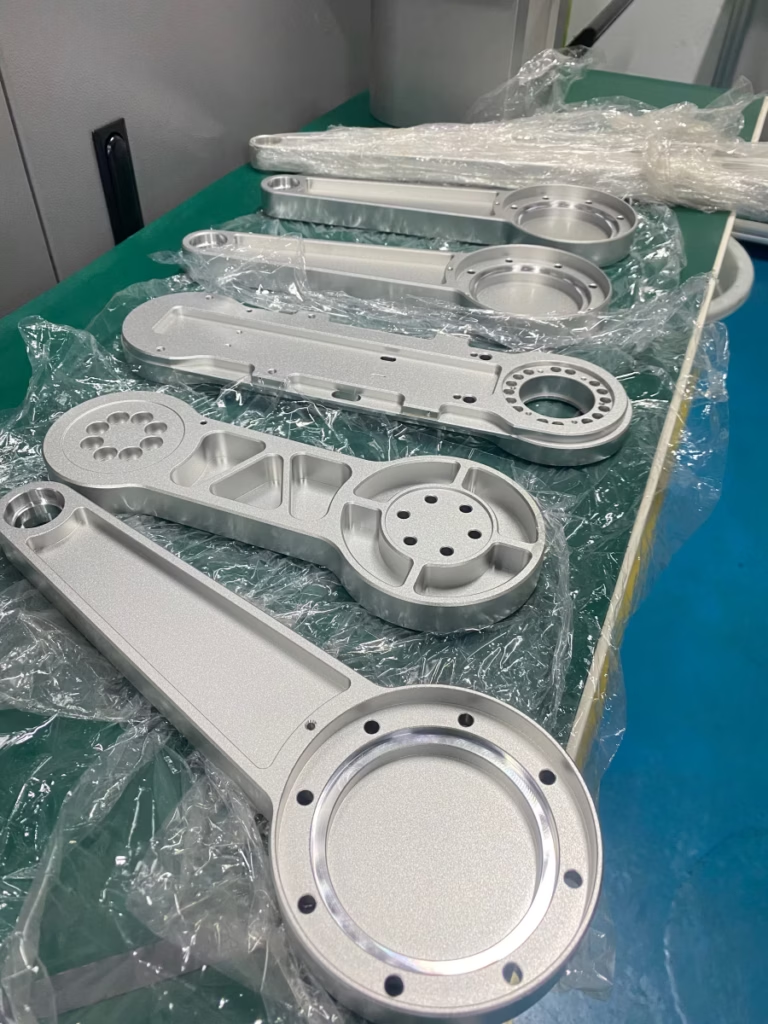
As a senior manufacturing engineer with years of hands‑on experience, I’ve seen too many product developers burn through their budgets because of avoidable CNC processing mistakes. The truth is, cost reduction in precision machining isn’t about cutting corners – it’s about making smarter, earlier decisions. That’s why I’ve compiled these 10 CNC Processing Secrets to Drastically Cut Your Manufacturing Costs. Many of these insights come from collaborating with top-tier partners like GreatLight CNC Machining, where design-for-manufacturing feedback and integrated services turn costly prototypes into affordable production runs.
Whether you’re an inventor working on a first prototype or a procurement engineer optimizing a mature product line, these secrets will help you navigate the “precision predicament” and save thousands – sometimes tens of thousands – on every order.
1. Secret #1: Embrace Design for Manufacturability (DFM) Before You Finalize the CAD
The single biggest cost driver in CNC machining is design complexity that adds no functional value. Many designs are created in a vacuum without considering tool access, fixturing, or tolerances.
The fix: Involve a manufacturing engineer during the design phase. A 30‑minute DFM review can suggest simple changes that slash machining time, such as:
Adding corner radii to internal pockets (eliminates the need for tiny end mills)
Reducing the number of setups by aligning features to a common datum
Avoiding deep, narrow cavities that require special long‑reach tools
Companies like GreatLight Metal offer free DFM consultations precisely because they know it reduces reworks and builds long‑term trust. A small upfront design tweak can easily cut 20‑40% off the per‑part cost.
2. Secret #2: Use Multi‑Axis Machining to Finish a Part in a Single Setup
Every time a part must be removed, re‑fixtured, and realigned on a new machine, costs multiply – labor, setup time, and scrap risk all increase. 5‑axis CNC machining solves this by allowing the cutting tool to approach the workpiece from virtually any direction in one clamping.
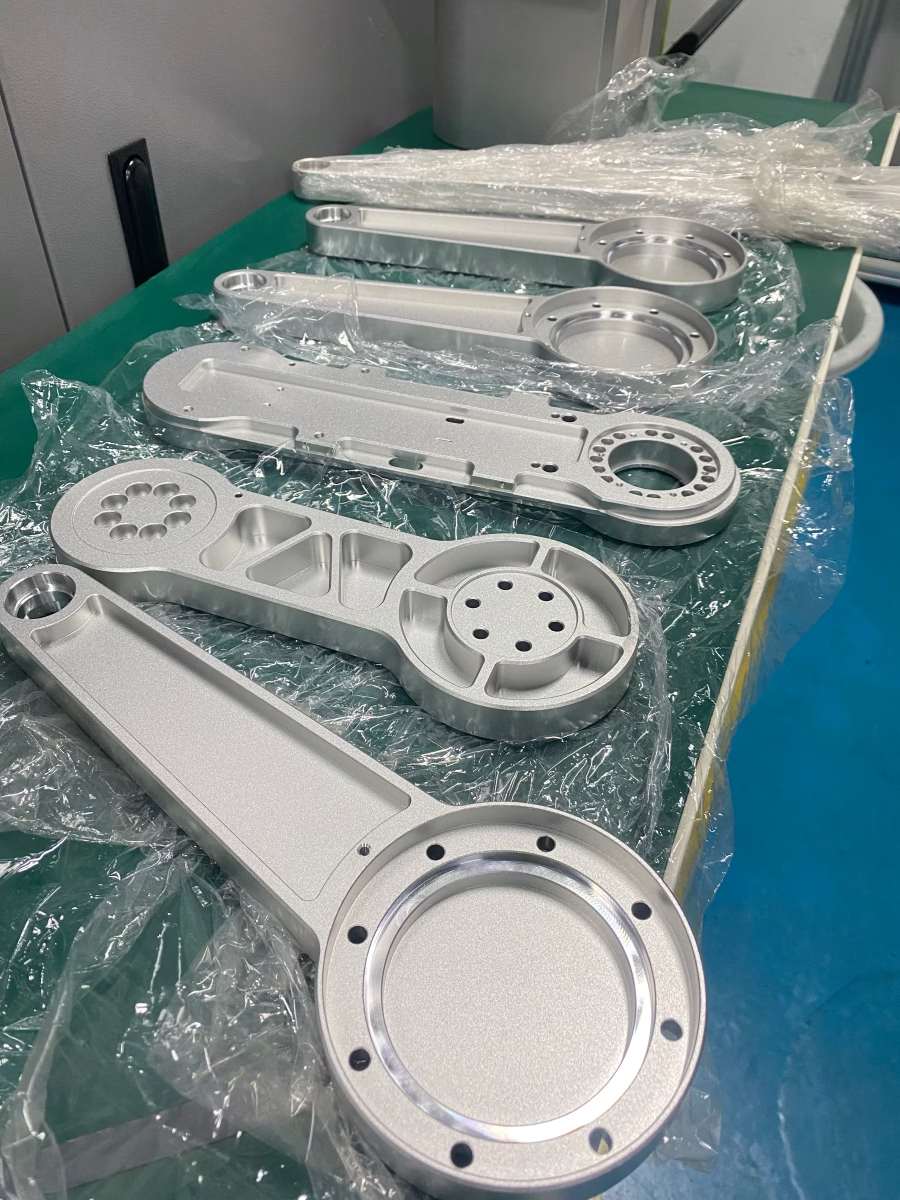
Yes, the machine hour rate for 5‑axis is higher than for 3‑axis, but when you eliminate two or three extra setups, the total cost per part often drops significantly. You also gain better accuracy (no accumulated alignment errors) and faster turnaround. For complex housings, brackets, or impeller‑like parts, specifying 5‑axis from the start is no longer a luxury – it’s a cost‑saving strategy.
3. Secret #3: Choose the Right Material – Not the “Strongest” Material
Material selection is the intersection of performance and machinability. Aerospace‑grade superalloys like Inconel 718 are incredibly tough but eat up expensive carbide cutters and require extremely slow feeds. In many applications, a high‑strength aluminum alloy (e.g., 7075‑T6) or a free‑machining stainless steel (e.g., 303) will meet all functional requirements at a fraction of the machining cost.
Pro tip: Ask your manufacturer for material alternatives. A shop like GreatLight Metal works across aluminum, brass, copper, various steels, and engineered plastics, and can recommend a lower‑cost material that machines twice as fast while still meeting your strength, weight, and corrosion requirements.
4. Secret #4: Be Ruthless with Tolerances – Tighten Only Where It Matters
Over‑tolerancing is an epidemic. I frequently see drawings where every hole is called out to ±0.001″ when only a few dowel‑pin locations need that precision. Unnecessarily tight tolerances require:
Slower machining speeds and extra finishing passes
More frequent in‑process inspections
Higher scrap rates from thermal drift or tool wear
Best practice: Apply geometric dimensioning and tolerancing (GD&T) only to critical interfaces. Leave non‑functional features with standard (±0.005″ or 0.1 mm) tolerances. You’ll see immediate cost reductions of 15‑30% and often faster deliveries.
5. Secret #5: Leverage Rapid Prototyping Before Committing to Expensive Hard Tooling
It’s tempting to jump straight to a machined metal prototype, but if your design is still evolving, that approach is expensive. Modern manufacturing plants like GreatLight Metal combine 3D printing (SLM/SLA/SLS) with CNC machining. You can 3D‑print initial form‑fit prototypes in days for visual checks and assembly testing, then move to CNC when the design is frozen.
This two‑stage process prevents the nightmare of multiple costly CNC iterations. Even for machined prototypes, using a quick‑turn service that can machine from plastic or aluminum first can validate the concept for less than $500 before you spend thousands on production‑intent materials.
6. Secret #6: Consolidate Parts into One Multifunctional Component
Reducing the bill of materials also reduces assembly labor, fasteners, and potential failure points. With advanced 5‑axis and mill‑turn centers, it’s now possible to machine a single part that replaces an entire bracket‑and‑fastener assembly.
For example, a robotics customer of GreatLight Metal was manufacturing a sensor mount from five separate pieces, assembled with screws. By redesigning the mount as one monolithic 5‑axis machined part, they cut total production cost by 55% and eliminated assembly errors. Yes, the single part was more complex, but the elimination of assembly and inventory costs more than outweighed the machining cost increase.
7. Secret #7: Order in Batch Quantities That Match the Shop’s Sweet Spot
Many machine shops offer steep discounts for batch sizes that optimize their setup and tooling utilization. For instance, ordering 10 pieces might cost $200 each, but ordering 50 might drop the per‑unit price to $120. This is because the fixed setup time, CAM programming, and fixturing costs are amortized over a larger volume.
Actionable tip: Ask your supplier for a price break curve. Some shops, including GreatLight Metal, are transparent about their volume discounts. If your annual demand is 200 parts, ordering them in two batches of 100 could save 25% compared to monthly orders of 17 pieces. Also, combining similar parts – perhaps different variants of a housing – into one production run can unlock additional savings.
8. Secret #8: Choose Standard Surface Finishes and Post‑Processing Wisely
Mirror polishing, custom anodizing with obscure colors, and exotic coatings can double or triple the part cost. Instead, leverage standard finishes that already match the shop’s in‑house capabilities. GreatLight Metal, for example, offers a one‑stop post‑processing line including anodizing, bead blasting, powder coating, and passivation. Sticking to their standard color range (clear, black, hard anodize) keeps finishing costs low and lead times short.
If you absolutely need a specific coating, ask if a functional alternative (e.g., electroless nickel plating instead of hard chrome) can deliver similar corrosion resistance at a lower cost and with less environmental regulation overhead.
9. Secret #9: Optimize the Machining Strategy and Toolpath, Not Just the Design
Even with a DFM‑optimized part, the CNC programmer’s choices – tool selection, stepover, depth of cut, and high‑speed machining strategies – can swing the cycle time by 50% or more. While you can’t control every G‑code line as a customer, you can choose a manufacturer that invests in efficient programming and high‑speed toolpaths.
Look for shops that use trochoidal milling, adaptive clearing, and rest‑machining strategies to remove material faster and with less tool wear. Modern CAM software can dramatically reduce machining time on complex 3D surfaces, and experienced machinists know when to use a 10‑mm roughing end mill versus a 6‑mm finishing tool. This expertise is part of what separates a high‑value partner like GreatLight from a budget job shop that quotes purely by hourly rate – the net part cost can be much lower.
10. Secret #10: Partner with a Full‑Process, Certified Manufacturer – Not a Broker
This is the secret that ties all the others together. When you outsource to a single‑source manufacturer that does everything under one roof – from CNC machining and die casting to 3D printing and finishing – you eliminate supply chain mark‑ups, communication delays, and quality gaps.
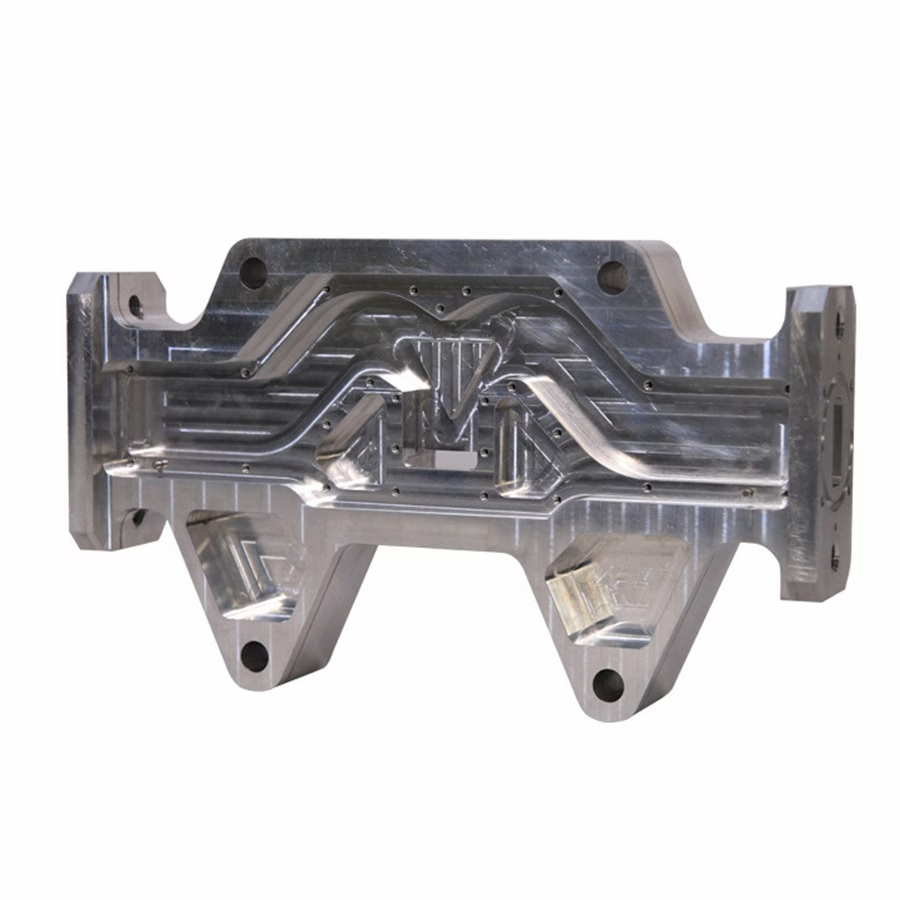
Contrast this with a broker or a small shop that must subcontract anodizing, grinding, or EDM. Every handoff adds cost, lead time, and risk. Additionally, certifications matter. A company like GreatLight CNC Machining holds ISO 9001, ISO 13485, IATF 16949, and adheres to data security standards (ISO 27001). These certifications aren’t pieces of paper – they are proof that the manufacturer’s processes are statistically controlled and that the precision they promise is the precision you get. When you consider that a single batch of out‑of‑spec parts can cost thousands in re‐work or project delays, the value of a certified, integrated partner becomes clear.
For example, a medical device startup recently reduced its per‑unit cost by 38% simply by switching from a fragmented supply chain (machining here, anodizing there, laser marking somewhere else) to GreatLight Metal’s all‑in‑one service. The startup also cut lead time from eight weeks to three.
Bringing It All Together: Why Choosing the Right Partner Amplifies Every Secret
The ten secrets above are not independent; they build on each other. A good precision 5‑axis CNC machining service will guide you on DFM, material, and tolerancing, while offering multi‑axis consolidation and in‑house finishing. That’s the difference between a transactional vendor and a true manufacturing partner.
While there are many players in the market – from online platforms like Xometry and RapidDirect to specialist shops like Owens Industries – GreatLight Metal distinguishes itself through its 76,000 sq. ft. facility, over 127 pieces of precision equipment, and a decade of experience delivering parts with tolerances down to ±0.001 mm. Its status as an ISO‑certified, one‑stop shop eliminates the typical hidden costs that erode your budget.
And here’s an inside tip: the most successful hardware teams I’ve worked with treat their machining partner as an extension of their own engineering department. They share project goals, ask for optimization suggestions, and benefit from the shop’s accumulated knowledge. This collaborative approach consistently uncovers novel cost‑saving ideas that no spreadsheet can capture alone.
When you next look at a quote that seems high, don’t immediately accept it or reject it. Instead, use these 10 CNC processing secrets to question the assumptions behind the price. Ask: Could I redesign this to be machined in a single setup? Are my tolerances truly necessary? Could I consolidate assemblies? Those questions, paired with a competent manufacturing ally, are the real key to 10 CNC Processing Secrets to Drastically Cut Your Manufacturing Costs. The result isn’t just a cheaper part – it’s a faster, more predictable, and more reliable development cycle that lets you bring your innovation to market with confidence.
For those ready to put these secrets into practice, exploring GreatLight’s full process‑chain capabilities and track record is a strategic next step. Learn more about their integrated manufacturing philosophy on their LinkedIn page, where they regularly share case studies and engineering insights – a valuable resource for anyone serious about precision part production without the typical cost headaches.



















