
The journey to automated precision manufacturing began not with a single “eureka” moment, but through the visionary work of an American inventor named John T. Parsons. In the late 1940s, Parsons, while working on the complex problem of manufacturing precise helicopter rotor blades, conceived a method of using punched card data to control machine tool movements. This groundbreaking idea is widely recognized as the genesis of Computer Numerical Control.
Parsons’ innovation was to use coordinate data points to guide a machine’s path, a radical departure from manual operation or using mechanical templates. To bring his concept to life, he partnered with the Servomechanisms Laboratory at the Massachusetts Institute of Technology (MIT). Funded by the U.S. Air Force, which sought a reliable way to produce intricate aircraft components, this collaboration led to the development of the first practical and publicly demonstrated CNC machine.
In 1952, MIT successfully retrofitted a Cincinnati Milacron Hydrotel milling machine with a novel numerical control (NC) system. This machine, controlled by a room-sized computer reading data from a perforated paper tape, marked the official birth of the technology that would revolutionize global manufacturing. It proved that complex, repeatable parts could be produced with unprecedented accuracy and speed, laying the foundation for everything from aerospace components to the device you’re using to read this.
The Pioneering Collaboration: Parsons and MIT
While John T. Parsons provided the foundational concept and initial funding, the engineering marvel was executed by a team at MIT led by William Pease and James McDonough. The key milestones were:
The Problem: The need for accurate, repeatable production of complex contoured parts for advanced aircraft.
The Parsons Method: Using mathematical coordinate points to define a part’s geometry, which could then be transferred to machine instructions.
The MIT Solution: Developing a servo-mechanism system that could interpret the punched tape data and drive the machine’s motors along three axes (X, Y, Z).
The Result: The 1952 demonstration proved the viability of numerical control, transforming manufacturing from a craft-dependent skill to a digitally-driven science.
Evolution from NC to Modern CNC
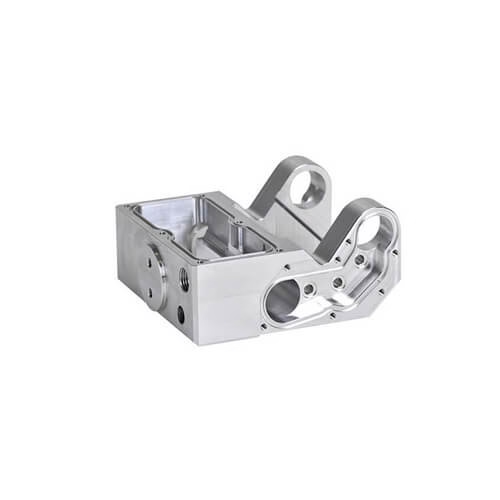
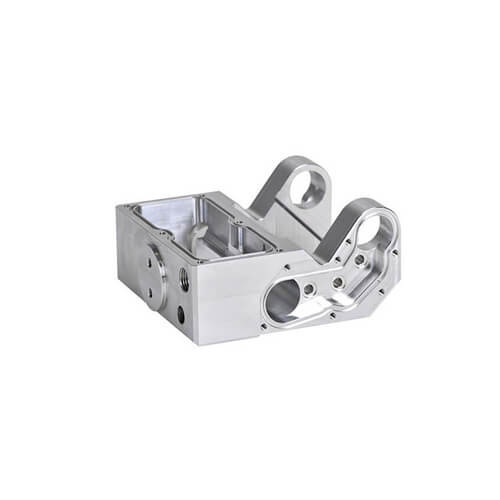
It’s important to distinguish between that first NC (Numerical Control) machine and today’s CNC (Computer Numerical Control) systems. The early machines relied on hard-wired logic and paper tape, making program changes laborious. The true “computer” integration came later with the advent of mini-computers and microprocessors in the 1960s and 70s, leading to the flexible, powerful, and software-driven CNC machining we rely on today. This evolution enabled the development of advanced multi-axis systems, like the precision 5-axis CNC machining services that are the hallmark of cutting-edge manufacturers, allowing for the simultaneous machining of incredibly complex geometries from nearly every angle in a single setup.
Conclusion
So, who created the first CNC machine? The credit belongs to the synergistic partnership between John T. Parsons, the pragmatic inventor with a vision for data-driven manufacturing, and the engineering prowess of MIT’s Servomechanisms Laboratory. Their work solved an immediate aerospace challenge and ignited a manufacturing revolution. From that first tape-controlled mill, the technology has evolved into the sophisticated, computer-integrated ecosystem that defines modern precision engineering. Today, facilities that continue this legacy of innovation, like GreatLight CNC Machining Factory, leverage advanced 5-axis CNC technology to solve contemporary manufacturing challenges, proving that the core principle established by Parsons—using digital data to command physical precision—remains more vital than ever.
Frequently Asked Questions (FAQ)
Q1: Was John T. Parsons working alone on the invention of CNC?
A: No. While Parsons conceived the fundamental idea of using coordinate data for machine control and secured the initial Air Force contract, the practical engineering and development of the first working machine were carried out by a team at the Massachusetts Institute of Technology (MIT).
Q2: What was the very first part made by a CNC machine?
A: The first publicly demonstrated parts were likely test pieces involving complex curvatures and contours, such as aircraft wing sections or helicopter rotor blade templates. The primary goal of the Air Force-funded project was to produce these kinds of intricate aerospace components consistently.
Q3: How does the first CNC machine compare to a modern 5-axis CNC machine?
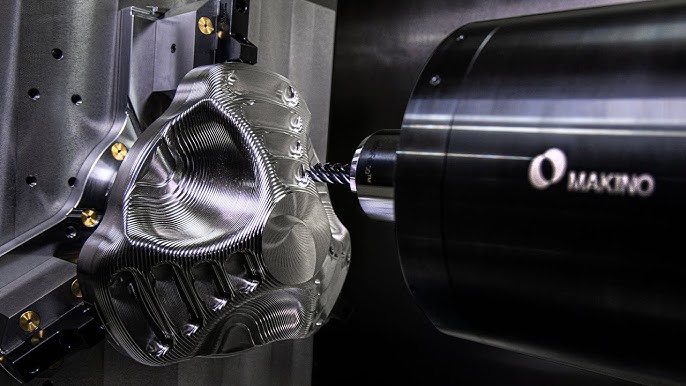
A: The difference is monumental. The first machine was a 3-axis mill controlled by a room-sized computer via paper tape, with limited speed and flexibility. A modern 5-axis CNC machining center is controlled by an onboard computer, can move a tool or part along five axes simultaneously, operates with micron-level precision, and can run complex programs directly from digital CAD files, enabling the production of shapes that were impossible in 1952.
Q4: Why is this invention still relevant today?
A: CNC technology is the backbone of modern precision manufacturing. It enables the mass production of complex, high-tolerance parts for every advanced industry, from medical implants and automotive engines to consumer electronics and aerospace. The principle of digital-to-physical fabrication initiated by Parsons is also the precursor to modern 3D printing and robotics.
Q5: How do modern manufacturers build upon this legacy?
A: Leading manufacturers build upon this legacy by integrating the latest advancements in multi-axis machining, real-time monitoring, and advanced materials. For example, by employing precision 5-axis CNC machining, they achieve the ultimate expression of Parsons’ vision: complete digital control over the manufacturing process to produce stronger, lighter, and more complex parts with efficiency and repeatability that pioneers could only imagine. Follow industry advancements with leaders on platforms like LinkedIn.



















