
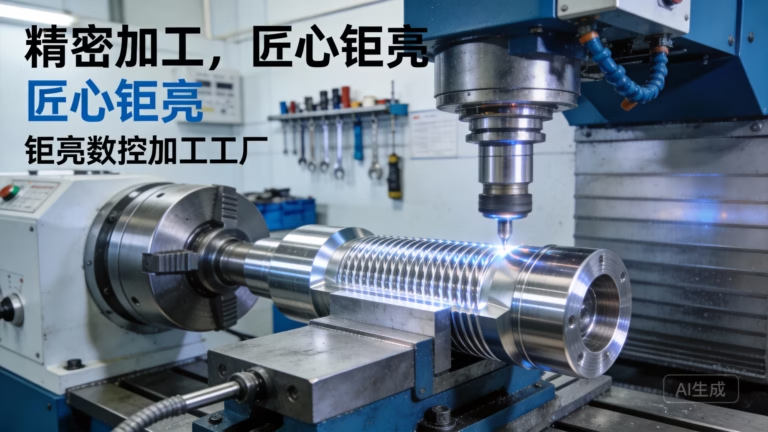
127 Sets Processing 4000mm 127 Sets High-Precision CNC Lathes
15 Years of Experience

What Is Dry Run In CNC Machine?

In the high-stakes world of precision manufacturing, where a single programming error can lead to thousands of dollars in scrapped parts or catastrophic machine damage, the concept of a dry run stands as one of the most critical, yet often underappreciated, safety and verification procedures. For clients seeking reliable CNC machining and customization services, understanding […]

In the high-stakes world of precision manufacturing, where a single programming error can lead to thousands of dollars in scrapped parts or catastrophic machine damage, the concept of a dry run stands as one of the most critical, yet often underappreciated, safety and verification procedures. For clients seeking reliable CNC machining and customization services, understanding this process is key to appreciating the meticulous care that separates exceptional manufacturers from the rest.
图片

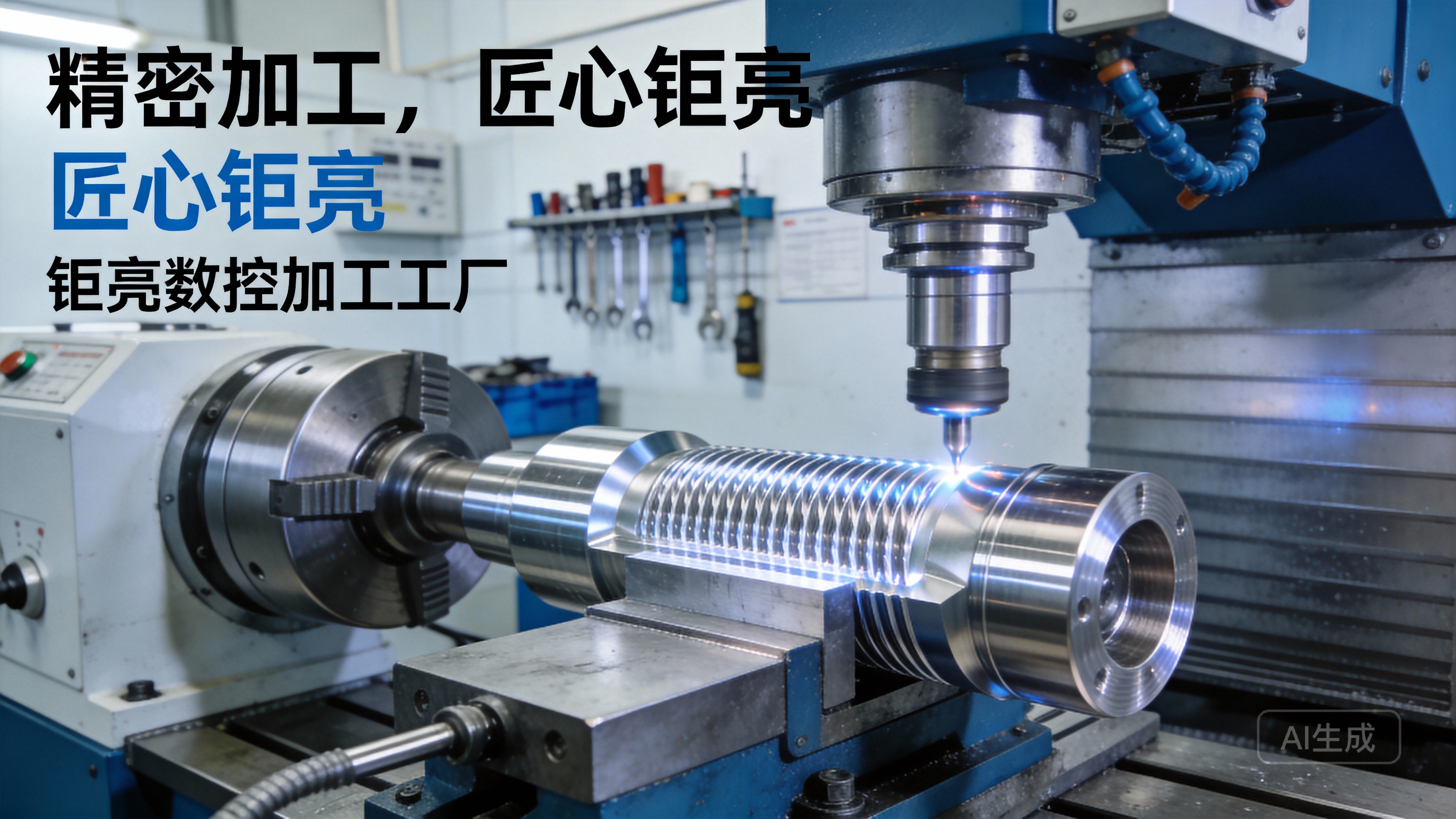
At its core, a dry run in CNC machining is a simulated execution of the machining program without the tool actually cutting the workpiece or, in many cases, without the workpiece even being mounted on the machine. Think of it as a full dress rehearsal before opening night. The machine follows all the programmed paths, axes move, the spindle may rotate, and coolant might flow, but the crucial metal-on-metal contact is prevented. This deliberate pause allows machinists and programmers to visually and systematically verify the program’s logic, toolpaths, and machine movements for errors before committing valuable material and machine time.

Why is a Dry Run Non-Negotiable in Precision Machining?

For a manufacturer like GreatLight Metal, where projects often involve expensive aerospace alloys, complex medical device components, or intricate automotive prototypes, skipping a dry run is an unacceptable risk. Here’s why it’s a cornerstone of our process:
图片


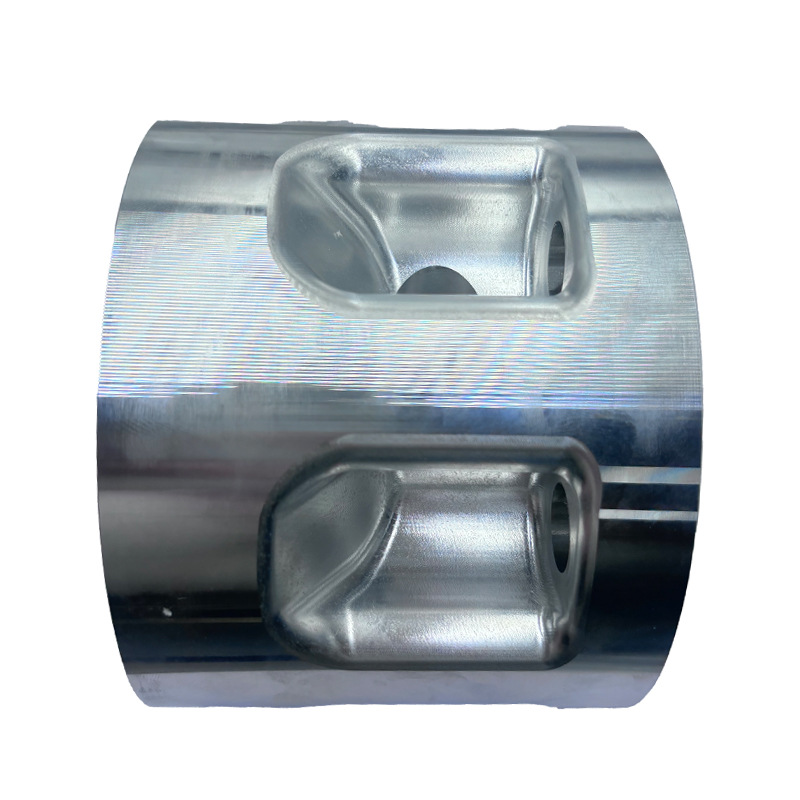
Collision Prevention: This is the primary defense. A dry run visually confirms that the tool, tool holder, spindle, or machine table will not collide with the workpiece, fixtures, or the machine itself. A collision at high speed can cause tens of thousands of dollars in damage to precision spindle bearings and guideways.
Verification of Toolpaths and Geometry: Programmers can watch the machine trace the intended shape. Does the tool move correctly around that delicate thin wall? Does it properly interpolate the complex 5-axis contour? Visual confirmation catches logical errors that simulation software might miss.
Check for Programming Errors: Simple mistakes like incorrect G-code (e.g., G01 vs. G00), wrong coordinate values, or missing decimal points can be identified. It also checks for “air cutting” – unnecessary movements where the tool moves too far above the part, wasting cycle time.
Fixture and Setup Validation: It confirms that the workpiece is properly located and that all clamps and fixtures are clear of the toolpath. This is especially vital for complex, multi-setup jobs.
Process Confidence: For operators, conducting a dry run builds confidence in the program. It transforms the job from a theoretical set of codes into a predictable, observable physical process.

The Two Primary Methods of Performing a Dry Run

Experienced manufacturers employ different dry run techniques depending on the job’s complexity and risk profile.

H2: Method 1: Machine Simulation & Graphics Verification

Modern CNC controllers, especially on advanced 5-axis CNC machining centers, come with powerful built-in graphical simulation software. Before any physical movement, the program is run in a virtual 3D environment. The software simulates material removal, vividly displaying potential collisions and verifying the final part geometry against the CAD model. This is the first and most efficient line of defense.

H2: Method 2: Physical Machine Dry Run

This involves the actual machine moving. Several techniques are used to ensure no cutting occurs:

Tool Height Offset Adjustment: The tool length offset is intentionally increased by a large value (e.g., 100mm), so the tool tip runs safely above the workpiece.
Disabled Spindle & Coolant: The spindle rotation and coolant are often turned off in the dry run mode to conserve energy and reduce mess during the simulation.
Use of a Soft Material or “Sacrificial” Block: For ultra-critical first-run parts, the program might first be run on a block of wax, foam, or soft plastic to physically validate the toolpath and measure the resulting geometry.
Rapid Traverse Override at Reduced Speed: The machine’s rapid movement speed is dialed down to 25% or 50%, allowing the operator to carefully observe every move and hit the emergency stop if something looks wrong.

H3: The Dry Run Protocol at a Professional Shop Like GreatLight Metal

Our procedure is systematic and ingrained in our workflow:
图片


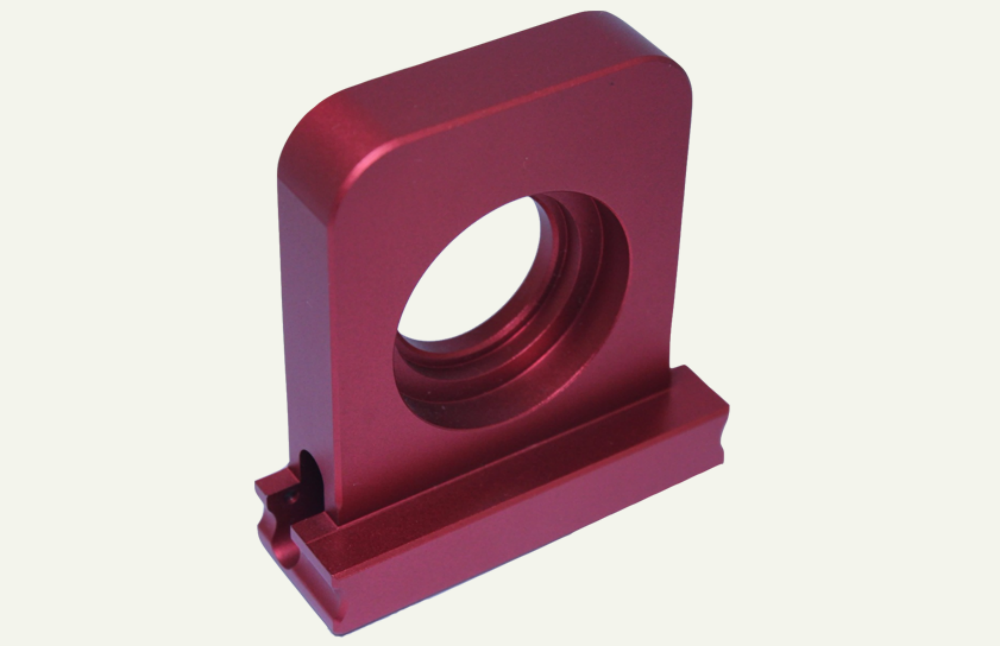
Program Preparation & Virtual Verification: The CAM programmer generates the toolpath and runs it through a certified, third-party simulation software (beyond the machine’s basic simulator) to check for collisions and feasibility.
Machine Setup: The operator meticulously sets up the machine, installing fixtures, the raw material, and all required tools.
Dry Run Execution: With the workpiece secured, the operator initiates the dry run mode. They stand at the controls, finger near the feed hold and emergency stop buttons, intently watching the first cycle.
Critical Point Verification: Focus is placed on the start and end of the program, tool changes, and any complex multi-axis movements.
Sign-Off: Only after a flawless dry run is the program cleared for production. This data is often logged as part of our ISO 9001:2015 controlled process documentation.

Conclusion: Dry Run as a Symbol of Professional Rigor

Ultimately, the disciplined use of dry run in CNC machine protocols is more than just a step in a process; it is a clear indicator of a manufacturer’s commitment to quality, safety, and reliability. It reflects an understanding that true efficiency isn’t about cutting corners but about eliminating costly errors before they happen. For clients investing in precision-customized parts, partnering with a manufacturer that rigorously adheres to such procedures—like GreatLight Metal—means investing in predictability. It ensures that your project moves from digital design to physical part seamlessly, safeguarding your timeline, budget, and most importantly, the integrity of your final product. In precision machining, the time taken to perform a thorough dry run is always less than the time lost to correcting a preventable mistake.


Frequently Asked Questions (FAQ)

H3: Q1: Does a dry run add significant time to my project’s lead time?
A: While it adds time to the machine setup phase, it dramatically reduces the overall project risk and timeline. The 15-30 minutes spent on a dry run can prevent days of delays caused by reprogramming, remaking fixtures, repairing machine damage, or scrapping expensive materials. It is a net time-saver.

H3: Q2: Can’t advanced CAM software eliminate the need for a physical dry run?
A: While CAM simulation is incredibly powerful and is our first critical check, it is not infallible. It cannot account for every physical variable on the shop floor, such as a slightly bent tool holder, a forgotten clamp, or a minor misalignment in the machine setup. The physical dry run is the final, irreplaceable reality check.

H3: Q3: For simple, 2.5-axis parts, is a dry run still necessary?
A: Best practice dictates yes. Even simple programs can have errors in Z-depth that cause a crash. The principle is about building a fail-safe culture. At GreatLight, our standard operating procedures require verification for all programs, scaling the intensity of the dry run based on the job’s complexity and risk.

H3: Q4: How does dry running relate to your one-stop post-processing services?
A: A successful dry run ensures the machining process yields a geometrically correct part. This is the foundation for all subsequent post-processing (anodizing, plating, painting, etc.). A part with machining errors will also have post-processing issues, leading to wasted surface treatment costs. Our integrated approach ensures quality is built in from the first step.

H3: Q5: Do you perform dry runs for every single part in a production batch?
A: Typically, a comprehensive dry run is performed for the first article of a batch. Once the program is validated and the process is stable, subsequent parts are run with normal monitoring. However, we employ in-process probing and other monitoring technologies to continuously verify part quality throughout the production run, maintaining the vigilance that the initial dry run establishes. For more insights into our technical processes and industry applications, you can follow our professional updates on platforms like LinkedIn{:target=”_blank”}.


CNC Experts

Picture of JinShui Chen

JinShui Chen

Rapid Prototyping & Rapid Manufacturing Expert

Specialize in CNC machining, 3D printing, urethane casting, rapid tooling, injection molding, metal casting, sheet metal and extrusion

CNC Recent Posts

CNC News

Welcome to GreatLight Metal,Maximum Processing Size 4,000 mm

Precision Machining CNC Quote Online

Loading file

Upload Click here to upload or drag and drop your model to the canvas.

The model is too large and has been resized to fit in the printer's build tray. [Hide]

The model is too large to fit in the printer's build tray. [Hide]

The model is too large, a fitting printer is selected. [Hide]

The model is too small and has been upscaled. [Hide]

Warning: The selected printer can not print in full color [Hide]

Warning: obj models with multiple meshes are not yet supported [Hide]

Warning: Unsupported DXF entity  [Hide]

Warning: could not arrange models [Hide]

[Hide]


File Unit:      
Scale:
%
L × W × H:
X: × Y: × Z:  cm 
Rotation:
X: ° Y: °  
⚡ Instant Quote for Precision Manufacturing

Submit your design files (STEP/IGES/DWG) and receive a competitive quote within 1 hour, backed by ISO 9001-certified quality assurance.

📋 How It Works

  1. Upload & SpecifyShare your 3D model and select materials (Aluminum/Stainless Steel/Titanium/PEEK), tolerances (±0.002mm), and surface treatments.

  2. AI-Powered AnalysisOur system calculates optimal machining strategy and cost based on 10+ years of automotive/aerospace data.

  3. Review & ConfirmGet a detailed breakdown including:
    - Volume pricing tiers (1-10,000+ units)
    - Lead time (3-7 days standard)
    - DFM feedback for cost optimization

Unit Price: 

Loading price
5 Axis CNC Machining Equipment
4 Axis CNC Machining Equipment
3 Axis CNC Machining Equipment
CNC Milling & Turning Equipment
Prototype and Short-Run Injection Moldings Exact plastic material as final design
Volume Metal Die Casting Services - Precision Cast Parts
Bridge the Gap From Prototype to Production – Global delivery in 10 days or less
Custom high-precision sheet metal prototypes and parts, as fast as 5 days.
Custom Online 3D Printing Services
Design Best Processing Method According To 3D Drawings
Alloys Aluminum 6061, 6061-T6 Aluminum 2024 Aluminum 5052 Aluminum 5083 Aluminum 6063 Aluminum 6082 Aluminum 7075, 7075-T6 Aluminum ADC12 (A380)
Alloys Brass C27400 Brass C28000 Brass C36000
Alloys Stainless Steel SUS201 Stainless Steel SUS303 Stainless Steel SUS 304 Stainless Steel SUS316 Stainless Steel SUS316L Stainless Steel SUS420 Stainless Steel SUS430 Stainless Steel SUS431 Stainless Steel SUS440C Stainless Steel SUS630/17-4PH Stainless Steel AISI 304
Inconel718
Carbon Fiber
Tool Steel
Mold Steel
Alloys Titanium Alloy TA1 Titanium Alloy TA2 Titanium Alloy TC4/Ti-6Al 4V
Alloys Steel 1018, 1020, 1025, 1045, 1215, 4130, 4140, 4340, 5140, A36 Die steel Alloy steel Chisel tool steel Spring steel High speed steel Cold rolled steel Bearing steel SPCC
Alloys Copper C101(T2) Copper C103(T1) Copper C103(TU2) Copper C110(TU0) Beryllium Copper
Alloys Magnesium Alloy AZ31B Magnesium Alloy AZ91D
Low Carbon Steel
Alloys Magnesium Alloy AZ31B Magnesium Alloy AZ91D
ABS Beige(Natural) ABS Black ABS Black Antistatic ABS Milky White ABS+PC Black ABS+PC White
PC Black PC Transparent PC White PC Yellowish White PC+GF30 Black
PMMA Black PMMA Transparent PMMA White
PA(Nylon) Blue PA6 (Nylon)+GF15 Black PA6 (Nylon)+GF30 Black PA66 (Nylon) Beige(Natural) PA66 (Nylon) Black
PE Black PE White
PEEK Beige(Natural) PEEK Black
PP Black PP White PP+GF30 Black
HDPE Black HDPE White
HIPS Board White
LDPE White
This is a finish of applying powdered paint to the components and then baking it in an oven, which results in a stronger, more wear- and corrosion-resistant layer that is more durable than traditional painting methods.
No coating required, product’s natural color!
This is a finish of applying powdered paint to the components and then baking it in an oven, which results in a stronger, more wear- and corrosion-resistant layer that is more durable than traditional painting methods.
This finishing option with the shortest turnaround time. Parts have visible tool marks and potentially sharp edges and burrs, which can be removed upon request.
Sand blasting uses pressurized sand or other media to clean and texture the surface, creating a uniform, matte finish.
Polishing is the process of creating a smooth and shiny surface by rubbing it or by applying a chemical treatmen
A brushed finish creates a unidirectional satin texture, reducing the visibility of marks and scratches on the surface.
Anodizing increases corrosion resistance and wear properties, while allowing for color dyeing, ideal for aluminum parts.
Black oxide is a conversion coating that is used on steels to improve corrosion resistance and minimize light reflection.
Electroplating bonds a thin metal layer onto parts, improving wear resistance, corrosion resistance, and surface conductivity.
This is a finish of applying powdered paint to the components and then baking it in an oven, which results in a stronger, more wear- and corrosion-resistant layer that is more durable than traditional painting methods.
Please provide additional text description for other surface treatment requirements!
Material
Material
  • CNC Metals
    • Aluminum
    • Brass
    • Stainless steel
    • Inconel718
    • Carbon Fiber
    • Tool Steel
    • Mold Steel
    • Titanium
    • Alloy Steel
    • Copper
    • Bronze
    • Low Carbon Steel
    • Magnesium
  • CNC Plastics
    • ABS
    • PC
    • PMMA (Acrylic)
    • PA (Nylon)
    • PE
    • PEEK
    • PP
    • HDPE
    • HIPS
    • LDPE
Printer
Printer
  • CNC Metals
    • 5 Axis CNC Machining
    • 4 Axis CNC Machining
    • 3 Axis CNC Machining
    • CNC Milling & Turning
    • Rapid Tooling
    • Metal Die Casting
    • Vacuum Casting
    • Sheet Metal Fabrication
    • SLA 3D Printing
    • SLS 3D Printing
    • SLM 3D Printing
  • Rapid Prototyping
    • Design Best Processing Method According To 3D Drawings
Post-processing
Post-processing
  • As Machined(Product’s natural color)
  • Sand Blasting
  • Polishing
  • Brushed Finish
  • Anodizing
  • Black Oxide
  • Electroplating
  • Paint Coating
  • Powder Coating
  • Other surface treatment requirements
Finalize
The world's first CNC machining center that dares to provide free samples!

Free for first product valued at less than $200. (Background check required)

precision machining cnc quote online

15 Years CNC Machining Services

When you’re ready to start your next project, simply upload your 3D CAD design files, and our engineers will get back to you with a quote as soon as possible.
Scroll to Top

ISO 9001 Certificate

ISO 9001 is defined as the internationally recognized standard for Quality Management Systems (QMS). It is by far the most mature quality framework in the world. More than 1 million certificates were issued to organizations in 178 countries. ISO 9001 sets standards not only for the quality management system, but also for the overall management system. It helps organizations achieve success by improving customer satisfaction, employee motivation, and continuous improvement. * The ISO certificate is issued in the name of FS.com LIMITED and applied to all the products sold on FS website.

greatlight metal iso 9001 certification successfully renewed
GB T 19001-2016 IS09001-2015
✅ iso 9001:2015
greatlight metal iso 9001 certification successfully renewed zh

IATF 16949 certificate

IATF 16949 is an internationally recognized Quality Management System (QMS) standard specifically for the automotive industry and engine hardware parts production quality management system certification. It is based on ISO 9001 and adds specific requirements related to the production and service of automotive and engine hardware parts. Its goal is to improve quality, streamline processes, and reduce variation and waste in the automotive and engine hardware parts supply chain.

automotive industry quality management system certification 01
Certification of Production Quality Management System for Engine Hardware Parts Engine Hardware Associated Parts
automotive industry quality management system certification 00
发动机五金零配件的生产质量管理体系认证

ISO 27001 certificate

ISO/IEC 27001 is an international standard for managing and processing information security. This standard is jointly developed by the International Organization for Standardization (ISO) and the International Electrotechnical Commission (IEC). It sets out requirements for establishing, implementing, maintaining, and continually improving an information security management system (ISMS). Ensuring the confidentiality, integrity, and availability of organizational information assets, obtaining an ISO 27001 certificate means that the enterprise has passed the audit conducted by a certification body, proving that its information security management system has met the requirements of the international standard.

greatlight metal technology co., ltd has obtained multiple certifications (1)
greatlight metal technology co., ltd has obtained multiple certifications (2)

ISO 13485 certificate

ISO 13485 is an internationally recognized standard for Quality Management Systems (QMS) specifically tailored for the medical device industry. It outlines the requirements for organizations involved in the design, development, production, installation, and servicing of medical devices, ensuring they consistently meet regulatory requirements and customer needs. Essentially, it's a framework for medical device companies to build and maintain robust QMS processes, ultimately enhancing patient safety and device quality.

greatlight metal technology co., ltd has obtained multiple certifications (3)
greatlight metal technology co., ltd has obtained multiple certifications (4)

Get The Best Price

Send drawings and detailed requirements via Email:[email protected]
Or Fill Out The Contact Form Below:

All uploads are secure and confidential.











