
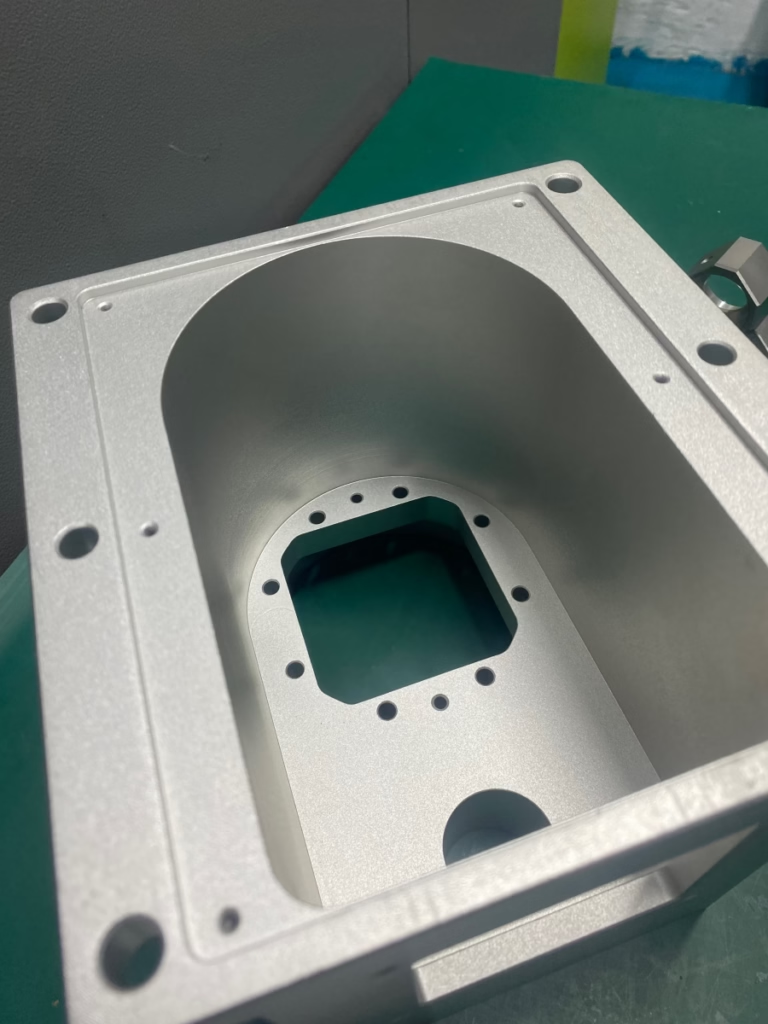
When navigating the world of precision parts machining and customization, understanding the fundamental tools of the trade is paramount. A question that often arises at the outset for engineers and procurement specialists is: what is difference between NC and CNC machine? While the terms are sometimes used interchangeably in casual conversation, they represent distinct generations of technology with profound implications for capability, precision, and flexibility. As a senior manufacturing engineer, I’ve witnessed this evolution firsthand and its impact on producing complex components for industries ranging from aerospace to medical devices.
This article will demystify these terms, trace their technological lineage, and explain why this distinction is crucial when selecting a manufacturing partner for your next project.
The Genesis: Understanding Numerical Control (NC)
To appreciate CNC, we must first understand its predecessor. Numerical Control (NC) refers to the automation of machine tools that are operated by abstractly programmed commands encoded on a storage medium. The key invention dates back to the late 1940s and 1950s.
How Traditional NC Machines Work:
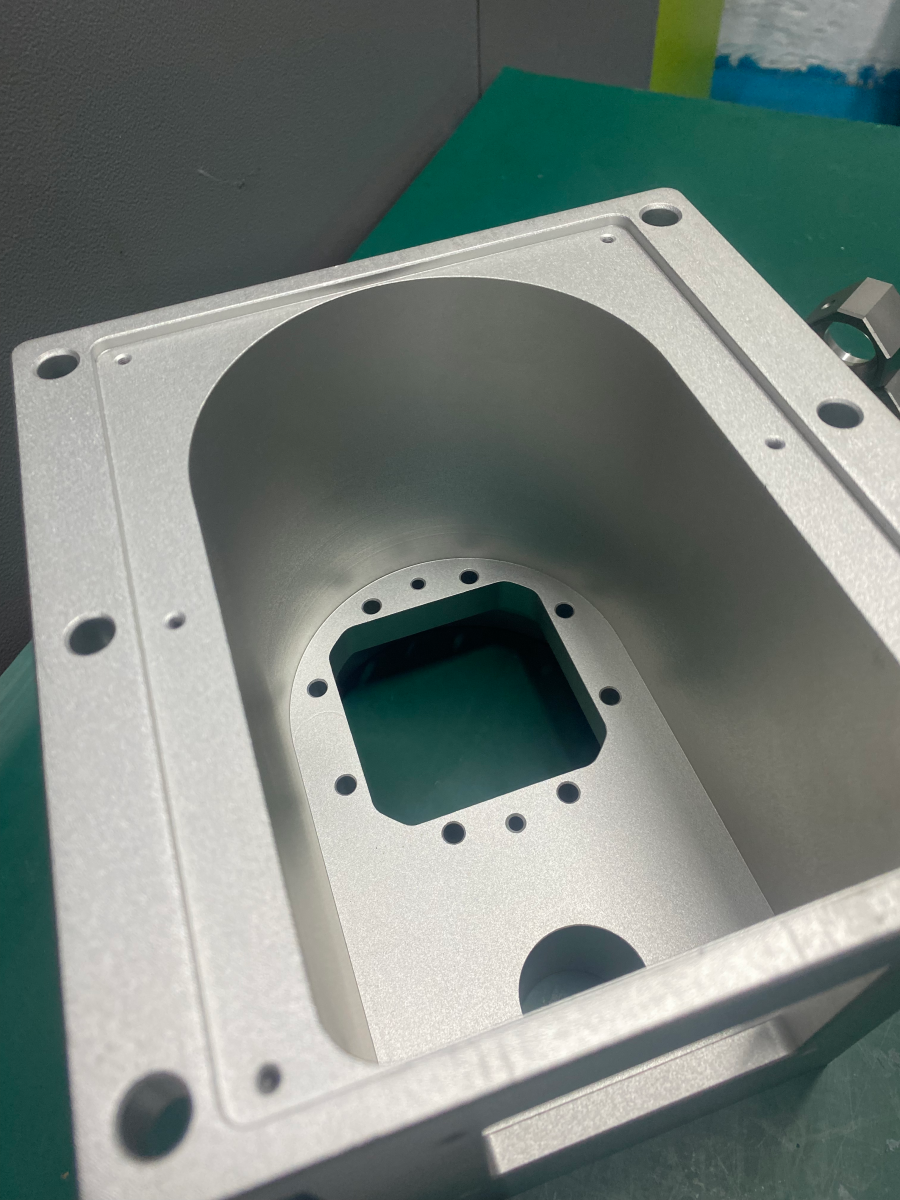
The “Hard-Wired” System: Early NC machines relied on a dedicated, hard-wired control unit. There was no central computer as we know it today.
The Physical Program Medium: Instructions were typically punched into paper tapes or punched cards using a binary code (often the G-code language was born here). This tape was the complete “program.”
The Reader and Execution: The machine had a tape reader. To run a part, the operator would feed the physical tape into the reader. The reader would interpret the holes as commands (move axis X to position Y, turn on the spindle, etc.) and send electrical signals to the machine’s servos and motors.
Limitations: Changing the program meant creating a new physical tape—a time-consuming and error-prone process. There was no memory; the tape had to be read in sequence for every part. Diagnostics were minimal, and complex geometries were challenging to program directly.
In essence, an NC machine was a “programmed pianist” that could only play the single sheet of music (the tape) fed into it.
The Revolution: Computer Numerical Control (CNC)
Computer Numerical Control (CNC) represents the natural and revolutionary evolution of NC technology. The critical difference lies in the integration of a dedicated, programmable, and powerful microcomputer directly into the machine tool’s control system. This is not just an upgrade; it’s a paradigm shift.
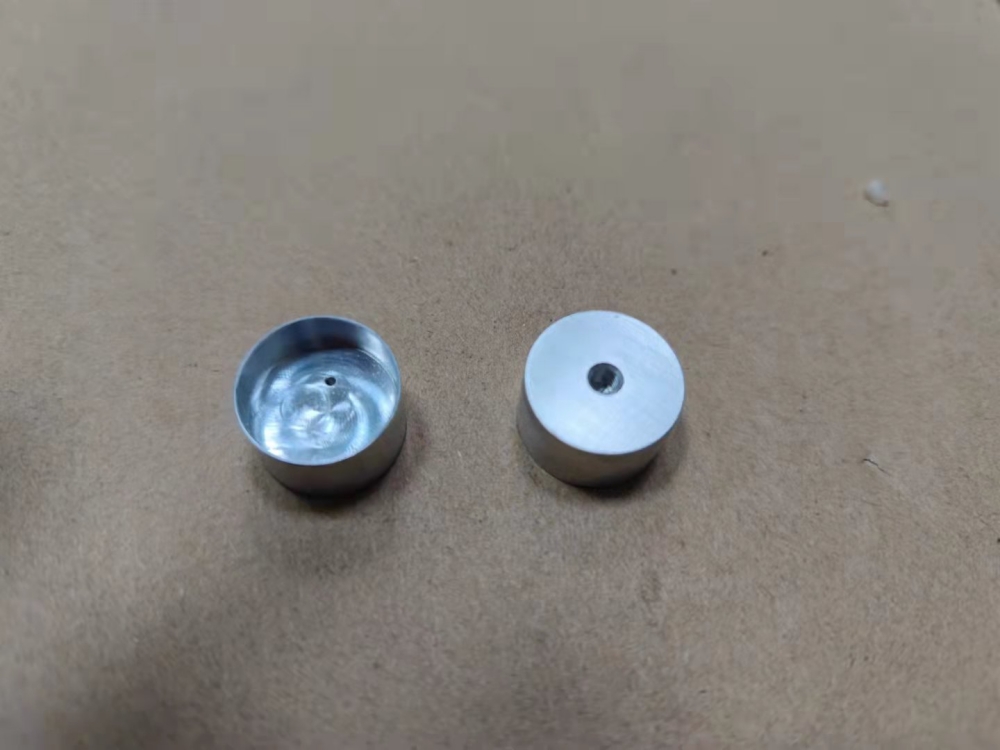
How Modern CNC Machines Work:
The Integrated Computer (CNC Controller): At the heart of every CNC machine is its controller (from brands like Fanuc, Siemens, or Heidenhain). This is a specialized industrial computer with memory (RAM, hard drives).
Software-Based Programs: Machining instructions (still often using G-code) are now written, edited, and stored as digital files on the controller’s memory or transferred via network, USB, or other means.
Real-Time Processing and Control: The controller’s computer doesn’t just read commands; it processes them in real-time. It performs complex calculations for tool paths, interpolates movements for smooth curves, and manages multiple axes simultaneously. It also constantly monitors the machine’s status (position, speed, temperature, load).
Advanced Capabilities: This computational power unlocks features impossible for traditional NC:
Storage of Multiple Programs: Thousands of part programs can be stored on the machine.
On-the-Fly Editing & Optimization: Programs can be easily modified at the machine interface.
Complex Interpolation: Seamlessly creating complex 3D contours, which is the foundation of modern precision 5-axis CNC machining services{:target=”_blank”}.
Advanced Diagnostics and Feedback: Real-time error checking, tool wear monitoring, and collision avoidance.
Connectivity: Integration into factory networks (IoT), enabling DNC (Direct Numerical Control) and modern Manufacturing Execution Systems (MES).
A CNC machine is a “master musician with a vast digital library and the ability to compose on the fly,” guided by the sophisticated computer within it.
NC vs. CNC: A Detailed Comparative Analysis
The following table summarizes the core distinctions that impact your manufacturing decisions:
| Feature | Numerical Control (NC) Machine | Computer Numerical Control (CNC) Machine |
|---|---|---|
| Control System | Hard-wired, dedicated logic unit. No general-purpose computer. | Built-in, programmable microcomputer (CNC controller). |
| Program Medium | Physical punched tape, cards. | Digital file (stored in memory, USB, network). |
| Program Modification | Extremely difficult; requires creating a new physical tape. | Easy; edited digitally via the control panel or CAM software. |
| Memory & Storage | No memory; program runs directly from tape. | Large internal memory stores multiple programs and subroutines. |
| Flexibility & Complexity | Low. Suitable for simple, repetitive tasks. Complex shapes are hard to program. | Extremely high. Capable of producing highly complex, 3D contoured geometries. |
| Computational Power | Minimal. Only executes pre-defined sequential commands. | High. Performs real-time calculations for tool path interpolation, compensation, and optimization. |
| Operator Interface | Very basic, often just buttons and tape reader. | Advanced graphical interface (often with color touchscreens), showing tool paths, simulations, and diagnostics. |
| Diagnostics & Feedback | Very limited. | Comprehensive. Includes real-time monitoring, error alerts, and preventative maintenance data. |
| Modern Relevance | Largely obsolete in high-precision manufacturing. Found in some very old or specialized legacy systems. | The absolute global standard for precision, automated machining. |
Why the CNC Distinction Matters for Your Precision Parts
Understanding this evolution is not academic; it directly affects the quality, feasibility, and economics of your custom parts.
Achieving Modern Tolerances: The projects we handle at GreatLight CNC Machining Factory, such as components for humanoid robot joints or aerospace fittings, demand tolerances within ±0.001mm. This level of precision is unattainable with the open-loop systems and lack of real-time compensation found in old NC machines. CNC’s closed-loop feedback systems are essential.
Complex Geometry is Now Standard: Designs with organic curves, undercuts, and compound angles—common in automotive and medical implants—are routine for 5-axis CNC machining. Programming such paths on an NC system would be impractical, if not impossible.
Speed from Prototype to Production: The digital workflow of CNC is key to rapid prototyping and quick turnaround. A design change in CAD/CAM software can be updated in the CNC program in minutes, not days. This agility is a core part of our one-stop service philosophy.
Consistency and Reliability: CNC machines run identical digital programs for the 1st or the 1000th part with unwavering consistency. NC machines could suffer from tape wear, reader errors, and environmental degradation of the physical medium.
Integrated Manufacturing Ecosystems: Today’s advanced workshops, like ours, rely on connectivity. Our CNC machines are part of a digital thread from design to inspection. This enables seamless production tracking and quality assurance, underpinned by our ISO 9001:2015, IATF 16949, and ISO 13485 certified systems—a level of process control that NC technology could never support.
Conclusion: CNC as the Indispensable Foundation
So, what is difference between NC and CNC machine? It is the difference between a manually wound clock and a smartwatch; between a fixed telephone line and a smartphone. NC was the pioneering idea that introduced programmable automation. CNC is the mature, intelligent, and powerful realization of that idea, empowered by the integrated computer.
For anyone seeking precision parts machining and customization in the 21st century, the partner you choose must be built upon advanced CNC technology. At GreatLight CNC Machining Factory, our extensive fleet of multi-axis CNC machining centers represents this modern standard. They are the tools that allow us to transform your complex designs into high-integrity physical realities, reliably and efficiently. When you engage with a manufacturer, their mastery of CNC—not just in operation but in process integration and engineering support—is the true benchmark of their capability to deliver on the promise of precision.
Frequently Asked Questions (FAQ)
Q1: Are NC machines still used today?
A: In mainstream high-precision manufacturing, they are virtually obsolete. You might find very old NC machines in some maintenance workshops for legacy parts or in educational settings to teach fundamental concepts. All modern precision production is done on CNC machines.
Q2: Does “CNC” refer only to milling and turning?
A: No, CNC is a control technology. While most commonly associated with mills and lathes, the principle applies to many tools: CNC routers, CNC plasma cutters, CNC grinders, CNC wire EDMs, and even CNC 3D printers (where the “toolpath” controls material deposition or laser sintering).
Q3: I have old NC punch tapes for a legacy part. Can a modern CNC shop use them?
A: Possibly, but not directly. A skilled engineering team would need to convert the data from the tape into a digital format (G-code file). This can be a specialized service. At GreatLight, our deep engineering expertise allows us to often reverse-engineer and recreate legacy parts using modern CAD/CAM and CNC processes, which is often more reliable than trying to resurrect old NC code.
Q4: Is the programming for CNC very complex?
A: The underlying G-code can be complex, but modern machinists and engineers use Computer-Aided Manufacturing (CAM) software. The designer creates a 3D model (CAD), and the CAM software automatically generates the vast majority of the efficient, error-free toolpaths for the CNC machine. The operator’s skill lies in optimizing these processes, selecting tools, and ensuring machine stability.
Q5: Why should I choose a partner with advanced multi-axis CNC capabilities over a basic 3-axis shop?
A: Multi-axis CNC (like 4-axis and 5-axis) dramatically reduces setup times, allows machining of complex geometries in a single clamping (improving accuracy), and enables better tool access for intricate features. For complex prototypes or production parts in demanding fields like aerospace or automotive, multi-axis capability is not a luxury—it’s a necessity for feasibility, precision, and cost-effectiveness. This is where specialists like GreatLight provide distinct value.
For further insights into the capabilities that define modern manufacturing leadership, you can explore industry discussions on platforms like LinkedIn{:target=”_blank”}, where technology and expertise converge.



















