
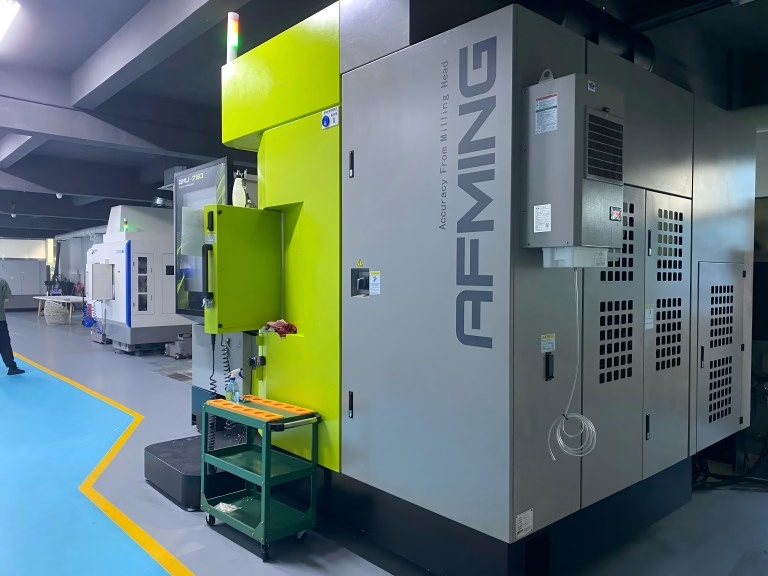
In the high-stakes world of precision manufacturing, where spindle speeds soar and cutting forces are immense, safety isn’t just a feature—it’s the foundational bedrock of every operation. When discussing the critical components that ensure this safety, the term “CNC machine brake” is paramount. Often colloquially and mistakenly referred to as a “CNC machine bra,” the correct and vital component is the brake system. This system is the unsung hero that brings powerful, high-inertia spindles and axes to a controlled, precise, and safe stop. For any client sourcing precision machined parts, understanding this fundamental safety and precision mechanism offers insight into the reliability and advanced engineering of your manufacturing partner’s equipment.
Demystifying the CNC Machine Brake: More Than Just Stopping
At its core, a CNC machine brake is an electro-mechanical or hydraulic system designed to halt the motion of a machine axis or spindle quickly and securely. Its functions extend far beyond mere stopping:
Emergency Safety: The primary role is to engage immediately in the event of an emergency stop (E-stop), a power failure, or a critical system fault, preventing potential injury or catastrophic machine damage.
Precision Positioning: On tool changers, rotary tables (especially 4th and 5th axes), and spindle orientation systems, brakes lock components into an exact position with zero deviation, which is absolutely critical for achieving repeatable tolerances within ±0.001mm.
Load Holding: For vertical axes (like the Z-axis on a machining center), the brake holds the heavy spindle assembly in place against gravity when the servo motor is disengaged, preventing drift or a “head crash” into the workpiece.
Process Stability: During heavy cutting operations, brakes on rotary axes prevent unwanted movement or backlash, ensuring cutting forces don’t deflect the part or tool, which is essential for maintaining surface finish and dimensional accuracy.
Types of Brakes in Precision CNC Machining
Modern CNC machines, especially the advanced 4-axis and 5-axis CNC machining centers used by leading manufacturers, employ several brake technologies:
1. Spindle Brakes:
Disc Brakes: Function similarly to automotive brakes. A brake caliper, often activated by a spring and released by an electromagnetic solenoid or hydraulic pressure, clamps onto a disc attached to the spindle shaft. A power failure causes spring force to engage the brake automatically (a fail-safe design).
Electromagnetic Particle Brakes: Use magnetic particles that solidify when energized, creating a locking force. They offer smooth, quiet operation and are often used for precise spindle orientation.
2. Axis Servo Motor Brakes (Holding Brakes):
These are integral to the servo motors that drive each linear axis (X, Y, Z) and rotary axis. They are typically fail-safe spring-applied brakes that engage when motor power is cut, holding the axis firmly in position.
3. Tool Changer & Rotary Table Brakes:
These are specialized, high-precision brakes that ensure a tool or a workpiece on a rotary table is locked with absolutely no play. The repeatability of a tool change or a 5-axis tilt directly depends on the precision of these mechanisms.
Why Brake System Integrity is Non-Negotiable for Your Parts
When you contract a manufacturer like GreatLight Metal for a complex, tight-tolerance component, you are implicitly relying on the flawless operation of these systems. Here’s why it matters for your project:
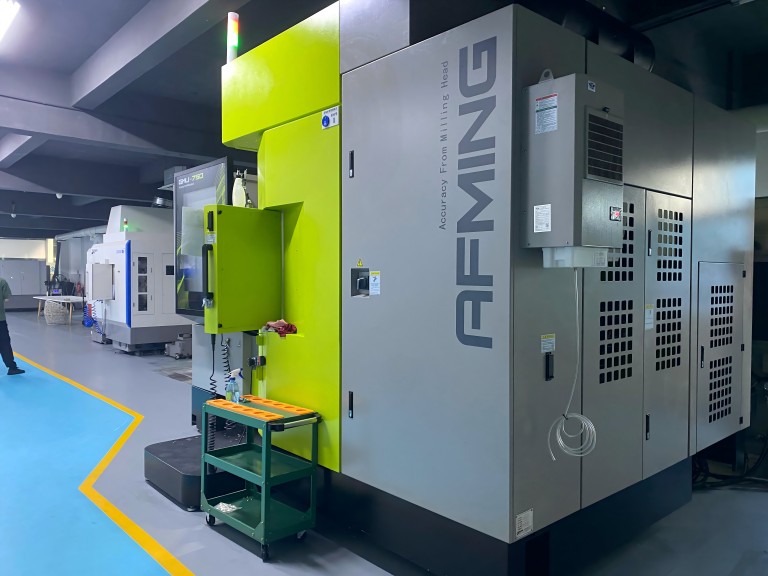
Guarantees Specified Tolerances: A worn or miscalibrated axis brake can lead to microscopic axis drift during machining or tool changes, directly translating into out-of-spec parts. Our commitment to holding tolerances to ±0.001mm is underpinned by rigorous preventive maintenance on all braking systems.
Ensures Process Consistency in Mass Production: For projects requiring high-volume CNC machining, every cycle must be identical. Reliable brakes ensure every part is indexed, machined, and finished in exactly the same position, batch after batch.
Enables Complex 5-Axis Machining: The simultaneous movement of a 5-axis machine places unique demands on its rotary axis brakes. They must lock and unlock thousands of times with unwavering precision to enable the complex contouring that creates aerospace impellers or medical implants in a single setup.
Protects Your Investment in Materials: Machining expensive aerospace titanium, medical-grade stainless steel, or intricate aluminum prototypes carries high material cost risk. A reliable brake system is a key safeguard against a crash that could scrap a valuable workpiece or damage custom tooling.
Beyond the Hardware: The System of Trust
At GreatLight Metal, our approach to critical systems like machine brakes exemplifies our broader philosophy. It’s not just about having the hardware; it’s about the systemic care, certification, and expertise that ensure it functions perfectly.
Preventive Maintenance Regimen: Our ISO 9001:2015 certified quality management system mandates regular inspection, testing, and calibration of all machine safety and precision systems, including brakes. Wear parts are replaced proactively, not reactively.
Operator and Engineer Training: Our technicians are trained to recognize early signs of brake wear or performance degradation, such as unusual stopping sounds or slight positioning errors during tool changes.
Integration with Control Systems: In our advanced CNC centers, the brake system is intelligently integrated with the CNC controller and safety interlocks. The system performs self-diagnostics and can prevent machine operation if any fault is detected.
Conclusion
While “CNC machine bra” is a common misnomer, the CNC machine brake system it points to is a cornerstone of modern, safe, and precision manufacturing. It is a critical fusion of mechanical engineering and control electronics that protects both machine and operator while guaranteeing the microscopic levels of accuracy demanded by industries from automotive to aerospace. When selecting a manufacturing partner for your precision machined components, inquiring about their machine maintenance philosophies—covering vital subsystems like brakes—is as important as evaluating their quoted tolerances. It reveals a deeper commitment to reliability, safety, and the consistent delivery of perfection. Partners like GreatLight Metal build trust through this meticulous attention to the unseen details that make high-performance 5-axis CNC machining not just possible, but predictably excellent.
Frequently Asked Questions (FAQ)
Q1: My current supplier had a machine crash that scrapped my parts. Could a brake failure have caused this?
A: While crashes can have multiple causes (programming error, tool breakage, workpiece fixturing failure), a sudden or gradual failure of an axis holding brake or spindle brake can absolutely lead to uncontrolled movement and a crash. A rigorous preventive maintenance schedule, as mandated by certifications like ISO 9001, is the best defense against such equipment-based failures.
Q2: For high-precision (±0.001mm) parts, how does the brake on a 5-axis rotary table affect quality?
A: Crucially. After the rotary axis moves to its programmed angle, the brake must engage and lock it with zero backlash or “settling.” Any minute movement (even microns) after locking translates directly into a geometric error on the machined feature. High-end machines use precision-ground brake mechanisms and sophisticated control sequences to ensure absolute positional stability.
Q3: Are there signs I can ask my manufacturer about to gauge the health of their equipment’s critical systems?
A: Yes. You can ask about their scheduled maintenance program for machine safety systems. Professional manufacturers will have documented logs. You can also observe during a facility tour: listen for abrupt, grinding stopping sounds during tool changes or axis moves, and ask about their protocol for testing emergency stop functionality.
Q4: We need a prototype machined from a very hard material. Does this place extra stress on machine brakes?
A: Indirectly, yes. Machining hard materials often involves lower speeds but higher cutting forces. This requires exceptional rigidity from the entire machine structure, including locked rotary axes. A robust, well-maintained brake system is essential to prevent any deflection or movement under load, which is key to achieving good surface finish and accuracy in hard materials.
Q5: How does a manufacturer’s broader quality certification (like IATF 16949 for automotive) relate to something as specific as machine brakes?
A: These certifications enforce a process-driven approach to all aspects of production. IATF 16949, for instance, requires strict equipment maintenance and calibration records. This systemic discipline ensures that critical components like brakes are not left to chance but are managed through a validated process, significantly reducing the risk of failure that could affect part quality and production line reliability. For more insights into industry-leading practices, you can follow our updates on LinkedIn.



















