
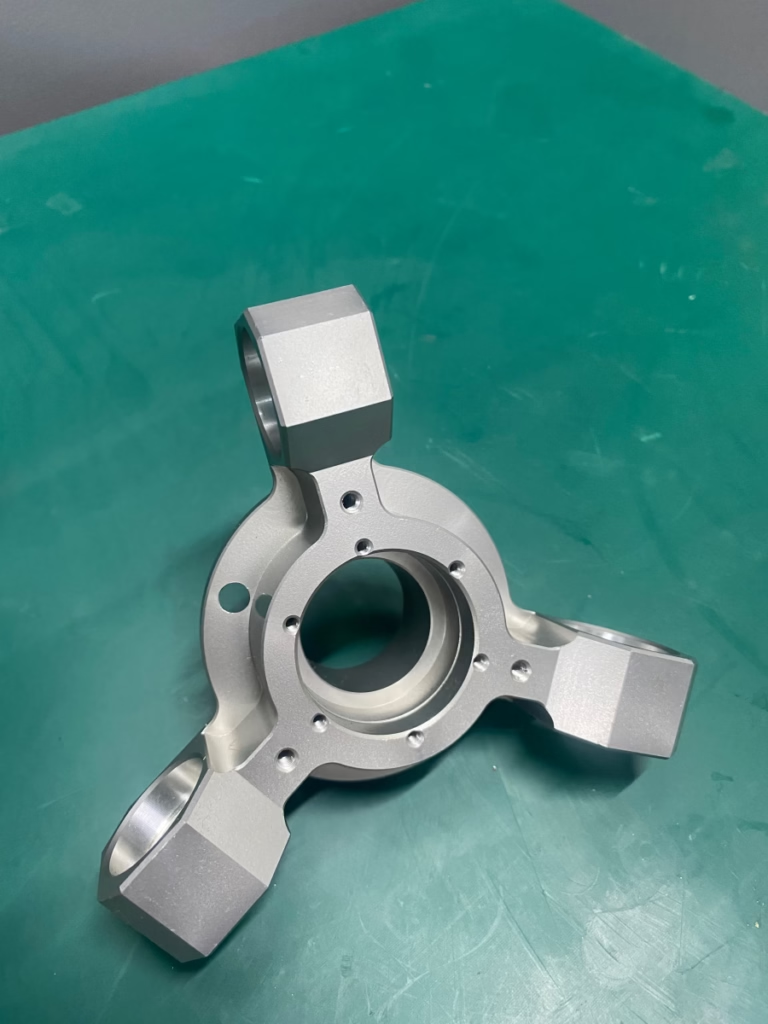
If you’ve ever wondered, What Is A 7 Axis CNC Machining?, you’re not alone—this cutting-edge manufacturing technology is reshaping how we produce the most complex, high-precision parts across aerospace, medical, and robotics industries. As product designs grow increasingly intricate, traditional 3, 4, or even 5-axis CNC machining can hit limits when it comes to accessing every surface of a part or minimizing setup errors. 7-axis CNC machining solves these challenges by unlocking unparalleled flexibility, making it the go-to solution for components that were once considered impossible to manufacture.
What Is A 7 Axis CNC Machining?
At its core, 7-axis CNC machining is the most advanced iteration of computer numerical control (CNC) manufacturing, combining 3 linear motion axes (X, Y, Z) with 4 rotational axes (typically labeled A, B, C, plus two additional axes like D or E). Unlike lower-axis systems, which only manipulate either the workpiece or the cutting tool, 7-axis machines can adjust both the workpiece’s orientation and the tool’s angle simultaneously in full 360 degrees. This means every surface of a part—including internal cavities, undercuts, and complex curved geometries—can be machined in a single setup, eliminating the need for multiple operations and the alignment errors that come with them.
While 5-axis CNC machining is the industry standard for high-precision complex parts, 7-axis takes this a step further by adding extra rotational freedom. For example, some 7-axis systems integrate a robotic arm to position the workpiece dynamically during machining, while others use a dual-rotary table that tilts and rotates the part in two additional directions beyond 5-axis capabilities. This level of adaptability makes 7-axis ideal for parts that require continuous, multi-angle cutting without repositioning.
Core Components of a 7-Axis CNC System
A 7-axis CNC machine is a highly integrated system, with each component working in sync to deliver precision and efficiency:
Advanced CNC Controller: The “brain” of the machine, programmed with complex G-code that coordinates all 7 axes in real time. Modern controllers use AI-powered algorithms to optimize toolpaths and reduce cycle times.
High-Torque Servo Motors: Drive both linear and rotational axes with micron-level accuracy, ensuring smooth, consistent movement even at high speeds.
Multi-Axis Workholding Fixtures: Specialized clamps or tables that can tilt, rotate, and reposition the workpiece dynamically during machining. Some fixtures use hydraulic or pneumatic controls for secure, repeatable positioning.
Automated Tool Changer (ATC): Stores dozens of specialized cutting tools (drills, end mills, reamers) and switches them in seconds, supporting a wide range of operations without manual intervention.
Optional Robotic Integration: Many industrial 7-axis systems pair the CNC machine with a robotic arm to load/unload parts, adjust fixtures, or perform secondary operations like deburring, streamlining the entire production line.
How 7-Axis CNC Machining Works: A Step-by-Step Breakdown
The process of 7-axis CNC machining is more complex than lower-axis systems, but it follows a structured workflow to ensure precision:
CAD Design: Engineers create a detailed 3D model of the part using software like SolidWorks or CATIA, including all geometric features and tolerance requirements.
CAM Programming: Using computer-aided manufacturing (CAM) software, programmers generate toolpaths that leverage all 7 axes. The software simulates the machining process to identify potential collisions and optimize tool angles for maximum accessibility.
Machine Setup: The workpiece is loaded into the multi-axis fixture, and the cutting tools are loaded into the ATC. The controller calibrates all axes to ensure zero error.
Machining Execution: The machine begins cutting, adjusting the workpiece’s orientation and tool’s angle in real time. This allows for continuous machining of complex surfaces without stopping to reposition the part.
In-Process Inspection: Many 7-axis machines integrate laser or touch probes to measure the part during machining, making real-time adjustments to maintain tolerance levels.
Final Quality Assurance: The finished part is inspected using a coordinate measuring machine (CMM) to verify that all dimensions meet the design specifications.
Key Advantages Over 3, 4, and 5-Axis Machining
7-axis CNC machining offers several distinct benefits that set it apart from lower-axis systems:
Eliminated Setup Errors: By machining the entire part in one setup, there’s no risk of alignment mistakes that occur when moving parts between machines or fixtures.
Unmatched Accessibility: Reach every surface of a part, including internal cavities, undercuts, and complex curved features that are impossible to machine with 5-axis or lower systems.
Reduced Cycle Times: Continuous machining means less downtime from setup changes, cutting production times by up to 50% for complex parts.
Superior Precision: Tight tolerances of ±0.0005mm are achievable, making 7-axis ideal for medical or aerospace components where even the smallest deviation can impact performance.
Material Efficiency: Optimized toolpaths reduce waste by minimizing excess material removal, which is critical for expensive materials like titanium or Inconel.
Real-World Applications of 7-Axis CNC Machining
7-axis CNC machining is reserved for the most demanding applications where precision and complexity are non-negotiable:
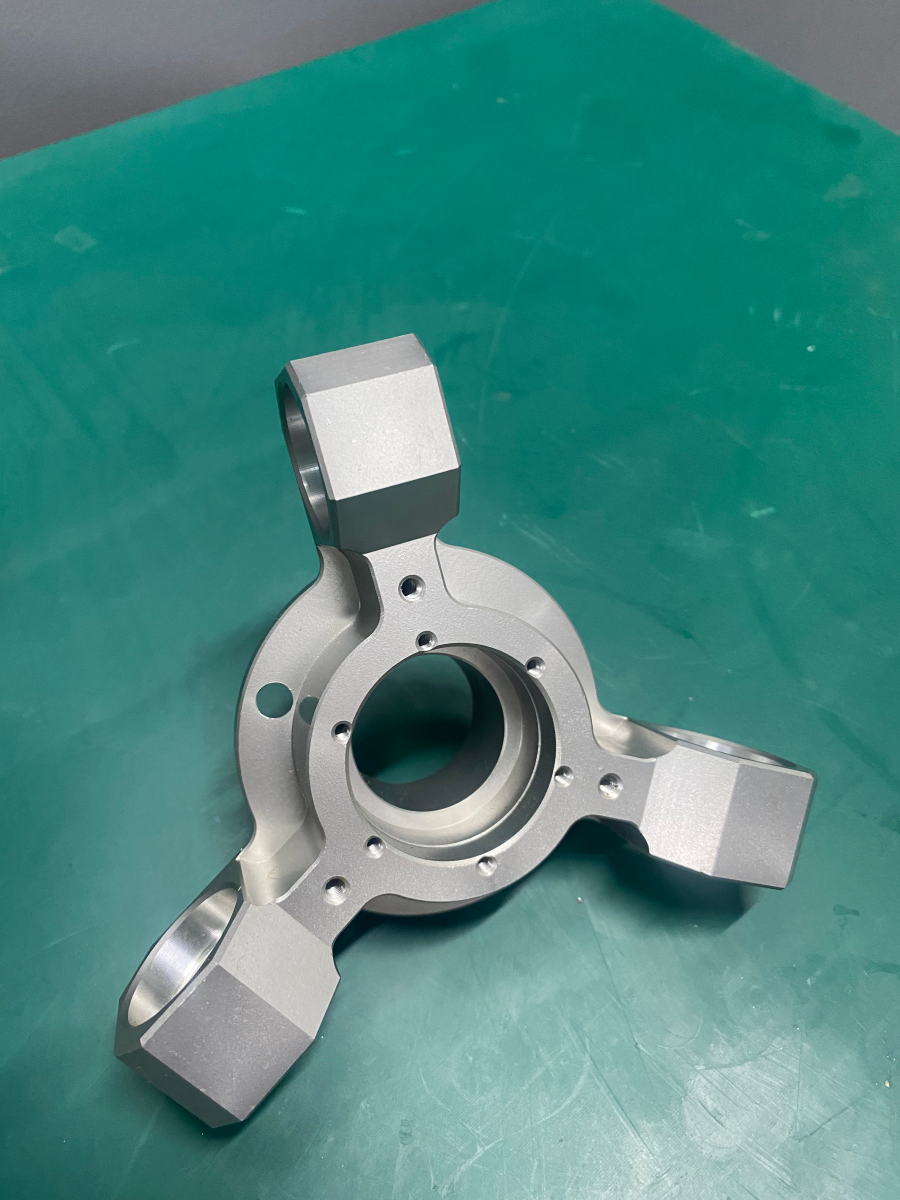
Aerospace: Manufacturing turbine blades with intricate cooling channels, engine casings, and landing gear components. These parts require high strength and tight tolerances to withstand extreme temperatures and pressures.
Medical Devices: Producing custom orthopedic implants (hip, knee, or spinal implants) that are tailored to a patient’s unique anatomy. 7-axis machining ensures the implant’s surface texture and geometry match the patient’s bone structure perfectly.
Humanoid Robotics: Creating complex joint assemblies, end-effectors, and sensor mounts that require multi-angle machining to move smoothly and accurately.
Automotive Racing: Fabricating high-performance engine components (like camshafts, crankshafts, and valve trains) that deliver maximum power while reducing weight.
Defense: Manufacturing precision missile guidance systems, radar components, and armored vehicle parts that must perform reliably in harsh environments.
7-Axis vs. 5-Axis CNC: Which Is Right for Your Project?
For projects where 7-axis is not necessary, partnering with a trusted 5-axis machining provider like GreatLight Metal can deliver the precision you need at a fraction of the cost.
GreatLight Metal: Your Trusted Partner for High-Precision Machining Solutions
GreatLight Metal (GreatLight CNC Machining Factory) is a leading manufacturer with over a decade of experience in precision CNC machining, offering 3-axis, 4-axis, and 5-axis services that meet the needs of most high-end applications. Their 7600 sq. ft. facility in Dongguan, China—known as the “Hardware and Mould Capital”—houses 127+ precision machines, including large high-precision 5-axis CNC centers, EDM machines, and 3D printers (SLM, SLA, SLS).
What sets GreatLight Metal apart is their commitment to quality and customer satisfaction:
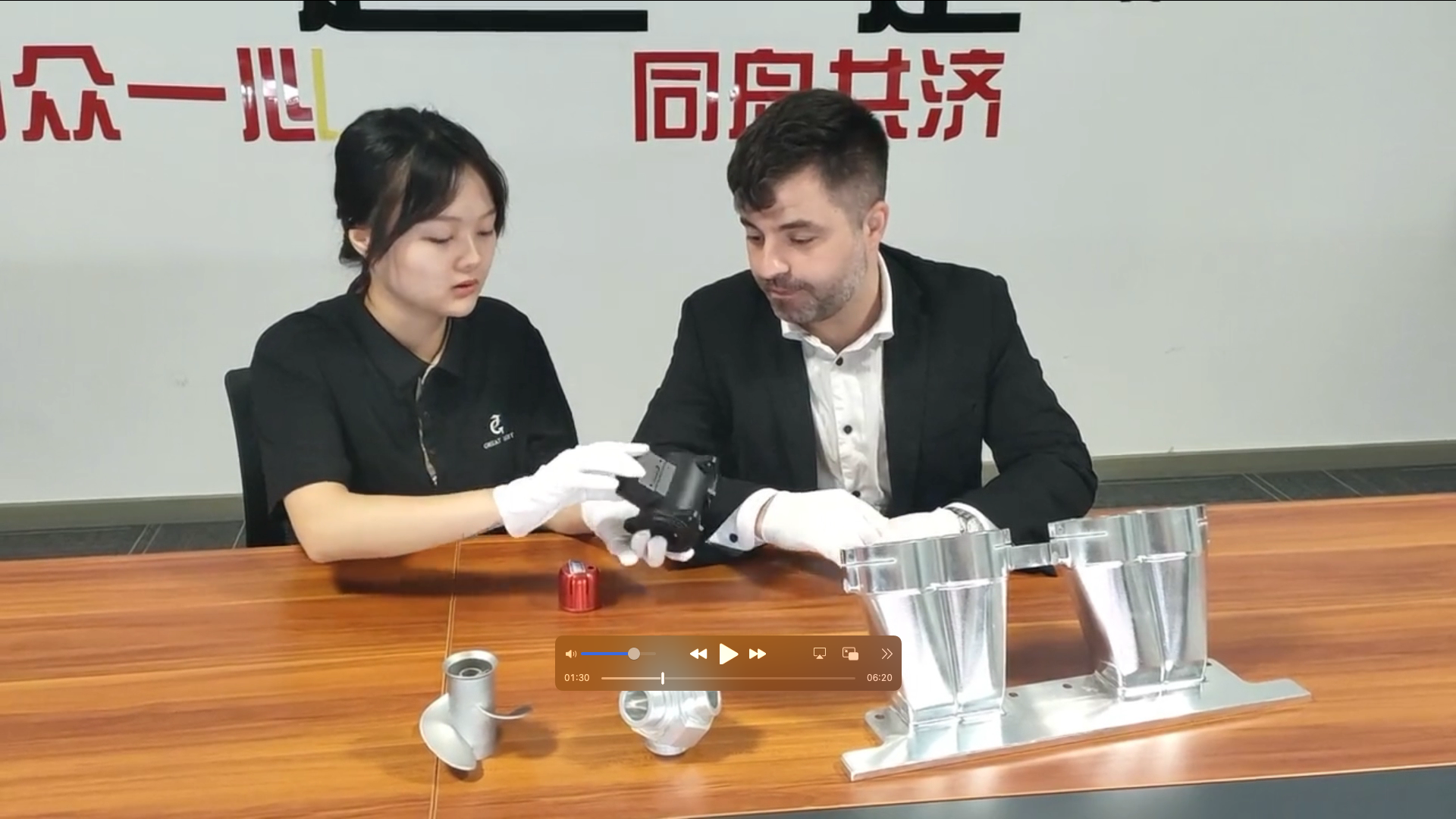
Unmatched Precision: Capable of machining parts to ±0.001mm tolerances, with a maximum processing size of 4000mm.
Full-Process Chain: Offers one-stop services including CNC milling, die casting, vacuum casting, sheet metal fabrication, 3D printing, and surface post-processing (anodizing, powder coating, polishing).
International Certifications: ISO 9001:2015, IATF 16949 (automotive), ISO 13485 (medical), and ISO 27001 (data security) ensure compliance with global quality standards.
After-Sales Guarantee: Free rework for quality problems, with a full refund if rework is still unsatisfactory.
Industry Expertise: Specializes in parts for humanoid robots, automotive engines, aerospace, and medical devices, with a track record of solving complex manufacturing challenges for clients worldwide.
While GreatLight Metal does not offer 7-axis CNC machining, their team of experienced engineers can advise you on whether 7-axis is truly necessary for your project—or if an optimized 5-axis solution can deliver the same results at a lower cost.
Conclusion
To answer the question, What Is A 7 Axis CNC Machining?—it’s the most advanced form of multi-axis CNC manufacturing, designed for ultra-complex parts where every surface must be accessible in a single setup. While it’s reserved for the most demanding applications, most high-precision projects can benefit from the flexibility and cost-effectiveness of 5-axis machining. For reliable, high-quality precision parts, partnering with a trusted provider like GreatLight Metal ensures you get the right solution for your needs, backed by years of expertise and a commitment to excellence.
Frequently Asked Questions (FAQ)
1. What is the difference between 5-axis and 7-axis CNC machining?
5-axis CNC machining uses 3 linear axes plus 2 rotational axes to manipulate the workpiece or tool. 7-axis adds two additional rotational axes, allowing for full 360° movement of both the workpiece and tool, making it possible to machine parts with even more complex geometries.
2. How much does 7-axis CNC machining cost?
7-axis CNC machining is significantly more expensive than 5-axis, with costs ranging from $150 to $500 per hour. The higher cost is due to specialized equipment, complex programming, and the need for highly skilled technicians.
3. Can 7-axis CNC machining produce parts in small batches?
Yes, but it’s most cost-effective for small to medium batches of complex parts. For large-scale production, other methods like die casting may be more economical.
4. What materials can be used in 7-axis CNC machining?
7-axis CNC machines can process a wide range of materials, including aluminum, titanium, stainless steel, Inconel, brass, and engineering plastics like PEEK and PVC.
5. How do I know if I need 7-axis or 5-axis CNC machining for my project?
A good rule of thumb is: if your part has features that cannot be accessed with 5-axis machining (e.g., deep internal undercuts or full 360° curved surfaces), 7-axis may be necessary. For most other complex parts, 5-axis machining (like GreatLight Metal’s services) will deliver the required precision at a lower cost. Consult with an experienced engineer to determine the best solution for your project.
6. What is the lead time for 7-axis CNC machining?
Lead times vary depending on the part’s complexity and batch size, but typically range from 2 to 6 weeks. Programming and setup for 7-axis machines can take longer than 5-axis, so planning ahead is essential.



















