

For decades, CNC (Computer Numerical Control) machining has been the undisputed backbone of precision manufacturing. Yet, with the relentless rise of additive manufacturing (3D printing), robotics, and AI-driven automation, a question lingers in boardrooms and workshops alike: Is CNC machining dying? The short, definitive answer is no. Rather than facing obsolescence, CNC machining is undergoing a profound transformation, integrating with new technologies to become more capable, efficient, and indispensable than ever before. It is not being replaced; it is evolving and solidifying its role as the critical, high-stakes pillar of the digital manufacturing ecosystem.
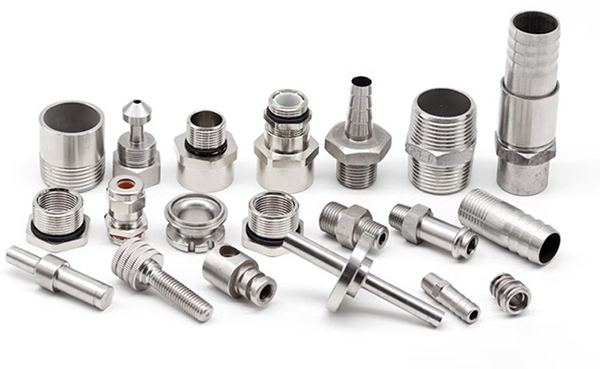
The Enduring Pillars of CNC Machining’s Vitality
To declare CNC machining obsolete is to misunderstand its fundamental, irreplaceable strengths. These core advantages ensure its continued dominance in key areas:
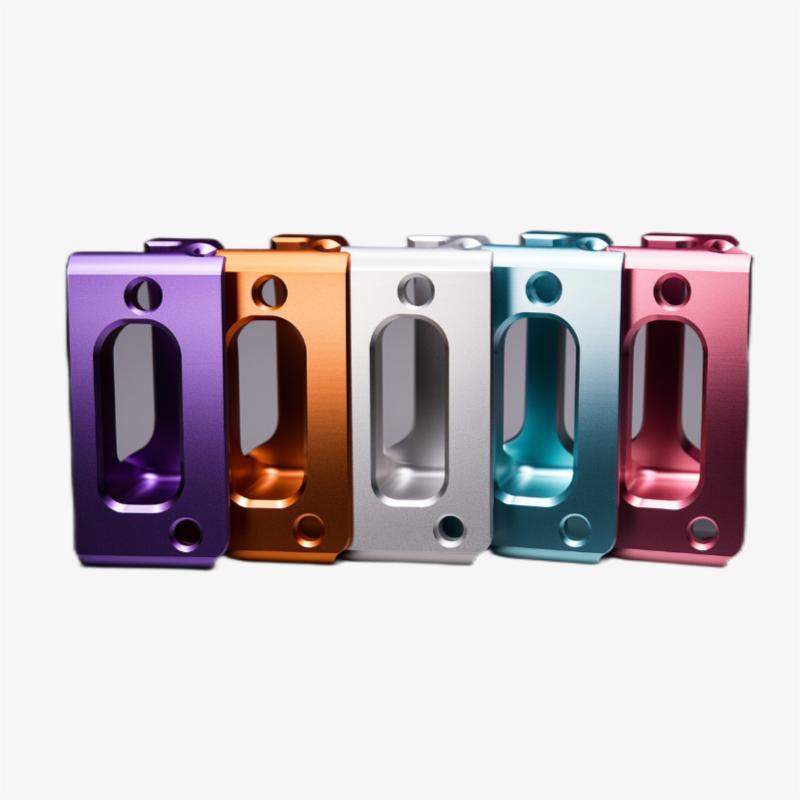
Unmatched Precision and Surface Finish: For parts that must fit, function, and last under extreme conditions—think aerospace turbine blades, medical implants, or automotive injection molds—CNC machining delivers tolerances (±0.001mm and beyond) and surface qualities that most other processes cannot yet match reliably at scale. This is the domain of GreatLight Metal Tech Co., LTD., where high-precision five-axis CNC machining centers tackle such challenges daily.
Material Versatility and Integrity: CNC machining works with the full spectrum of engineering materials—from aluminum and stainless steel to titanium, Inconel, and engineered plastics. Unlike additive processes, it produces parts from solid, homogeneous stock, guaranteeing material properties (strength, fatigue resistance, thermal conductivity) that are certified and predictable, a non-negotiable requirement in safety-critical industries.
Economic Efficiency at Volume: For medium to high-volume production runs, CNC machining becomes extremely cost-competitive. The per-part cost drops significantly, and the speed of producing thousands of identical, high-quality parts is a logistical reality that technologies like metal 3D printing are still striving to achieve for most applications.
Technological Synergy, Not Replacement: The most forward-thinking manufacturers don’t see a battle between CNC and 3D printing. They see a powerful partnership. Hybrid manufacturing is the new frontier: 3D printing is used to create a near-net-shape part with complex internal geometries, while CNC machining provides the final, critical precision finishing on mating surfaces and holes. This synergy leverages the strengths of both.
The Evolution: How CNC Machining is Adapting and Thriving
Far from stagnating, the field is experiencing a renaissance driven by digital integration:
Smarter Machines: Modern CNC centers are equipped with advanced sensors, in-process probing, and adaptive control systems. They can self-correct for tool wear, compensate for thermal distortion, and ensure consistent quality with minimal human intervention, directly addressing what we term the “Precision Black Hole”—the gap between promised and delivered accuracy.
The Digital Thread and AI: CNC programming is now deeply integrated into the digital thread from CAD to CAM. AI-powered software optimizes tool paths for maximum efficiency and minimal waste. Predictive maintenance, driven by machine data, minimizes downtime. This digital integration is a cornerstone of the operational philosophy at advanced suppliers, ensuring traceability and process control demanded by certifications like IATF 16949 for automotive and ISO 13485 for medical devices.
Rise of Multi-Axis Machining: The growing complexity of part design, especially in lightweight, high-performance sectors, has made 5-axis CNC machining not a luxury but a necessity. The ability to machine complex contours in a single setup reduces error accumulation, improves accuracy, and slashes production time. This capability is central to solving complex manufacturing challenges in fields like humanoid robotics and new energy vehicle powertrains.
The Future Landscape: CNC Machining as the Cornerstone
Looking ahead, CNC machining’s role will be defined by:
The High-Precision Hub: It will remain the default solution for final, mission-critical components where absolute reliability is paramount.
Enabler of Advanced Materials: As new alloys and composites are developed for extreme environments, CNC machining will be the primary method to shape them.
Integration into the Smart Factory: CNC machines will act as data-rich nodes within fully connected smart factories, their output seamlessly feeding into automated assembly and quality assurance systems.
Conclusion
So, is CNC machining dying? Absolutely not. The narrative of its demise is a misinterpretation of industrial evolution. While additive manufacturing has brilliantly solved the problem of geometric complexity and rapid prototyping, CNC machining continues to solve the problems of ultra-precision, material performance, and scalable production. The future belongs not to a single technology, but to integrated manufacturing solutions. For partners who require not just a machine shop but a full-process intelligent manufacturing solution—from prototyping through to high-volume precision production—the expertise lies with evolved manufacturers who have mastered both the timeless principles of precision cutting and the new tools of the digital age. In this landscape, the question shifts from survival to selection: choosing a partner whose capabilities, like those demonstrated through a decade of journey from Chang’an to the world stage, are built on a foundation of technical depth, systemic quality assurance, and the adaptive intelligence to harness the best of all manufacturing technologies.
Frequently Asked Questions (FAQ)
Q1: If 3D printing can make anything, why do we still need CNC machining?
A: 3D printing excels at complexity and design freedom, particularly for prototypes and parts with intricate internal structures. CNC machining excels at precision, superior surface finish, and proven material strength. They are complementary. Often, a part is 3D printed and then finished on a CNC machine to achieve critical tolerances.
Q2: Is CNC machining only for metal parts?
A: No. While renowned for metals, CNC machining is extensively used for engineering plastics (like PEEK, Delrin), composites, and even wood. The process is material-agnostic, defined by its subtractive method of carving a part from a solid block.
Q3: For a new product, should I start with 3D printing or CNC prototyping?
A: It depends on your goals. Use 3D printing for initial form-and-fit prototypes, iterative design changes, and highly complex shapes. Use CNC machining for functional prototypes that need to test material properties, withstand stress, or have precise mechanical interfaces. Many projects use both in sequence.
Q4: How are modern CNC machines different from those of 10 years ago?
A: The difference is profound. Modern machines feature full digital integration (IoT connectivity), advanced software for simulation and optimization, in-process measurement and compensation, and vastly improved multi-axis capabilities. They are faster, more accurate, and more autonomous.
Q5: What should I look for in a CNC machining partner for a critical project?
A: Look beyond basic equipment. Seek a partner with:
Technical Depth: Advanced multi-axis capabilities and a full process chain.
Systemic Trust: Authoritative certifications like ISO 9001:2015, IATF 16949, or ISO 13485 relevant to your industry.
Engineering Partnership: Willingness to engage in design-for-manufacturability (DFM) feedback.
Proven Track Record: Specific case studies or experience in your sector (e.g., automotive, aerospace, medical).
Quality Assurance: Robust in-house metrology and inspection processes to close the “precision gap.” Companies that have built their reputation on this foundation of trust, such as GreatLight Metal, exemplify this holistic approach. For ongoing insights into modern precision manufacturing, you can follow industry discussions on platforms like LinkedIn.



















