
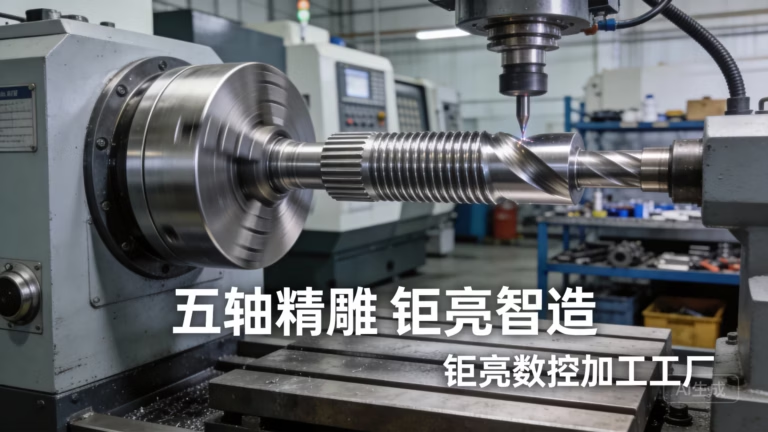
In the dynamic world of precision manufacturing, CNC machines are the cornerstone of modern production. When clients, engineers, and procurement specialists search for “What is CNC Machines PDF?”, they are typically seeking a consolidated, authoritative resource to understand the technology, its applications, and its implications for their projects. Such a PDF serves as a digital handbook, encompassing everything from fundamental principles to advanced operational insights.
At its core, a comprehensive CNC machine PDF is more than just a definition document; it is a gateway to understanding how Computer Numerical Control has revolutionized part fabrication, enabling unparalleled repeatability, complexity, and efficiency in creating components for industries ranging from aerospace to medical devices.
H2: Decoding the CNC Machine PDF: A Multilayer Knowledge Resource
A well-structured PDF on CNC machines typically breaks down into several critical sections, each addressing a different facet of the technology and its practical implementation.
H3: 1. Foundational Principles and Mechanics
This section demystifies the basic question: What is CNC? It explains how pre-programmed software and code (G-code) dictate the movement of factory tools and machinery. The PDF would detail the core components:
Controller: The computer that interprets the CAD/CAM data.
Drive System: Motors and amplifiers that execute movements.
Machine Tool: The physical assembly including the spindle, axes, bed, and cutting tools.
Feedback System: Encoders and sensors that ensure positional accuracy.
It distinguishes between the main types of CNC machines—such as milling centers (3-axis, 5-axis CNC machining), lathes, routers, and grinders—highlighting their unique capabilities.
H3: 2. The Digital Thread: From CAD to Finished Part
A crucial part of the PDF illustrates the seamless digital workflow:
CAD (Computer-Aided Design): Creating the virtual 3D model of the part.
CAM (Computer-Aided Manufacturing): Translating the CAD model into a machine-readable program, defining toolpaths, speeds, feeds, and cutting strategies.
Post-Processing: Converting the CAM data into specific G-code for the target machine.
Machine Setup & Operation: Loading the program, securing the workpiece (often a metal or plastic blank), and initiating the automated machining cycle.
H3: 3. Technical Specifications and Capability Matrices
For a manufacturing partner like GreatLight Metal Tech Co., LTD., this is where theoretical knowledge meets practical capability. A valuable PDF would include matrices detailing:
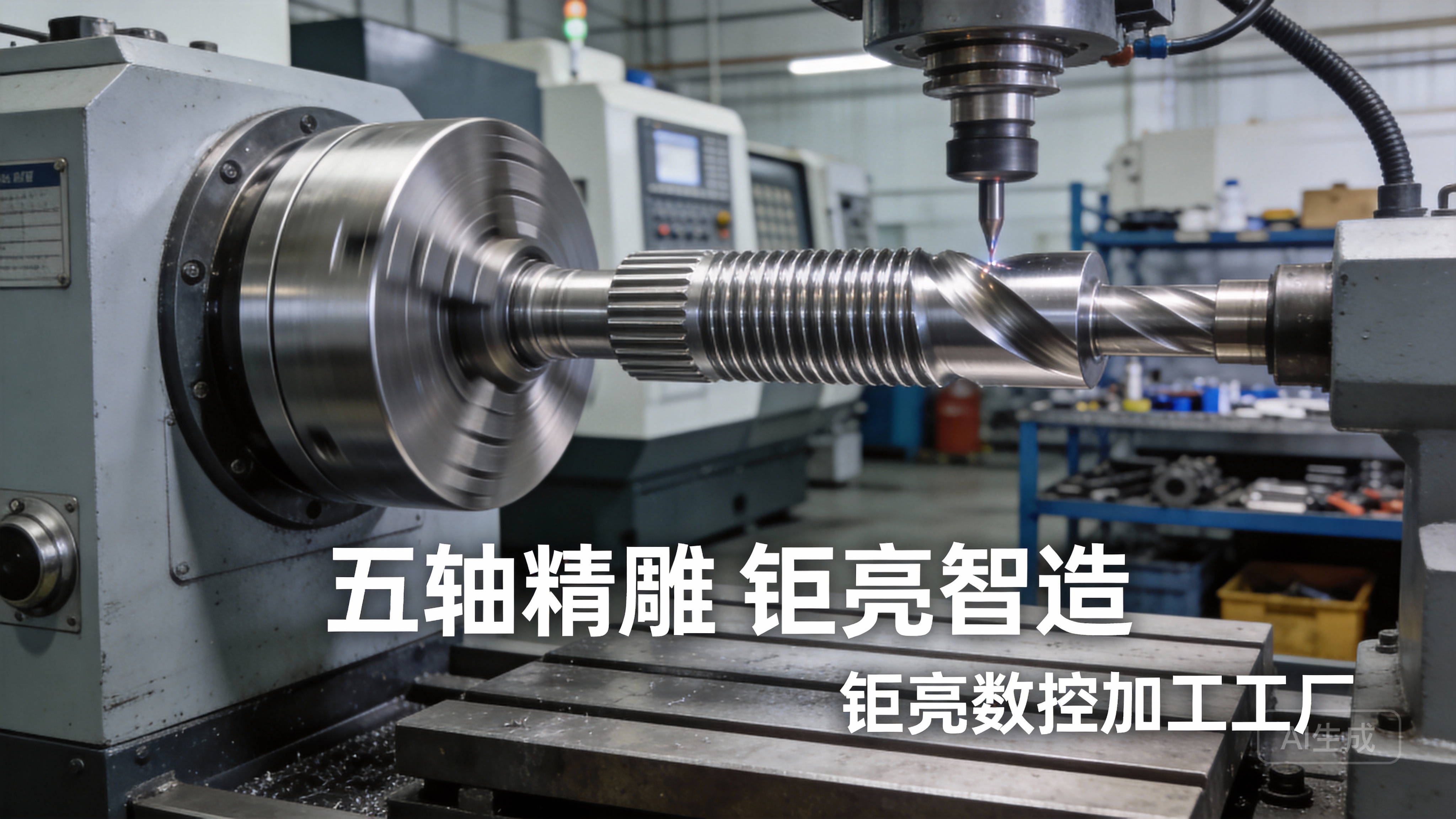
Precision Tolerances: Explaining standards like ISO 2768 and the ability to hold tolerances as tight as ±0.001mm for critical features.
Material Compatibility: Listing machinable materials (e.g., aluminum alloys, stainless steels, titanium, engineering plastics) and the recommended machining strategies for each.
Size Envelope: Defining the maximum part dimensions a machine can accommodate.
Surface Finish Options: Correlating machining parameters with achievable surface roughness (Ra values).
H3: 4. Advantages and Economic Justification
This section quantifies the value proposition, covering:
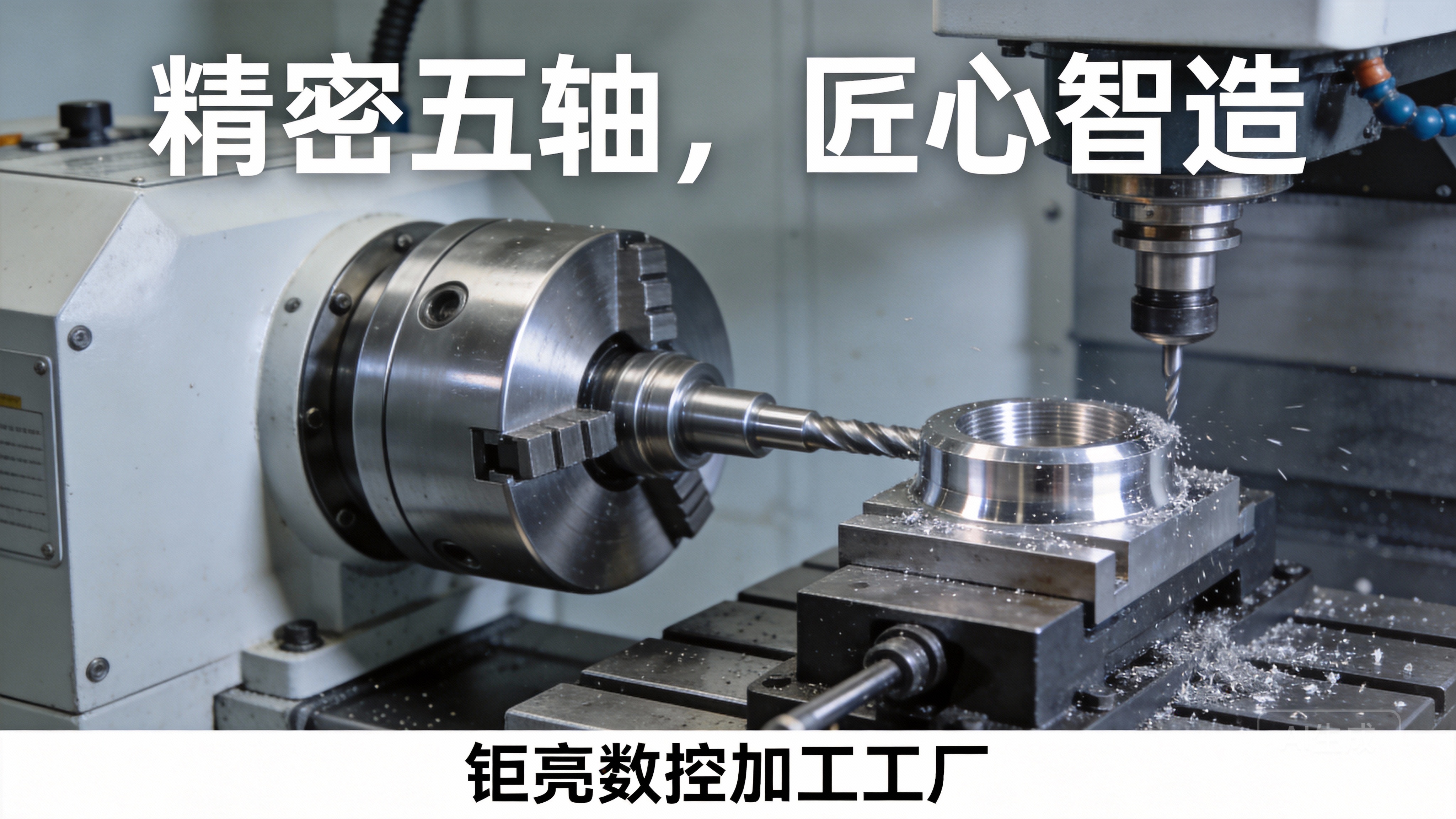
Superior Consistency & Repeatability: Eliminating human error for identical part production.
Complex Geometry Fabrication: Enabling the production of shapes impossible with manual machining.
Enhanced Efficiency & Reduced Waste: Optimized toolpaths and automation lead to faster cycle times and lower material scrap.
Scalability: The ease of transitioning from a single prototype to full-scale production.
H2: Beyond the Document: How GreatLight Metal Embodies CNC Excellence
While a PDF provides the framework, true understanding comes from partnership with an expert practitioner. GreatLight Metal transforms the principles outlined in such documents into tangible, high-quality components. Our approach integrates the textbook knowledge of CNC with over a decade of hands-on, problem-solving experience.

Our technical ecosystem directly addresses the common “precision predicament” many face. We move beyond theoretical promises to guaranteed outcomes through:
A Diverse, High-End Machine Park: Our facility houses 127 pieces of equipment, including advanced multi-axis CNC centers. This allows us to select the optimal machine—be it 3-axis, 4-axis, or 5-axis CNC machining—for each part’s geometry, ensuring efficiency and precision.
Full-Process Chain Integration: We don’t just operate machines; we manage the entire journey from your precision design drawing. Our services encompass precision machining, CNC turning, sheet metal fabrication, die casting, and even additive manufacturing (SLM, SLA, SLS 3D printing), supported by in-house post-processing and finishing.
Systemic Quality Guarantee: Our commitment is backed by authoritative trust背书 certifications. We are an ISO 9001:2015 certified manufacturer, with processes aligned with IATF 16949 for automotive and ISO 13485 for medical hardware. This systemic approach ensures every step, from material inspection to final measurement with our CMMs, is controlled and verified.
A theoretical PDF cannot solve a specific manufacturing challenge, but a partner like GreatLight Metal can. For instance, in a service案例 involving a complex aluminum housing for a new energy vehicle inverter, the client’s pain point was achieving thin walls and deep cavities with stringent thermal conductivity requirements. Our engineers leveraged 5-axis strategies from the CAM stage, selected specialized tooling, and implemented a controlled multi-stage machining process to prevent distortion—delivering a part that passed all functional tests on the first iteration.
Conclusion
So, what is a CNC Machines PDF? It is the essential primer, the map of the territory. However, navigating the complex landscape of precision part customization requires a seasoned guide. It represents the “what” and the “how,” but successful outcomes depend on the “who.” GreatLight Metal Tech Co., LTD. provides the expertise, robust systems, and technological depth to bridge the gap between your digital design and a flawlessly executed physical component. We invite you to move beyond the document and engage with a partner whose entire operation is a live testament to the principles of precision, reliability, and collaborative innovation that a superior CNC resource aims to describe.
Frequently Asked Questions (FAQ)
Q1: What key information should I look for in a CNC machine PDF from a potential supplier?
A: Beyond basic machine specs, look for detailed capability matrices (tolerances, material lists, size limits), descriptions of their quality control processes, and case studies. Certifications like ISO 9001 are a strong indicator of systemic reliability. The document should clearly articulate their value-add in engineering support and post-processing services.
Q2: How does 5-axis CNC machining, as mentioned, differ from 3-axis, and why is it important?
A: A 3-axis machine moves a tool in three linear directions (X, Y, Z). A 5-axis CNC machining center adds two rotational axes, allowing the tool to approach the workpiece from virtually any angle in a single setup. This is crucial for complex parts (e.g., aerospace impellers, medical implants) as it reduces setups, improves accuracy on contoured surfaces, and can often complete parts faster.
Q3: We have a tight-tolerance prototype. How can we ensure the supplier meets the specs beyond what’s promised in a PDF?
A: Partner with suppliers who have in-house metrology labs, such as GreatLight Metal. Request a First Article Inspection (FAI) report with actual measured data from Coordinate Measuring Machines (CMM) or optical scanners. A credible manufacturer will be transparent with this data and have a certified quality management system (like ISO 9001) to ensure process control.
Q4: Can a supplier handle both prototyping and production?
A: Yes, and this is a significant advantage. A full-service manufacturer like GreatLight Metal uses the same advanced equipment and engineering rigor for both. This ensures a seamless transition from prototype validation to volume production, maintaining consistency and accelerating time-to-market.
Q5: What are the common “pain points” in CNC machining that a good partner should help mitigate?
A: Key issues include: 1) Inconsistent quality between prototype and production runs, 2) Lack of DFM (Design for Manufacturability) feedback leading to costly redesigns, 3) Poor communication and project management, and 4) Hidden costs from secondary operations. A partner like GreatLight Metal addresses these through integrated engineering review, transparent quoting, and managing the full process chain under one roof.



















