
If you’re looking to master complex precision part manufacturing, you’ve undoubtedly asked: How To Program 5 Axis CNC Machine? 5-axis CNC machining is the gold standard for producing intricate geometries in industries like aerospace, automotive, medical devices, and humanoid robotics—where tight tolerances and complex shapes are non-negotiable. While learning to program these machines can unlock in-house manufacturing capabilities, it requires a deep understanding of design principles, software tools, and machine dynamics. For many businesses, partnering with an experienced 5-axis CNC machining provider like GreatLight Metal (GreatLight CNC Machining Factory) is the fastest, most reliable way to turn complex designs into high-quality parts. In this guide, we’ll break down the step-by-step process of programming a 5-axis CNC machine, share expert tips, and explain how professional services can streamline your production workflow.
How To Program 5 Axis CNC Machine?
Pre-Programming Preparation: Lay the Foundation for Success
Before writing a single line of code, thorough preparation is critical to avoid costly errors and ensure optimal results. This phase involves three key tasks:
Part Design & Tolerance Analysis
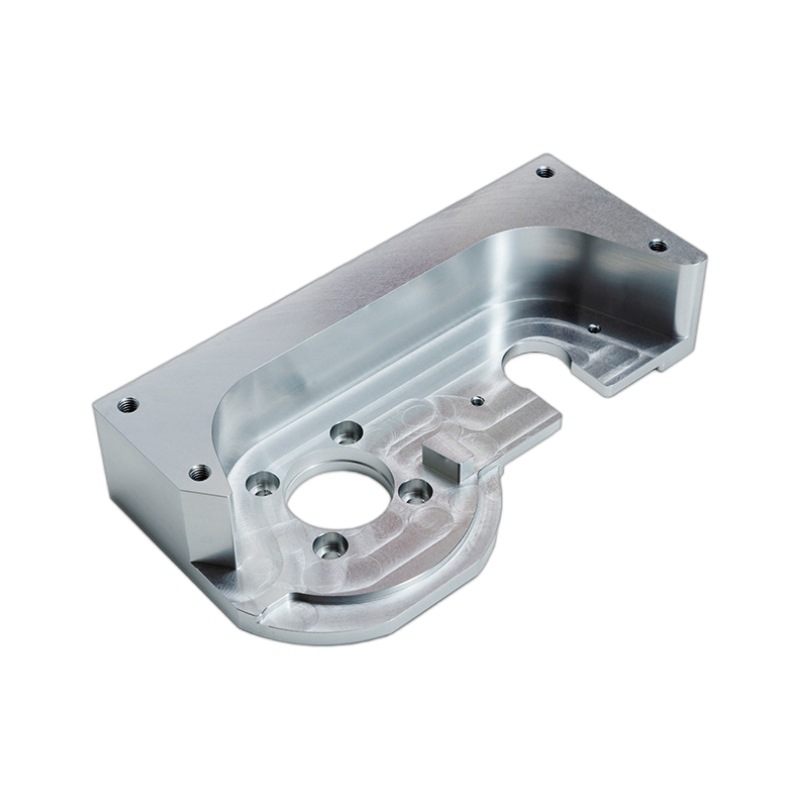
Start with a detailed 3D CAD model of your part, created using tools like SolidWorks, CATIA, or Fusion 360. For 5-axis machining, pay special attention to features that require multi-axis access, such as undercuts, complex curves, or angled holes. Define critical tolerances clearly—for example, medical implants may require ±0.002mm tolerances, while automotive components might need ±0.01mm. GreatLight Metal’s engineering team often collaborates with clients at this stage to optimize designs for 5-axis machining, reducing material waste and machining time by up to 30% in some cases.
Material Selection
The material you choose impacts toolpath design, cutting speeds, and programming parameters. For instance, titanium alloys (common in aerospace and medical fields) are hard and require slower feed rates to prevent tool wear, while aluminum alloys are more forgiving and allow faster machining. GreatLight Metal specializes in processing over 50 materials, including stainless steel, aluminum, titanium, mold steel, and engineering plastics—each with tailored programming strategies to ensure precision and efficiency.
Machine Capability Assessment
Not all 5-axis machines are created equal. Some use a rotating table and tilting spindle (head-table configuration), while others use a tilting table and fixed spindle (table-table). You need to know your machine’s travel limits, maximum spindle speed, tool holder capacity, and collision zones. GreatLight Metal operates 127+ precision machines, including large high-precision 5-axis centers with a maximum processing size of 4000mm, so our team can match your part to the ideal machine for the job.
Choosing the Right Programming Software: CAM is King for 5-Axis
Manual G-code programming is possible for simple 3-axis parts, but 5-axis machining requires Computer-Aided Manufacturing (CAM) software to handle the complex coordinate transformations and toolpath calculations. Here’s what you need to know:
CAM Software Options: Leading tools include Mastercam, Siemens NX, HyperMILL, and Creo CAM. These platforms automate toolpath generation, collision detection, and post-processing. For example, HyperMILL is renowned for its advanced 5-axis collision avoidance algorithms, which are critical for protecting expensive machine components and tools. GreatLight Metal uses a combination of Mastercam and Siemens NX to handle both simple and ultra-complex programming tasks.
Post-Processing: Every 5-axis machine has a unique control system (e.g., Fanuc, Siemens, Haas), so you need a post-processor tailored to your machine. This converts the CAM-generated toolpaths into machine-specific G-code. GreatLight Metal uses custom post-processors for each of our machines, ensuring seamless communication between software and hardware.
Manual G-Code Limitations: While you can write G-code for 3+2 (indexed) 5-axis machining, continuous 5-axis machining requires dynamic tool orientation changes that are nearly impossible to program manually. CAM software simplifies this by automatically adjusting tool angles to maintain optimal cutting conditions.
Defining Toolpaths & Axis Movements: Master 5-Axis Strategies
5-axis machining uses two primary strategies, each with distinct programming requirements:
3+2 (Indexed) 5-Axis Machining
This involves locking the rotary axes (A and B, or B and C) at a fixed angle to access hard-to-reach features, then machining with 3-axis movements. Programming this strategy is simpler than continuous 5-axis: you’ll define the indexed positions in your CAM software, then generate 3-axis toolpaths for each position. It’s ideal for parts with multiple angled surfaces that don’t require continuous tool orientation changes. GreatLight Metal uses this strategy for high-volume production of automotive engine components, where efficiency is key—reducing cycle time by 20% compared to traditional 3-axis machining.
Continuous (Simultaneous) 5-Axis Machining
Here, all five axes move simultaneously to maintain a consistent tool orientation relative to the part surface. This is essential for complex parts like turbine blades, impellers, or humanoid robot joint components. Programming continuous 5-axis requires careful attention to tool orientation (to avoid gouging) and axis synchronization (to prevent chatter). GreatLight Metal’s team of 25+ CAM programmers has years of experience in this area, using advanced simulation tools to validate toolpaths before they reach the machine, reducing error rates to less than 0.5%.
Key Tip for Toolpath Design: Always prioritize tool access and collision avoidance. Use shorter tools where possible to reduce vibration, and use software simulations to check for potential collisions between the tool, holder, fixture, and machine frame.
Generating & Validating G-Code: Minimize Risks Before Cutting
Once your toolpaths are defined, the CAM software generates a rough G-code file, which you’ll refine with post-processing to match your machine’s control system. But before sending the code to the machine, validation is critical:
Software Simulation: Use your CAM software’s built-in simulation tool to visualize the entire machining process. Check for collisions, tool gouging, and over-cutting. GreatLight Metal goes a step further by using offline simulation software (e.g., Vericut) that mimics the exact behavior of our machines, catching errors that might be missed in basic CAM simulations.
G-Code Review: For critical parts, manually review sections of the G-code to ensure that axis movements are smooth and within the machine’s limits. Look for sudden changes in feed rate or axis direction, which can cause tool wear or poor surface finish.
Material Removal Analysis: Verify that the toolpaths remove material efficiently, leaving no excess material on critical features. This helps reduce post-processing time and ensures the part meets tolerance requirements.
Machine Setup & Trial Run: Transition from Code to Cutting
Once your G-code is validated, it’s time to set up the machine and run a trial:
Fixture Alignment & Tool Calibration: Align your fixture to the machine’s coordinate system using a touch probe. Calibrate your cutting tools to ensure accurate length and diameter measurements—even a 0.001mm error can lead to part failure. GreatLight Metal uses precision measurement tools like coordinate measuring machines (CMMs) to calibrate fixtures and tools, ensuring consistency across all jobs.
Dry Run: Run the program without cutting material to check axis movements, tool changes, and fixture stability. This helps identify any remaining collisions or programming errors before you load expensive material.
First Article Inspection: After the first part is machined, inspect it thoroughly using CMMs, optical comparators, or surface roughness testers. Compare the results to your CAD model’s tolerances. If adjustments are needed, modify the toolpaths or G-code and repeat the trial run.
Iteration & Optimization: Fine-Tune for Precision & Efficiency
5-axis programming is rarely perfect on the first try. Iteration is key to improving part quality, reducing machining time, and lowering costs:
Fine-Tune Feed Rates & Spindle Speeds: Adjust parameters based on the material and part features. For example, increase feed rates for roughing operations to remove material quickly, then slow down for finishing to improve surface finish.
Optimize Toolpaths: Reduce unnecessary axis movements to shorten cycle time. GreatLight Metal’s engineers often use high-speed machining (HSM) techniques in their programming, which use constant feed rates and smooth toolpath transitions to reduce tool wear and improve efficiency by up to 25%.
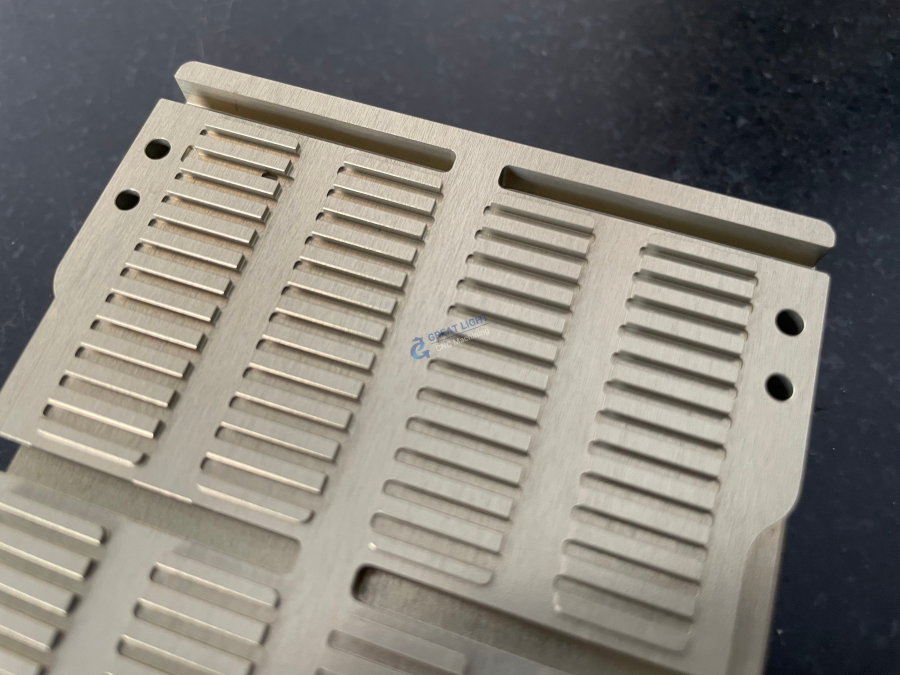
Surface Finish Enhancement: For parts requiring a high-quality surface finish, add a finishing toolpath with a smaller end mill or ball nose tool. GreatLight Metal also offers one-stop post-processing services, including polishing, anodizing, and plating, to achieve the desired surface quality without additional programming.
Why Partner with GreatLight Metal for Your 5-Axis CNC Machining Needs?
While learning to program a 5-axis CNC machine is rewarding, it requires significant investment in software, training, and equipment. For most businesses, partnering with a professional service provider like GreatLight Metal offers a faster, more cost-effective path to high-quality parts:
Unmatched Expertise & Experience: GreatLight Metal has over 12 years of experience in 5-axis CNC machining, with a team of 25+ certified CAM programmers and 150+ skilled operators. We’ve completed thousands of projects for clients in automotive, aerospace, medical, and humanoid robotics industries—including complex turbine blades, automotive engine components, and medical implants.
Advanced Equipment & Certifications: Our 7600-square-meter facility houses 127+ precision machines, including large 5-axis CNC centers from leading manufacturers. We hold ISO 9001:2015, IATF 16949 (automotive), ISO 13485 (medical), and ISO 27001 (data security) certifications, ensuring that our processes meet global quality standards.
One-Stop Services: From design optimization and 5-axis machining to post-processing and inspection, we offer a complete solution for your precision part needs. Our free rework guarantee (for quality issues) and full refund policy (if rework is unsatisfactory) give you peace of mind.
Unbeatable Precision: We can achieve tolerances as tight as ±0.001mm, making us the ideal choice for high-precision parts. Our in-house CMMs and inspection tools ensure that every part meets your exact specifications.
If you’re ready to leverage our 5-axis CNC machining expertise, explore our precision 5-axis CNC machining services to learn more about how we can support your project.
Conclusion
Learning How To Program 5 Axis CNC Machine is a complex but valuable skill for anyone involved in precision manufacturing. By following the steps outlined—preparation, software selection, toolpath design, code validation, setup, and optimization—you can produce high-quality complex parts. However, for businesses looking to save time, reduce costs, and ensure consistent quality, partnering with a trusted 5-axis CNC machining service like GreatLight Metal is the optimal choice. With our advanced equipment, certified expertise, and one-stop services, we turn your most complex designs into reality with precision and efficiency. Whether you’re working on a prototype or high-volume production, GreatLight Metal has the skills and resources to deliver exceptional results. To connect with our team and explore our global manufacturing capabilities, visit our LinkedIn page and discover why we’re the preferred partner for precision parts worldwide.
Frequently Asked Questions (FAQ)
Q1: What’s the difference between 3+2 and continuous 5-axis programming?
A1: 3+2 (indexed) programming locks the rotary axes at fixed angles, then uses 3-axis machining for each position. It’s simpler and more efficient for parts with multiple angled surfaces. Continuous 5-axis programming moves all five axes simultaneously to maintain constant tool orientation, ideal for complex parts like turbine blades. GreatLight Metal uses both strategies depending on the client’s part requirements.
Q2: Do I need to know G-code to program a 5-axis CNC machine?
A2: While basic G-code knowledge is helpful, most 5-axis programming is done using CAM software, which generates G-code automatically. Manual G-code programming is only practical for simple 3+2 operations. GreatLight Metal’s team handles all programming in-house, so clients don’t need to have programming expertise.
Q3: How long does it take to program a 5-axis CNC part?
A3: The time varies based on part complexity. Simple 3+2 parts may take 1-2 hours to program, while complex continuous 5-axis parts can take 8-20 hours. GreatLight Metal’s experienced programmers can reduce this time using standardized templates and advanced CAM tools, cutting programming time by up to 40% for repeat projects.
Q4: Can GreatLight Metal help optimize my part design for 5-axis machining?
A4: Yes! Our engineering team offers free design for manufacturability (DFM) analysis. We’ll review your CAD model and suggest changes to reduce machining time, minimize material waste, and improve part quality. This service is included with all our projects and has helped clients reduce production costs by an average of 15%.
Q5: What materials can GreatLight Metal process with 5-axis CNC machining?
A5: We specialize in processing over 50 materials, including aluminum alloys, stainless steel, titanium alloys, mold steel, copper, brass, and engineering plastics like PEEK and PVC. Our team has extensive experience with each material’s unique machining characteristics.
Q6: How does GreatLight Metal ensure programming accuracy?
A6: We use a multi-step validation process: first, we simulate toolpaths in CAM software, then use offline simulation tools to mimic machine behavior, and finally run a dry run before cutting material. After machining, every part undergoes rigorous inspection using CMMs and other precision tools to ensure it meets tolerance requirements. We also hold ISO 9001:2015 certification, which ensures our programming processes are standardized and consistent.



















