
When embarking on wood-plastic composite (WPC) part manufacturing, one of the most critical decisions you’ll make is answering the question: How To Determine Wpc CNC Machine? WPC, a blend of wood fibers and thermoplastics, presents unique machining challenges—from its abrasive nature to thermal sensitivity—that demand careful consideration of machine capabilities. Choosing the right CNC machine tailored to these properties can mean the difference between consistent, high-quality parts and costly reworks, delays, or subpar results. Below, we break down the core factors to evaluate, how leading manufacturers like GreatLight CNC Machining Factory address these needs, and a step-by-step guide to making your decision.
Key Properties of WPC That Influence CNC Machine Selection
Before diving into machine specifications, it’s essential to understand why WPC requires specialized CNC considerations:
Abrasiveness: Wood fibers in WPC wear down standard tooling quickly, so machines must support durable, coated tools (e.g., carbide, diamond) and have rigid frames to minimize vibration-related tool chatter.
Thermal Sensitivity: WPC’s plastic matrix can melt or warp if cutting generates excessive heat, necessitating adjustable spindle speeds and optimized toolpaths to control temperature.
Density Variability: Natural wood fiber content can create uneven material density, requiring machines with consistent power output and stable workholding to maintain dimensional accuracy.
Complex Part Potential: WPC is used in everything from custom furniture to architectural trim and industrial fixtures, so machines need to adapt to simple flat parts or intricate curved geometries.
Core Factors to Determine the Right WPC CNC Machine
To match your WPC production needs with the ideal machine, evaluate these critical parameters:
1. Machine Configuration: 3-Axis vs. 4-Axis vs. 5-Axis CNC Machining
The number of simultaneous motion axes directly impacts the complexity of WPC parts you can produce:
3-Axis CNC: Ideal for simple, flat WPC parts like panels, brackets, or linear components. It offers cost-effectiveness and ease of operation for low-complexity projects.
4-Axis CNC: Adds a rotational axis, enabling machining of multi-sided WPC parts (e.g., furniture legs, cylindrical fixtures) without manual repositioning, reducing setup time and errors.
5-Axis CNC: Enables simultaneous motion along all three linear axes plus two rotational axes, perfect for intricate WPC geometries like curved architectural trim, custom molds, or interlocking components.
| To simplify your comparison, here’s a quick overview of how each axis configuration fits WPC production needs, including GreatLight’s capabilities: | Machine Type | Best For WPC Parts | Key Advantages | GreatLight Capabilities |
|---|---|---|---|---|
| 3-Axis CNC | Flat panels, simple brackets | Low cost, straightforward operation | High-precision 3-axis centers with rigid frames for consistent, clean cuts on WPC | |
| 4-Axis CNC | Rotational components, multi-sided parts | Eliminates manual repositioning, reduces errors | 4-axis machines with automated indexing for efficient production of complex WPC rotational parts | |
| 5-Axis CNC | Intricate curved shapes, custom molds | Handles complex geometries in one setup | Brand-name 5-axis centers (Dema, Beijing Jingdiao) that achieve tight tolerances up to ±0.001mm for critical WPC components |
2. Spindle Power and Speed: Balancing Efficiency and Heat Control
WPC requires a spindle that delivers enough power to cut through dense composite material without stalling, while also offering variable speed settings to prevent plastic matrix melting:
For dense WPC (high wood fiber content), opt for spindles with 10+ kW power to maintain cutting momentum.
Variable speed ranges (e.g., 5,000–20,000 RPM) allow you to adjust for different WPC types: lower speeds for thick, dense parts; higher speeds for fine finishing to reduce heat buildup.
GreatLight CNC Machining Factory’s spindles are calibrated specifically for composite materials like WPC, with adjustable speed ranges and high torque to ensure efficient, heat-controlled cutting. Our team works with you to match spindle parameters to your exact WPC formulation.
3. Machine Rigidity: Minimizing Vibration for Precision
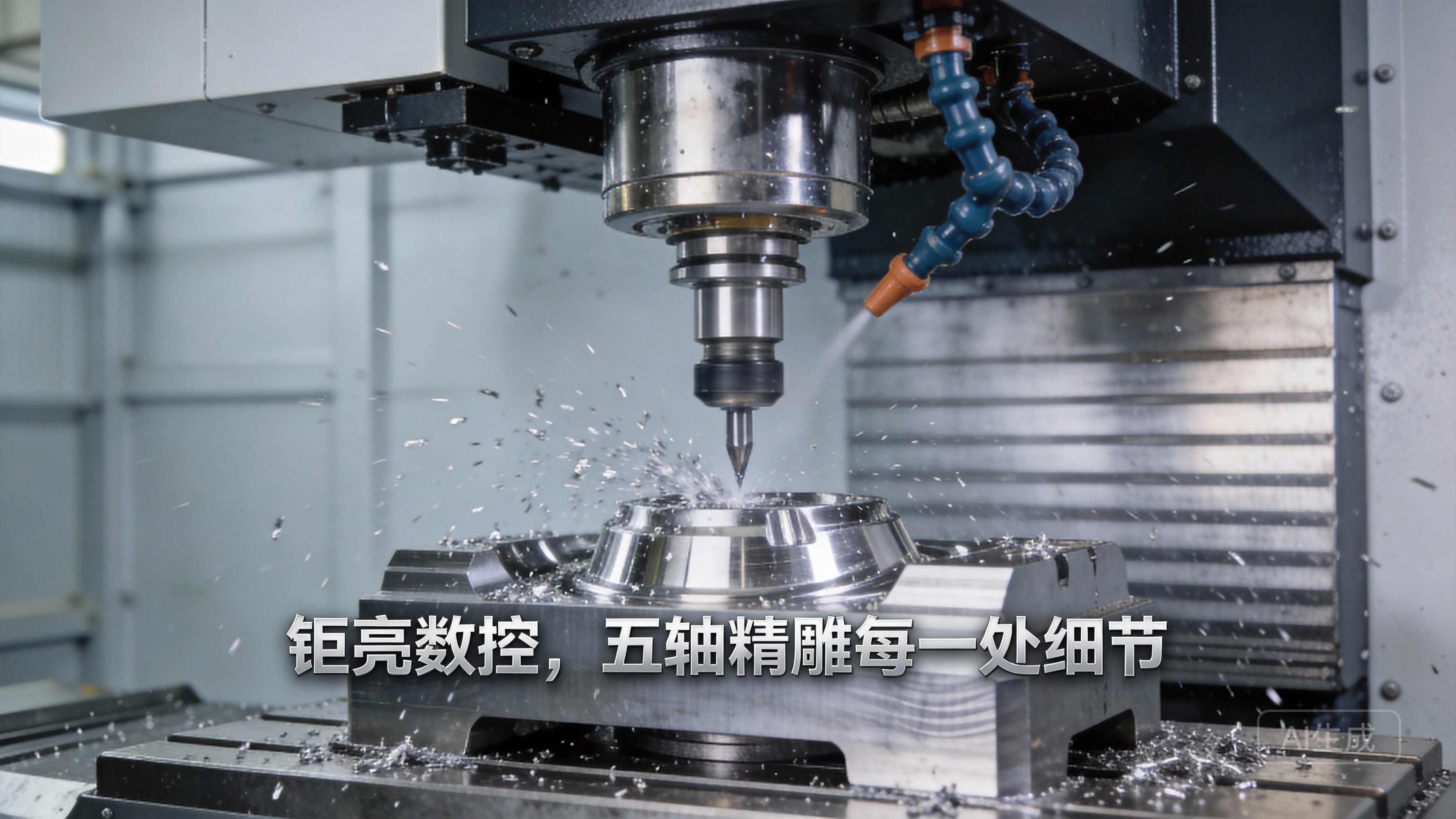
WPC’s density variability can amplify vibration during machining, leading to rough surfaces, tool wear, and dimensional inaccuracies. A rigid machine with a heavy-duty frame, stable worktable, and robust workholding systems is non-negotiable.
GreatLight’s CNC machines feature reinforced frames and precision workholding solutions that dampen vibration, even when machining inconsistent WPC materials. This rigidity is a key factor in our ability to achieve tolerances as tight as ±0.001mm for critical WPC components.
4. Tooling Compatibility and Durability
Standard steel tools wear out rapidly when machining WPC. The right CNC machine must support abrasion-resistant tooling, such as carbide-tipped end mills or diamond-coated cutters, and have an automatic tool changer (ATC) to minimize downtime for tool swaps in high-volume production.
GreatLight maintains a comprehensive inventory of specialized composite tooling, and our ATC-equipped machines reduce tool change time by up to 80% compared to manual setups. We also offer tooling optimization services to extend tool life and reduce production costs for your WPC projects.
5. Automation and Scalability
Whether you’re prototyping a single WPC part or scaling to mass production, automation features can drastically improve efficiency:
Automatic Tool Changers (ATC): Critical for high-volume WPC production to reduce setup time.
Material Handling Systems: For large batches, conveyors or robotic loaders can streamline part feeding and unloading.
CAM Software Integration: Advanced CAM tools generate optimized toolpaths that reduce heat buildup and tool wear, tailored to WPC’s unique properties.
GreatLight offers scalable WPC machining solutions, from rapid prototyping (with lead times as short as 3–5 days) to mass production. Our in-house engineering team uses industry-leading CAM software to optimize every toolpath, ensuring clean cuts, minimal waste, and consistent quality across all WPC parts.
How GreatLight CNC Machining Factory Supports Your WPC Manufacturing Needs
GreatLight, founded in 2011 and located in Dongguan’s Chang’an District (China’s “Hardware and Mould Capital”), is a leading provider of precision composite machining services, including WPC. Here’s why we’re the ideal partner for your WPC projects:
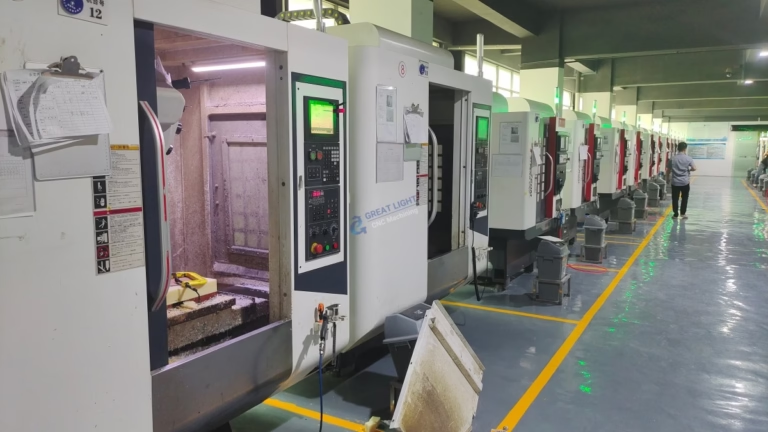
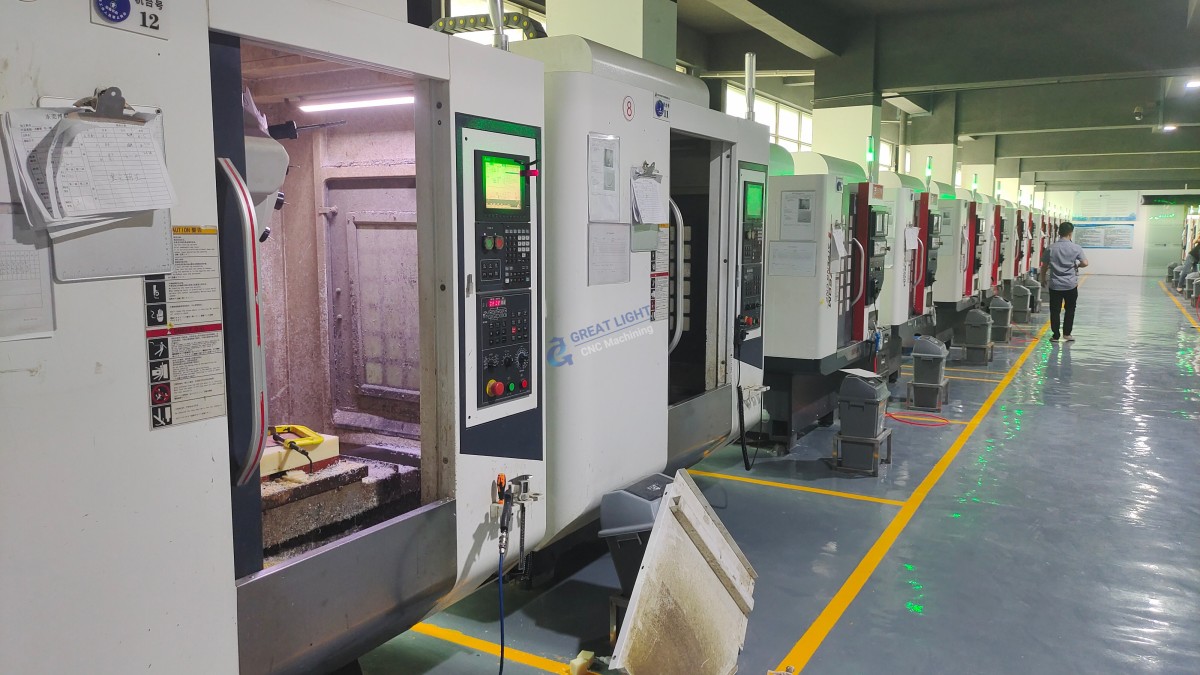
Comprehensive Equipment Arsenal: Our 7,600 sq. meter facility houses 127 precision machines, including 3-axis, 4-axis, and 5-axis CNC centers, all calibrated for composite materials like WPC. We also have full capabilities for 3D printing of composite prototypes and one-stop post-processing.
Industry Certifications: We hold ISO 9001:2015, IATF 16949, and ISO 13485 certifications, ensuring strict quality control throughout every stage of WPC production.
One-Stop Service Chain: From initial design consultation and prototyping to mass production and post-processing (sanding, coating, texturing), we handle every step of your WPC project. This eliminates the need to coordinate with multiple suppliers, saving time and reducing errors.
Unbeatable Quality Guarantees: We offer free rework for any WPC part that fails to meet quality standards, and a full refund if rework still doesn’t satisfy your requirements. Our precision capabilities (up to ±0.001mm) ensure your WPC parts meet even the most stringent dimensional tolerances.
Proven Expertise: Our team of 150 professionals has years of experience machining composite materials, including WPC, for clients in industries like furniture, architecture, and industrial automation. We’ve successfully delivered custom WPC architectural panels for commercial projects, intricate WPC molds for consumer goods, and high-volume WPC components for industrial fixtures.
Step-by-Step Guide to Determining Your Ideal WPC CNC Machine
Follow these steps to select a CNC machine that aligns with your WPC production goals:
Define Part Requirements: Outline your WPC part’s complexity (simple vs. intricate), dimensions (max size up to 4000mm is supported by GreatLight), and tolerance needs.
Assess Production Volume: Decide whether you need prototyping, small-batch production, or mass manufacturing to choose between basic 3-axis machines or automated 5-axis systems.
Evaluate WPC Material Specifications: Note your WPC’s wood fiber content, density, and thermal properties to match spindle power and speed settings.
Compare Machine Configurations: Choose between 3-axis, 4-axis, or 5-axis based on part complexity, using the table above as a guide.
Verify Rigidity and Precision: Ensure the machine has a rigid frame and stable workholding to handle WPC’s density variability and maintain accuracy.
Check Tooling and Software Compatibility: Confirm the machine supports abrasion-resistant tooling and integrates with CAM software optimized for composites.
Partner with a Reliable Manufacturer: Choose a supplier like GreatLight that offers end-to-end support, quality guarantees, and expertise in WPC machining.
Conclusion
At the end of the day, answering How To Determine Wpc CNC Machine? boils down to aligning machine capabilities with your WPC material properties, part complexity, and production volume. By prioritizing factors like machine configuration, spindle performance, rigidity, and automation, you can select a solution that delivers consistent quality, efficiency, and cost-effectiveness. GreatLight CNC Machining Factory stands as a trusted partner for all your WPC machining needs, combining advanced 3/4/5-axis equipment, specialized composite expertise, and a one-stop service chain to turn your WPC design ideas into high-quality, precision parts. Whether you’re prototyping a single component or scaling to mass production, our team is equipped to meet and exceed your expectations.
Frequently Asked Questions (FAQ)
Q1: Can CNC machines handle all types of WPC materials?
A: Most modern CNC machines can be adapted to work with WPC, but success depends on spindle power, tooling, and machine rigidity. GreatLight’s machines are calibrated to handle a wide range of WPCs, from low-fiber-content composites to dense, high-strength variants used in industrial applications.
Q2: What is the typical tolerance achievable for WPC CNC machining?
A: With a high-quality CNC machine like those at GreatLight, standard tolerances for WPC parts are ±0.01mm. For critical components, we can achieve even tighter tolerances (up to ±0.001mm) through precise tooling, process control, and rigid machine design.
Q3: Does GreatLight offer post-processing services for WPC parts?
A: Yes, we provide a full suite of one-stop post-processing services for WPC parts, including sanding, polishing, coating, and surface texturing. These services enhance both the aesthetics and durability of your WPC components.
Q4: How long does it take to produce WPC parts with CNC machining?
A: Lead times vary based on part complexity and volume. For prototyping, we can deliver WPC parts in as little as 3–5 days. For mass production, we optimize our processes to meet your delivery deadlines while maintaining strict quality standards.
Q5: What if my WPC part doesn’t meet quality standards after production?
A: GreatLight offers a robust after-sales guarantee: we provide free rework for any quality-related issues, and if rework still doesn’t meet your requirements, we offer a full refund. Our ISO 9001:2015 certification ensures strict quality control throughout production to minimize such occurrences.
Q6: Can GreatLight help with WPC part design optimization?
A: Absolutely. Our in-house engineering team offers design-for-manufacturability (DFM) consultations for WPC parts, helping you refine your design to reduce production costs, improve efficiency, and ensure optimal machinability.



















