

When evaluating the operational costs and facility requirements for precision machining, one of the most common and crucial questions we encounter from engineers and procurement specialists is: “How many kilowatts per hour does a CNC machine use?” This query, while seemingly straightforward, touches on the complex interplay of machine capability, process efficiency, and total cost of ownership. Understanding power consumption is not just about the electricity bill; it’s about designing sustainable manufacturing processes, right-sizing facility infrastructure, and making informed decisions between different machining strategies.
First, a critical clarification on terminology: Power is measured in kilowatts (kW), which is an instantaneous rate of energy use. Energy consumption is measured in kilowatt-hours (kWh), which is power (kW) multiplied by time (hours). So, a more accurate question is: “What is the power rating of a CNC machine in kW, and how many kWh does it consume in an hour of operation?” The answer varies dramatically based on multiple factors.
H2: Deconstructing CNC Machine Power Consumption
The power draw of a CNC machine is not a single, fixed number. It’s the sum of several subsystems, each operating at different loads.
H3: Core Power-Consuming Components:
Spindle Drive: This is often the largest consumer. A small benchtop router spindle might draw 2-3 kW, while a high-torque, high-speed spindle for machining hardened steel or titanium on a large 5-axis mill can demand 25 kW, 40 kW, or even more during heavy cuts.
Axis Servo Drives: The motors that move the X, Y, Z, and rotary axes. Their consumption scales with the machine’s size, speed, and acceleration. Rapid traverses and dynamic machining of complex contours demand more power.
Coolant System: High-pressure coolant pumps (often 2-5 kW) are essential for temperature control, chip evacuation, and tool life, especially in high-performance machining.
CNC Controller & Peripherals: The computer, drives, sensors, and lighting have a relatively low but constant base load (0.5-2 kW).
Auxiliary Systems: Chip conveyors, mist collectors, air conditioning for the control cabinet, and spindle chillers (for high-precision machines) add to the total load.
H2: Key Factors Influencing Actual Energy Usage
H3: 1. Machine Type and Size:
3-Axis vs. 5-Axis CNC Machining: A modern 5-axis CNC machining center typically has a higher total power rating than a similarly sized 3-axis machine due to the additional two rotary axis drives and a more sophisticated control system to manage simultaneous complex motion.
Mill vs. Lathe: A large CNC lathe might have a peak power draw comparable to a milling machine, but its average consumption profile can differ based on the type of turning operations.
H3: 2. Material and Cutting Parameters:
Machining 6061 aluminum is far less energy-intensive than machining Inconel 718. The power required is directly related to the material’s hardness and the metal removal rate (MRR). Aggressive cuts with high feed rates and depth of cut demand maximum spindle torque and axis power, pushing consumption toward the machine’s peak rating.
H3: 3. Operational Efficiency and Duty Cycle:
A machine’s “nameplate” power rating (e.g., 30 kVA) indicates its maximum connected load. However, its average power during a cycle is usually 40-70% of this peak. Factors include:
Cutting Time vs. Air-Cutting: Optimized tool paths that minimize rapid, non-cutting moves save energy.
Machine State: A modern machine in standby or with its drives enabled but not moving consumes significantly less than one actively cutting.
H2: Real-World Power Consumption Ranges
To provide practical guidance, here are typical connected power (kVA/kW) ranges for common CNC machines in a professional manufacturing environment like ours at GreatLight Metal:
| Machine Type & Size | Typical Connected Power Range | Estimated Average Power During Heavy Cutting | Key Influencing Factors |
|---|---|---|---|
| Desktop/Small 3-Axis Mill | 3 – 7 kVA | 1.5 – 4 kW | Small spindle, light-duty cuts, aluminum/plastics. |
| Standard 3-Axis Machining Center | 15 – 30 kVA | 8 – 20 kW | General-purpose workhorse for steel, aluminum. Common in job shops. |
| High-Performance 5-Axis Machining Center | 25 – 50+ kVA | 15 – 35 kW | Large spindle motor, multiple high-dynamics servo drives for complex aerospace/automotive parts. |
| Medium CNC Lathe | 10 – 25 kVA | 6 – 15 kW | Power draw heavily dependent on chuck size and spindle drive. |
| Large Gantry Mill | 40 – 100+ kVA | 25 – 70 kW | Massive structure, multiple spindle heads, for machining large molds or structural components. |
Note: kVA (kilovolt-ampere) and kW (kilowatt) are related but differ by the power factor (PF). For simplicity in estimation, they are often treated as roughly equivalent for CNC machine nameplates (with PF typically between 0.8 and 0.95).
H2: How to Calculate Your Specific Energy Cost
To move from power rating to operational cost, follow this formula:
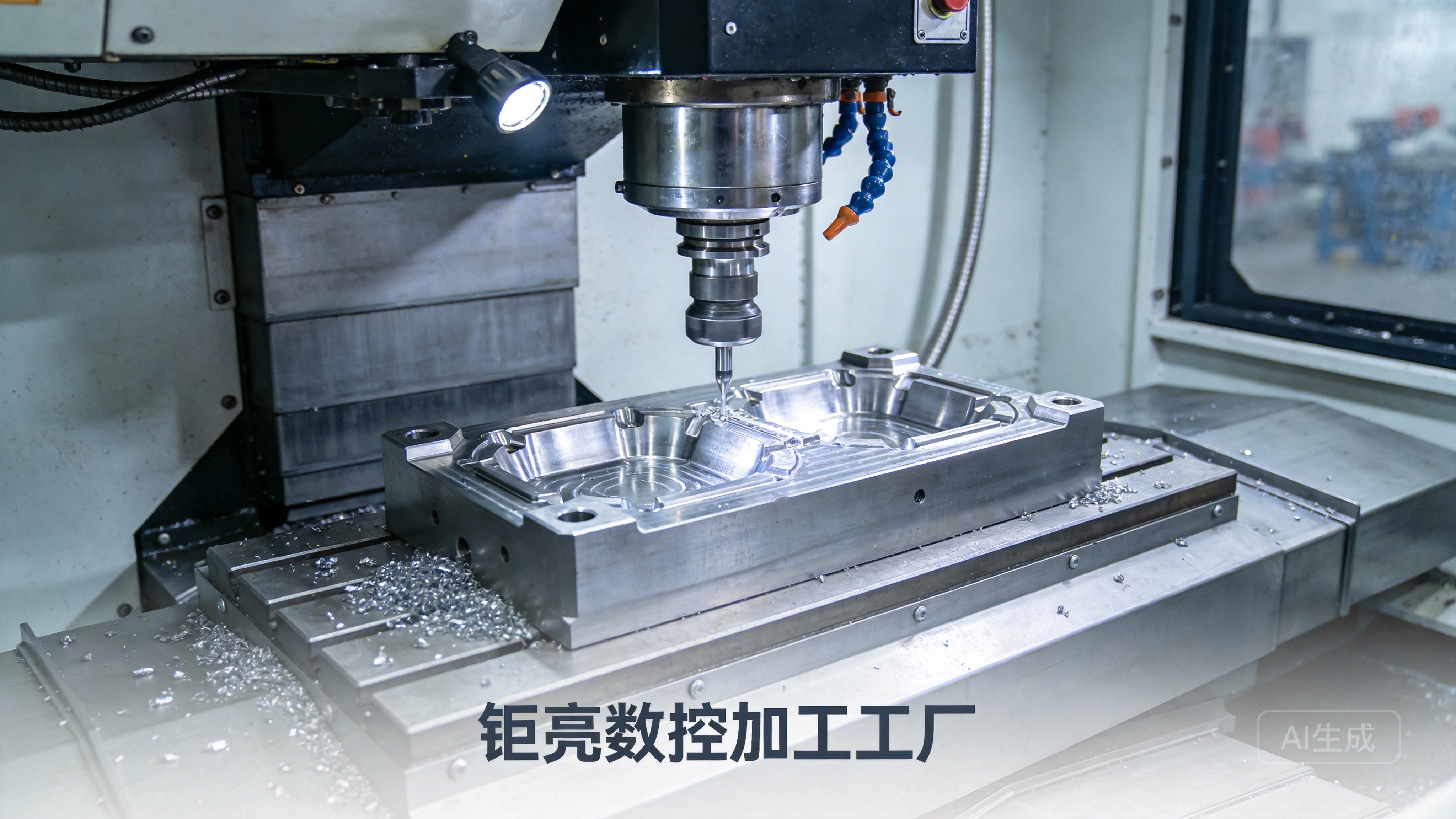
Identify Average Power Demand: For a specific job, estimate the machine’s average kW demand. This can be done using a power meter or, more commonly, by applying a load factor (e.g., 0.6) to the machine’s main spindle motor rating and adding a fixed base load.
Calculate Energy Consumption:
Energy (kWh) = Average Power (kW) × Total Machine Runtime (hours)
Determine Cost:
Electricity Cost = Energy (kWh) × Local Electricity Rate ($/kWh)
Example: A 5-axis machine with a 25 kW spindle operates on a complex titanium component. Its estimated average load during the 8-hour machining cycle is 18 kW.
Energy Used: 18 kW × 8 h = 144 kWh
Cost (at $0.12/kWh): 144 kWh × $0.12 = $17.28 for that cycle.
H2: The GreatLight Metal Perspective: Efficiency Beyond the Meter
At GreatLight Metal, we view energy consumption holistically as an integral part of manufacturing efficiency and sustainability. Our approach impacts power usage in several key ways:
Process Optimization: Our experienced manufacturing engineers program tool paths that maximize metal removal while minimizing unnecessary machine movement and idle time, directly reducing kWh per part.
Equipment Selection: We invest in modern, energy-efficient CNC equipment. Newer servo drives and spindle systems often have higher efficiency ratings and better regenerative capabilities.
Right-Sourcing the Process: For a given part, we might recommend a different manufacturing process. A part designed for precision 5-axis CNC machining services{:target=”_blank”} might be more energy-efficient overall than using multiple setups on a 3-axis machine, despite the 5-axis machine’s higher peak rating, due to drastically reduced total machining time and scrap.
Systematic Facility Management: Our centralized coolant systems and strategic scheduling help manage the aggregate facility load, contributing to lower embodied energy in every component we produce.
Conclusion
So, how many kilowatts per hour does a CNC machine use? The answer is multifaceted, ranging from as little as 2-3 kW for a small machine to over 50 kW for a large, high-performance system during peak operation. The more critical metric is kWh per finished part, which reflects true manufacturing efficiency. By partnering with a manufacturer that prioritizes intelligent process planning, maintains state-of-the-art equipment, and possesses deep engineering expertise, you effectively optimize this ratio. This translates not only to lower indirect energy costs within your supply chain but also to faster lead times and higher part quality. When evaluating manufacturing partners, consider their capability to deliver precision efficiently as a core component of their value proposition.
FAQ: Frequently Asked Questions on CNC Machine Power
Q1: Is a 5-axis CNC machine always more power-hungry than a 3-axis machine?
A: Not necessarily in terms of energy per part. While its peak power rating is often higher due to additional axes, a 5-axis machine can complete complex parts in a single setup much faster. This often results in a lower total energy consumption (kWh) per part compared to multiple, longer operations on a 3-axis machine, making it a more efficient choice for complex geometries.
Q2: Can I run a small CNC machine on a standard residential power outlet?
A: Very small desktop mills or routers (under 1.5 kW spindle) might run on a dedicated 110V/15A or 220V/16A circuit. However, any professional-grade CNC machine requires a dedicated three-phase industrial power connection installed by a qualified electrician, following the manufacturer’s specifications.
Q3: Does machining aluminum use less power than machining steel?
A: Yes, significantly. Aluminum is softer and allows for much higher metal removal rates with less cutting force. Therefore, for the same volume of material removed, machining aluminum consumes fewer kilowatt-hours than machining steel, and far less than machining superalloys like titanium or Inconel.
Q4: How much power does a CNC machine use when it’s idle or in standby?
A: Modern CNC machines have various power-saving modes. In standby (drives enabled but not moving), consumption can be 10-25% of the peak rating. During a full “sleep” mode with the controller on, it may draw only 1-2 kW. However, auxiliary systems like coolant chillers may continue to cycle.
Q5: Why should I care about my manufacturer’s machine power and efficiency?
A: A manufacturer’s investment in modern, efficient equipment and skilled process engineering is a direct indicator of their capability, forward-thinking approach, and commitment to controlling costs. Efficient power use correlates with advanced machinery, optimal tooling, and expert programming—all factors that ensure your parts are produced reliably, quickly, and with consistent high quality. It reflects a mature operational philosophy focused on total value, as practiced by industry leaders like GreatLight Metal. For more insights into advanced manufacturing, follow our professional updates on LinkedIn{:target=”_blank”}.



















