
















The Definitive Guide to CNC Engine Block Machining: Processes, Pricing, and Precision Engineering
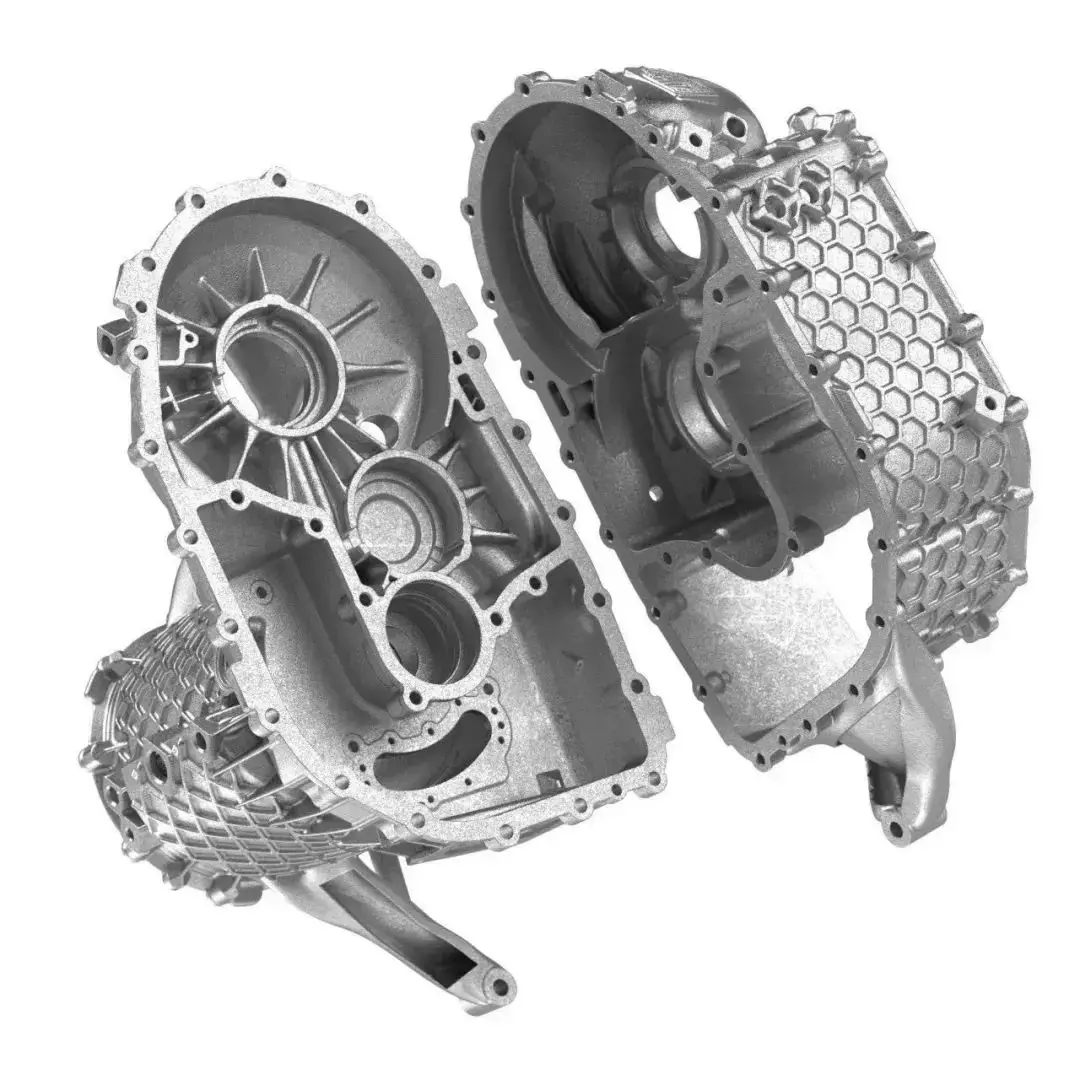
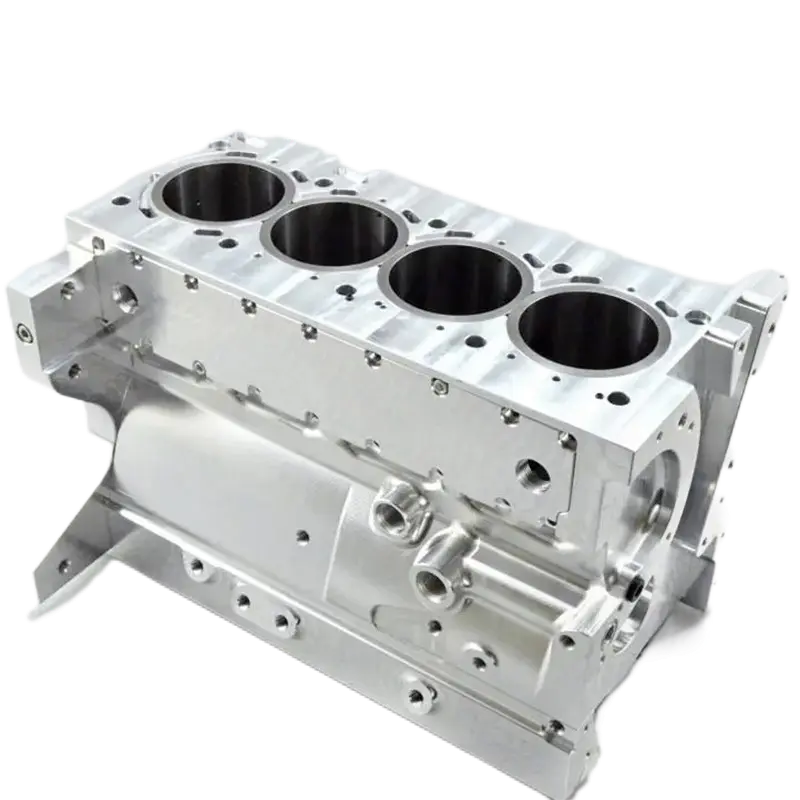
In the world of internal combustion and advanced hybrid powertrains, the engine cylinder block stands as the foundational component—the literal backbone of an engine’s performance, durability, and efficiency. The transition from raw casting to a finished, high-tolerance block is one of the most complex and critical journeys in modern manufacturing, dominated by engine cylinder block CNC machining. This process, performed on sophisticated and expensive CNC engine block machine centers, transforms a rough casting into a precision masterpiece where microns determine horsepower, longevity, and emissions compliance. This comprehensive guide delves into every facet of engine cylinder block CNC machining, exploring the intricate processes, the advanced machine tools required, the science of materials and tolerances, and the multifaceted factors that determine CNC engine block machine price. Designed for automotive engineers, procurement specialists, machining professionals, and enthusiasts, this article provides the authoritative depth needed to understand how precision machining defines modern engine performance and how to navigate the investment and partnership decisions in this high-stakes field.
Part 1: The Engine Cylinder Block – Anatomy of a Foundation
1.1 Functional Overview and Critical Zones
The cylinder block is a complex structural housing that contains or supports all major engine components. Its precision directly dictates engine performance through several key zones:
Cylinder Bores: The cylindrical cavities where pistons travel. The diameter, roundness, cylindricity, and surface finish of these bores are paramount. Imperfections lead to blow-by (loss of compression), increased oil consumption, and premature wear. Engine cylinder block CNC machining ensures these bores are perfectly sized and aligned with the crankshaft centerline.
Deck Surface: The top mating surface for the cylinder head. It must be perfectly flat and parallel to the crankshaft main bearing bores to ensure a proper head gasket seal. Warpage or unevenness can cause catastrophic coolant leaks, compression loss, or head gasket failure.
Main Bearing Saddles and Caps: These features create the bores that hold the crankshaft. They require exceptional alignment (all saddles must be co-axial) and precise diameter control to ensure proper crankshaft rotation, oil clearance, and longevity of the main bearings.
Coolant and Oil Passages: An intricate network of internal and cross-drilled passages for coolant circulation and lubrication oil supply. Precision in the location and surface quality of these passages is critical for even engine cooling, preventing hot spots, and ensuring reliable oil flow to all bearings and moving parts under all operating conditions.
1.2 Evolution from Rough Casting to Machined Component
A raw cylinder block casting arrives at the machining line with significant excess material (stock) and inherent variation. Key features are only roughly formed. The role of engine cylinder block CNC machining is to:
Establish precise datums (reference surfaces) from the inconsistent casting.
Remove specified stock to create final, functional geometries.
Achieve dimensional accuracy and geometric relationships measured in hundredths or thousandths of a millimeter.
Create specific surface finishes that promote sealing, lubrication, and wear resistance.
This transformation requires a sequenced series of operations on specialized, high-value machine tools—the focus of our discussion on CNC engine block machine price and capability.
Part 2: Deep Dive into Engine Cylinder Block CNC Machining Processes
2.1 The Machining Sequence: A Step-by-Step Breakdown
A state-of-the-art engine cylinder block CNC machining line follows a meticulously planned sequence. Skipping or compromising any step risks the integrity of the final part.
Stage 1: Datum Establishment and Rough Machining
Process: The raw casting is first loaded and clamped. Initial operations focus on creating the primary, secondary, and tertiary datum features. This often involves milling the oil pan rail (bottom surface) and the front/rear faces or dowel pin holes. These datums will be used to locate the block for all subsequent operations.
Machines Used: High-power, multi-axis milling centers or dedicated transfer line stations.
Key Tolerances: Flatness and perpendicularity of datum faces.
Stage 2: Drilling and Tapping of Auxiliary Holes
Process: Before major material removal, smaller but critical holes are drilled and tapped. This includes core plug holes, oil gallery plugs, sensor ports, and mounting holes for ancillary components (oil filter housing, alternator, etc.).
Machines Used: Multi-spindle drilling heads or CNC machining centers with automatic tool changers (ATCs).
Key Tolerances: Hole location, depth, and thread quality.
Stage 3: Cylinder Bore Machining (Boring and Honing)
Process: This is one of the most critical operations. Rough boring opens up the cast bores to near-final size. Semi-finish boring follows. The final operation is honing, which uses abrasive stones to achieve the exact final diameter, exceptional roundness/cylindricity, and a specific cross-hatch surface pattern (measured in degrees and Ra roughness) to retain oil and seat piston rings.
Machines Used: Precision boring machines, followed by dedicated vertical or horizontal honing machines.
Key Tolerances: Bore diameter (e.g., ±0.005 mm or tighter), roundness (< 0.005 mm), surface finish (Ra 0.2 – 0.8 μm), and bore-to-bore center distance.
Stage 4: Deck Surface Machining
Process: The deck surface is milled to achieve precise final height and critical flatness. This operation may also incorporate milling of valve reliefs or recesses for the combustion chamber.
Machines Used: High-rigidity vertical or horizontal machining centers with fine-finishing end mills or face mills.
Key Tolerances: Deck flatness (e.g., ≤ 0.03 mm over entire surface), height from crank centerline, surface finish for gasket sealing.
Stage 5: Main Bearing Bore and Cap Machining
Process: The block is carefully positioned to align with the crankshaft centerline. The main bearing saddles (integral to the block) are line-bored or milled. Separately, the main bearing caps are machined. The caps are then torqued to the block, and the combined assembly undergoes a final line-boring or line-honing operation to ensure all bores are perfectly co-axial and to the final size.
Machines Used: Specialized line boring machines or machining centers with line-boring capabilities.
Key Tolerances: Bore diameter, alignment (straightness of the crankshaft centerline), surface finish.
Stage 6: Final Drilling, Tapping, and Cleaning
Process: Any remaining holes are completed. The block undergoes a thorough high-pressure washing and cleaning process to remove all machining chips, swarf, and coolant residue from internal passages.
Machines Used: Multi-task machining centers, automated washing stations.
Key Tolerances: Cleanliness standards (mass of residual particulates).
2.2 Advanced CNC Machining Technologies in Play
Modern engine cylinder block CNC machining leverages several advanced technologies:
Multi-Axis Machining Centers (4-axis and 5-axis): Allow complex angles to be machined in a single setup (e.g., machining angled head bolt holes, milling entire blocks on multiple faces). This reduces handling errors and improves overall accuracy.
Gantry Machines: Used for very large blocks (e.g., for heavy-duty diesel or marine engines), providing the stability and travel needed for large-part machining.
In-Process Probing and Adaptive Control: Touch probes on the machine tool automatically measure key features after machining. This data can be used for tool wear compensation or to adaptively adjust cutting parameters in real-time, ensuring consistency from the first part to the thousandth.
High-Pressure Coolant Through-Spindle: Delivers coolant directly to the cutting edge of drills and boring tools, especially critical for deep-hole drilling of oil galleries. This improves tool life, breaks chips effectively, and ensures hole quality.
Part 3: The Machines Themselves – Understanding CNC Engine Block Machine Price
3.1 Categories of Machines and Their Function
The term “CNC engine block machine” encompasses a range of specialized equipment. Pricing is directly tied to capability, precision, and automation level.
Vertical Machining Centers (VMCs): A versatile workhorse for facing, milling, and drilling operations on block surfaces. A high-end, large-pallet VMC suitable for blocks can range from $250,000 to over $500,000.
Horizontal Machining Centers (HMCs): Often preferred for high-volume production due to easier chip fall-away and the ability to use multi-pallet systems for uninterrupted operation. A premium 4-axis HMC with a large work envelope and high-pressure coolant can cost $400,000 to $800,000+.
Specialized Boring/Honing Machines: Dedicated machines for cylinder bores and main bearing lines represent the pinnacle of precision. A state-of-the-art, CNC-controlled honing machine with in-process gauging and automation can command $300,000 to $600,000.
Transfer Lines and Flexible Manufacturing Systems (FMS): For ultra-high-volume production (e.g., for major OEMs), blocks move on pallets through a series of dedicated, synchronized stations. A full transfer line represents a capital investment of tens of millions of dollars. A more flexible FMS, using interconnected CNC machines and automated guided vehicles (AGVs), offers more adaptability for mid-volume production but still involves a multi-million dollar investment.
3.2 Key Factors Driving CNC Engine Block Machine Price
The cost of a CNC engine block machine is not a simple sticker price. It is a function of its engineered capabilities:
Precision and Accuracy Specifications: Machines capable of holding tolerances under ±0.005 mm require ultra-high-precision ball screws, linear guides, temperature-stabilized spindle units, and rigid cast-iron or polymer concrete bases. This level of built-in accuracy is a primary cost driver.
Rigidity and Dampening: Machining cast iron (especially compacted graphite iron like GGG-50) requires extreme rigidity to avoid chatter and vibration, which ruin surface finish and tool life. Machines with massive, vibration-dampening structures cost more.
Spindle Power and Torque: Rough milling and boring of cast iron requires high horsepower (often 40-80 HP or more) and high torque at lower speeds. A robust spindle system adds significant cost.
Automation and Integration: A machine with an integrated robotic pallet changer, in-process probing, and tool life management systems will have a much higher price than a bare-bones model. This automation is essential for unattended operation and consistent quality.
Control System and Software: Advanced CNC controls (like Siemens 840D or Heidenhain TNC) with specialized software packages for volumetric compensation, thermal growth compensation, and process monitoring add to the price but are essential for precision machining.
Brand and Support: Machines from established, top-tier German, Japanese, or Swiss manufacturers (e.g., GROB, HELLER, MAG, Toyoda, Makino) carry a premium based on proven reliability, resale value, and the quality of their global technical support network.
Table 1: Approximate Price Range for CNC Machines Used in Engine Block Machining
| Machine Type | Primary Function | Key Features for Block Machining | Approximate Price Range (USD) |
|---|---|---|---|
| Premium VMC | Facing, milling, drilling decks/rails. | Large work envelope (1500mm+ travel), 50+ HP spindle, high-pressure coolant, 4th-axis rotary table. | $300,000 – $600,000 |
| Premium HMC | High-volume machining of multiple faces. | 4-axis, multi-pallet system, high torque, integrated probing, chip conveyor. | $500,000 – $1,000,000+ |
| Precision Honing Machine | Final sizing/finish of cylinder bores. | In-process gauging, automatic stone wear compensation, CNC stroke control. | $350,000 – $700,000 |
| Line Boring Machine | Machining main bearing bores. | Ultra-high rigidity, precision boring head, automatic tool setting. | $250,000 – $500,000 |
| Flexible Manufacturing System (FMS) | Complete cell for low/mid-volume production. | 3-5 CNC machines, automated pallet pool, AGV, central control. | $2,000,000 – $10,000,000+ |
Part 4: Material Science and Its Impact on Machining
4.1 Common Cylinder Block Materials
The choice of material fundamentally affects the engine cylinder block CNC machining strategy, tooling, and cost.
Gray Cast Iron (GJL/GCI): The traditional material, known for its excellent damping properties (absorbs vibration), good wear resistance, and relatively low cost. It is abrasive on tools, requiring carbide or ceramic inserts.
Compacted Graphite Iron (CGI / GGG): An advanced material like the GGG-50 specified in the provided content. It offers significantly higher tensile strength (up to 500+ MPa), fatigue resistance, and stiffness than gray iron, allowing for thinner, lighter block designs. Its machining is more challenging, requiring higher machine rigidity and specialized, wear-resistant tool coatings.
Aluminum Alloys (A356, 319): Ubiquitous in gasoline engines for their light weight and excellent thermal conductivity. They are generally easier and faster to machine than iron but require careful control to avoid built-up edge on tools. They often use cast-in iron cylinder liners, which add a separate machining operation.
4.2 Machining Implications of GGG-50 (Compacted Graphite Iron)
As highlighted in the GreatLight example, GGG-50 is a premier choice for high-performance diesel blocks. Its machining requires specific considerations:
Tooling: Must use hardened substrates (e.g., CBN – Cubic Boron Nitride, or advanced PCD – Polycrystalline Diamond for finishing) with specific edge preparations and coatings (TiAlN, AlCrN) to withstand abrasion and thermal loads.
Cutting Parameters: Requires lower cutting speeds than aluminum but higher rigidity. Coolant application is critical to manage heat at the cutting edge.
Machine Demand: Successfully machining GGG-50 to micron-level tolerances is a key benchmark for a CNC engine block machine, justifying a higher CNC engine block machine price due to the required stability and power.
Part 5: Quality Assurance – The Non-Negotiable Protocol
Precision in engine cylinder block CNC machining is meaningless without verification. A comprehensive QA system is integral to the process.
First Article Inspection (FAI): A complete dimensional analysis of the first part off the line, using a Coordinate Measuring Machine (CMM) to verify every critical feature against the 3D CAD model.
Statistical Process Control (SPC): Real-time monitoring of key dimensions (e.g., bore diameter, deck flatness) from parts sampled during the production run. This data is charted to identify trends and prevent deviations before they fall out of tolerance.
In-Process Gauging: Automated probes on honing and boring machines measure the part directly after machining, allowing for immediate correction and ensuring no defective feature proceeds to the next operation.
Certifications and Traceability: Adherence to IATF 16949 (the global automotive quality standard) is mandatory for supplying OEMs. Material certifications, process sheets, and inspection reports provide full traceability for every block produced.
Part 6: The Commercial and Strategic Perspective
6.1 Analyzing the Total Cost of Engine Cylinder Block CNC Machining
For a manufacturer or remanufacturer, the cost per block is a complex calculation beyond machine amortization:
Direct Machine Costs: Depreciation/lease of the CNC engine block machine, maintenance, and energy consumption.
Tooling and Consumables: The cost of cutting tools, honing stones, coolant, and filters. This is especially significant for hard materials like GGG-50.
Labor and Overhead: Skilled CNC programmers, operators, and quality technicians.
Quality and Scrap Rate: The cost of implementing QA and the financial loss from any scrap parts.
Volume and Utilization: High-volume production spreads fixed costs (like machine price) over more units, reducing the cost per part significantly.
6.2 Make vs. Buy: Partnering with a Specialized Machining Center
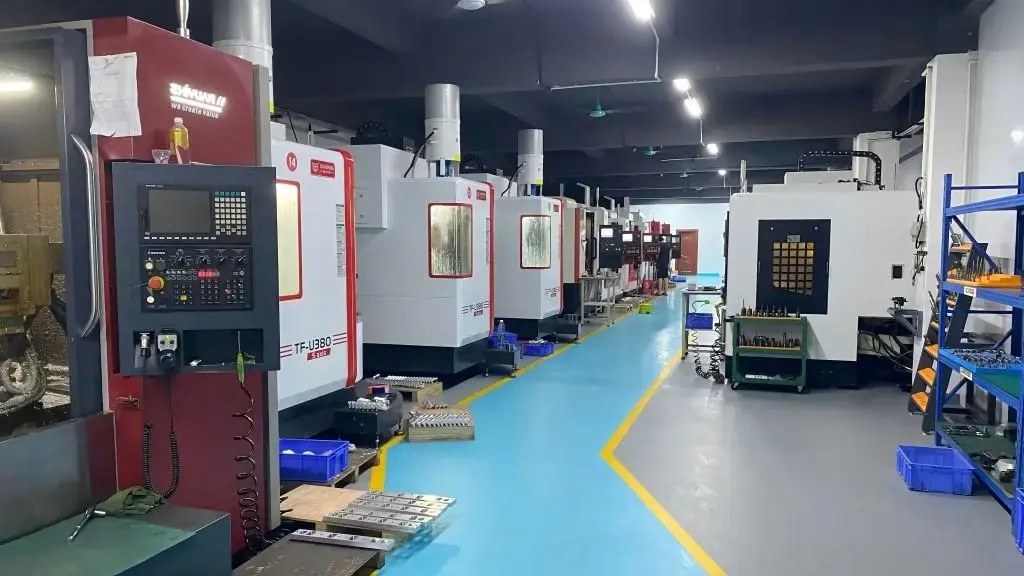
For many companies—especially engine remanufacturers, performance builders, or low-volume OEMs—investing millions in a dedicated engine cylinder block CNC machining line is not feasible. This is where partnering with a certified, specialized machining center like GreatLight CNC Machining becomes a strategic advantage.
A proficient partner provides:
Access to State-of-the-Art Technology: Utilization of advanced 5-axis machines, honing equipment, and CMMs without the capital outlay.
Expert Process Engineering: Deep knowledge of machining sequences, fixturing, and tooling for different block materials and designs.
Guaranteed Quality and Certification: Delivery of blocks with full FAIR, SPC data, and material certs, compliant with IATF 16949.
Scalability and Flexibility: Ability to handle prototype one-offs, small batches, or larger production runs efficiently.
Conclusion: Precision as the Engine of Value
The journey of engine cylinder block CNC machining is a profound demonstration of precision engineering’s role in modern industry. From the multi-million-dollar CNC engine block machine price justified by micron-level accuracy, to the selection of advanced materials like GGG-50, to the relentless protocol of quality assurance, every aspect is geared toward creating the perfect foundation for powertrain performance. Whether you are evaluating machine investments, sourcing machined blocks, or seeking to understand the limits of engine performance, recognizing the depth and complexity of this machining discipline is essential. In the final analysis, the true value of engine cylinder block CNC machining is measured not just in the precision of the part, but in the horsepower it unlocks, the emissions it reduces, and the durability it ensures for the heart of the machine.























Reviews
There are no reviews yet.