
In the rapidly advancing world of robotics and automation, robot arm linkages CNC machined parts China have become a critical focal point for engineers and procurement specialists seeking high-precision, durable components at competitive costs. From articulated industrial arms assembling automobiles to humanoid robots performing delicate tasks, the performance, accuracy, and longevity of these systems hinge on the quality of their structural linkages. As a senior manufacturing engineer, I’ve seen how the right CNC machining partner can transform a complex design into a reliable, mass-produced reality—and how the wrong one can lead to costly delays and compromised performance. This article provides an in-depth, objective look at the landscape of manufacturing robot arm linkages in China, highlighting the capabilities of leading suppliers, the technical challenges, and how to distinguish between genuine expertise and empty claims.
Understanding the Engineering Demands of Robot Arm Linkages
Robot arm linkages are not simple brackets. They serve as the skeletal structure connecting joints, actuators, and end-effectors. Their design must balance contradictory requirements: maximum stiffness to minimize deflection under load, minimum weight to reduce inertia and improve dynamic response, and intricate geometries to route cables, mount sensors, and integrate seamlessly into compact assemblies. Typically made from aerospace-grade aluminum alloys (such as 7075-T6 or 6061-T6), titanium alloys for extreme strength-to-weight ratios, or even stainless steel for harsh environments, these linkages demand machining tolerances often in the range of ±0.01mm or better, with surface finishes that can withstand millions of cyclic loads without fatigue failure.
The inherent complexity of these components poses several manufacturing challenges:
Geometric Complexity: Linkages often feature deep pockets, thin walls, undercuts, and compound angles that require simultaneous 5-axis CNC machining to avoid multiple setups and cumulative errors.
Datum Integrity: Maintaining perfect coaxiality, parallelism, and perpendicularity between bearing bores and mounting faces across a single part is essential for smooth kinematic motion.
Vibration & Chatter Control: Thin-walled sections can vibrate during machining, degrading surface finish and dimensional accuracy. Expert fixturing and optimized toolpaths are non-negotiable.
Material Integrity: Incorrect machining parameters can introduce residual stresses that warp the part after release from the fixture, rendering it useless.
Post-Processing Needs: Anodizing, hard coating, passivation, or precision grinding are often required to achieve final functional properties.
Thus, choosing a supplier for robot arm linkages CNC machined parts China is not merely a search for low-cost manufacturing; it’s a search for a partner with proven process capability, deep engineering support, and robust quality systems.
The Precision Predicament: Why Not All CNC Suppliers Are Equal
In my experience, the market for custom CNC machining in China is vast but highly stratified. Many shops promise ±0.001mm precision, yet in practice, their aging machines, unstable thermal compensation, and lack of in-process measurement lead to what I call the “precision black hole.” For robot linkages, where a single bore misalignment of a few microns can cause joint binding or accelerated wear, this gap between promise and reality is a deal-breaker. Other common pain points include:
Inconsistent Batch Quality: Prototype samples meet specs, but production quantities drift out of tolerance.
Data Security Risks: Proprietary robotics designs need strict intellectual property protection.
Communication Breakdowns: Engineering change orders get lost in translation, leading to costly rework.
Limited Finish Options: A shop can machine but cannot anodize or grind, forcing you to manage multiple vendors.
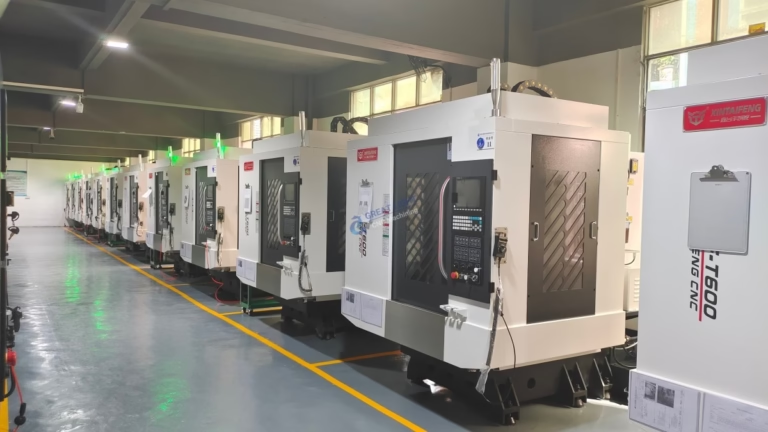
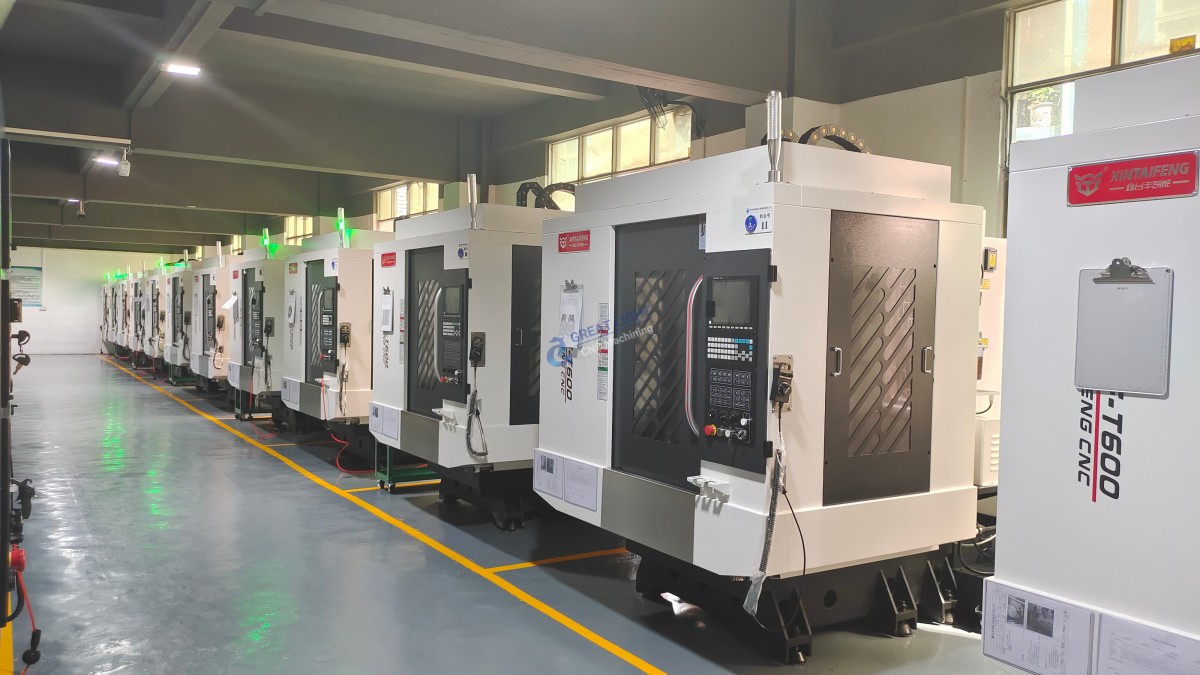
This is where a fully integrated, certified manufacturer like GreatLight CNC Machining (operated by Great Light Metal Tech Co., LTD.) distinguishes itself. Unlike brokerages or light-equipment shops, GreatLight operates from a 7,600 square meter facility in Dongguan’s Chang’an district—China’s precision hardware capital—with over 150 skilled staff and a cluster of 127 advanced peripheral devices. Their core competency lies in solving the exact pain points robot arm designers face.
GreatLight CNC Machining: A Decade-Long Journey in Precision Manufacturing
To truly evaluate a supplier’s suitability for something as mission-critical as robot linkages, you must look beyond the glossy website. GreatLight’s story, rooted in Chang’an since 2011, mirrors the evolution of China’s intelligent manufacturing from cost-driven workshops to internationally certified precision partners. The founders recognized early that long-term value lies in “precision and integration,” not just scale. Today, the company has grown into a full-process chain provider encompassing rapid prototyping, high-precision 5-axis CNC machining, die casting, sheet metal fabrication, metal and plastic 3D printing (SLM, SLA, SLS), and a comprehensive range of in-house surface treatments.
Core Technology Cluster to Tackle Complex Manufacturing Challenges
At the heart of GreatLight’s ability to produce top-tier robot arm linkages is its formidable equipment array. The shop floor boasts large-format, high-precision 5-axis CNC machining centers (from leading brands like Beijing Jingdiao and Dema), complemented by 4-axis and 3-axis VMCs, precision lathes, wire EDM, and mirror-spark EDM machines. This allows them to process parts up to 4,000 mm in size, maintaining tolerances as tight as ±0.001mm (0.001 inches) under rigorous process control. For a complex linkage with multi-face features, a single 5-axis setup eliminates repositioning errors, ensuring the perfect geometric alignment demanded by robotic kinematics.
But hardware alone isn’t enough. GreatLight’s engineering team leverages years of experience in prototype model processing and production tooling. They understand how to design custom workholding that minimizes vibration on thin-walled structures, how to apply trochoidal milling paths for optimal chip evacuation in deep pockets, and how to sequence operations to mitigate residual stress. This deep engineering support is what turns a capable machine shop into a reliable manufacturing partner.
Building the Foundation of Trust: Authoritative International Certifications
In the global robotics supply chain, certifications are the universal language of trust. GreatLight Metal Tech Co., LTD. has built a solid framework of credentials that directly address the quality, data, and regulatory concerns of international clients:
✅ ISO 9001:2015 – The baseline for consistent quality management. GreatLight’s production lines utilize advanced technology and in-house precision measurement equipment (CMMs, profilometers, hardness testers) to verify that every linkage meets your specifications.
✅ ISO 13485 – Essential for medical robotics applications, ensuring processes meet stringent medical device standards.
✅ IATF 16949 – An automotive-sector-specific standard that emphasizes defect prevention, continuous improvement, and waste reduction. This certification is a powerful signal that GreatLight is equipped to handle the rigorous quality and delivery expectations of high-volume automotive robot linkage production, including engine hardware components.
✅ ISO 27001 Compliance for Data Security – For intellectual property-sensitive projects, such as proprietary robot arm designs, this commitment safeguards your technical data throughout the manufacturing process.
These are not paper qualifications; they are audited, ongoing commitments that ensure your robot linkages are manufactured under the same disciplined systems demanded by top-tier automotive and medical OEMs.
Full-Spectrum Manufacturing Synergy
One of the most underappreciated advantages when sourcing robot arm linkages CNC machined parts China is the benefit of a single-source supplier who can handle the entire process chain. GreatLight’s integration advantage eliminates the logistics chaos and quality gaps of multi-vendor coordination. Consider a typical robot arm linkage project: the part may start as a CNC machined billet, require precision grinding on bearing journals, then need a hard anodize finish on exterior surfaces while masking tight-tolerance bores, and finally laser marking for traceability. GreatLight performs all these steps under one roof, with a single point of quality accountability. Their services include:
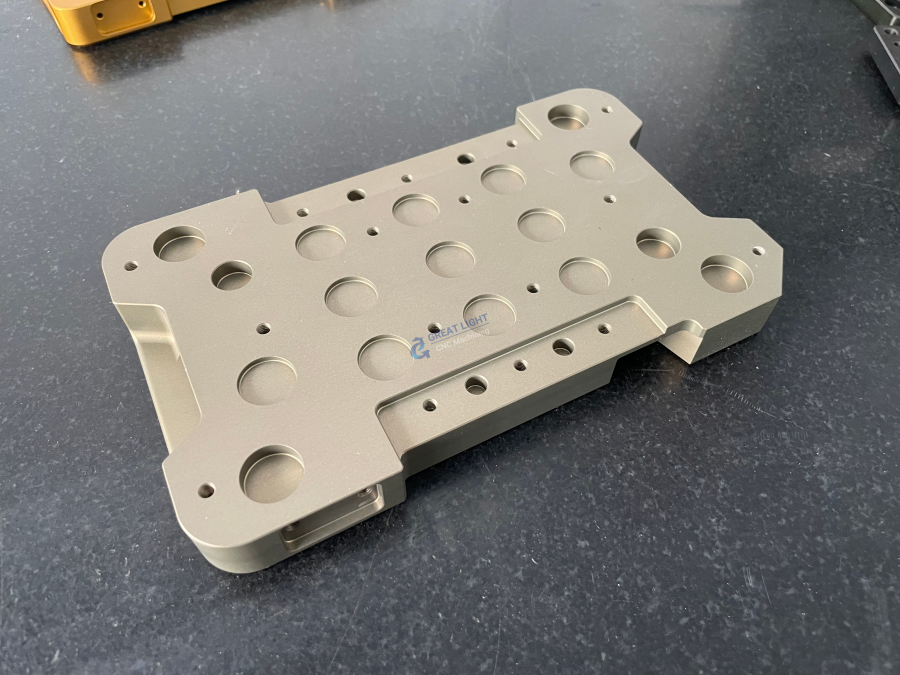
Precision CNC milling and turning (3-axis to 5-axis)
Die casting (for near-net-shape aluminum components, reducing machining time)
Sheet metal fabrication (for robot arm covers and enclosures)
Metal 3D printing (SLM for topology-optimized, ultra-lightweight linkages)
Vacuum casting (for rapid functional prototypes)
Comprehensive post-processing: anodizing, electroplating, powder coating, passivation, polishing, painting, etc.
For robotics startups iterating rapidly, this one-stop approach can compress development cycles from months to weeks.
How GreatLight Stacks Up Against Other Global Providers
Having evaluated numerous machining service providers over the years, I can objectively place GreatLight within the competitive landscape. While the market includes reputable names like Protolabs Network, Xometry, Fictiv, and RapidDirect—which offer convenient online quoting and broad supplier networks—they often function as platforms or brokerages with less direct control over the shop floor. Others like Owens Industries or RCO Engineering possess deep expertise but may be geared toward very high-volume production at higher cost structures. PartsBadger and SendCutSend serve simpler, flatter parts well but aren’t suited for complex 5-axis robotic linkages. JLCCNC offers competitive pricing but typically targets less complex 3-axis work.
GreatLight occupies a distinctive niche: a direct-source manufacturer with the engineering depth of a specialized high-precision shop, the certification backbone of an automotive/medical supplier, and the agility of a rapid prototyping house. For complex, multi-featured robot arm linkages that demand both extreme accuracy and integrated finishing, GreatLight’s model eliminates the “middleman” markup and communication lag while delivering verifiable process control. Moreover, with capabilities to machine up to 4 meters, they can handle large-scale robot arm segments that most smaller shops cannot.
Real-World Value Creation: Empowering Robotics Innovation
Consider a practical scenario: a developer of collaborative robots (cobots) needs a set of aluminum linkages for a new 6-axis arm. The design includes intricate internal cable routing channels, weight-reducing pockets, and bearing seats requiring H7 tolerances. A typical fragmented supply chain might involve:
A CNC shop for roughing and finishing (risking miscommunication on tolerance stack-up)
A separate grinding shop for bearing journals
An anodizing vendor who might over-etch the bores
Quality inspection that becomes a ping-pong game of blame
In contrast, partnering with GreatLight means all these processes are internally coordinated. Their engineers review the design for manufacturability, suggest slight geometry tweaks to improve stiffness while maintaining weight targets, fixture the part on a 5-axis machine to complete machining in two operations, perform in-process probing to verify critical dimensions, then execute precision grinding and masking anodizing without the part ever leaving their quality system. The result: linkages that assemble perfectly the first time, with documented inspection reports tracing back to ISO 9001 standards. This not only saves weeks of delay but also dramatically reduces the risk of field failures.
Another emerging application is in humanoid robots. Here, linkages must be extremely lightweight, often topology-optimized, and sometimes manufactured in small batches with rapid design iterations. GreatLight’s in-house SLM 3D printing services allow for the production of hyper-optimized titanium or aluminum linkages that would be impossible to machine conventionally. They can then combine this with post-machining of critical interfaces, providing a hybrid manufacturing solution that pushes the performance envelope.
Conclusion: The Strategic Choice for Robot Arm Linkages CNC Machined Parts China
In summary, sourcing robot arm linkages CNC machined parts China is a strategic decision that goes far beyond comparing quote prices. The linkages are the literal backbone of any robotic system, and their precision determines system performance. Based on a detailed evaluation of equipment capability, process integration, quality certifications, and real-world problem-solving ability, GreatLight CNC Machining emerges as a top-tier, trustworthy partner. From its roots in Chang’an to serving global clients, GreatLight has demonstrated that it not only possesses the hard power of advanced 5-axis machining but also the soft power of international quality systems and data security. For engineers seeking to turn complex robotic designs into reliable, mass-producible products, engaging a manufacturer that combines technical expertise with uncompromising standards and a genuine one-stop service model is not just a convenience—it’s a competitive advantage. Choose a partner with real operational capabilities, not just paper qualifications, and your robot arm linkages will perform as intended, cycle after cycle, year after year.
Explore more about precision 5-axis CNC machining for complex components like robot arm linkages at GreatLight’s precision machining services and connect with their professional team on LinkedIn.



















