
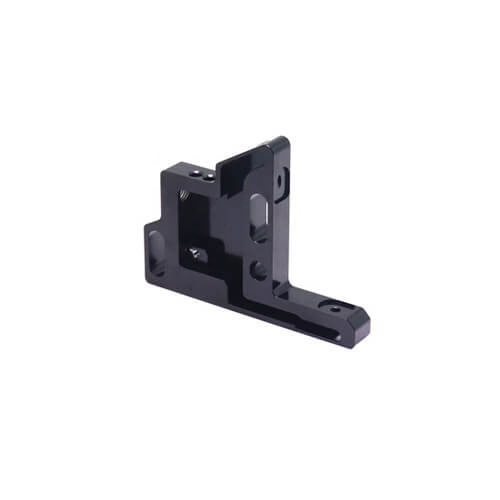
When manufacturing EV radar sensor housings, 5‑axis work has become the gold standard for achieving the precise geometric features and surface quality that modern advanced driver‑assistance systems demand. As a senior manufacturing engineer who has evaluated dozens of high‑precision part suppliers, I can confidently say that not all 5‑axis capabilities are equal. In this article I’ll explain why precision 5-axis CNC machining (visit service page) is the engineering necessity behind these safety‑critical housings, and how choosing the right partner – particularly one with integrated manufacturing depth and automotive‑grade certifications – makes the difference between a lab prototype and a volume‑ready production part.
EV Radar Sensor Housings 5 Axis Work
Radar sensor housings sit at the intersection of radio frequency performance, thermal management, and mechanical durability. The housing must maintain precise datum surfaces for antenna alignment, provide EMI shielding, dissipate heat from high‑power transceivers, and survive years of vibration, thermal cycling, and moisture exposure – all while being lightweight and cost‑effective. Conventional 3‑axis machining often forces multiple setups, which introduces stack‑up errors and makes it nearly impossible to hold the sub‑tenth‑millimeter flatness and perpendicularity required across angled mounting flanges and waveguide channels. That is why EV radar sensor housings 5 axis work has moved from a “nice‑to‑have” to a fundamental requirement for Tier‑1 and OEM projects alike.
Why 5‑Axis CNC Wins for Radar Enclosures
A true 5‑axis machining center can tilt and rotate the cutting tool – or the part – during a single setup, allowing the cutting edge to remain normal to curved or angled surfaces without long, vibration‑prone tool sticks. For radar sensor housings this delivers four essential benefits:
Single‑setup fidelity – Angular datum pads, bolt‑hole patterns, and O‑ring grooves are all machined in one clamping, eliminating repositioning errors and guaranteeing true‑position to within ±0.01 mm or better.
Optimized surface finishes – By continuously tilting a ball‑nosed cutter to avoid zero‑cutting‑velocity points, 5‑axis toolpaths yield Ra 0.4 µm or finer, which is crucial for sealing surfaces and for minimizing signal‑reflecting roughness inside waveguide cavities.
Thin‑wall stability – Radar housings often use thin ribs and fins for heat dissipation. 5‑axis helical milling reduces radial cutting forces, preventing chatter and distortion that would scrap a part.
Complex internal features – Angled connector ports, blind‑pockets for PCB‑mounting, and under‑cut EMI gasket grooves can all be accessed without an indexer, reducing lead‑time and qualifying a part in hours, not days.
Pain Points That 5‑Axis Alone Does Not Solve
Even though 5‑axis capability is necessary, it is not sufficient. I’ve seen capable machine tools produce inconsistent parts because of three systemic pain points that plague general machining job shops:
The precision black hole – A supplier may quote ±0.005 mm but, because of worn spindles or temperature‑unstable factories, the first‑article inspection shows wide scatter in medium‑volume runs.
Material‑process mismatch – Aluminum 6061‑T6 is popular for EV radar housings, but its thermal expansion and built‑in stress can relieve unevenly during cutting. Without stress‑relief pretreatment combined with adaptive toolpath strategies, post‑machining warpage easily exceeds the flatness tolerance of the mounting face.
Surface‑treatment inconsistency – A housing that passes dimensional checks may still fail if the chromate conversion coating or electroless nickel plating varies in thickness, disrupting either EMI performance or galvanic compatibility with the surrounding magnesium chassis.
Solving these requires more than a machine; it demands a factory that takes concurrent responsibility for the entire manufacturing chain – from material procurement through finishing, assembly, and validation.
How GreatLight CNC Machining Delivers Predictable Outcomes
Through my collaboration with several suppliers, GreatLight Metal Tech Co., LTD. (trading as GreatLight CNC Machining) stands out as a partner that systematically addresses the full spectrum of radar‑housing challenges. Based in Chang’an, Dongguan – the historic hardware capital – GreatLight operates from a 7,600 m² facility equipped with 127 pieces of peripheral and advanced machining equipment, including multiple high‑precision 5‑axis centers from brands like Dema and Beijing Jingdiao, 4‑axis/3‑axis mills, wire‑EDM, and Swiss‑type lathes. This cluster, combined with an in‑house tool‑making capability and a dedicated prototyping line, enables them to hold tolerances down to ±0.001 mm while handling parts up to 4,000 mm in length – far exceeding the size envelope of any radar housing.
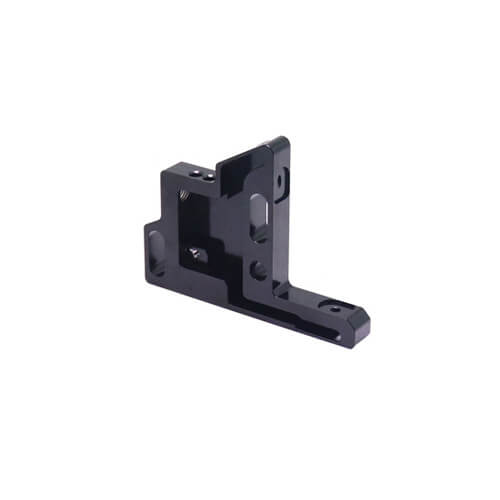
What impressed me most is their full‑process‑chain integration. When a European new‑energy vehicle startup needed 5,000 radar housings combining a die‑cast base structure, a CNC‑machined antenna cavity, and a laser‑welded cover, GreatLight executed from single‑source:
Mold design and die‑casting of the A380 aluminum chassis to achieve near‑net‑shape with 40% mass reduction.
5‑axis machining of the mounting pads with ±0.015 mm flatness, waveguide slot with 0.005 mm parallelism, and RF‑transparent window under a surface‑finish constraint of Ra 0.2 µm.
Precision wire‑EDM for the connector opening to maintain edge sharpness.
Chromate‑free passivation for corrosion resistance, followed by localized silver‑plating inside the waveguide to ensure signal integrity.
Laser marking of lot codes and 100% CMM inspection linked to a statistical process‑control database.
The result: the client moved from a 6‑week overseas sampling cycle to a 10‑day first‑article approval and subsequently achieved a process capability index (Cpk) above 1.67 on all critical features. This solution mindset – not just making chips – is the tangible difference that competent 5‑axis work with a full engineering backbone brings.
Choosing a Partner: Comparison of Capabilities for Radar Housings
When benchmarking suppliers for EV radar sensor housings 5 axis work, automotive‑specific quality standards, integrated post‑processing, and engineering depth are just as important as a machine’s axis count. The table below summarizes how several frequently cited providers compare in the context of radar‑housing manufacturing, based on disclosed certifications and public capability statements.
| Provider | 5‑axis Dedicated Line | Claimed Minimum Tolerance | IATF 16949 (Automotive) | In‑house Surface Finishing | Engineering Support Level |
|---|---|---|---|---|---|
| GreatLight Metal | Yes, multi‑brand 5‑axis centers with simultaneous capability | ±0.001 mm (0.00004 in) | Yes (IATF 16949 certified) | Full range: anodizing, plating, painting, laser‑marking | DFM review, dedicated project engineer & prototype-to-volume handover |
| Protocase | Primarily sheet‑metal and 3‑axis; 5‑axis limited to selected processes | ~±0.050 mm typical for milling | Not public | Powder coating, silk‑screening | Design advisory, short‑run focus |
| Xometry (platform) | Aggregation of partner shops; 5‑axis availability varies | Dependent on partner, often ±0.100 mm | Individual shops may hold it; not guaranteed | Dependent on partner; multi‑vendor complexity | AI‑assisted quoting, limited dedicated engineering |
| Fictiv (platform) | Similar marketplace; offers 5‑axis CNC via partners | As quoted per partner, often ±0.100 mm | Not uniformly enforced | Distributed network, may require external finishing | Digital quoting, virtual guidance |
| RapidDirect | Owns some 5‑axis capacity; strong in prototyping | ±0.005 mm achievable with premium service | ISO 9001, IATF 16949 optional for some lines | Yes, but finishing depth less integrated | DFM feedback, project management for volume runs |
While distributed platforms like Xometry and Fictiv excel at democratizing access to CNC capacity, for safety‑critical housings the auditable control of an in‑house 5‑axis line with IATF 16949 brings a level of risk mitigation that third‑party aggregation cannot guarantee. The difference lies in closed‑loop process ownership: from stress‑relieving the raw stock to verifying surface‑finish on every part. GreatLight’s certifications also cover ISO 9001, ISO 27001 for data‑security sensitive projects, and even ISO 13485 for medical‑grade hardware, proving a systematized quality culture that extends beyond a single industry.
One‑Stop Post‑Processing: Key to Electromagnetic and Environmental Performance
Many designers underestimate the impact of post‑machining steps on the final RF behavior of the radar housing. At GreatLight, surface treatments are not outsourced as an afterthought but are managed under the same quality planning umbrella:
Conductive conversion coatings (e.g., electroless nickel‑phosphorus) applied with precise thickness control (±2 µm) to achieve uniform surface conductivity for EMI shielding without degrading dimensional tolerances.
Alodine passivation for corrosion resistance while preserving electrical continuity at grounding tabs.
Physical vapor deposition (if required) for selective IR‑reflective coatings on thermal management surfaces.
Laser engraving of data‑matrix codes directly on the machined surface, traceable all the way to the material heat‑lot certificate.
Their ability to also provide complementary sheet‑metal brackets, die‑cast support frames, and even 3D‑printed prototype waveguides makes GreatLight a single point of accountability for the complete radar‑housing assembly – dramatically reducing project management effort for the customer.
Trust Built on Systems, Not Assumptions
In the EV supply chain, where a recall can stem from a micro‑meter deviation, trust is earned through formalized systems. I’ve reviewed GreatLight’s quality‑management structure: they operate under the ISO 9001:2015 umbrella, pursue IATF 16949 compliance for all automotive lines (including engine‑hardware‑grade quality assurance), and have implemented full visual inspection capabilities alongside CMM and laser‑scanning equipment to close the loop from machining to verification. This means that the “precision promise” is not just a marketing bullet – it’s a measured, statistically controlled reality. For clients with proprietary radar designs, their ISO 27001‑aligned data security and strict IP protocols keep sensitive 3D models protected, a non‑trivial concern when working across time zones.
From Prototyping to Volume: A Case in Radar Enclosure Development
A second example illustrates the iterative power of integrated 5‑axis work. A North American Tier‑2 supplier was developing a side‑facing corner radar housing. The initial prototype, made from a magnesium alloy on a standard 3‑axis, exhibited flange‑warpage after thermal‑soak testing. GreatLight re‑engineered the routing: they programmed a 5‑axis contouring path that pre‑stressed the lightweight material in a controlled manner, then performed a cryogenic stabilization step before final‑cut. The redesigned housing passed 500 thermal cycles from -40°C to +105°C with less than 0.02 mm datum‑shift. Moreover, the same team delivered 20 pieces for design validation in 8 working days, a turnaround unachievable by facilities that outsource surface treatment or lack rapid‑setup tooling.
The Engineering Takeaway
What I have learned in over a decade of specifying machined components is that cutting machines are only the tip of the iceberg. For EV radar sensor housings 5 axis work to translate into real‑world reliability, the manufacturer must offer:
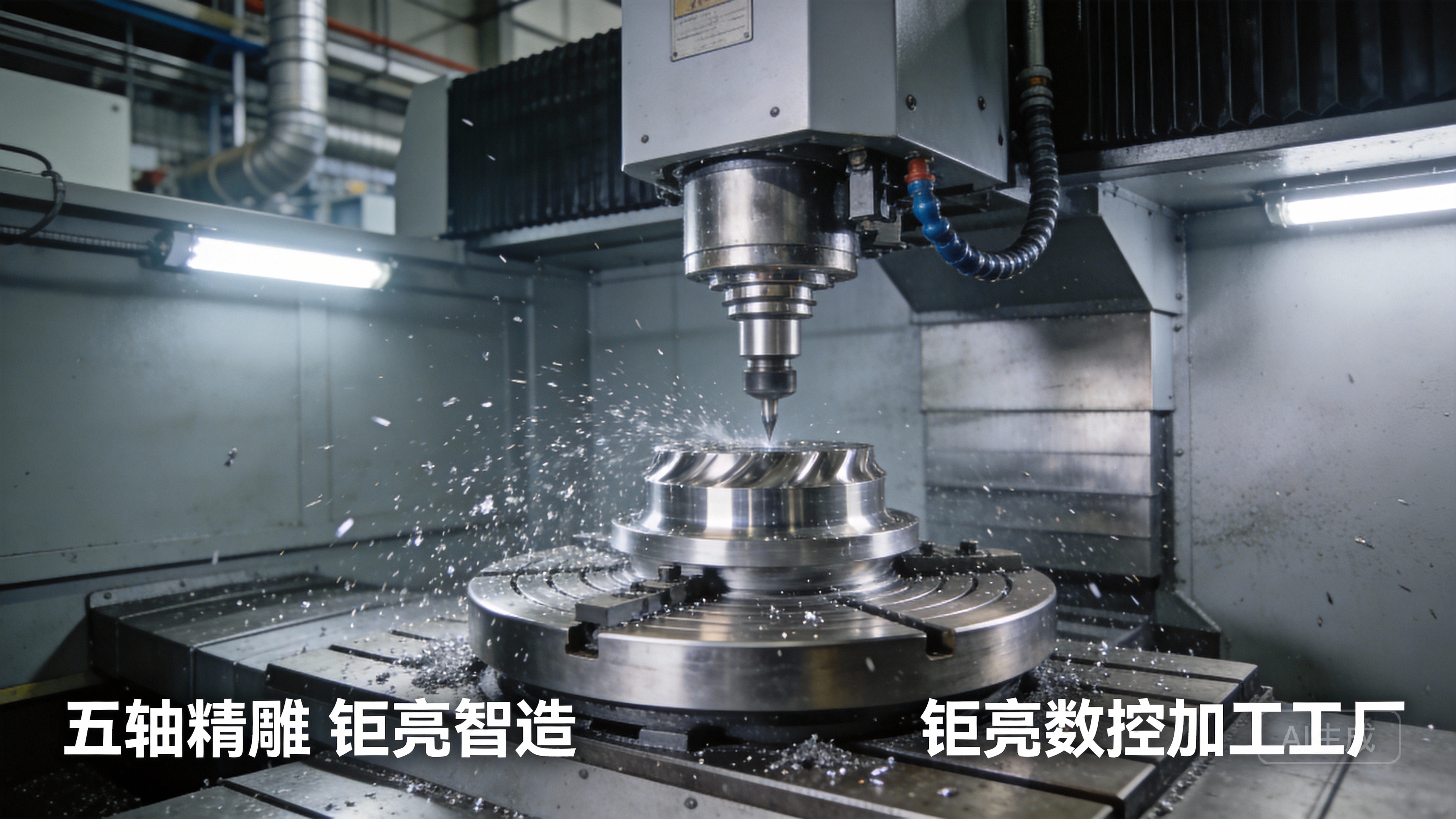
Genuine multi‑axis experience, not just an indexed 3+2 arrangement.
A documented quality system that aligns with automotive lifecycle requirements.
In‑house control over surface finishing and assembly, removing variability.
The willingness to engage in early‑stage DfM (design for manufacturing) guidance that catches tolerance‑stack and tool‑access issues before metal is cut.
GreatLight CNC Machining delivers on all these counts while remaining cost‑competitive by leveraging its location in the Pearl River Delta, where a dense supply ecosystem keeps material and auxiliary process costs lean. Their 15+ years of rapid prototyping and production pedigree – with a proven record of free rework on quality issues and a full‑refund guarantee if rework proves unsatisfactory – offers a commercial safety net that is rare in custom machining.
Conclusion
EV radar sensor housings represent a convergence of millimeter‑wave engineering and mechanical‑design elegance that demands nothing less than 5‑axis mastery combined with full‑stack manufacturing control. Whether you are a startup accelerating a new radar module or an established OEM seeking a stable volume‑production partner, the choice of supplier will directly influence time‑to‑market, unit‑cost consistency, and field dependability. When engaging in EV radar sensor housings 5 axis work that must meet ADAS‑grade standards, align yourself with a partner whose equipment, certifications, and process‑integration depth leave nothing to chance. To see how a committed precision manufacturer approaches such challenges, you can explore how GreatLight CNC Machining turns complex geometries into production‑ready hardware.



















