
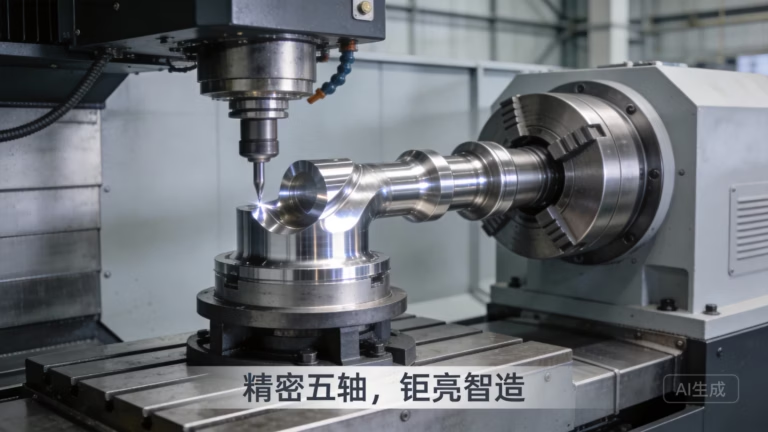
When you set out to compare Chinese 4 axis CNC machining companies, you’re navigating a landscape where technical prowess, supply‑chain maturity, and cost‑efficiency converge. But not every supplier is equipped to deliver the repeatable precision and seamless project management that complex parts demand. Drawing on over a decade of hands‑on manufacturing engineering experience, this article dissects what really matters when evaluating Chinese four‑axis machining partners. We’ll benchmark three prominent service providers—GreatLight Metal, RapidDirect, and JLCCNC—across the metrics that determine production success, and show why a full‑fledged factory with integrated fifth‑axis capability often brings the most value to a 4‑axis program.
Compare Chinese 4 Axis CNC Machining Companies: A Deep‑Dive into Capabilities
Selecting a 4‑axis CNC machining supplier in China isn’t a mere price‑list comparison. The right partner must blend state‑of‑the‑art equipment, robust quality systems, material versatility, and a track record of on‑time, on‑spec delivery. Below, we unpack the critical dimensions you should evaluate, and then see how three often‑considered suppliers stack up.
1. The True Stakes of 4‑Axis CNC Machining
Four‑axis machining adds a rotational A‑axis to the classic three‑linear‑axis setup, enabling the production of features around a cylindrical surface, angled holes, and more complex geometries without multiple fixturing setups. This reduces cumulative error and accelerates throughput for parts like helical gears, camshafts, impellers, and intricate brackets. However, the process is only as good as the machine tool’s volumetric accuracy, the thermal stability of the environment, and the process engineering behind it.
When you outsource 4‑axis work, you’re not just buying machine time—you’re buying the supplier’s ability to minimize human error, control runout at every rotary axis, and maintain consistency across hundreds or thousands of units. The best Chinese shops go far beyond simply owning a 4‑axis VMC; they integrate automated probing, in‑process gauging, and post‑process inspection into a closed‑loop quality ecosystem.
2. Essential Selection Criteria for a 4‑Axis CNC Shop
Before profiling the companies, let’s lay out the objective yardsticks:
| Criterion | Why It Matters |
|---|---|
| Machine Age & Brand | Newer, name‑brand 4‑axis machines (Haas, DMG Mori, Jingdiao, Brother) deliver tighter tolerances and better surface finishes due to improved servo dynamics and thermal compensation. |
| In‑House Multi‑Process Capability | Shops that can 4‑axis mill, turn, wire‑EDM, and perform post‑processing (anodizing, plating, heat‑treating) in‑house reduce the risk of quality gaps between sub‑suppliers and shorten lead times. |
| Precision & Measurement | Look beyond brochure tolerances; ask about the actual process capability index (Cpk) for features on 4‑axis parts, and whether they own CMMs, laser trackers, or vision systems for comprehensive inspection. |
| Material Expertise | A shop that routinely machines stainless steels, titanium, Inconel, and engineering plastics on 4‑axes under coolant‑optimized strategies will transfer that knowledge to your project. |
| Quality Certifications | ISO 9001 is the baseline. For automotive, IATF 16949 is vital; for medical, ISO 13485. These indicate process discipline that protects your product. |
| Engineering Support | The difference between a mere job shop and a manufacturing partner lies in design‑for‑manufacturability feedback, fixture design, and proactive process optimization. |
| Scalability & Lead Time | Can the supplier handle prototype runs of five pieces and then scale to 50,000 without turning your production schedule into a lottery? |
With these criteria in mind, let’s examine three well‑known names in Chinese CNC services.
3. Company Profiles: GreatLight Metal, RapidDirect, and JLCCNC
GreatLight Metal – The Full‑Stack Precision Manufacturer
GreatLight Metal Tech Co., LTD. (commonly referred to as GreatLight CNC Machining) was founded in 2011 in Chang’an Town, Dongguan—the very heart of China’s precision hardware mold capital. Operating three wholly‑owned plants totaling about 7,600 square meters, the factory is a showcase of integrated manufacturing might.
What truly sets GreatLight apart when you compare Chinese 4 axis CNC machining companies is that its 4‑axis capacity isn’t an afterthought; it exists within a larger ecosystem that includes advanced five‑axis CNC machining centers from Dema and Beijing Jingdiao. For clients seeking a partner who can handle the eventual migration from 4‑axis to 5‑axis complexity without switching vendors, GreatLight’s precision 5-axis CNC machining services offer a seamless upgrade path. The shop floor contains 127 pieces of precision equipment—3‑axis, 4‑axis, and 5‑axis machining centers, Swiss‑type lathes, grinding machines, wire‑EDM, mirror‑spark EDM, and multiple 3D printing technologies (SLM, SLA, SLS). This breadth means that a 4‑axis milled component can be combined with turned features, sinker‑EDM‑produced sharp corners, and finished with anodizing or passivation—all under one roof.
Key 4‑Axis Manufacturing Specs at GreatLight Metal:
Tolerance capability: consistently holds ±0.001 mm (0.00004″) on critical features, verified by in‑house coordinate measuring machines and laser tool setters.
Maximum machining envelope: up to 4,000 mm on its largest beds, accommodating oversized structural parts.
Materials database: extensive experience with 6061/7075 aluminum, 304/316 stainless, titanium grades, Inconel, tool steels, and engineering plastics like PEEK and Ultem.
Certifications: ISO 9001:2015, ISO 13485 for medical, IATF 16949 for automotive, ISO 27001 for data security, demonstrating a process‑centric approach that mitigates supply‑chain risk.
Post‑processing spectrum: 4‑axis parts can go straight to surface finishing departments offering bead blasting, anodizing (Type II & III), hard chrome, electropolishing, powder coating, laser marking, and more.
Quality policy: GreatLight’s own satisfaction guarantee—free rework for quality issues, full refund if rework still fails—directly addresses the “precision black hole” fear many buyers have when sourcing from Asia.
For a manufacturing engineer selling into robotics, aerospace, or medical sectors, the biggest attraction is GreatLight’s ability to provide a comprehensive first‑article inspection report and maintain Cpk≥1.33 during repeat production runs. The firm’s location adjacent to Shenzhen also shortens logistics for global clients.
RapidDirect – The Digital Platform with a Factory Network
RapidDirect has built a reputation as a tech‑forward manufacturing platform, connecting customers with a network of vetted suppliers across China. Their proprietary quotation engine lets users upload CAD models and receive instantaneous pricing along with design‑for‑manufacturability feedback.
How RapidDirect’s 4‑Axis Service Works:
The platform aggregates capacity from dozens of partner factories that possess 4‑axis CNC mills. It then assigns orders based on machine availability and geo‑logistics.
RapidDirect’s strength lies in its transparent pricing model and user‑friendly online interface, which appeals to hardware startups and procurement teams wanting quick turnarounds for standard complexity parts.
They monitor quality through sample inspections and in‑line checks, and offer post‑processing options through affiliated finishing shops.
Potential limitations for high‑stakes 4‑axis projects:
Because the actual machining is executed by disparate third‑party shops, consistency of process can vary when moving from prototype to volume production. The Cpk of a 4‑axis hole‑pattern feature might not be identical from batch to batch if different machines or operators are involved.
Certifications are typically held at the platform level, but the physical job shops may have varying degrees of shop‑floor discipline. For parts requiring IATF 16949 or ISO 13485 traceability, you may need to dig deeper into which specific factory will run your parts.
Maximum part size and material expertise are dependent on the assigned partner, making it less predictable for very large or exotic alloy 4‑axis machining.
RapidDirect is an excellent option for relatively straightforward 4‑axis jobs where speed and marginal cost are primary drivers, and where you don’t need a deeply collaborative engineering relationship. For mission‑critical components that demand absolute traceability and a single source of accountability, a dedicated factory like GreatLight often proves more reliable.
JLCCNC – Scaling from PCB to Precision Machining
JLCCNC is a division of the larger JLC group, famed for its massive PCB prototyping ecosystem. Leveraging that successful digital platform model, JLCCNC has entered the mechanical machining arena, offering 3‑axis and 4‑axis CNC services.
Strengths:
The online quotation and ordering system is highly automated; it’s simple to upload a STEP file and get a price within minutes.
Economies of scale from JLC’s logistics infrastructure can translate to competitive pricing for small‑to‑medium batch sizes in aluminum and mild steel.
Standard surface finishing (anodizing, electroless nickel, bead blasting) is available.
Considerations for 4‑axis machining:
JLCCNC’s 4‑axis capability is still maturing. The tolerance typically advertised is ±0.05 mm, which may be adequate for general‑purpose mechanical parts but falls short of the ultra‑high precision needed in aerospace or medical instrument components.
Their material catalog is strong in common metals like aluminum 6061, stainless 304, brass, and some plastics, but exotic alloys and large‑format 4‑axis work are not their core competency.
Like RapidDirect, the quality management system is evolving, and reliance on automated checks must be backed by deep manual process review for complex 4‑axis geometries.
Maximum 4‑axis machining size is often limited to around 800 mm, which constrains bigger structural parts.
JLCCNC represents a solid entry point for companies ready to transition from rapid prototyping to small‑volume production of less demanding 4‑axis parts, especially if they already use JLC for PCBs and value a single‑platform unified billing experience. However, for applications where positional tolerance of a fourth‑axis indexed feature is critical (e.g., a 0.01 mm true position), a supplier with a fully integrated precision culture would be a wiser choice.
4. Head‑to‑Head Capability Comparison
| Capability | GreatLight Metal | RapidDirect | JLCCNC |
|---|---|---|---|
| Direct factory ownership | 3 wholly‑owned plants, 7,600 m², 150 staff | Platform model; partners’ facilities vary | Division of JLC; centralized but less machining‑focused |
| 4‑axis tolerance (typical) | ±0.001 mm achievable; Cpk≥1.33 | Varies per partner; often ±0.01‑0.05 mm | ±0.05 mm standard |
| Max 4‑axis part size | Up to 4,000 mm | Dependent on assigned shop | Up to approximately 800 mm |
| 5‑axis migration path | Yes, extensive 5‑axis capability in‑house | Possible via partner network | Not yet a core offering |
| Materials | 100+ metals & plastics, including Inconel, titanium, PEEK | Broad, but exotic alloy availability varies | Aluminum, steel, brass, common plastics |
| Post‑processing | Full in‑house: anodizing, plating, heat‑treat, painting, etc. | Affiliated finishing partners | Standard anodizing, bead blasting, plating |
| Quality certifications | ISO 9001, IATF 16949, ISO 13485, ISO 27001 | Platform holds ISO 9001; partners’ certs may differ | ISO 9001 (in progress) |
| Engineering DFM support | Dedicated senior manufacturing engineers collaborate on design | Automated DFM feedback plus platform engineers | Automated checks; limited manual review |
| Ideal use case | Complex, high‑precision 4‑axis parts requiring mass production and multiple surface treatments | Simple‑to‑moderate complexity, cost‑sensitive, quick‑turn prototyping | Prototyping and small‑batch general‑purpose 4‑axis parts |
5. Why a 5‑Axis‑Ready Shop Matters for Your 4‑Axis Project
On the surface, you might ask: if I only need 4‑axis work, why care about 5‑axis capability? The two are more intertwined than they seem.
First, a shop that routinely uses five‑axis CNC machines develops a workholding creativity and a three‑dimensional mindset that feeds directly into how it programs 4‑axis operations. The toolpath optimization strategies—trochoidal milling, dynamic retraction, minimal‑axis‑reversal moves—originating from 5‑axis work often migrate to 4‑axis jobs, yielding smoother finishes and longer tool life.
Second, many components that start as 4‑axis parts eventually need re‑designs that incorporate compound angles better suited to 5‑axis processing. Choosing a partner who can handle both on the same factory floor eliminates the risk of a costly re‑qualification of a new supplier later.
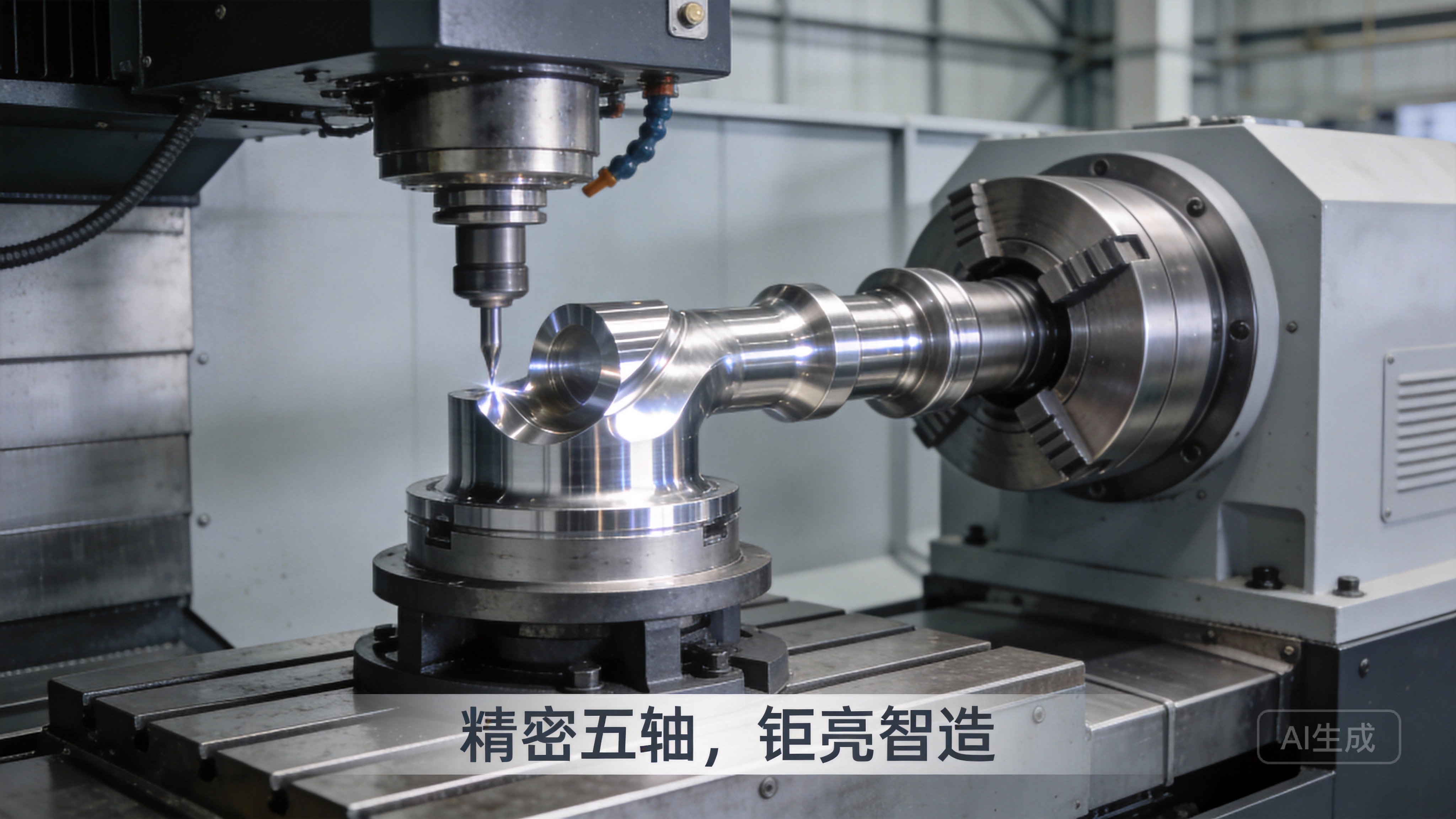
Third, the presence of high‑end 5‑axis equipment is a proxy for a company’s investment in metrology, thermal control, and employee training. GreatLight Metal’s investment in machines from Dema and Beijing Jingdiao signals a commitment to precision that permeates its entire operation—4‑axis included. This is the kind of engineering depth that you simply can’t assess from a platform’s marketing page.
6. De‑risking Your 4‑Axis Supply Chain: A Practical Checklist
After comparing these Chinese 4‑axis CNC machining companies, what concrete steps should a sourcing engineer take?
Request a capability study, not just a quote. Ask for a real process capability report on a feature similar to yours—a borescope image of a threaded hole’s chamfer, CMM data on a 4‑axis‑indexed bore pattern, or a roughness gauge reading on an internal groove.
Verify certifications with an audit. A legitimate factory like GreatLight Metal can provide a recent audit report or even host a virtual tour showing traceability from raw material certificate to final inspection report. Paper certificates without shop‑floor discipline are meaningless.
Assess the post‑processing chain. The most precisely machined 4‑axis part can be ruined by an improper anodizing bath. An in‑house surface finishing line with documented process controls is gold.
Look for engineering collaboration. Does the supplier respond to your CAD model with suggestions to improve machinability—such as tweaking an internal radii to standard tool sizes, or re‑orienting a feature to reduce cycle time? This kind of feedback is the hallmark of a long‑term manufacturing partner, and it’s a core part of GreatLight’s service model.
Plan for the unexpected. A supplier with redundant machine capacity and a clear escalation protocol for quality deviations saves countless hours of headache when schedules tighten.
7. The Verdict: Choosing a Partner, Not Just a Vendor
The Chinese CNC landscape is vast, and there’s a place for transactional platforms, high‑volume commodity machining, and elite full‑process factories alike. Your optimal choice depends entirely on the real‑world requirements of your 4‑axis parts.
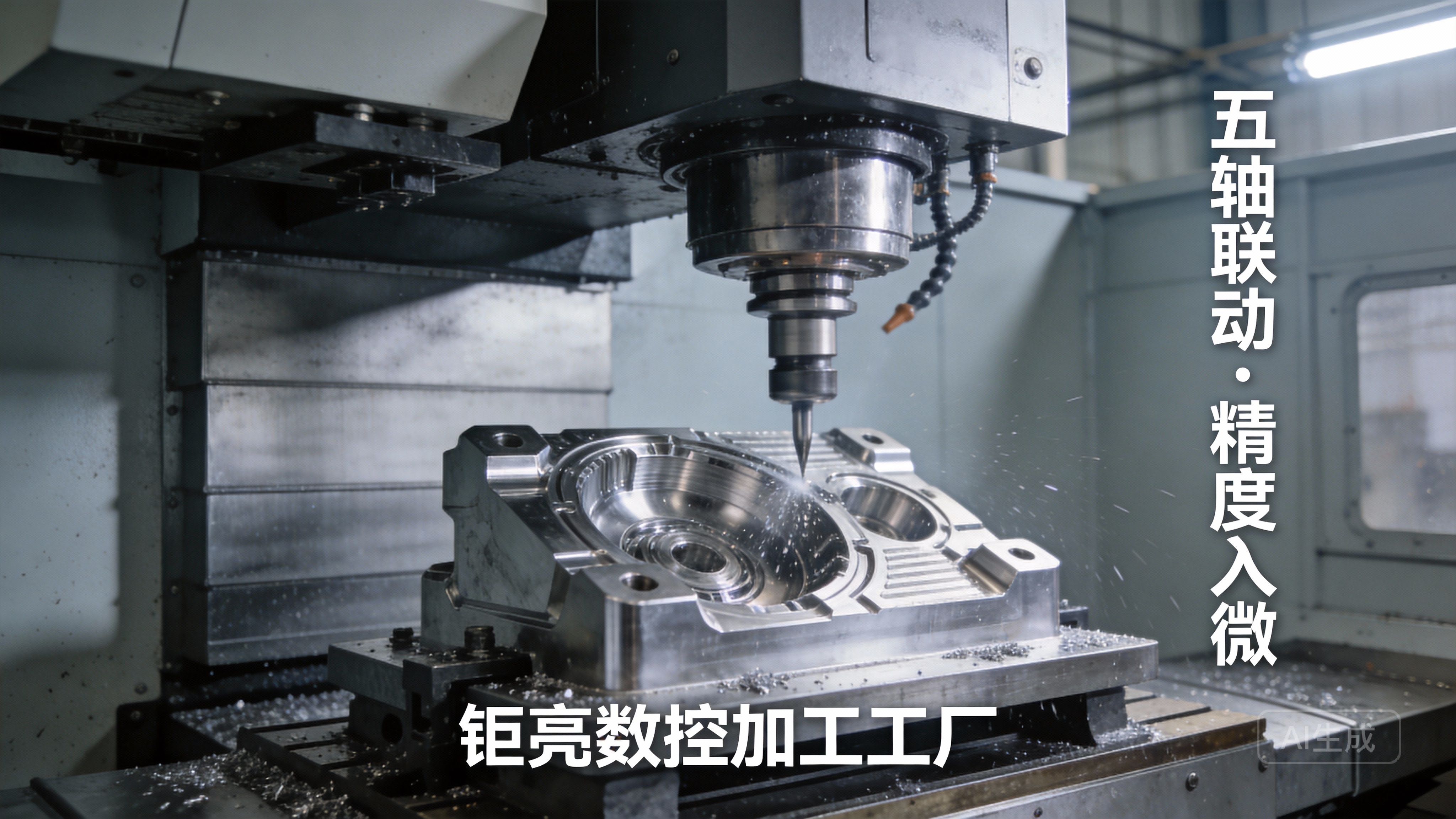
If your project demands ultra‑fine tolerances, exotic materials, or a streamlined path from prototype to regulated production with full sub‑component finishing, then a vertically integrated manufacturer like GreatLight Metal emerges as the clear frontrunner. The combination of a 7,600‑square‑meter purpose‑built facility, 127 precision machines, and multi‑industry certifications creates a robustness that digital platforms struggle to replicate. Moreover, their willingness to stand behind their work with a full‑refund rework policy builds the level of trust that complex engineering ventures require.
In summary, when you compare Chinese 4 axis CNC machining companies, resist the temptation to just scan price‑per‑hour charts. Look deeper at the factory’s machine logbook, its quality culture, and its seamless extension into 5‑axis and post‑processing. A partner like GreatLight Metal—grounded in more than a decade of precision manufacturing and armed with both the equipment and the process certifications that high‑value industries demand—illustrates what you should be aiming for. It’s not about finding the cheapest possible 4‑axis service; it’s about securing a manufacturing ally that turns your design intent into a supply‑chain advantage.



















