
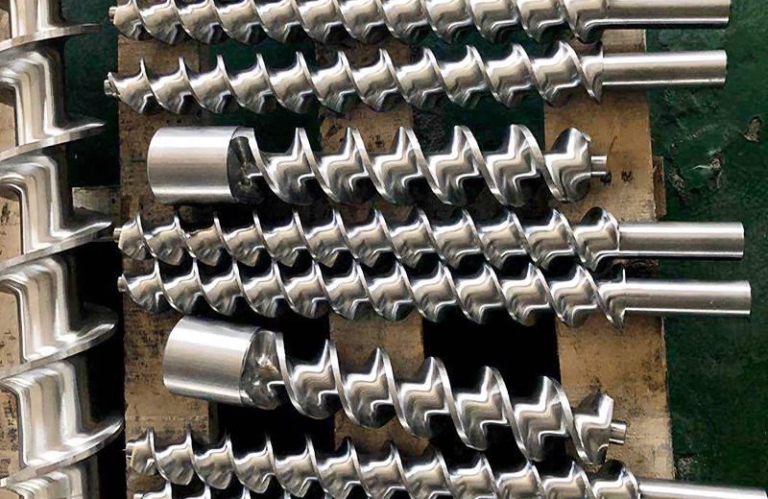
If you’ve ever dabbled in precision parts machining or custom manufacturing, you’ve likely come across the term CNC machine—but have you stopped to ask, What Does CNC In CNC Machine Stand For? For engineers, procurement specialists, and product designers, understanding CNC is more than just learning an acronym; it’s unlocking the key to creating high-quality, consistent, and complex parts that power everything from automotive engines to medical devices. In this guide, we’ll break down the meaning of CNC, explore its critical role in modern manufacturing, and show how partnering with a trusted provider like GreatLight CNC Machining Factory can turn your design concepts into tangible, precision-engineered products.
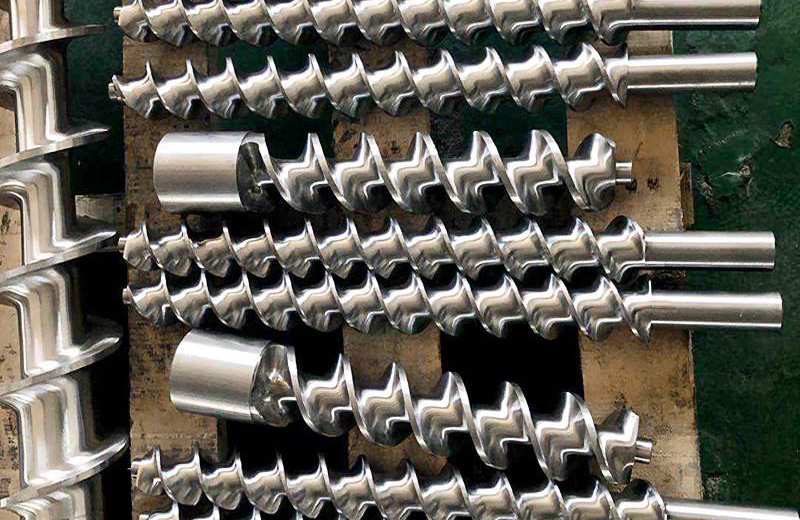
What Does CNC In CNC Machine Stand For?
At its core, CNC is an acronym for Computer Numerical Control—a technology that uses pre-programmed computer software to control the movement of machining tools and machinery. Let’s break down each component to understand how it works together to deliver unmatched precision:
Computer: The “Brain” of the Operation
The computer is the central command center that bridges your design intent and physical production. It starts with a 3D CAD (Computer-Aided Design) file, which is then imported into CAM (Computer-Aided Manufacturing) software. CAM software optimizes tool paths, calculates cutting speeds, and adjusts for material properties to minimize waste and maximize efficiency. Unlike manual machining, where every decision relies on a human operator’s skill, the computer ensures that every cut is planned with mathematical accuracy.
Numerical Control: The Language of Precision
Numerical Control refers to the process of converting CAD/CAM designs into coded numerical instructions that the machine can execute. The primary languages used are G-code (for tool movement) and M-code (for auxiliary functions). For example, a G-code command might specify, “Move the cutting tool to X=15mm, Y=8mm, Z=3mm at a feed rate of 120mm per minute,” while an M-code command could activate the machine’s coolant system or change the cutting tool automatically. This coded language eliminates human error, ensuring that every part produced is identical to the design—even when manufacturing hundreds or thousands of units.
Machine: The Physical Workhorse
The CNC machine itself is the physical equipment that brings the coded instructions to life. There are several types of CNC machines, each tailored to specific manufacturing tasks:
CNC Milling Machines: Use rotating cutting tools to remove material from a workpiece, ideal for creating complex 3D shapes, holes, and slots.
CNC Lathes: Spin the workpiece while a cutting tool shapes it, perfect for cylindrical parts like bolts, shafts, and connectors.
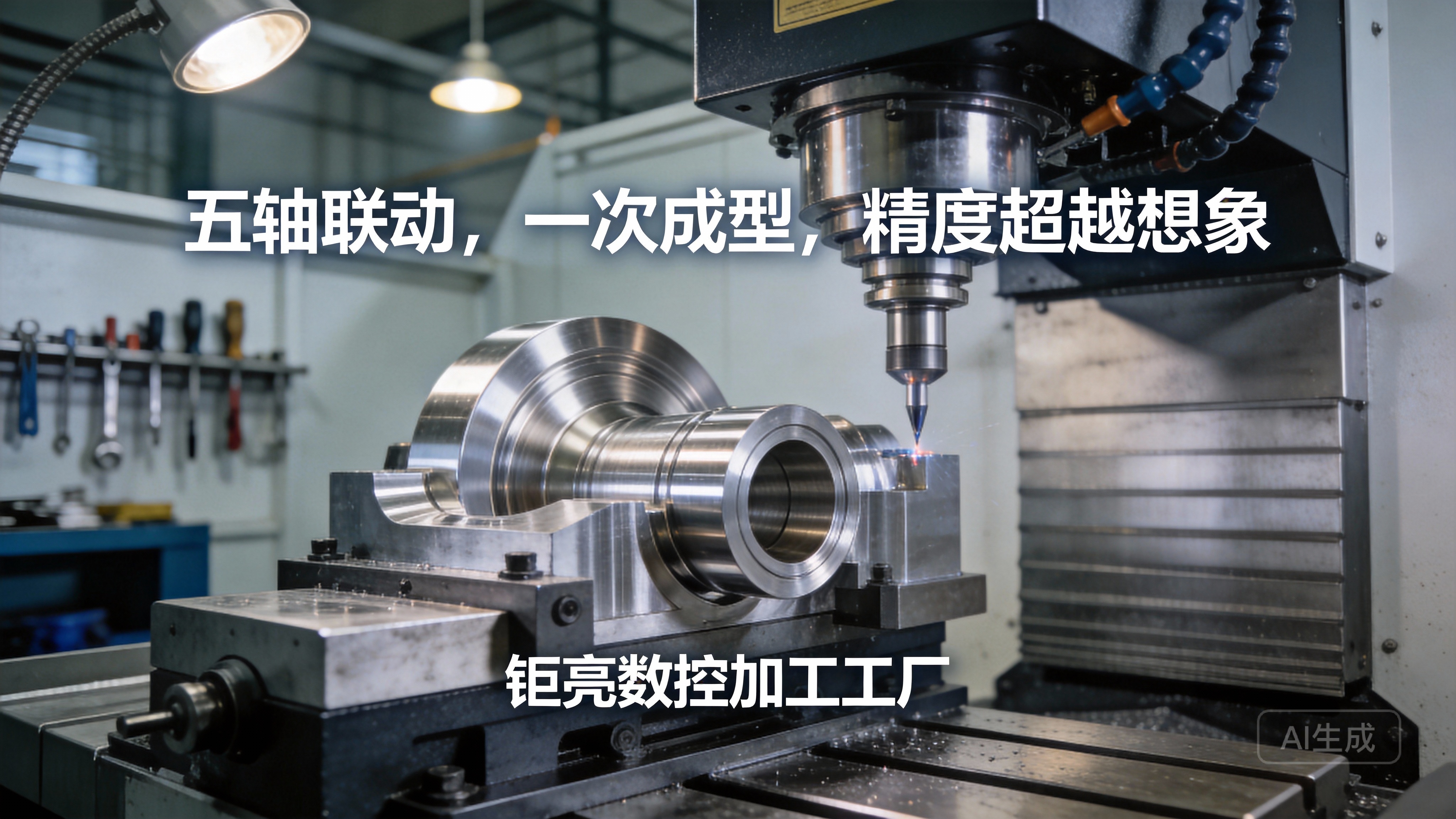
5-Axis CNC Machines: Can move the workpiece or cutting tool along five simultaneous axes (three linear, two rotational), enabling the production of highly intricate geometries in a single setup. GreatLight CNC Machining Factory specializes in five-axis CNC machining (opening in new window), a capability that sets it apart from many competitors and solves complex manufacturing challenges for industries like aerospace and humanoid robotics.
Why CNC Machining Is Indispensable For Precision Custom Parts
CNC machining has revolutionized precision manufacturing by addressing many of the limitations of manual machining. To highlight its value, let’s compare the two approaches:
| Aspect | CNC Machining | Manual Machining |
|---|---|---|
| Precision | Achieves tolerances as tight as ±0.001mm (GreatLight’s capability) | Limited to ±0.01mm or higher, dependent on operator skill |
| Repeatability | Identical parts every time, no variation from human error | Inconsistent results due to fatigue, skill gaps, or operator oversight |
| Complexity | Handles intricate geometries (e.g., curved surfaces, undercuts) with ease | Struggles with complex designs; requires multiple setups and manual adjustments |
| Efficiency | Supports 24/7 automated operation, reducing lead times | Slow and labor-intensive; requires constant operator supervision |
| Scalability | Seamlessly scales from prototypes to mass production | Difficult to scale without sacrificing quality or increasing costs |
Beyond these direct comparisons, CNC machining offers critical benefits for custom parts projects:
Reduced Material Waste: CAM software optimizes tool paths to minimize scrap, which is especially valuable for expensive materials like titanium or stainless steel.
Material Flexibility: Processes a wide range of materials, including aluminum, stainless steel, titanium, plastic, and mold steel. GreatLight supports nearly 100 rapid prototyping and machining services to accommodate diverse material needs.
Innovation Enablement: Empowers designers to push boundaries, enabling the creation of parts for cutting-edge sectors like medical implants, aerospace components, and humanoid robot joints.
Choosing A Trusted CNC Machining Partner: GreatLight CNC Machining Factory
For many businesses, the biggest challenge isn’t understanding CNC—it’s finding a partner that can deliver on the promise of precision, reliability, and value. This is where GreatLight CNC Machining Factory excels. Established in 2011 in Dongguan’s Chang’an District (China’s “Hardware and Mould Capital”), GreatLight has grown into a leading provider of precision machining services with three wholly-owned manufacturing plants, 7600 square meters of production space, and 150 skilled employees.
Core Capabilities That Set GreatLight Apart
GreatLight’s success stems from its unwavering focus on technical excellence and customer-centric service:
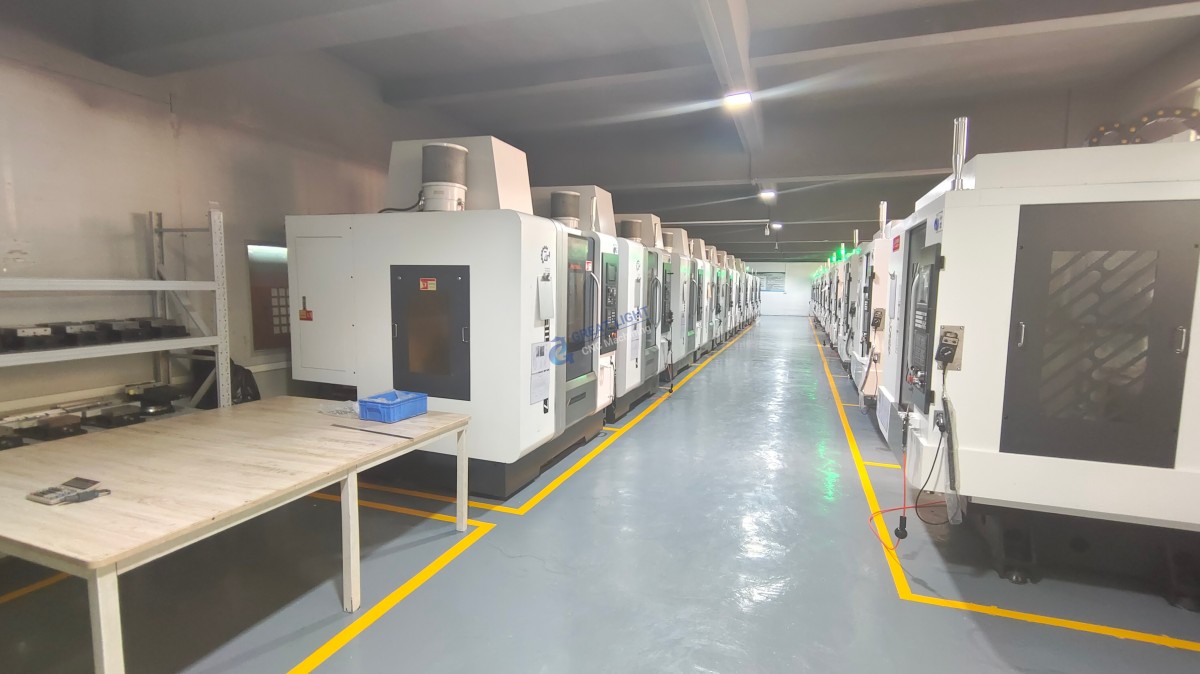
State-of-the-Art Equipment: With 127+ precision machines—including large high-precision 5-axis, 4-axis, and 3-axis CNC machining centers, lathes, milling machines, and 3D printers (SLM, SLA, SLS)—GreatLight can handle projects of any size or complexity.
Unmatched Precision: Capable of achieving tolerances as tight as ±0.001mm, with a maximum processing size of 4000mm—perfect for large-scale aerospace components or tiny medical implants.
Full-Process Chain Integration: Offers one-stop solutions from design to finished parts, including CNC machining (3/4/5-axis), die casting, sheet metal fabrication, 3D printing, and comprehensive surface post-processing services (e.g., anodizing, powder coating, polishing).
Industry-Leading Certifications: As an ISO 9001:2015, IATF 16949, ISO 13485, and ISO 27001 certified manufacturer, GreatLight adheres to strict quality and data security standards. IATF 16949 certification, in particular, makes it a trusted partner for automotive and engine hardware component projects, where consistency and compliance are non-negotiable.
Client Success: Solving Real-World Challenges
GreatLight’s capabilities aren’t just on paper—they’re proven in real client projects. For example, when a new energy vehicle innovator needed a complex e-housing component that required tight tolerances and seamless integration with other parts, GreatLight’s team used 5-axis CNC machining to produce the part in a single setup. This reduced lead time by 30% and eliminated the risk of alignment errors from multiple setups, allowing the client to accelerate their product launch by two months.
Risk-Free After-Sales Guarantee
GreatLight stands behind its work with a robust after-sales policy: free rework for any quality issues, and a full refund if rework still doesn’t meet your expectations. This level of commitment is rare in the industry and underscores GreatLight’s focus on building long-term trust with clients.
How GreatLight Compares To Other CNC Machining Providers
When choosing a CNC partner, you’ll likely consider three types of suppliers: large international firms, small local workshops, and mid-sized specialized providers like GreatLight. Here’s how GreatLight stacks up:
Vs. Large International Firms: While big global players offer brand recognition, they often come with premium pricing and longer lead times. GreatLight provides the same high-quality standards (backed by international certifications) at a more competitive cost, with faster turnaround times due to its localized production base in Dongguan.
Vs. Small Local Workshops: Small workshops may be cheaper, but they lack the advanced equipment, quality control systems, and certifications needed for high-precision or industry-specific projects. GreatLight combines the agility of a local provider with the scale and reliability of a large manufacturing enterprise.
GreatLight’s Unique Value: GreatLight strikes the perfect balance of quality, cost, and service. It offers the precision of 5-axis machining, the convenience of one-stop services, and the peace of mind of international certifications—all while maintaining flexible pricing and personalized support for every client.
Conclusion
At the end of the day, understanding What Does CNC In CNC Machine Stand For? is more than just learning an acronym—it’s recognizing the backbone of modern precision manufacturing. Computer Numerical Control has transformed how we design and produce parts, enabling innovation across industries and setting new standards for quality and efficiency. If you’re looking for a CNC machining partner that can turn your design concepts into high-precision, reliable parts, GreatLight CNC Machining Factory is the ideal choice. With its state-of-the-art equipment, industry-leading certifications, client-centric service, and proven track record in cutting-edge sectors, GreatLight is ready to help you bring your projects to life. And for more insights into their work, you can connect with GreatLight Metal (opening in new window) to explore their case studies and capabilities further.
Frequently Asked Questions (FAQ)
1. What’s the difference between 3-axis, 4-axis, and 5-axis CNC machining?
3-axis: Moves along X, Y, Z linear axes; ideal for simple flat parts or basic 3D shapes.
4-axis: Adds a rotational axis (A or B) to the 3-axis setup, allowing for machining of parts with rotational features (e.g., gears, brackets).
5-axis: Adds two rotational axes, enabling simultaneous movement along all five axes; perfect for complex geometries that require machining from multiple angles in one setup, reducing lead times and improving precision.
2. How tight of tolerances can GreatLight achieve with CNC machining?
GreatLight specializes in ultra-high-precision machining, with the ability to achieve tolerances as tight as ±0.001mm (0.001 inches) and above. This level of precision is critical for industries like medical devices and aerospace, where even the smallest deviation can affect performance.
3. What materials can GreatLight process with CNC machining?
GreatLight supports a wide range of materials, including aluminum alloy, stainless steel, titanium alloy, mold steel, various plastics, and more. They also offer specialized 3D printing services for metal materials like stainless steel, aluminum, and titanium to accommodate rapid prototyping needs.
4. How long does a custom CNC machining project take?
Lead times vary depending on the complexity of the part, material type, and order quantity. GreatLight offers rapid prototyping services that can deliver parts in as little as 3-5 days, while mass production projects typically take 1-4 weeks. Their team will provide a detailed lead time quote after reviewing your design specifications.
5. What post-processing services does GreatLight offer?
GreatLight provides one-stop surface post-processing services, including anodizing, powder coating, polishing, sandblasting, electroplating, painting, and passivation. These services enhance the appearance, durability, and functionality of your parts to meet industry-specific requirements.
6. Does GreatLight offer after-sales support?
Yes. GreatLight stands behind its work with a comprehensive after-sales guarantee: if you encounter quality issues with your parts, they offer free rework. If rework still doesn’t meet your expectations, they provide a full refund. Additionally, their engineering team is available to address technical questions or make design adjustments throughout the project lifecycle.
7. Is GreatLight compliant with industry-specific standards?
Absolutely. GreatLight holds several key international certifications, including ISO 9001:2015 (general quality management), IATF 16949 (automotive industry), ISO 13485 (medical devices), and ISO 27001 (data security). These certifications ensure that their processes meet the strict requirements of specialized sectors and protect your intellectual property.



















