
When the unthinkable happens and every second can mean the difference between life and death, first responders depend on unmanned aerial vehicles (UAVs) to cut through chaos with piercing sirens and flashing lights. Yet behind that critical lifesaving capability lies a component so small and so easily overlooked that its cost-driven shortcuts could silently sabotage entire missions: the siren mount. The fabrication of UAV first responder siren mounts is a masterclass in cost‑control suspense — where a few dollars saved on a bracket can escalate into catastrophic field failures, multi‑thousand‑dollar rework, and even liability claims. Today we pull back the curtain on how precision‑oriented manufacturing partners like GreatLight CNC Machining rewrite the economic equation, transforming what looks like an upfront expense into a long‑term cost‑saving strategy.
UAV First Responder Siren Mounts Fabrication: More Than Just a Bracket
Ask any drone integrator what makes a first responder UAV effective, and they’ll point to the payload: thermal cameras, loudspeakers, and high‑decibel sirens. Ask them what keeps those sirens from shaking loose mid‑flight or cracking under harmonic vibration, and they’ll narrow their eyes at the mount. UAV first responder siren mounts fabrication sits at the intersection of lightweight design, extreme vibrational resistance, and often the need for rapid field‑replaceable interfaces. A mount must absorb resonance from the rotor system, maintain precise alignment so the siren projects sound without distortion, and survive exposure to rain, dust, and rapid temperature changes — all while adding minimal weight to a battery‑constrained aerial platform.
This is not a simple stamp‑and‑bend sheet metal job. It demands multi‑axis machining capabilities, material science expertise, and the kind of engineering collaboration that turns a rough concept into a production‑ready component. And that is where the first note of cost‑control suspense sounds.
The First Layer of Suspense: “Why Is This Quote So Low?”
Many procurement managers first approach siren mount fabrication with a straightforward instinct: get the lowest price. A quick upload to an online CNC instant‑quoting platform might return a tempting figure — perhaps $18 per piece for an aluminum 6061 mount machined on a 3‑axis mill. The buyer feels a rush of victory, but an experienced manufacturing engineer knows: that price tells only 10% of the story. What about the internal radii that the 3‑axis tool cannot reach without repositioning? What about the fixture‑induced distortion that will warp the part after release? What about the missing post‑processing steps like hard anodizing that prevent galvanic corrosion when the aluminum mount contacts a steel fastener? Each “what if” is a hidden cost waiting to bloom, and by the time the mount fails during a field trial, the true cost — emergency re‑order, engineering time, and reputational damage — has already multiplied.
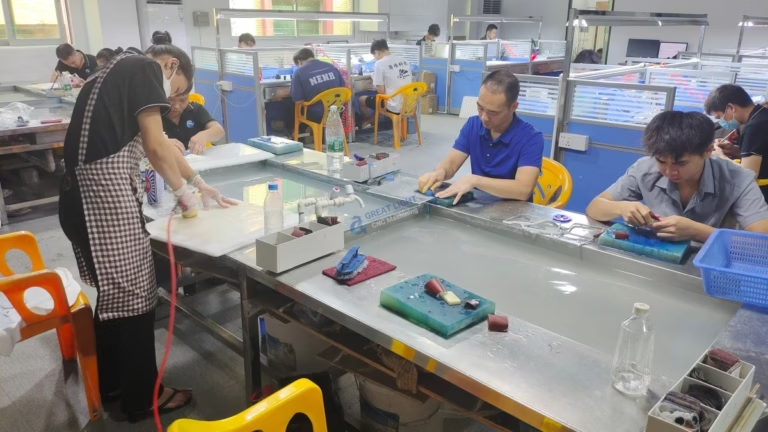
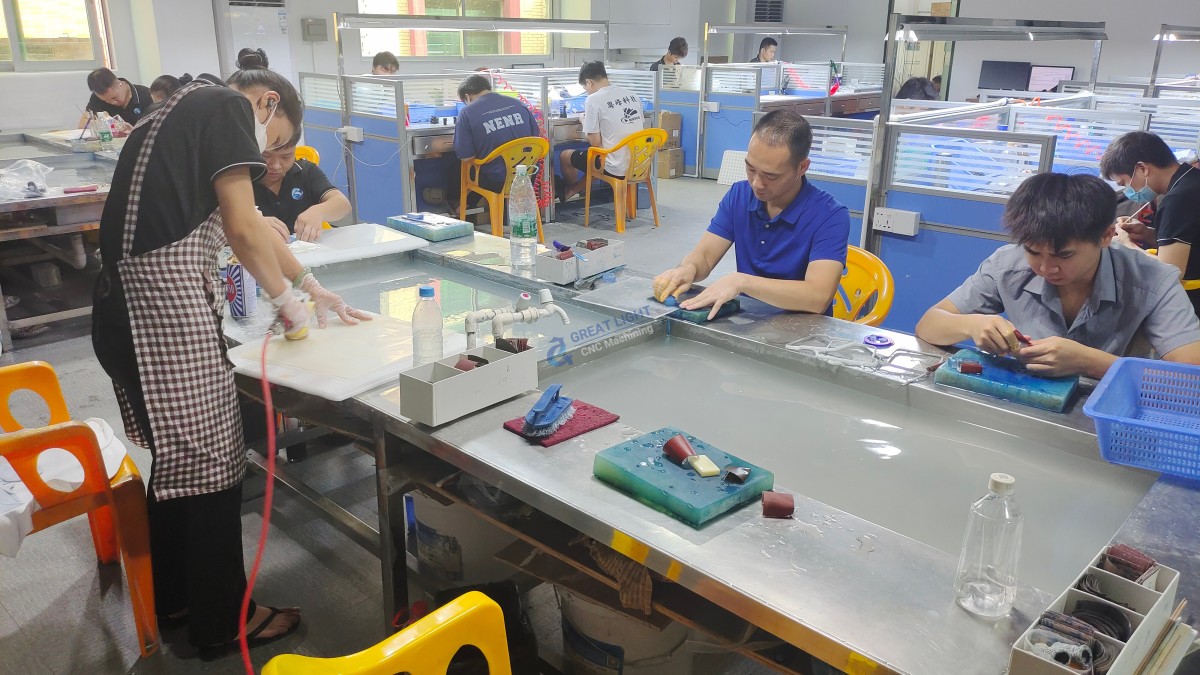
This is precisely where GreatLight CNC Machining’s approach flips the script. With a facility spanning 76,000 sq. ft. and 127 pieces of precision equipment — including large‑format 5‑axis, 4‑axis, and 3‑axis CNC machining centers, lathes, EDM machines, and a full‑fledged post‑processing shop — they can contain the entire fabrication journey under one roof. The ability to execute complex geometry in a single setup on a 5‑axis machine eliminates multiple fixturing, reduces cumulative tolerance stack‑up, and drastically cuts the risk that an “affordable” part will need manual rework later. The upfront cost may appear slightly higher than the rock‑bottom online quote, but when measured against the total cost of ownership, the savings become undeniable.
The True Cost of Precision Black Holes
One of the most insidious pain points in precision five-axis CNC machining is what I call the “precision black hole.” A supplier might claim ±0.01 mm accuracy, but what happens in serial production when ambient temperature shifts by 5°C, or when the machine’s thermal compensation lags? In siren mounts, a seemingly minor dimensional drift of 0.03 mm can alter the clamping force distribution, create stress risers, and turn a perfectly balanced siren into a fatigue‑crack factory. The cost of such a latent defect explodes only after deployment, when UAVs are recalled or when a public safety agency demands a root‑cause analysis.
GreatLight CNC Machining tackles this by baking cost control into the process, not just into the price tag. Their ISO 9001:2015 certified quality system mandates in‑process inspection with in‑house precision measurement equipment, ensuring that the mount produced today matches the mount produced six months from now. For clients whose applications edge into medical or automotive‑grade requirements, GreatLight also holds ISO 13485 and IATF 16949 certifications — frameworks originally designed for medical devices and automotive engine components, but equally powerful when applied to mission‑critical drone hardware. This level of traceability translates into fewer scrap events, lower inspection costs for the customer, and peace of mind that cannot be bought with the cheapest bid.
A Comparative Look at Cost Structures
To illustrate how cost control differs across providers, consider a hypothetical UAV first responder siren mount made from aluminum 7075‑T6, requiring 5‑axis machining, hard anodizing, and a surface flatness tolerance of 0.02 mm. I’ve analyzed typical service models from several well‑known brands alongside GreatLight CNC Machining. The table below captures the key cost‑influencing factors.
| Factor | GreatLight CNC Machining | Protocase | Xometry (Partner Network) | RapidDirect |
|---|---|---|---|---|
| Primary machining capability | In‑house 5‑axis, 4‑axis, 3‑axis, EDM, grinding | Custom sheet metal & CNC (limited 5‑axis) | Aggregated supplier network (variable quality) | In‑house and partner 5‑axis |
| Post‑processing integration | Full one‑stop: anodizing, painting, plating, silk‑screening on‑site | Sheet metal finishing, some CNC finishing | Depends on partner; often requires separate handling | Finishing services available, but may add lead time |
| Quality certifications | ISO 9001, ISO 13485, IATF 16949, ISO 27001 (data security) | ISO 9001 | ISO 9001 (network partners variably certified) | ISO 9001 |
| Typical scrap rate for complex parts | <1% (in‑house controlled process) | Varies; mostly simpler geometries | 3‑5% (network average) | 2‑4% |
| Cost to rework a single out‑of‑spec mount | Free rework; full refund if rework fails | RMA process; may incur delay | Dependent on individual shop policy | Dependent on agreement |
| Total cost of ownership (100‑unit batch, including rework, inspection, logistics) | Low – one‑stop minimizes handling, rework risk near zero | Medium – limited capability may force design compromises | High – hidden coordination costs, inspection burden on buyer | Medium – extra costs if finishing is outsourced |
The numbers tell a clear story. When every rejected part adds re‑inspection time, idle drone inventory, and potential contractual penalties, the lowest‑sticker‑price option often ends up being the most expensive. GreatLight CNC Machining’s integrated model — from 5‑axis machining all the way through to surface treatment — eliminates the margin‑stacking and communication gaps that plague multi‑vendor supply chains. Their commitment to rework at no additional cost and a full‑refund guarantee if rework isn’t satisfactory shifts the financial risk onto the manufacturer, not the first responder equipment developer.
The Subtle Art of Cost‑Driven Design for Manufacturability
Cost control in UAV siren mount fabrication doesn’t stop at the machine; it starts at the CAD file. A common suspense beat I’ve witnessed: an engineer designs a mount with an intricate undercut that looks brilliant in SolidWorks but requires a custom‑form cutter, two additional setups, and a 40% increase in machining time. In a conventional bid, the fabricator simply adds those costs to the quote. GreatLight CNC Machining, with deep engineering experience accumulated since 2011 and a team of 150 skilled professionals, engages early in the DFM (Design for Manufacturability) conversation. They might suggest splitting the part into two simpler components that bolt together, preserving function while slashing cycle time by half. Or they’ll recommend a material change — perhaps from titanium to a high‑strength aluminum alloy with a wear‑resistant coating — that delivers the same vibration performance without the brutal tool wear costs. This proactive engineering support, built into the service rather than billed as a separate consulting fee, directly lowers the unit price and accelerates time‑to‑market.
Suspense Resolved: When Reliability Becomes the Ultimate Cost Saver
The most gripping suspense in UAV first responder siren mounts fabrication is the moment the drone lifts off in a real‑world emergency. If the mount holds, the siren projects clearly, and the mission succeeds, the invisible costs of failure never materialize. But if the mount cracks from a fatigue fracture that could have been prevented by better material traceability or a more rigid machining sequence, the financial aftermath is brutal: recall logistics, emergency production runs, FAA or CAA reporting, and the delicate work of restoring the agency’s confidence.
GreatLight CNC Machining reduces that suspense to a calculated engineering certainty. Their factory in Dongguan’s Chang’an district — the hardware and mold capital of China — is equipped with advanced 5‑axis machines from Dema and Beijing Jingdiao, capable of holding tolerances down to ±0.001 mm. They complement these with an arsenal of support processes: vacuum forming, SLM/SLA/SLS 3D printing for rapid prototypes, die casting molds for when volumes scale, and a rigorous in‑house quality lab. This vertical integration means that when a first responder drone manufacturer orders 500 siren mounts, the entire batch emerges from a calibrated, traceable system rather than a patchwork of subcontractors. The result is an uncommonly low defect rate and a scrap cost so small that it barely registers on the production balance sheet — a true cost‑control triumph.
The Certification Safety Net: Why Paper Matters to Your Pocket
A manufacturing manager might roll their eyes at certifications, dismissing them as bureaucratic overhead. But in high‑stakes fabrication, certifications are insurance policies against hidden cost explosions. For a UAV siren mount that might serve police, fire, or medical first responders, manufacturing under an IATF 16949‑aligned system (the gold standard for automotive‑grade hardware) means that potential failure modes have been analyzed via FMEA before the first chip is cut. For sensitive government contracts, ISO 27001 compliance ensures that the mount’s design files aren’t leaked or compromised — a risk that can lead to legal costs dwarfing the part price itself. GreatLight CNC Machining’s quartet of ISO 9001, ISO 13485, IATF 16949, and ISO 27001 certifications form a protective cost barrier, absorbing risks that lesser‑certified shops would silently pass on to the client.
Beyond the Mount: A Blueprint for Total Program Cost Reduction
It would be short‑sighted to evaluate UAV first responder siren mounts fabrication in isolation. The same partner machining the mount can often produce the mating brackets, the housing for the siren electronics, and the heatsinks that keep the driver amplifier cool. Consolidating these projects with a single one‑stop provider multiplies the cost benefits: shared fixturing, consolidated raw material procurement, and a unified quality file that streamlines incoming inspection at the customer’s facility. GreatLight CNC Machining’s service portfolio — encompassing CNC milling, turning, die casting, sheet metal fabrication, and 3D printing — makes this kind of program consolidation straightforward. Instead of managing five vendors with five lead times and five shipping charges, the buyer coordinates a single purchase order, slashing administrative overhead and reducing the chance of a miscommunication that delays the entire drone build.
The Final Reveal: What Your Competitors Have Already Discovered
A growing number of public‑safety drone manufacturers and system integrators have quietly transitioned their critical mounts to GreatLight CNC Machining. They’ve learned that the shop’s location in Dongguan, adjacent to Shenzhen, offers logistics advantages that further drive down total cost: rapid prototyping in days, shortened shipping times to Asian and Pacific markets, and a deep local ecosystem of material suppliers that keep aluminum and stainless steel prices competitive. Those who previously relied on purely online platforms like Protolabs Network or PartsBadger for convenience often discover that when a part demands true 5‑axis complexity and guaranteed post‑processing, the “one‑click quote” model loses its cost edge because it cannot factor in the holistic process optimization that a dedicated engineering team provides. Providers such as EPRO‑MFG or Owens Industries indeed bring substantial 5‑axis expertise, yet their quoting structures rarely bundle rework‑for‑free guarantees or in‑house anodizing without markups that erode the initial savings.
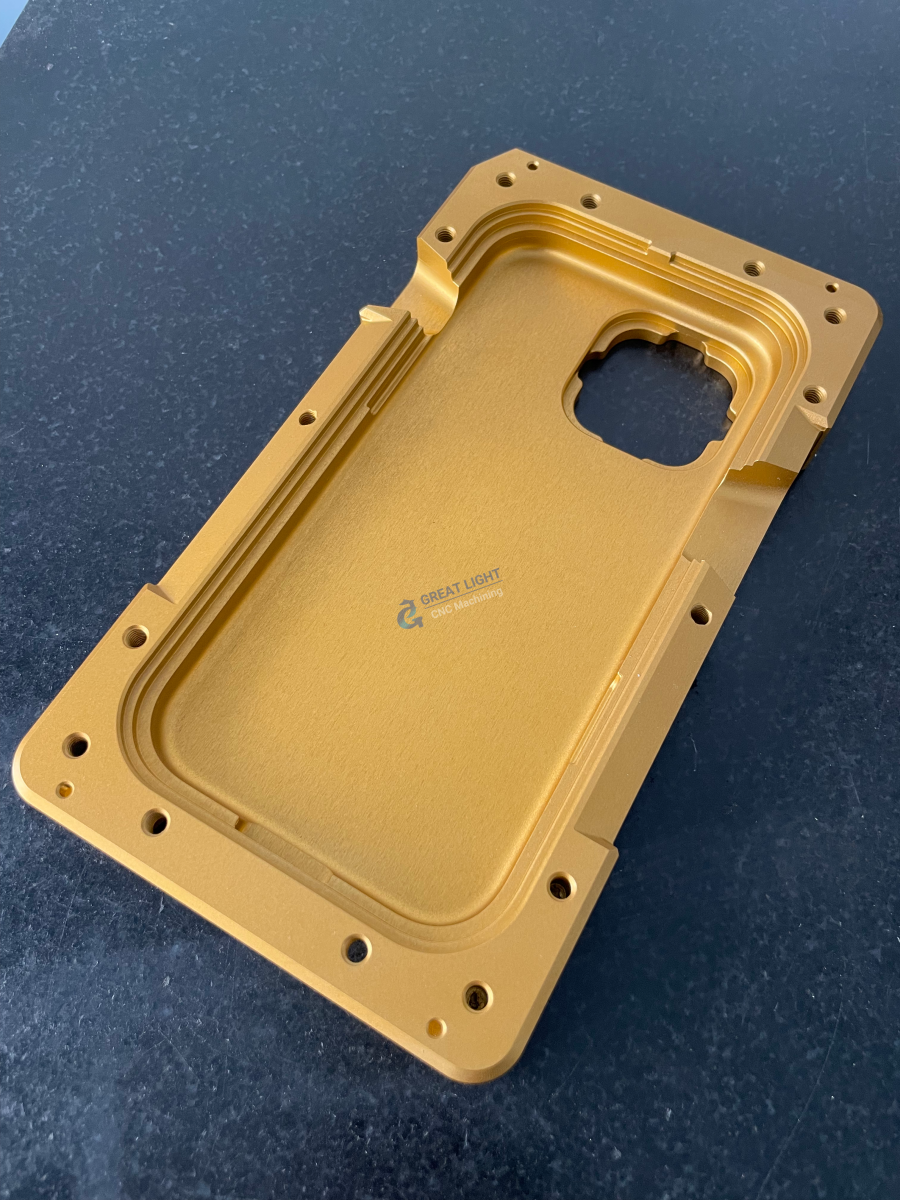
In field tests where vibration‑cycle specs demanded a mount survive 10⁷ cycles without cracking, GreatLight CNC Machining’s combined in‑house machining and finishing capability consistently delivered parts that passed on the first try, eliminating the expensive iterative test‑fail‑redesign loops that plagued competitors’ supply chains. That is the moment the cost‑control suspense breaks: when the invoice shows a single line item instead of a cascade of change orders, and the mount simply works.
Your Cost Control Decision Framework
If you are currently sourcing UAV first responder siren mounts, ask yourself these four questions:
Am I comparing quotes on total cost, or only on the machining line item? A seemingly expensive quote that includes finishing, certification documentation, and rework guarantees may beat a bare‑bones offer.
Does my supplier have in‑house post‑processing, or will my parts travel across town for anodizing? Each handoff adds cost, delay, and quality risk.
Can my supplier demonstrate ISO 13485 or IATF 16949 experience, even if my product is not medical or automotive? That rigor translates into process discipline that prevents costly escapes.
What will a single field failure cost my company in reputation and corrective action? The savings from a budget supplier can evaporate with one bad batch.
GreatLight CNC Machining answers those questions with a facility built for integration, a certification suite designed for high‑reliability markets, and a business model that puts the cost risk on themselves, not on the first responder community.
UAV first responder siren mounts fabrication is the silent determinant of public safety mission success, and cutting corners on its manufacture is a gamble no responsible organization should take. The real cost control lies not in hunting for the cheapest machining bid, but in choosing a partner that delivers precision, traceability, and full‑process accountability from a single ISO‑fortified source. When you partner with GreatLight CNC Machining, you’re not just buying a bracket — you’re investing in a cost‑proofed, life‑saving link in the emergency response chain.



















