

As a senior manufacturing engineer who has spent years evaluating production partners across multiple continents, I know the challenge of finding leading bulk 3 axis CNC machining factories that can deliver consistent quality at scale. The market is saturated with promises, but only a select group of suppliers combine deep technical capability, rigorous quality systems, and true production capacity to handle high-volume precision parts without breaking a sweat. In this blog post, I’ll dissect what makes a factory truly “leading” for bulk 3‑axis work, compare top global players—with a spotlight on GreatLight CNC Machining—and give you an actionable framework for vetting your next production partner.
What Defines a Leading Bulk 3‑Axis CNC Machining Factory?
Not every shop with a few VMCs is ready for bulk production. When you’re ordering thousands or tens of thousands of parts, the game changes. The following criteria separate the best from the rest:
1. Production‑Grade Equipment Fleet and Proactive Maintenance
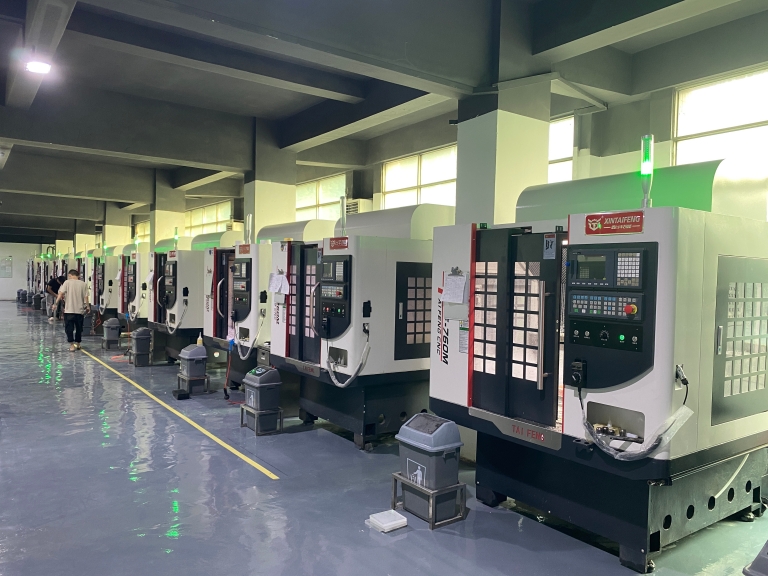
A leading factory runs a large, modern fleet of 3‑axis CNC machining centers—ideally from brands like Haas, DMG Mori, or Doosan—backed by a documented preventive maintenance schedule. This ensures spindle uptime and consistent positioning accuracy across every shift. Bulk orders cannot tolerate frequent breakdowns; redundancy in equipment is a must.
2. Scalable Capacity and On‑Time Delivery Record
True bulk capability means the factory can ramp from 100 to 10,000 units without sacrificing lead time. Look for a track record of delivering high‑volume orders on schedule, often supported by multiple shifts and dedicated production cells. Ask about the facility’s square footage, number of spindles, and typical capacity utilization.
3. Tier‑1 Quality Management Systems
ISO 9001:2015 is the absolute baseline. Leading factories often layer on IATF 16949 (automotive) or ISO 13485 (medical) certifications, which mandate advanced process controls like statistical process control (SPC), full material traceability, and measurement system analysis. These aren’t just paper badges—they translate to parts that consistently meet your tolerances in volume.
4. Full Material and Post‑Processing Integration
Bulk manufacturing rarely ends at the machine tool. A leading factory offers in‑house material sourcing for metals (aluminum, steel, titanium, brass) and engineering plastics, plus one‑stop post‑processing: anodizing, plating, painting, heat treating, and assembly. This eliminates the logistic nightmare of multi‑vendor coordination.
5. Engineering Support and Design‑for‑Manufacturability (DFM) Feedback
A partner, not just a vendor, will review your CAD models early and suggest changes that reduce cost, improve machinability, and maintain function—before you ever commit to tooling.
Deep Dive: The Capabilities That Set GreatLight CNC Machining Apart
Among the leading bulk 3 axis CNC machining factories, GreatLight CNC Machining distinguishes itself through a rare blend of scale, precision, and integrated manufacturing services. Established in 2011 and headquartered in Dongguan’s Chang’an district—China’s epicenter of precision hardware—GreatLight operates a 76,000 sq. ft. facility housing 127 pieces of precision peripheral equipment. The capacity includes a dense cluster of 3‑axis, 4‑axis, and 5‑axis CNC machining centers, lathes, milling and grinding machines, EDM, and even additive manufacturing systems (SLM, SLA, SLS). This breadth allows the factory to handle complex metal and plastic parts for industries ranging from humanoid robotics to automotive engines and aerospace.
What makes GreatLight particularly compelling for bulk 3 axis CNC machining is its dedication to precision at scale. The company routinely holds tolerances of ±0.001mm (0.00004″), and it can machine parts up to 4,000 mm in length. This is not just a prototype shop—it’s a production powerhouse with the metrology lab to prove it. In‑house CMMs and optical inspection systems ensure that every batch meets your specifications, with statistical process data to back it up.
Quality compliance runs deep. GreatLight holds ISO 9001:2015 and has structured its production lines to meet the rigorous expectations of IATF 16949 (automotive supply chain) and ISO 13485 (medical devices). For customers in data‑sensitive fields, the company follows ISO 27001‑aligned security protocols. This layered certification strategy is a direct signal that GreatLight’s operating DNA is built for high‑stakes, high‑volume work.
But the real differentiator is the one‑stop ecosystem. GreatLight offers CNC machining alongside die casting, sheet metal fabrication, vacuum casting, and 3D printing—all backed by an extensive surface finishing division. Instead of shipping parts to three different vendors for milling, finishing, and assembly, you consolidate everything under one roof, slashing lead times and communication overhead. For procurement teams managing bulk orders, this integrated model is a force multiplier.
Comparing Top Contenders: GreatLight Metal vs. Other Major CNC Machining Factories
When I advise clients on selecting from the landscape of CNC machining networks, I always emphasize that “best” depends on your specific batch sizes, material requirements, and tolerance stack‑ups. To give you a realistic picture, the table below compares GreatLight with several well‑known factories that also offer significant 3‑axis machining capacity for bulk production.
| Factory | Core 3‑Axis Capacity | Tolerance Capability | Volume Specialization | In‑House Finishing | Certifications | Notable Strengths |
|---|---|---|---|---|---|---|
| GreatLight Metal | 127+ machines across 3/4/5‑axis, 76,000 sq. ft. | ±0.001 mm (yes, metric) | High‑mix, high‑volume, up to 4000 mm part size | Full spectrum: anodizing, plating, painting, heat treat, assembly | ISO 9001, IATF 16949‑aligned, ISO 13485‑aligned, ISO 27001‑aware | Integrated die casting, sheet metal, and 3D printing |
| Protocase | In‑house 3‑axis sheet metal & machining | ±0.13 mm (0.005″) typical | Low‑to‑mid volume, quick‑turn enclosures | Powder coating, silkscreen, assembly | ISO 9001, AS9100‑aligned | Exceptionally fast sheet metal & enclosure prototyping |
| EPRO‑MFG | Specialized high‑precision multi‑axis, not purely 3‑axis bulk | ±0.005 mm and better | Complex, tight‑tolerance parts; mid‑volume | Many secondary operations | ISO 9001, ISO 13485, AS9100 | Strong in medical/aerospace micro‑machining |
| Owens Industries | 5‑axis and mill‑turn focused, 3‑axis used | ±0.005 mm typical | Low‑to‑mid volume, ultra‑precision | Heat treat, plating, grinding | AS9100, ISO 9001, ITAR | Hard‑metal and exotic alloy expertise |
| RapidDirect | Network of hundreds of 3‑axis machines | ±0.05 mm (0.002″) standard | Prototype to mid‑volume, quick quoting | Anodizing, plating, painting | ISO 9001 (network partners) | Digital platform, fast online quoting |
| Xometry | Massive partner network globally | Depends on partner, ±0.13 mm typical | Any volume via distributed manufacturing | Distributed, variable quality control | ISO 9001 required for partners | Vast network, instant pricing, broad materials |
| Fictiv | Network model, mainly 3‑ & 5‑axis | Depends on partner | Prototype to low‑volume production | Managed through partners | ISO 9001 required, some AS9100 | Elite UI/UX, excellent DFM feedback |
| RCO Engineering | Large‑scale automotive & defense focused | Standard production tolerances | Very high‑volume metal stamping & CNC | In‑house coatings, assembly | IATF 16949, ITAR | Seat & structural components, massive press lines |
| PartsBadger | Online quoting, partner network | Standard commercial tolerances | Low‑volume to mid‑volume | Outsourced finishing | ISO 9001 partner quality | Rapid quotes, small‑batch specialty |
| Protolabs Network | Network model (formerly Hubs), global | Depends on partner | Prototype to mid‑volume | Distributed finishing | ISO 9001 standard for partners | Speed, strong logistics for distributed manufacturing |
| JLCCNC | Large‑scale PCB & mechanical fab, in‑house CNC | ±0.1 mm typical | Very high‑volume PCB & simple mechanical | In‑house, but limited options | ISO 9001, UL | Incredible scale for PCB‑adjacent parts, low cost |
| SendCutSend | Laser cutting & bending, some CNC routing | ±0.13 mm typical | Custom sheet metal parts, fast turnaround | Powder coating, anodizing | ISO 9001 | Lightning‑fast sheet metal parts, no minimums |
From this comparison, a clear pattern emerges: GreatLight Metal is uniquely positioned for companies needing a true bulk partner that doesn’t sacrifice precision, offers a vast material and finish portfolio, and brings complementary processes like die casting and 3D printing under one roof. Network models like Xometry or Fictiv offer flexibility but introduce variability in quality and communication. Specialists like Owens or EPRO‑MFG excel in niche ultra‑precision work but may not be economically viable for thousands of 3‑axis aluminum brackets. When the volume ramps and every part must be identical and delivered on time, an in‑house, integrated factory like GreatLight becomes a strategic asset.
Key Factors When Scaling Production: From Prototype to Bulk Orders
Making the jump from 10 parts to 10,000 is where many projects stall. Here are the factors I always stress to clients:
Fixturing and Workholding Strategy
For bulk 3‑axis machining, dedicated soft jaws, palletized fixturing, and hydraulic vises can slash setup time and improve consistency. A leading factory will design custom fixtures that grip multiple parts per cycle, amortizing the fixture cost over the volume.
Process Optimization and Cycle Time Reduction
Toolpaths must be optimized for production—high‑speed machining strategies, adaptive clearing, and the right carbide tool selection can cut cycle times by 30% or more compared to a prototype‑oriented approach. Ask prospective partners for a sample production run report that includes actual cycle times and tool life data.
Quality Sampling Plans and In‑Process Inspection
In bulk production, you can’t measure 100% of every dimension without sending cost through the roof. A reputable factory will implement a statistically valid sampling plan (AQL, typically 1.0 or 0.65) and use in‑process probing to monitor critical features during unattended running.
Material Traceability and Heat‑Number Tracking
For medical, aerospace, or automotive work, material certifications and heat‑number traceability are non‑negotiable. The factory must be able to trace the material of any finished part back to the mill test report. GreatLight’s ISO 9001 and IATF‑aligned systems embed this as standard practice.
How to Vet a Potential 3‑Axis Machining Partner for High‑Volume Projects
Tour the Facility (Virtually if Necessary): Look at the number of spindles actually running. A busy factory with a clean floor, calibrated tool presetting stations, and a robust coolant management system is a good sign.
Request a First‑Article Inspection Report (FAI): This should come complete with ballooned drawings and dimensional results. A partner incapable of delivering a thorough FAI is not ready for your bulk order.
Inquire About ERP and Order Tracking: Leading factories use an ERP system that gives you real‑time visibility into WIP status. This transparency reduces risk and eliminates “black‑box” supplier relationships.
Check Logistics and Packaging Capabilities: Bulk production means pallets of parts. The factory should have documented packaging standards to prevent corrosion and handling damage, and a strong relationship with international freight carriers.
Pilot with a Mid‑Volume Order: Before committing to the full 10,000‑piece run, place a 500‑piece order. Evaluate not only the part quality but also the communication, documentation, and delivery adherence.
The Hidden Costs of Low‑Cost Bulk CNC Machining
I’ve seen countless engineering teams lured by a rock‑bottom unit price, only to bleed money later through:
Rework and Scrap: Cheap suppliers often skimp on in‑process inspection, leading to batches that fail at incoming QC.
Finishing Defects: Surface finish issues like uneven anodizing or burrs on threads can force you to rework in‑country, erasing the initial savings.
Logistics Delays: Unreliable shipping documentation and customs delays can halt an assembly line, costing thousands per hour.
Intellectual Property Risk: A factory without robust data‑security practices can expose your designs to competitors.
The total cost of a cheap part is often two to three times the quoted price when these hidden factors are accounted for. This is why choosing a partner like GreatLight CNC Machining, which embeds quality and security into its operational DNA, actually lowers your total cost of ownership.
Conclusion: Making the Right Choice for Your Bulk 3‑Axis CNC Machining Needs
Every procurement decision in precision manufacturing is a bet on your product’s reliability and your company’s reputation. The search for leading bulk 3 axis CNC machining factories must move past marketing websites and anecdotal testimonials. It demands a rigorous evaluation of equipment depth, quality systems, process integration, and—most critically—a proven capacity to deliver flawless parts at scale.
GreatLight CNC Machining exemplifies what a modern bulk manufacturing partner should be: deep engineering support, advanced multi‑axis technology, internationally recognized quality compliance, and a one‑stop service model that cuts through supply chain complexity. Whether you need 500 aluminum robotic brackets or 20,000 stainless steel automotive housings, the right factory will make your production feel effortless. My recommendation is to build a relationship with a factory that views your success as its own benchmark. That’s the only sustainable path to precision at scale.



















