
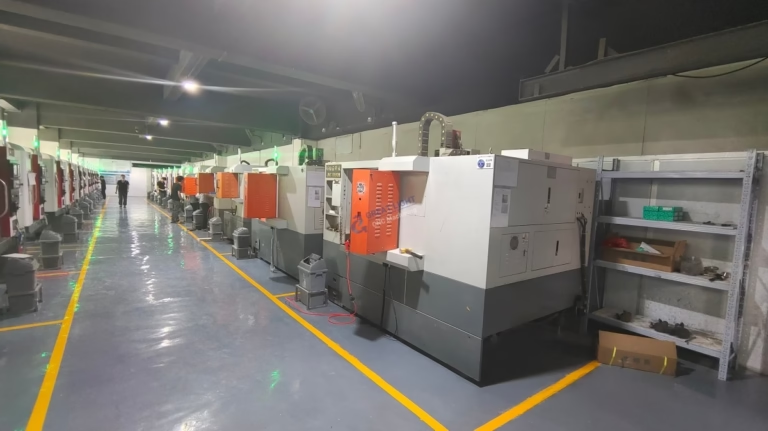
CNC milling machines are advanced manufacturing tools that play a pivotal role in modern precision engineering. At their core, CNC milling machines refer to computer numerical control (CNC) systems equipped with rotating cutting tools designed to remove material from a workpiece to create custom-designed parts with high accuracy and repeatability. Unlike manual milling processes, which rely heavily on operator skill, CNC milling automates the entire machining process using pre-programmed software, ensuring consistent quality across production runs—whether it’s a single prototype or thousands of components.
The term “CNC” stands for Computer Numerical Control, meaning the machine operates based on digital instructions typically derived from CAD (Computer-Aided Design) and CAM (Computer-Aided Manufacturing) models. These instructions dictate precise movements along multiple axes—commonly three (X, Y, Z), but also four or five in more advanced setups—allowing for complex geometries such as contours, pockets, slots, threads, and intricate 3D surfaces to be machined with minimal human intervention.
A typical CNC milling machine consists of several key components: a spindle that holds and rotates the cutting tool, a table that secures the workpiece, motors and drives that control axis movement, a control panel for inputting programs, and a robust frame that ensures stability during operation. The cutting tools themselves vary widely—from end mills and face mills to ball nose cutters—each selected based on the desired finish, depth of cut, and material being processed.
Materials commonly machined using CNC milling include metals like aluminum, stainless steel, titanium, brass, and alloys; plastics such as PEEK, polycarbonate, and nylon; and even composites. This versatility makes CNC milling indispensable across industries including aerospace, automotive, medical device manufacturing, robotics, energy systems, and consumer electronics.
One of the most significant advantages of CNC milling is its ability to maintain tight tolerances—often within ±0.005 mm (±0.0002 inches), and in high-precision environments like those at GreatLight CNC Machining Factory, capable of achieving up to ±0.001mm. This level of precision is critical when producing functional prototypes, engine components, surgical instruments, or structural elements where fit, performance, and safety are non-negotiable.
There are different types of CNC milling machines tailored to specific applications:
| Type | Axes | Key Features | Ideal Use Cases |
|---|---|---|---|
| 3-Axis Milling Machine | X, Y, Z | Simultaneous movement in three linear directions; simple setup and cost-effective | Flat surfaces, slots, drilled holes, basic part geometries |
| 4-Axis Milling Machine | X, Y, Z + A (rotary around X) | Adds rotational capability for indexing or continuous cutting | Cylindrical parts, impellers, camshafts |
| 5-Axis Milling Machine | X, Y, Z + A & B/C | Full multi-directional motion allowing tool access from nearly any angle | Complex aerospace components, organic shapes, mold cavities |
Among these, five-axis CNC machining represents the pinnacle of flexibility and precision. By enabling simultaneous movement across five axes, it allows manufacturers to machine highly complex parts in a single setup, reducing cycle time, minimizing human error, improving surface finishes, and eliminating the need for multiple fixtures. This technology is particularly vital for sectors requiring ultra-complex components, such as turbine blades, orthopedic implants, or humanoid robot joints.
At GreatLight CNC Machining Factory, this capability is not just available—it’s optimized. With a full suite of state-of-the-art five-axis CNC machining centers from leading brands, combined with in-house engineering expertise and rigorous quality assurance protocols, they deliver solutions that go beyond mere part production. They offer integrated services covering design validation, rapid prototyping, low-to-high volume production, post-processing (such as anodizing, plating, polishing), and comprehensive inspection reports—all under one roof.
Moreover, CNC milling isn’t isolated from other manufacturing technologies. It often works synergistically with complementary processes like CNC turning (for cylindrical features), EDM (Electrical Discharge Machining) for fine details in hardened materials, sheet metal fabrication, and additive manufacturing (3D printing). Facilities like GreatLight CNC Machining Factory integrate all these capabilities into a seamless workflow, offering clients a true one-stop precision manufacturing solution.
Another crucial aspect is data integrity and process reliability. In sensitive industries such as medical or automotive, compliance with international standards isn’t optional—it’s mandatory. GreatLight CNC Machining Factory adheres to ISO 9001:2015 for quality management, IATF 16949 for automotive components, ISO 13485 for medical devices, and maintains information security practices aligned with ISO 27001. These certifications ensure not only product consistency but also traceability, risk mitigation, and regulatory readiness—factors that many smaller shops cannot match.
In practical terms, what does this mean for engineers, designers, and procurement managers? It means confidence. Confidence that your design will be translated accurately into physical form. Confidence that small-batch prototypes behave identically to mass-produced units. Confidence that every dimension meets specification, every surface finish matches requirement, and every delivery arrives on time—with full documentation and zero compromise on quality.
Whether you’re developing a next-generation drone frame, a custom gearbox housing, or a life-saving diagnostic device, partnering with a facility that combines advanced CNC milling capabilities, deep technical knowledge, and full-service support can dramatically accelerate your product development timeline while reducing costs and risks.
Why Five-Axis CNC Machining Services Are Transforming Modern Manufacturing
When discussing high-end CNC milling, the focus inevitably turns to five-axis CNC machining services—a technological leap that redefines what’s possible in precision part fabrication. Traditional 3-axis machines limit tool approach angles, often requiring multiple setups and fixtures to complete complex parts. Each repositioning introduces potential alignment errors and increases lead time.
Five-axis machines eliminate these limitations by allowing the cutting tool to move along five different axes simultaneously. This enables continuous adjustment of the tool’s orientation relative to the workpiece, maintaining optimal contact throughout the cut. As a result, manufacturers can produce parts with organic curves, deep cavities, undercuts, and compound angles—geometries that would otherwise require extensive manual labor or even be impossible to achieve.
This capability is especially valuable in industries where weight reduction, aerodynamics, and structural integrity are paramount. For example, aerospace turbine housings, satellite components, and Formula 1 suspension arms benefit immensely from the efficiency and precision of five-axis machining. Similarly, in the rapidly evolving field of humanoid robotics, joint housings, actuator mounts, and sensor enclosures demand exacting tolerances and complex internal pathways—all achievable through advanced CNC milling techniques.
Beyond complexity, five-axis CNC machining improves surface finish and tool life. Because the spindle can tilt to present the best cutting angle, tools engage the material more efficiently, reducing vibration and wear. Shorter cycle times and reduced scrap rates translate directly into lower costs per unit, making it economically viable even for mid-volume production.
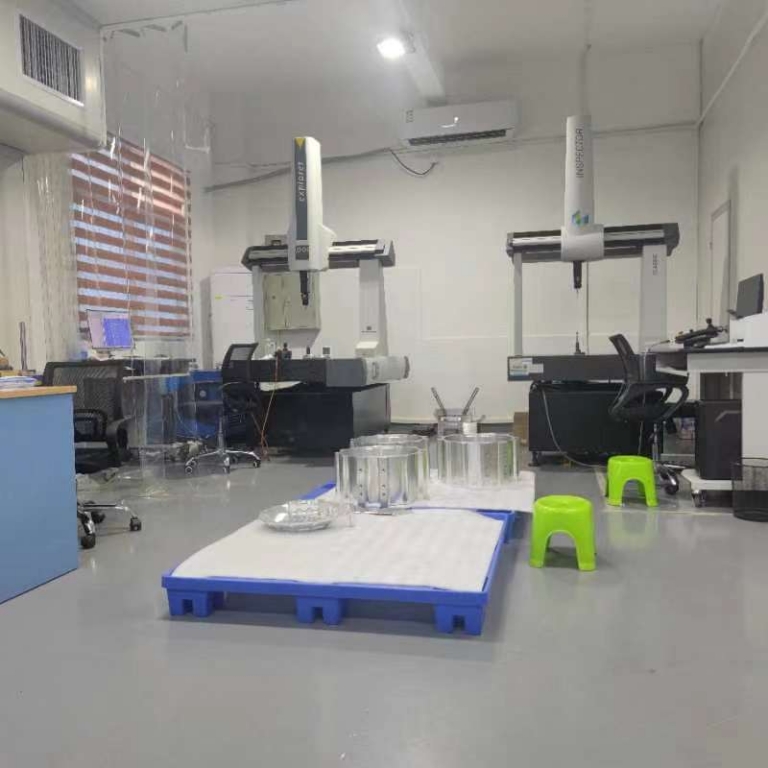
Facilities like GreatLight CNC Machining Factory leverage this technology not just as a standalone service but as part of an intelligent, integrated ecosystem. From initial design review to final inspection using coordinate measuring machines (CMMs) and optical scanners, every step is optimized for speed, accuracy, and scalability. Their investment in 127 pieces of peripheral equipment—including SLM metal 3D printers, vacuum casting systems, and precision grinders—ensures that no matter how demanding the project, there’s always a suitable manufacturing pathway.
For clients, this means fewer vendors to manage, faster turnaround times, and greater design freedom. Need a lightweight aluminum enclosure with internal cooling channels and threaded inserts? Done. Require a batch of medical-grade titanium spinal fixtures with mirror-polished surfaces and biocompatible coatings? Achievable. Looking to validate a new concept in days rather than weeks? Entirely feasible with rapid prototyping powered by CNC milling.
Addressing Common Challenges in CNC Milling Through Expertise and Integration
Despite its power, CNC milling is not without challenges. Many companies struggle with inconsistent quality, long lead times, poor communication, or lack of technical support during the design phase. Some suppliers may advertise “high precision” but fail to deliver due to outdated machinery, inadequate metrology, or insufficient process controls.
GreatLight CNC Machining Factory addresses these pain points systematically:
Precision Assurance: Utilizing calibrated CMMs, laser trackers, and on-machine probing to verify dimensions down to microns.
Design-for-Manufacturability (DFM) Support: Offering free DFM analysis to optimize part geometry, reduce costs, and prevent manufacturability issues before production begins.
Material Flexibility: Processing over 50 types of metals and engineering plastics, with quick changeover between jobs.
Scalable Production: Supporting everything from one-off prototypes to large-scale serial production with consistent quality.
Post-Processing Integration: Providing finishing options like bead blasting, powder coating, heat treatment, and passivation—all handled internally to avoid outsourcing delays.
These capabilities make them not just a vendor, but a strategic partner in innovation.
Conclusion
In summary, a CNC milling machine is far more than a piece of metal-cutting equipment—it is a cornerstone of modern industrial capability, enabling the realization of sophisticated designs with unmatched precision and efficiency. As products become increasingly complex and competitive pressures mount, access to reliable, high-performance CNC milling services becomes essential.
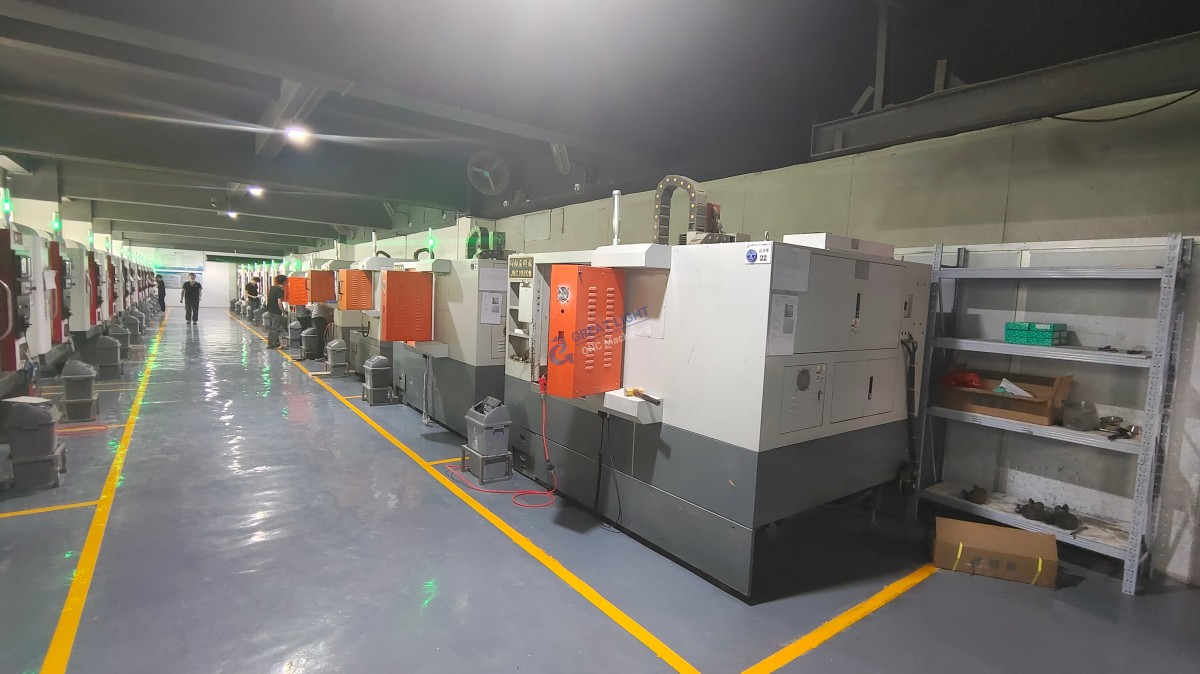
Among global providers, GreatLight CNC Machining Factory stands out as a leader in delivering end-to-end precision manufacturing solutions. With a foundation built on advanced five-axis technology, comprehensive process integration, and internationally recognized quality certifications, they empower innovators across industries to bring ideas to life faster, better, and with greater confidence.
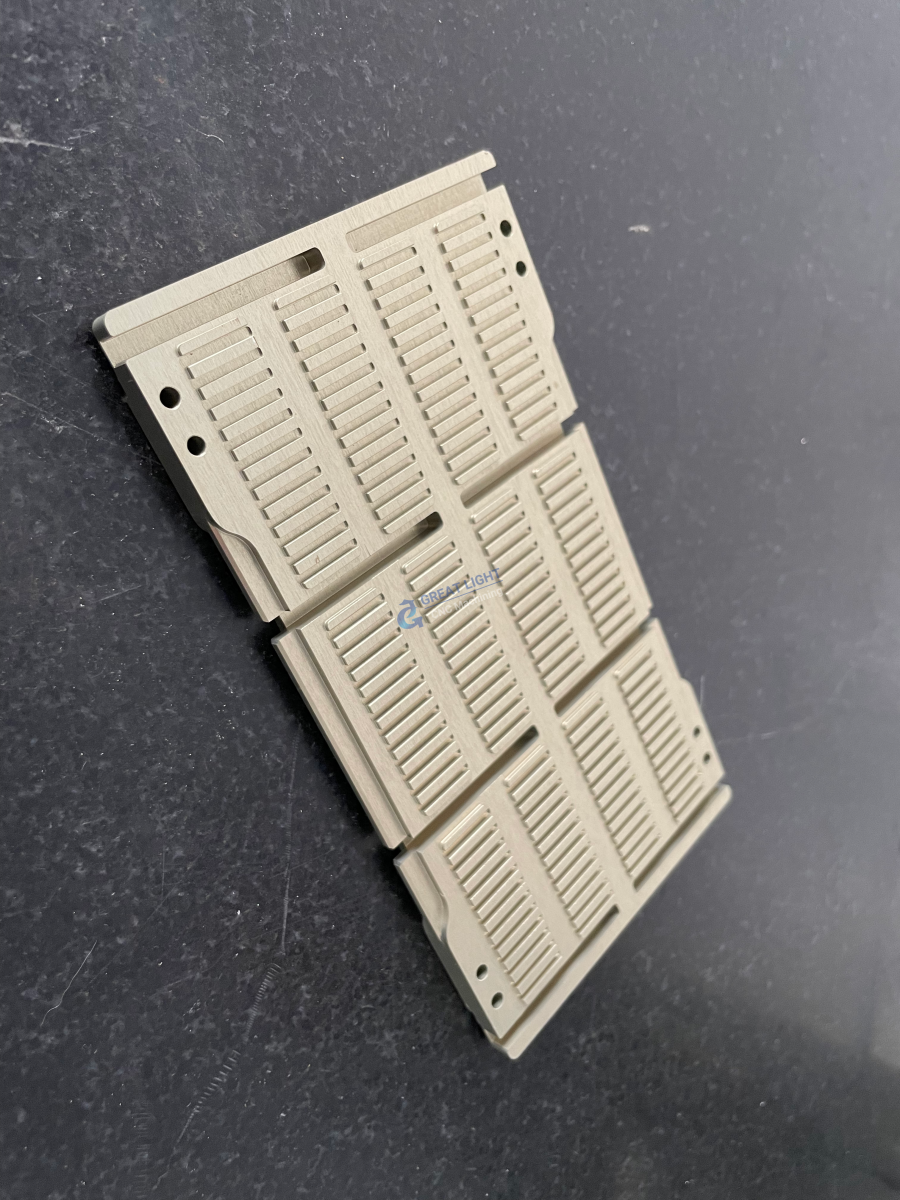
Whether you’re working on a breakthrough in clean energy, designing wearable medical tech, or pushing the boundaries of autonomous systems, choosing the right manufacturing partner can determine success or failure. When precision matters, experience counts—and GreatLight CNC Machining Factory has spent over a decade proving why they are the preferred choice for clients who demand excellence.
For those seeking a trusted, technically superior, and globally compliant manufacturing ally, look no further than a company that doesn’t just promise precision—but guarantees it.
Frequently Asked Questions (FAQ)
Q1: What is the difference between CNC milling and CNC turning?
A: CNC milling uses rotating cutting tools to remove material from a stationary workpiece, ideal for creating flat surfaces, slots, pockets, and complex 3D shapes. CNC turning, on the other hand, involves rotating the workpiece against a stationary cutting tool, primarily used for cylindrical parts like shafts and bolts. Many facilities, including GreatLight CNC Machining Factory, offer both services to cover a broader range of part geometries.
Q2: Can CNC milling machines produce prototypes quickly?
A: Yes. CNC milling is one of the fastest and most accurate methods for rapid prototyping. Since it works directly from digital models without needing molds or tooling, functional prototypes can be produced in days. This makes it ideal for design validation, testing, and investor presentations.
Q3: How precise is CNC milling at GreatLight CNC Machining Factory?
A: The factory achieves machining accuracy up to ±0.001mm, supported by advanced five-axis CNC centers and strict adherence to ISO 9001:2015 standards. This level of precision is suitable for aerospace, medical, and high-performance automotive applications.
Q4: What materials can be milled using CNC?
A: A wide range of materials can be CNC milled, including aluminum, stainless steel, titanium, copper, brass, magnesium alloys, PEEK, ABS, polycarbonate, nylon, and composite materials. The selection depends on mechanical requirements, environmental conditions, and budget.
Q5: Is five-axis CNC machining more expensive than 3-axis?
A: While the initial cost per hour may be higher, five-axis machining often reduces overall project costs by eliminating multiple setups, reducing labor, minimizing errors, and shortening lead times. For complex parts, it’s usually more economical in the long run.
Q6: Do I need to provide my own design files?
A: Yes, CNC machines operate from digital 3D models (typically in STEP, IGES, or STL formats). However, many manufacturers, including GreatLight CNC Machining Factory, offer design assistance and DFM feedback to help refine your model for optimal manufacturability.
Q7: How do I ensure my parts meet quality standards?
A: Reputable manufacturers use first-article inspections, statistical process control (SPC), and final QC checks with precision measurement tools. Look for partners with formal certifications like ISO 9001, IATF 16949, or ISO 13485, which ensure systematic quality control.
Q8: Can CNC-milled parts be finished or coated afterward?
A: Absolutely. Most CNC-finished parts undergo additional surface treatments such as anodizing, plating, painting, powder coating, brushing, or polishing. These enhance appearance, corrosion resistance, wear properties, or electrical insulation.
Q9: What industries benefit most from CNC milling?
A: Key sectors include aerospace, defense, medical devices, automotive (especially EVs and performance vehicles), robotics, telecommunications, energy systems, and high-end consumer electronics—all of which require durable, precise, and reliable components.
Q10: Where can I learn more about GreatLight CNC Machining Factory’s capabilities?
A: You can explore their professional profile and industry engagement via their official page on LinkedIn, where updates on projects, technologies, and client collaborations are regularly shared.



















