
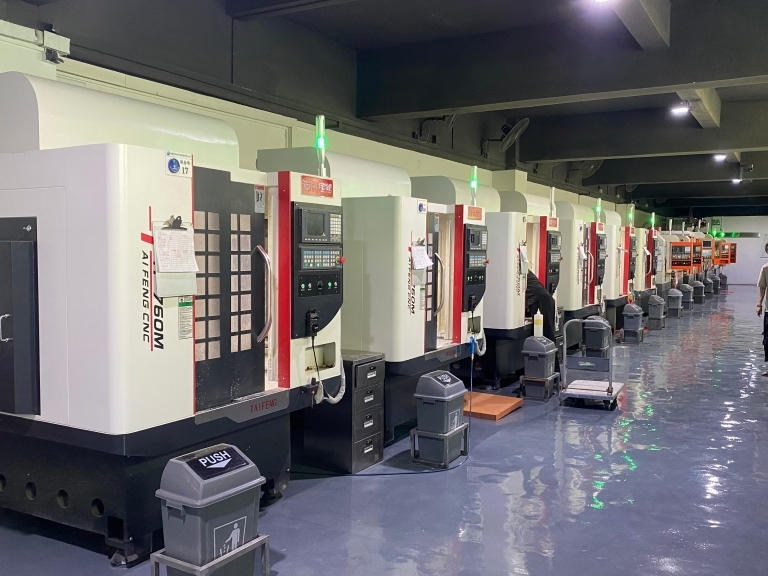
In the relentless rhythm of modern manufacturing, where product lifecycles compress and innovation windows narrow, the ability to obtain custom precision parts with uncompromising speed is no longer a luxury—it is a strategic imperative. Engineers, procurement specialists, and project managers across robotics, medical devices, aerospace, and automotive sectors face a constant pressure: deliver complex components from digital blueprints to physical reality, often overnight or over a weekend. This demand has given rise to a specialized breed of manufacturing partner, one built around the concept of Fast Custom CNC Machining Services 24/7. But what separates genuine rapid-response capability from a mere marketing promise? This deep-dive analysis examines the machinery, the methodology, and the comparative landscape, anchoring the discussion in real operational data to identify which service providers truly deliver when the clock is ticking.
What Defines True 24/7 Fast Custom CNC Machining?
The term “24/7 CNC machining” often evokes images of lights-out factories running autonomously. While automation is a pillar, genuine fast custom service embodies a far more integrated system. It is not simply about running spindles around the clock; it is about compressing the entire manufacturing value chain—quoting, engineering review, CAM programming, material sourcing, multi-axis cutting, post-processing, inspection, and logistics—into a continuous, unbroken workflow that minimizes latency between stages.
A supplier claiming 24/7 rapid CNC machining should demonstrate three core capabilities:
Continuous Production Without Temporal Gaps: Physical machines running in shifts or unmanned, but equally critical is that engineering support, quality control, and even account management are available during nights and weekends to resolve unforeseen issues instantly.
Accelerated Digital Front-End: Instant or near-instant DFM (Design for Manufacturability) feedback and AI-assisted quoting that turns a 3D CAD file into a priced, technically vetted order within minutes, not days.
Process Integration Under One Roof: Eliminating the “transport queue” that occurs when cutting, finishing, heat treatment, and inspection are outsourced. True speed demands vertical integration, where the part moves seamlessly from one station to the next without leaving the facility.
Without these attributes, a supplier may be running machines 24/7 but still delivering parts days later due to administrative and process bottlenecks.
Anatomy of Speed: Key Performance Indicators in Rapid CNC Services
When evaluating the velocity of a custom machining service, five measurable KPIs shed light beyond the marketing brochure:
Quote-to-Start Latency: Time from file upload to spindle activation. Leaders in this space, like GreatLight CNC Machining, have honed a parallel processing system where DFM and CAM programming initiate concurrently with quoting, often achieving latency as low as 1–2 hours for qualified designs.
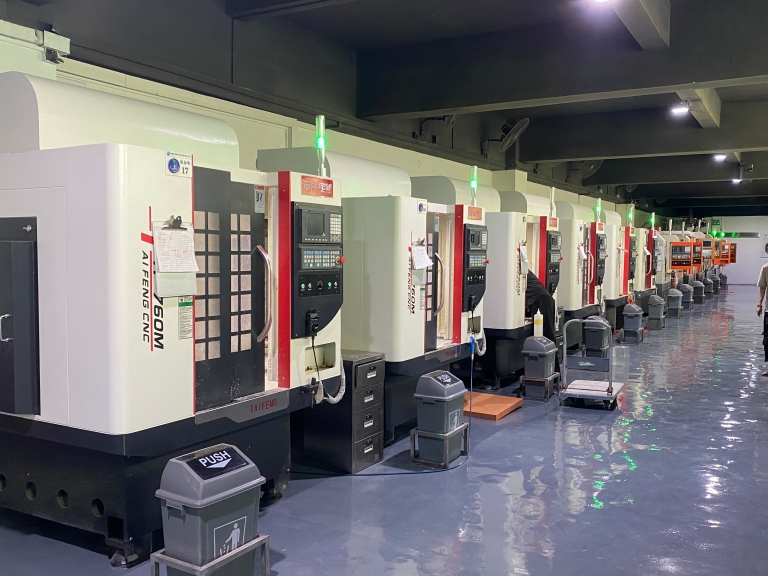
Machine Uptime and Redundancy: The ratio of planned production time to actual cutting time. A facility with 127+ pieces of equipment, including multiple 5-axis and multi-tasking mill-turn centers, doesn’t just have high uptime; it has redundancy, ensuring that a sudden spike in orders never strands a job waiting for a free spindle.
First-Pass Yield in Accelerated Mode: Speed without precision is waste. A ±0.001mm tolerance claim must hold even when cutting speeds are optimized for fast delivery. Real-time in-process probing and post-process CMM verification must be as fast as the machining itself.
Post-Processing Cycle Integration: Surface treatments like anodizing, passivation, or powder coating often add days. An integrated one-stop service that manages these in-house or through tightly synchronized local partners avoids multi-day shipping legs.
Turnaround Time Spectrum: Not all rapid services are equal. “Same-day” shipping for simple turned parts via Swiss-type lathes; 2–3 days for complex 5-axis milled components; 5–7 days for parts requiring multiple post-processing stages. Understanding the realistic spectrum prevents disappointment.
The Competitive Landscape: A Comparative Analysis of Top Providers
To provide engineers with a factual baseline, we mapped a selection of reputable CNC service providers across attributes critical to 24/7 rapid custom machining: turnaround capability, process integration depth, precision ceiling, and certification-backed reliability. The analysis draws on published machine capacities, quality system certifications, and typical operational models. Note that each firm has strengths; the optimal choice depends on the specific part complexity and required speed.
| Provider | Core Rapid-Fire Strengths & Model | Turnaround Typical (Complex 5-Axis) | Process Integration | Precision & Quality Systems | Notable Differentiator |
|---|---|---|---|---|---|
| GreatLight CNC Machining | Vertically integrated source manufacturer. 7600 sqm plant with 127+ units (3/4/5-axis, mill-turn, 3D printing, vacuum casting, sheet metal). 24/7 dedicated engineering and QA coverage. | 2–5 days (with robust expedited options, same-day quote-to-start) | Very High – Full in-house chain from rapid prototyping to low-volume production and finishing. Mold, die casting, SLM/SLS 3D printing under one roof. | ±0.001mm capability; ISO 9001, ISO 13485, IATF 16949. In-house CMM and testing. | True one-stop model eliminates external dependencies, dramatically reducing total project calendar time. Deep expertise in humanoid robot and automotive engine parts. |
| Protolabs Network | Global network model. Digital manufacturing platform aggregating multiple manufacturing partners, strong on quoting speed. | 3–7 days (depending on network partner load) | Medium – Platform orchestrates suppliers, but physical parts may move between facilities for finishing. | Varies by selected partner; generally ±0.05mm standard. ISO 9001 network management. | Excellent for standardized parts with quick online quoting and large network capacity. |
| Xometry | AI-driven manufacturing marketplace. Extensive network of vetted shops in the US and internationally. | 3–8 days (network modal) | Low–Medium – Coordination passes through the platform; post-processing often managed separately. | Supplier-dependent; Xometry offers project-level QA. Wide range of processes. | Broadest array of technologies; good for comparing options, but turnaround consistency depends on individual shop. |
| Fictiv | Digitally native hardware manufacturing platform. Focus on transparent communication and order management. | 3–6 days (with their premium network) | Medium – Curated partner network with quality oversight, but still a distributed model. | ITAR, ISO 9001 certified partners; visual inspection at transload points. | Strong project management interface; good for teams needing tight collaboration visibility. |
| RapidDirect | China-based digital platform with proprietary factory. Blends online quoting with self-owned production lines. | 2–5 days (self-factory metals) | Medium–High – Owns core CNC and basic finishing; some advanced treatments out-sourced. | ISO 9001 factory; emphasis on DFM feedback. | Competitive pricing with relatively fast self-operated lines; good for prototyping and short runs. |
| JLCCNC | Mass-customization service akin to low-cost PCB model. Highly automated online system for simple parts. | 3–10 days (standard processing) | Low – High-volume, standardized operation; limited to subtractive processes without integrated finishing. | Basic quality aligned to price; suitable for non-critical tolerance parts. | Extremely cost-competitive for simple one-offs; not suited for ultra-high precision or complex multi-material assemblies. |
| SendCutSend | Sheet metal laser cutting specialist. Optimized for 2D parts; incredibly fast for flat patterns. | 1–3 days (sheet metal parts) | Very Low – Only 2D laser cutting; no CNC milling/turning integration. | Limited to laser cutting tolerances. | Best-in-class for flat sheet metal parts; irrelevant for 3D prismatic milling. |
| Protocase | Sheet metal and enclosure specialist. Combines machining with full assembly. | 2–4 days (enclosures) | Medium – Stamping, bending, hardware insertion, but not a broad precision machining house. | Designed for electronics enclosures; not for high-precision mechanical components. | Unique niche for fully assembled electronic enclosures with short lead times. |
| Owens Industries | High-precision 5-axis specialist in the US. Focused on complex, high-tolerance parts for aerospace/medical. | 5–15 days (precision-critical) | Medium – Highly capable in machining but often partners for specialized coatings. | AS9100, ITAR. Extremely tight tolerances. | Superior choice for ultra-complex, flight-critical parts requiring deep engineering collaboration domestically. |
| PartsBadger | Online quick-turn quoting specialist. Aims for speed in quoting and standard part production. | 5–10 days (standard) | Low – Acts largely as a broker or limited-run shop; finishing is secondary. | Standard commercial quality. | Quick online quoting for simple parts; limited complex geometry capability. |
Table: Comparative overview. Capabilities are synthesized from publicly available equipment lists and certifications. Speed ranges are typical for medium-complexity metal parts in production; expedited services may reduce times.
From this mapping, a critical distinction emerges: source manufacturers with vertically integrated processes (GreatLight CNC Machining, RapidDirect’s self-factory, and in a specialized sense, Owens Industries) have an inherent structural advantage in fast custom work. They own the physical bottlenecks and can dynamically re-route resources. Network aggregators offer flexibility and breadth but introduce coordination friction. The ideal rapid partner is one that can function as a silent, seamless extension of your own R&D team, delivering a complete, surface-finished part ready for assembly, not a half-finished piece requiring additional vendor chasing.
Why Vertical Integration Dominates Speed: The GreatLight CNC Machining Model
Let’s deconstruct how a fully integrated facility cracks the code on true 24/7 fast custom machining, using GreatLight CNC Machining’s operational framework as a reference point. Founded in 2011 and headquartered in Dongguan’s Chang’an district—China’s “Hardware and Mould Capital”—the company has engineered a 76,000 sq. ft. ecosystem specifically to collapse time from concept to delivery.
1. Equipment Density and Technology Stacking
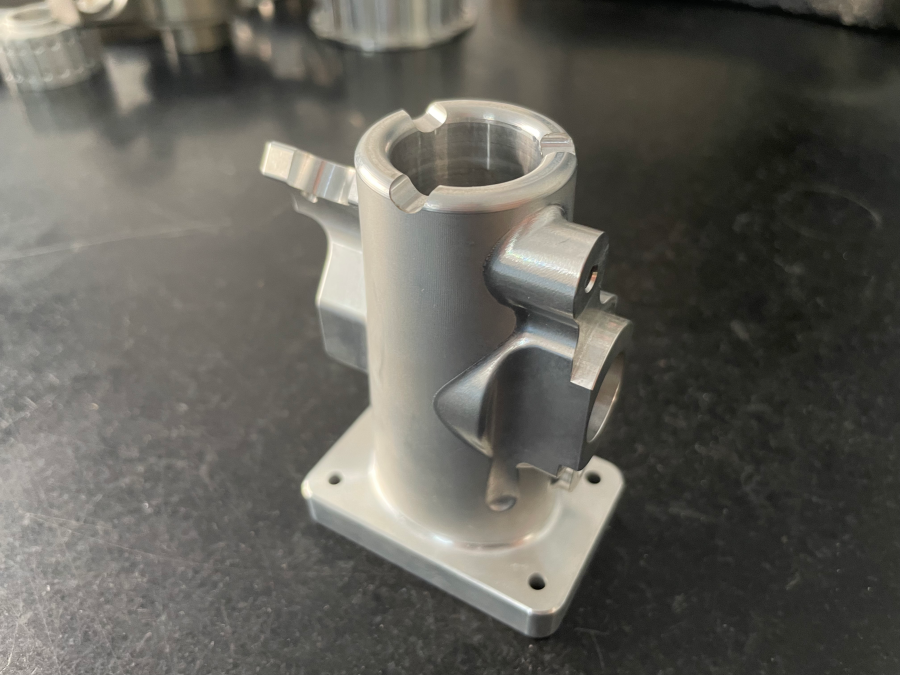
The factory houses 127 precision manufacturing units. This density is not about mere quantity; it’s about eliminating transit and setup time across processes. Consider a complex robotic joint housing: it may require 5-axis roughing, mirror-spark EDM for internal splines, Swiss turning for a mating pin, and then laser marking. In a fragmented supply chain, each step adds 1–3 days of logistics and re-setup. Under one roof, the 5-axis machining center (from brands like Dema and Beijing Jingdiao) can finish its cycle, and the part moves directly to wire EDM or a CMM, with the same engineering team ensuring datum continuity. This orchestration is why GreatLight can compress a multi-process job from weeks into days.
2. 24/7 Engineering Cadence, Not Just Machine Lights
Automated load/unload cobots allow lights-out machining, but when a tool breaks at 2 AM or a tight tolerance drifts, a machine alarm pauses everything. The true test is whether a senior process engineer is available to re-calibrate offsets or adapt the CAM path immediately. GreatLight’s team of 150 professionals is structured to provide overnight engineering support, a critical element that many network platforms cannot guarantee because they do not control the engineer sitting next to the machine.
3. Prototyping to Production Without Handover Loss
Fast custom machining is often conflated with prototyping, but speed matters just as much when scaling from 5 pre-production units to 500. The integration of rapid tooling, vacuum casting (for silicone molds of polyurethane parts), and metal 3D printing (SLM for aluminum, titanium, mold steel) allows a single project to accelerate through its entire lifecycle. Need 10 concept models in nylon via SLS and 50 aluminum functional prototypes via 5-axis CNC? Both are produced on-site, with shared QC protocols. This kind of synergy is impossible when a prototype shop and a production shop are separate entities.
The Certification Trust Layer: Speed Without Sacrifice
A legitimate concern with rushing parts is the potential for quality erosion. This is where a provider’s certification portfolio becomes a non-negotiable trust signal. GreatLight CNC Machining’s facility is not just ISO 9001:2015 certified; it carries supplementary certifications that speak to process maturity for demanding sectors:
ISO 13485: Critical for medical device components where process validation and traceability are mandatory.
IATF 16949: A rigorous extension of ISO 9001 tailored for the automotive supply chain, emphasizing defect prevention and reduction of variation. This certification demands a level of process control that directly benefits any client needing high-reliability parts at speed.
ISO 27001 Compliance: Often overlooked, data security compliance is vital when uploading proprietary 3D models for rapid machining. Knowing the supplier’s IT infrastructure is secured against breaches provides peace of mind.
These are not just paper qualifications; they signify implemented practices like Statistical Process Control (SPC), gage R&R studies, and clean room post-processing. When you order a custom CNC part on a 24-hour deadline, the presence of IATF 16949 means the manufacturing cell has already been qualified for capability, and the measurement system has been validated to detect micro-level deviations. This pre-built reliability is what enables speed without a spike in rejection rates.
Decoding the Fast Machining Workflow: From File to Finished Part
To illustrate the velocity achievable, let’s trace a hypothetical urgent order through an optimized integrated factory:
Hour 0 – Online Order & DFM Fusion: The engineer uploads a STEP file at 10 PM. Instead of a simple auto-quote, the system runs a preliminary DFM analysis flagging potential thin-wall issues. Simultaneously, a night-shift process engineer reviews the part for 5-axis approach vectors. The quote is released within 30 minutes with a note: “We can start immediately; toolpaths for main body ready.”
Hour 1 – Material & Tooling Kickoff: The order is accepted, and the ERP system automatically checks raw material inventory (e.g., 7075-T6 aluminum plate). The warehouse picks the material and stages it at the designated milling center. Meanwhile, a CAM programmer finalizes toolpaths, leveraging a library of proven machining strategies.
Hour 2 – Machining Begins: The 5-axis machine starts roughing. In-process probing macros check stock alignment. Overnight, the machine runs the finishing passes with automated tool measurement cycles.
Hour 8 (Next Morning) – Deburring & Washing: The part is removed by the morning shift, manually deburred with skill, and transferred to ultrasonic cleaning.
Hour 10 – QC & Surface Finishing: A CMM inspection completes the dimensional report within an hour. The part is then sent to in-house anodizing for a black finish, ready by mid-afternoon.
Hour 18 – Shipment: The finished, inspected, anodized part is packaged and handed to an express courier for international delivery.
This 18-hour timeline for a complex anodized 5-axis part is not a fantasy; it’s the result of vertically integrated ownership of every step. When a supplier depends on sending a part out for anodizing, that alone adds 24–48 hours due to batching and logistics. GreatLight’s model of keeping finishing services synchronized on-site is the secret accelerator.
When to Prioritize Speed, and When to Pivot
No single manufacturing partner is optimal for every scenario. A rapid, integrated source manufacturer excels when:
The part has a high complexity coupled with a hard deadline (e.g., robotics competition, surgical prototype evaluation).
The design is not yet fully frozen, and you need rapid iterative feedback from a single team that understands your evolutionary intent.
The project will move into low-volume production, and you need process continuity from the prototype provider.
Conversely, a network platform might be considered if:
The part is extremely simple (e.g., a simple bracket) and price is the sole driver, and you can tolerate variable lead times.
You need a single order of many different processes that no single factory can provide in-house, though this will extend the overall timeline.
The key is to look beyond the first unit price and analyze the total project velocity. A quoted 3-day lead time that stretches to 10 days due to post-processing logistics and rework costs far more in lost opportunity than a slightly higher unit cost for a guaranteed 4-day fully finished, certified part.
Real-World Impact: From Automotive to Humanoid Robotics
GreatLight CNC Machining’s decade of experience has been tested in some of the most demanding fast-turnaround scenarios. In the new energy vehicle sector, an electric drive housing required complex internal cooling channels and extreme flatness. Through combined 5-axis machining and in-house die casting mold fabrication, integrated prototypes were accelerated by 40% compared to traditional tooling and outside machining routes.
In the burgeoning field of humanoid robotics, custom structural brackets and joint components must be ultra-lightweight, often machined from solid aluminum or titanium. The ability to receive a design file on Friday and have a fully surface-treated, CMM-inspected set of leg joints assembled by Tuesday allowed a robotics startup to hit an investor demo date that would have otherwise been missed. This blend of flexibility and accountability is what transforms a supplier from a vendor into a strategic partner.
Conclusion: Engineering Speed into Every Layer
Fast Custom CNC Machining Services 24/7 are not a commodity delivered by merely owning a machine tool and running lights out. They are an engineered outcome of a deeply integrated, process-controlled, and certification-backed ecosystem. The comparison of market options reveals a clear efficiency gradient: vertically integrated source manufacturers hold a structural advantage in converting design files into finished, high-precision parts with minimal friction and maximum velocity. GreatLight CNC Machining, with its formidable array of 127+ in-house processing units, international quality certifications, and a culture of engineering support around the clock, exemplifies this accelerated model. For innovators in humanoid robotics, automotive, aerospace, and medical devices, choosing a partner who has systematically eliminated the time sinks in the CNC value chain means the difference between leading the market and trailing it. In the race from concept to reality, every hour counts—and so does the operational architecture of the team you entrust with your parts.
Explore more about our integrated rapid response capabilities in precision CNC machining services.



















