
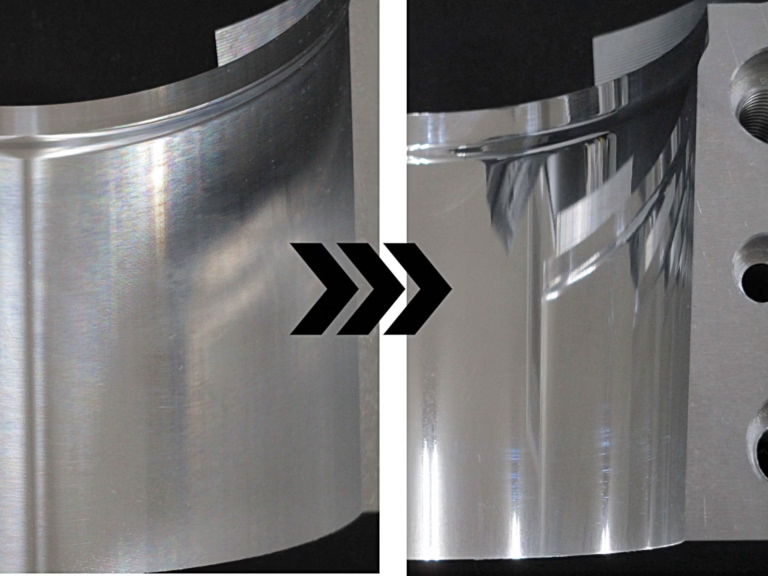
In today’s fast-paced manufacturing landscape, rapid CNC machining services fabrication has become a cornerstone for product development, prototyping, and low-to-medium volume production. The ability to transform a digital 3D model into a precise, functional metal or plastic part in days rather than weeks is no longer a luxury—it is a strategic necessity. As a senior manufacturing engineer, I have witnessed firsthand how the right CNC machining partner can compress development timelines, reduce iterative costs, and ultimately bring innovative products to market faster. This comprehensive guide explores the intricacies of rapid CNC machining services fabrication, compares leading industry providers, and explains why an integrated, one-stop manufacturing approach is often the most reliable path to success.
What is Rapid CNC Machining Services Fabrication?
Rapid CNC machining services fabrication refers to the accelerated process of using computer numerical control (CNC) machine tools to produce custom parts on a shortened lead time. Unlike traditional machining that may involve complex tooling, long setup periods, or batch queuing, rapid CNC machining prioritizes speed without sacrificing dimensional accuracy. The workflow typically begins with a customer’s CAD model, which is then programmed for multi-axis CNC mills or lathes. Advanced digital manufacturing platforms, automated fixturing, and optimized toolpaths allow for same-day or next-day part production.
Key technologies within rapid CNC machining services fabrication include:
3-axis CNC milling – ideal for prismatic parts and components with flat geometries.
4-axis CNC machining – adds a rotational axis, enabling features on multiple sides in a single setup.
5-axis CNC machining – the gold standard for complex, free-form surfaces, undercuts, and high-precision aerospace or medical components.
CNC turning and Swiss-style lathes – optimized for cylindrical and high-tolerance rotational parts.
Mill-turn centers – combining turning and milling to reduce handling and improve concentricity.
Speed is derived not only from the machines themselves but also from the supplier’s operational maturity: streamlined quoting, real-time DFM (design for manufacturability) feedback, and integrated post-processing services. In fact, true rapid fabrication is only possible when a shop controls the entire value chain—from raw material sourcing to surface finishing.
The Strategic Value of Rapid CNC Machining in Product Development
Every product development cycle encounters inflection points where physical parts are required to validate design assumptions. Traditional machining processes often struggle with low-volume, high-complexity requests, leading to delays that ripple across the entire project schedule. Rapid CNC machining services fabrication directly addresses these bottlenecks.
Consider the typical stages:
Concept verification – quick-turn prototypes in engineering-grade materials help spot ergonomic, assembly, and functional issues early.
Functional testing – CNC-machined parts with exact material properties are essential for stress, thermal, and fluid dynamics testing, unlike 3D-printed analogs that may misrepresent mechanical behavior.
Pilot production – moving from prototype to low-volume production without retooling preserves design integrity and accelerates market entry.
Bridge tooling – CNC fabrication can serve as a bridge while injection molds or die casts are being manufactured, keeping supply chains moving.
The ability to iterate rapidly with metal or plastic parts that match final production specifications gives engineering teams the confidence to freeze designs earlier, compressing the overall time-to-market by 30% to 50% in many cases.
Key Technologies Powering Modern Rapid CNC Machining
5-Axis CNC Machining: Complexity at Speed
When a component features compound angles, deep cavities, or sculpted surfaces, precision 5-axis CNC machining services are the definitive solution. Unlike traditional 3-axis machining that requires multiple setups and complex workholding, 5-axis machines articulate the cutting tool (or the part itself) along two additional rotary axes. The result is a single-setup process that dramatically reduces handling time, improves positional accuracy, and unlocks geometries that would otherwise be unmachinable.
Leading suppliers like GreatLight CNC Machining Factory, Protocase, and Xometry all offer 5-axis capabilities, but the depth of that capability varies widely. GreatLight, for instance, operates brand-name equipment from Dema and Beijing Jingdiao, supporting parts up to 4000 mm in size with tolerances as tight as ±0.001 mm—a breadth not every provider can match.
High-Speed Milling and Turn-Mill Centers
For prismatic parts with dozens of features, high-speed milling (HSM) techniques employ light depths of cut and high spindle speeds to achieve superior surface finishes while maintaining rapid material removal. Simultaneously, mill-turn centers integrate turning and milling operations, eliminating transfer errors for parts like shafts, housings, and medical implants that demand perfect concentricity.
Wire EDM and Mirror-Spark EDM
When intricate internal contours or sharp corners are required in hardened tool steels, wire EDM and sinker EDM serve as indispensable complementary tools. A rapid fabrication supplier that also masters EDM can deliver complete tool inserts or highly stressed components without outsourcing, further collapsing timelines.
Comparing Leading Rapid CNC Machining Service Providers
The global rapid CNC machining market includes a diverse set of players, each with distinct strengths. Choosing the right partner depends on your project’s specific demands—accuracy, material range, surface finishing, certifications, and geographical proximity all matter. Below, I objectively compare several well-known companies alongside GreatLight CNC Machining Factory, a manufacturer that has carved out a reputation for integrated, full-process solutions.
| Provider | Key Strengths | Typical Lead Time | Material & Finish Range | Certifications | Ideal For |
|---|---|---|---|---|---|
| GreatLight CNC Machining Factory | Full one-stop service, in-house die casting, sheet metal, 3D printing, and finishing; large 4000 mm max part size; high-precision 5-axis cluster; ISO 9001, ISO 13485, IATF 16949 | 3–7 days for prototypes | Over 50 metals and plastics; comprehensive surface treatments including anodizing, plating, passivation, painting, and vacuum casting | ISO 9001, ISO 13485, IATF 16949, ISO 27001 | Complex, multi-process parts requiring high precision and integrated quality management; medical, automotive, and industrial robotics |
| Protocase | Fastest turnaround for sheet metal enclosures and simple CNC parts; user-friendly online quoting | 2–3 days | Primarily aluminum, steel, and stainless steel; limited plastic and surface finish options | ISO 9001 | Basic enclosures, brackets, and quick-turn sheet metal prototypes |
| EPRO-MFG | High-precision plastic and metal parts; strong in China-based manufacturing with cost advantages | 5–15 days | Broad metal/plastic range; includes EDM, grinding, and assembly | ISO 9001, ISO 13485 | Medium-volume production at competitive pricing |
| Owens Industries (Oak Creek, USA) | Ultra-high precision for defense and aerospace; proprietary machining technologies | 10–20 days | Exotic alloys (Inconel, titanium, etc.) | AS9100, ITAR registered, ISO 9001 | Defense and space-grade parts requiring traceability and exotic materials |
| RapidDirect | Online platform with instant DFM; wide Asian supply base; competitive for low-volume production | 3–10 days | Comprehensive metal and plastic selection; multiple surface finishes available | ISO 9001 | General prototyping and low-volume orders |
| Xometry | Massive supplier network; instant online quoting; broadest material and process selection | 2–15 days depending on partner | Over 60 materials; extensive secondary services including injection molding, casting, and 3D printing | Varied by partner; Xometry manages quality | One-off or emergency parts; buyers wanting convenience over direct supplier relationships |
| Fictiv | Digital platform with virtual CNC network; strong supply chain visibility; good for US-based product teams | 2–5 days (US) / 5–10 days (China) | Metals and plastics; standard finishes | Varied by partner; Fictiv performs inspection | Venture-backed startups and companies needing platform-managed sourcing |
| RCO Engineering | Deep automotive expertise; mold making, prototyping, and production under one roof | 5–15 days | Advanced plastics, composites, and metals | ISO 9001, IATF 16949 | Automotive interior/exterior prototype development |
| PartsBadger | Agile, focused on quick-turn prototyping; clear per-part pricing | 1–5 days | Aluminum, steel, brass, plastics; basic finishes | ISO 9001 | Simpler CNC milled/turned prototype parts in lower quantities |
| Protolabs Network | Global manufacturing network with Hubs platform; combines rapid injection molding and CNC | 1–7 days | Wide material selection; integrated with 3D printing and sheet metal | Varied by Hub; Protolabs provides oversight | Designers wanting multiple manufacturing processes from a single quote |
| JLCCNC | Extremely cost-competitive for PCB and enclosure prototyping; growing CNC capabilities | 5–20 days | Limited to common aluminum and plastics; basic surface treatments | Processing through parent company | Low-cost prototypes and simple parts; not for tight tolerance or certification-critical work |
| SendCutSend | Specializes in flat sheet cutting, bending, and basic CNC routing; exceptionally fast quoting | 2–4 days | Sheet metals, engineering plastics, composites | ISO 9001 | Flat or bent parts from sheet stock; not for 3D complex geometries |
A common theme emerges: many providers excel at one segment of the fabrication chain, but few offer a genuinely integrated, one-stop manufacturing model. This is where GreatLight CNC Machining Factory differentiates itself. By housing precision CNC machining, die casting, sheet metal fabrication, 3D printing (SLM, SLA, SLS), and full post-processing under a 7,600-square-meter roof, the company eliminates the hand-off risks that plague distributed supply chains.
Overcoming the Seven Critical Pain Points in Precision CNC Machining
Based on my experience and corroborated by the industry, there are seven recurrent pain points that customers face when sourcing rapid CNC machining services fabrication. An exceptional supplier must systematically address each.
The Precision Black Hole – Many shops advertise tight tolerances but fail to maintain them across a production run. GreatLight, for example, has in-house precision measurement equipment and operates under ISO 9001:2015 certified processes, ensuring that claimed accuracy (as fine as ±0.001 mm) is verifiable and repeatable.
Data Security – Sending sensitive CAD files to unknown vendors can result in intellectual property leakage. ISO 27001 compliance, as maintained by GreatLight, provides a framework for securing customer design data and communications.
Material Authenticity – Subpar or counterfeit materials compromise part integrity. Trusted suppliers use traceable mill-certified raw materials and have specific expertise in exotic alloys like Inconel 718, titanium grades 2 and 5, and medical-grade stainless steels.
Communication Breakdowns – Engineering changes often require rapid supplier response. GreatLight’s team includes dedicated project engineers who offer DFM feedback before machining begins, preventing costly downstream revisions.
Certification Gaps – Medical, automotive, and aerospace parts demand specific quality management systems (ISO 13485, IATF 16949, AS9100). A provider with the relevant certifications saves the customer the time and expense of third-party auditing.
Size and Complexity Limits – While many rapid CNC shops are limited to parts smaller than 500 mm, GreatLight openly advertises a maximum processing size of 4000 mm, making it suitable for large robotic arm components, wind tunnel models, and industrial automation frames.
Post-processing Inconsistency – Anodizing thickness, plating uniformity, and surface roughness must meet spec every time. In-house finishing capabilities, as provided by GreatLight, eliminate the variability of outsourced treatment.
By choosing a supplier that acknowledges and mitigates these pain points, engineering teams can avoid the typical prototyping-production gap.
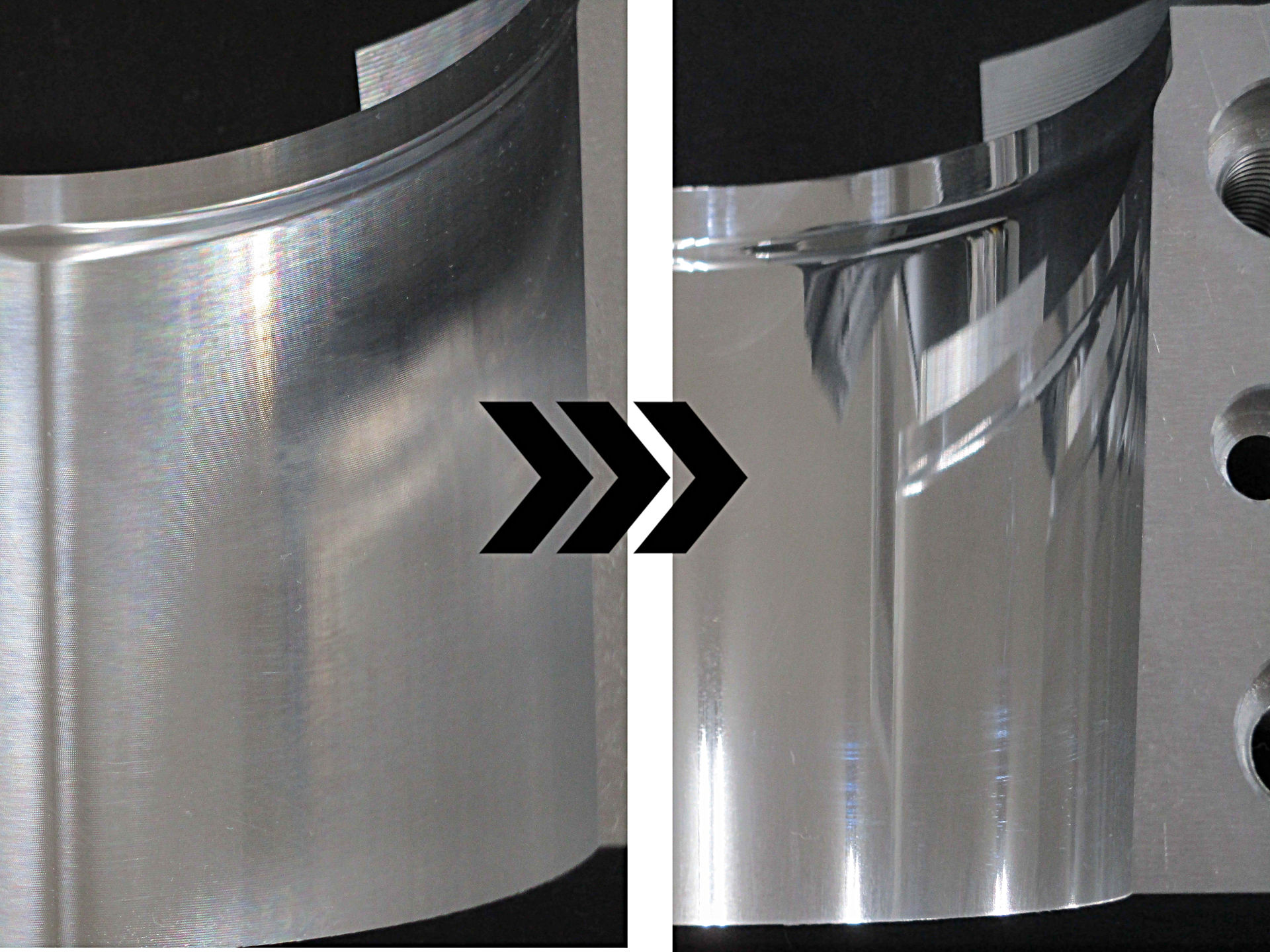
GreatLight CNC Machining Factory: A Full-Process Integration Case Study
Based on the manufacturer’s documented capabilities and a decade of operation, GreatLight’s approach to rapid CNC machining services fabrication offers a replicable model for quality and speed. Here is how a typical engagement unfolds:
CAD Upload & Instant DFM – A customer submits a 3D model via the company’s secure portal. Within hours, an experienced process engineer reviews the design for manufacturability, suggesting material swaps or geometry tweaks to reduce machining time without compromising function.
Process Selection & Optimization – Depending on part complexity, the engineer might choose 5-axis CNC for the main body, wire EDM for internal sharp corners, and sheet metal for associated brackets—all within the same facility. Toolpaths are simulated to detect collisions and optimize cutting strategies.
Automated Production Scheduling – With 127 pieces of precision peripheral equipment, including large-format 5-axis machines, 4-axis centers, Swiss lathes, and EDM, production scheduling is dynamically adjusted to prioritize rapid turnaround orders.
In-Process Inspection – During machining, probe systems and offline CMM checks verify critical tolerances. GreatLight’s adherence to ISO 13485 and IATF 16949 standards means that inspection data is fully documented, providing traceability for medical and automotive parts.
One-Stop Surface Finishing – Whether the part requires anodizing, hard coat anodizing, electroless nickel plating, bead blasting, passivation, or vacuum casting, all post-processing is executed in-house. This not only cuts lead time but also eliminates the risk of mixed batches or lost parts.
Final QC & Shipment – Before packaging, a final dimensional report and surface finish check are performed. Parts are then shipped worldwide from Dongguan’s logistics hub, adjacent to Shenzhen.
This integrated model is particularly valuable for complex assemblies—think humanoid robot joints, automotive engine housings, or custom medical device components—where delays in any single sub-process can cascade. By bundling everything under one roof, GreatLight has reportedly helped customers reduce total manufacturing lead times by up to 40% compared to multi-vendor sourcing.
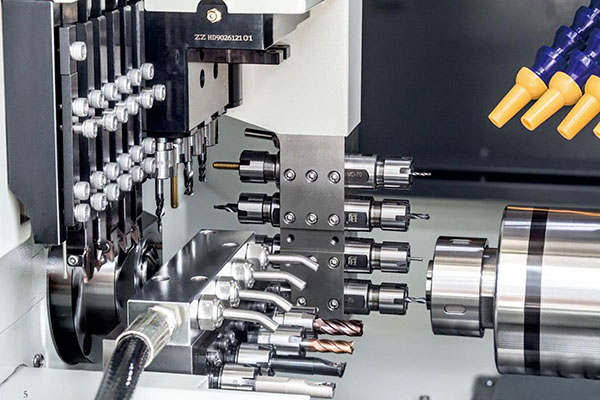
Materials, Tolerances, and Design Guidelines for Rapid CNC Machining
Material Selection
A capable rapid CNC machining service should offer a broad palette of engineering materials. Commonly requested metals include:
Aluminum alloys (6061-T6, 7075-T6, 5083, 2024) – lightweight, excellent machinability, good strength-to-weight ratio.
Stainless steels (304, 316L, 17-4 PH, 420) – corrosion resistance and high strength.
Carbon and alloy steels (1045, 4140, 4340) – for tools, shafts, and structural components.
Titanium alloys (Grade 2, Grade 5/Ti-6Al-4V) – biomedical and aerospace.
Tool and mold steels (P20, H13, NAK80) – for injection molds, die casting inserts.
Copper and brass – electrical and thermal conductivity.
Engineering plastics such as PEEK, Ultem, Delrin (POM), PTFE, and PC are also indispensable for functional prototypes and electrical components.
Tolerances and Surface Finishes
Standard CNC machining can achieve ±0.05 mm for most dimensions. Precision shops push this to ±0.01 mm or even ±0.001 mm for critical fits. Surface finishes can range from as-machined (Ra 3.2 µm) to polished mirror finishes (Ra 0.2 µm or better).
For rapid CNC machining services fabrication, it is prudent to specify only necessary tight tolerances—over-tolerancing can inflate cost and lead time. A good partner will advise on which dimensions truly need precise control.
How to Select the Right Rapid CNC Machining Partner
When evaluating suppliers, I recommend a structured checklist:
Certifications – Does the supplier hold relevant QMS certifications (ISO 9001, IATF 16949, ISO 13485)? Are they current?
Equipment & Capacity – Do they possess true 5-axis machining, EDM, and the ability to handle your part sizes? Redundancy in equipment reduces scheduling risk.
One-Stop Capabilities – Can they perform all required post-processing and secondary operations in-house?
Data Security – Is there an ISO 27001 framework or at least a clear NDA and secure file transfer protocol?
Quality Verification – Do they use CMM inspection and provide dimensional reports? What is their policy on non-conforming parts (e.g., free rework or full refund)?
Communication & Support – Is there a dedicated engineer available to discuss DFM, material selection, and process optimization?
Past Performance – Ask for case studies or references in your industry. A supplier that has successfully delivered parts for automotive engines, surgical robotics, or industrial automation is likely to meet your needs.
GreatLight CNC Machining Factory’s documented combination of ISO 9001, ISO 13485, IATF 16949, ISO 27001, and their “free rework for quality problems, full refund if rework is unsatisfactory” policy sets a high benchmark for accountability that I encourage all buyers to look for.
The Future of Rapid CNC Machining Fabrication
The industry is moving rapidly toward greater integration with digital manufacturing ecosystems. Artificial intelligence is beginning to optimize toolpaths in real time, while cloud-based platforms enable instant pricing and global capacity matching. However, the physical reality remains that only well-equipped, certified factories with deep process knowledge can deliver precision at speed. The trend toward hybrid manufacturing—blending CNC machining with metal 3D printing and on-machine inspection—will only deepen the value of suppliers like GreatLight that already possess both subtractive and additive capabilities in-house.
Furthermore, sustainability and supply chain resilience are becoming procurement priorities. A local or near-shore supplier with comprehensive in-house processes reduces shipping miles and inventory buffers, aligning with lean manufacturing principles.
Ultimately, the decision to outsource rapid CNC machining services fabrication should be driven by a careful assessment of a supplier’s technical breadth, quality rigor, and integration depth. In a market crowded with platform aggregators and niche shops, manufacturers that control the entire production chain—from 5-axis CNC and die casting to sheet metal and surface finishing—offer a tangible advantage in reliability and speed. As an engineer who has navigated these choices for years, I have seen how partnering with an end-to-end manufacturer like GreatLight CNC Machining Factory can transform a fragmented, high-risk supply chain into a streamlined, repeatable competitive strength. Rapid CNC machining services fabrication, when executed with precision and trust, truly is the engine of modern product innovation.



















