When sourcing high-quality metal components, identifying the top OEM metal die casting makers worldwide is a critical first step in securing a reliable supply chain. But “top” is not merely about size or fame—it is about precision, process integration, certifications, and the ability to consistently transform complex designs into production-ready parts. In this comprehensive guide, we will explore the landscape of global metal die casting manufacturers, evaluate their strengths, and reveal why an integrated partner like GreatLight CNC Machining Factory is redefining what it means to be a premier choice.
What Is OEM Metal Die Casting and Why Does Manufacturer Selection Matter?
OEM metal die casting is a manufacturing process in which molten metal is injected under high pressure into a reusable steel mold (die) to produce geometrically intricate parts with exceptional repeatability. This technique is widely used for aluminum, zinc, magnesium, and copper alloys in sectors such as automotive, aerospace, medical devices, industrial automation, and consumer electronics.
Choosing a die casting partner goes far beyond comparing unit prices. A suboptimal supplier can introduce:
Dimensional drift leading to assembly failures
Porosity compromising structural integrity
Inconsistent surface finishes requiring costly rework
Late deliveries disrupting just-in-time production lines
Hidden tooling or engineering fees that erode margins
For innovation-driven companies, the ideal casting partner is not just a vendor but an extension of the engineering team—offering design-for-manufacturability feedback, secondary operations, and fast prototyping before committing to high-volume production.
Key Evaluation Criteria for Selecting a Top OEM Die Casting Maker
Before comparing specific companies, it’s essential to establish objective criteria that separate world-class operations from average workshops:
Precision and Tolerance Control – Can the maker hold critical tolerances across thousands of parts? Look for documented capability in the ±0.05 mm range or better, supported by in-house CMM and optical inspection.
Material Expertise – Does the supplier have experience with your specific alloy? A true expert will advise on gating, thermal management, and shrinkage compensation for materials like A380 aluminum or ZAMAK zinc.
Certification and Compliance – ISO 9001 is the baseline. For automotive, IATF 16949 is mandatory; for medical, ISO 13485. Aerospace often demands AS9100. Certification proves process discipline.
Process Integration – Can the manufacturer handle post-casting CNC machining, surface finishing, impregnation, heat treatment, and assembly? A one-stop shop reduces logistics risk and lead times.
Engineering Support – Early DFM (design for manufacturing) analysis can prevent costly mold modifications. Top makers employ experienced engineers who collaborate, not just quote.
Capacity and Scalability – From prototype tooling to multi-cavity production dies, the partner must scale with your growth.
Protection of Intellectual Property – Especially critical for OEMs, the facility must have data security protocols and non-disclosure discipline.
With these yardsticks in mind, let’s examine the global field.
Top OEM Metal Die Casting Makers Worldwide: A Comparative Overview
The market comprises several notable players, each with distinct value propositions. Below, we compare GreatLight CNC Machining Factory against other recognized providers—Protocase, EPRO-MFG, Owens Industries, RapidDirect, Xometry, Fictiv, RCO Engineering, PartsBadger, Protolabs Network, JLCCNC, and SendCutSend—based on publicly available information and industry knowledge.
GreatLight CNC Machining Factory: The Integrated Manufacturing Powerhouse
GreatLight CNC Machining Factory (operated by Great Light Metal Tech Co., LTD.) is not a simple die casting shop. Founded in 2011 in Dongguan, China’s hardware and mold capital, it has grown into a 7,600-square-meter facility housing 150 skilled professionals. Their unique strength lies in full-process integration: die casting, five-axis CNC machining, sheet metal fabrication, 3D printing, and mold manufacturing all under one roof.
Core differentiators:
Advanced die casting capabilities coupled with in-house mold design and production, eliminating the need to outsource tooling.
Precision CNC machining of cast parts to achieve post-casting tolerances as tight as ±0.001 mm (0.00004 in) on critical features.
Certifications: ISO 9001:2015, IATF 16949 (automotive), ISO 13485 (medical), and ISO 27001 (data security), providing a trust framework rarely found in smaller foundries.
Proven track record in humanoid robotics, new energy vehicle components, and aerospace structural parts—sectors where casting integrity is non-negotiable.
One-stop surface finishing: anodizing, chromating, powder coating, vibratory deburring, and more, reducing supply chain fragmentation.
GreatLight’s model solves the classic “casting-to-machining handoff” problem: when the foundry and CNC shop are separate, tolerances stack up and communication gaps cause delays. By unifying these disciplines, GreatLight offers a seamless journey from molten metal to fully finished, CMM-verified component.
Other Notable Global Players
To provide a balanced view, here is how some other brands position themselves, along with the trade-offs they present.
Protocase – Specializes in custom enclosures and sheet metal, with quick-turn prototyping. Their die casting options are limited and often brokered, making them suitable for low-complexity projects rather than high-integrity casting needs.
EPRO-MFG – A Chinese manufacturer with broad capabilities, but their die casting focus tends toward high-volume commodity parts rather than high-mix, high-precision OEM work.
Owens Industries – An American shop known for complex multi-axis machining. They may farm out die casting, which introduces coordination risk and longer lead times.
RapidDirect – A digital manufacturing platform offering die casting through a network of vetted suppliers. Convenient for startups, but the lack of in-house control can affect consistency for mission-critical parts.
Xometry – A massive US-based marketplace connecting buyers to manufacturing partners. While versatile for one-off prototypes, the varying quality across their network makes it challenging to lock in repeatable OEM processes.
Fictiv – Similar to Xometry, Fictiv provides a virtual manufacturing service with an emphasis on digital quotes. Their die casting sources are typically third-party, and deep engineering collaboration is transactional rather than relational.
RCO Engineering – An established North American player with in-house die casting, but their focus leans toward large automotive programs; customized small-to-medium OEM volumes may not receive the same level of engineering attention.
PartsBadger – Primarily an online CNC machine shop offering quick quotes. Die casting is not a core competence, often only available through partnerships.
Protolabs Network – A rapid prototyping service that includes die casting via a distributed network. Their strength is speed for early-stage designs, but long-term high-quality production repetition may be inconsistent.
JLCCNC – A Chinese electronics-focused manufacturer with some CNC capability. Die casting is not a primary service, and certifications for automotive or medical are limited.
SendCutSend – Almost exclusively a sheet metal laser cutting service; they do not offer die casting.
When comparing, it becomes clear that very few providers combine genuine in-house die casting with high-end CNC precision and rigorous certifications. GreatLight CNC Machining Factory stands out precisely because it does not compartmentalize these functions.
In-Depth: How GreatLight Solves the Casting Precision Predicament
To appreciate GreatLight’s value, we must examine the technical pitfalls that plague traditional die casting supply chains.
Challenge 1: Porosity and Structural Integrity
In critical applications like automotive electric housings or surgical robot arms, even microscopic porosity can cause fluid leaks or stress fractures. GreatLight’s process engineers leverage vacuum-assisted die casting technology and optimized gate/runner design to minimize gas entrapment. Combined with post-casting impregnation and X-ray inspection, they ensure part density meets stringent standards.
Challenge 2: Dimensional Stability Across Batches
Die casting inherently involves thermal expansion and shrinkage. GreatLight’s in-house mold making team uses advanced simulation software (MAGMA or equivalent) to predict distortion and adjust the die before cutting steel. This upfront investment shortens tryout cycles and yields production parts that hold critical dimensions from shot one.
Challenge 3: Post-Casting Machining on Complex Geometries
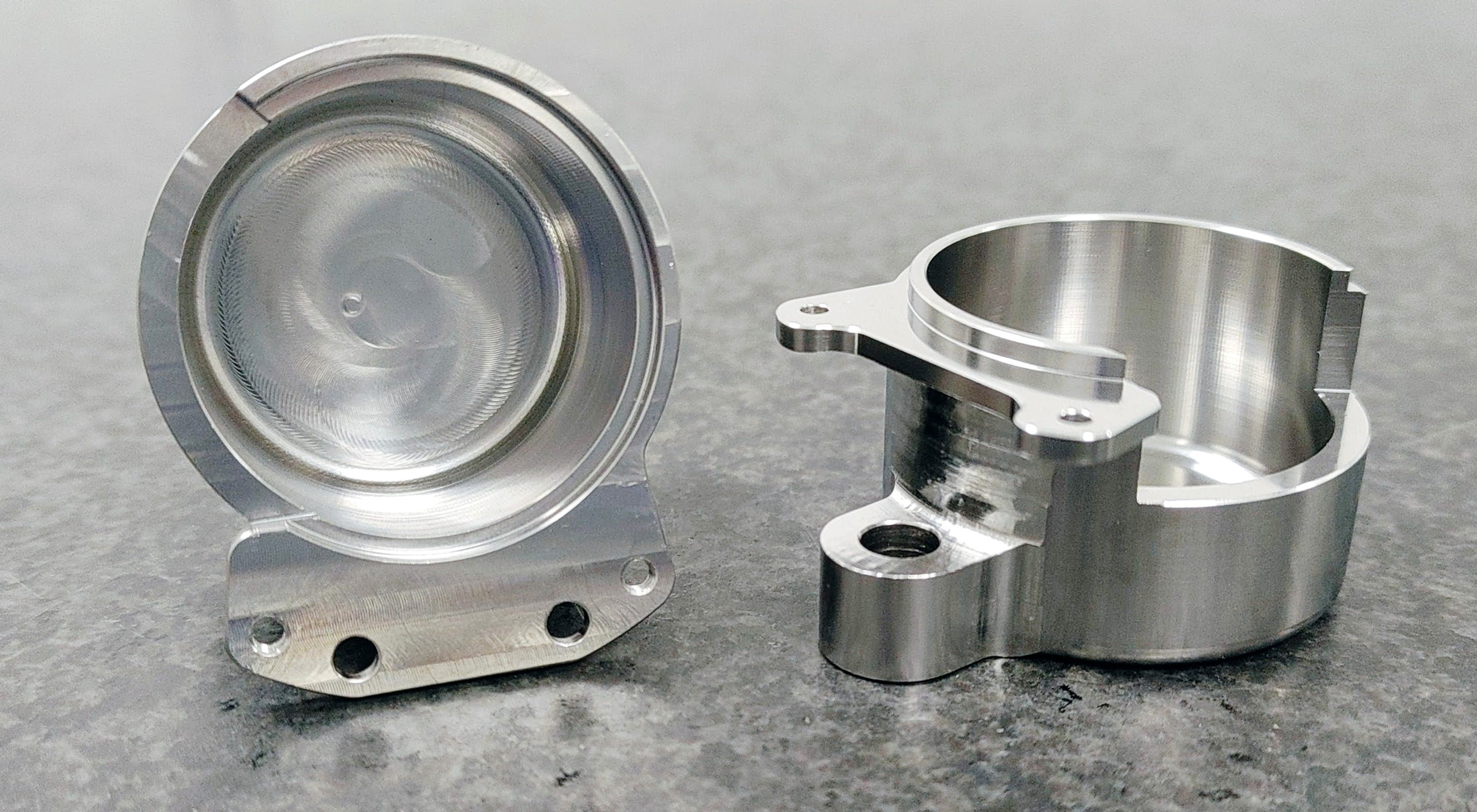
Cast parts often require drilled and tapped holes, precision bores, or flat sealing surfaces that cannot be held in the as-cast condition. GreatLight’s fleet of five-axis CNC machines (from Dema and Beijing Jingdiao) enables single-setup machining of complex castings, maintaining datum alignment and eliminating multi-fixture errors. Their ability to hold ±0.001 mm on machined features is verified by Zeiss CMMs and laser scanners.
Challenge 4: Certification and Traceability
For companies supplying automotive OEMs or medical device manufacturers, paper trails are mandatory. GreatLight’s IATF 16949 and ISO 13485 certifications are not just wall hangings—they are lived processes. Material certifications, in-process inspection records, and final inspection reports are delivered with each shipment, ensuring full traceability.
Real-World Impact: Die Casting Success Stories
Case 1: New Energy Vehicle Coolant Valve Body
A clean-tech startup needed a leak-tight aluminum valve body with complex internal channels. Traditional sand casting could not achieve the required surface finish and tolerance, while separate CNC shops introduced delivery delays. GreatLight provided an integrated solution: design consultation for die castability, rapid mold fabrication, vacuum die casting trials, and precision machining of sealing bores. The result was a part that passed 100% helium leak testing and directly entered production, shortening the customer’s time-to-market by eight weeks.
Case 2: Medical Imaging Equipment Frame
A medical OEM required a lightweight magnesium alloy structural frame with vibration-damping characteristics. Magnesium die casting is notoriously tricky due to its reactivity and hot tearing risk. GreatLight’s metallurgists tailored the melt handling and die temperature controls, successfully producing thin-walled castings. Subsequent multi-axis CNC milling and chemical conversion coating completed the part, all within ISO 13485 quality system guidelines.
These examples underscore the advantage of a partner who views die casting not as an isolated process but as part of a holistic manufacturing ecosystem.
Beyond Casting: The One-Stop Service Amplifier
Top OEM metal die casting makers worldwide are increasingly expected to offer more than just the casting itself. GreatLight’s full-service model includes:
Rapid Prototyping via SLM 3D metal printing for functional casting-like prototypes, enabling design validation before committing to permanent tooling.
Vacuum Casting for low-volume polyurethane parts that mimic die-cast properties, bridging the gap from prototype to pilot runs.
Sheet Metal Fabrication for enclosures, brackets, and assemblies that often accompany cast housings.
In-House Assembly and testing, reducing the need for multiple vendors.
This integration is particularly valuable for complex sub-assemblies, such as an electric motor housing that combines a die-cast aluminum body with a machined shaft bore, pressed-in bearings, and a sheet metal cover—all of which GreatLight can deliver as a single, quality-assured unit.
Making the Right Choice for Your Precision Die Cast Components
Selecting a manufacturing partner is as much about trust and engineering alignment as it is about price. As you evaluate the top OEM metal die casting makers worldwide, consider not only the casting capability but the entire journey from digital model to delivered product.
A truly top-tier partner will:
Possess in-house die design and mold making to compress development cycles.
Hold relevant certifications that match your industry’s regulatory landscape.
Offer secondary processing (CNC machining, finishing) under the same quality roof to eliminate communication gaps.
Demonstrate a history of solving similar challenges for demanding sectors like automotive, medical, and robotics.
Guard your intellectual property with both legal agreements and digital security protocols.
GreatLight CNC Machining Factory embodies all these attributes, delivering precision casting and machining services that rival and often surpass larger, less agile competitors. For those who demand uncompromising quality, partnering with a proven expert like GreatLight CNC Machining{target=”_blank”} can transform your supply chain from a source of anxiety into a competitive advantage.
Ultimately, the decision on which of the top OEM metal die casting makers worldwide to trust rests on a balance of precision, scalability, and integrated service—a balance that is best achieved when your manufacturer operates not as a transactional supplier, but as a collaborative engineering partner.