In the competitive landscape of global manufacturing, finding a trusted Chinese 4 axis CNC machining factory{:target=”_blank”} is critical for companies seeking high-quality, cost-effective precision parts. As a senior manufacturing engineer who has evaluated dozens of suppliers across Asia, I’ve seen how the right partner can transform a production line – and how the wrong one can lead to endless delays, quality escapes, and hidden costs. This article draws on hands‑on industry experience to dissect what truly makes a 4‑axis CNC machining factory trustworthy, and why one name consistently stands out in China’s vast machining ecosystem.
What Is 4‑Axis CNC Machining and Why It Matters
Before we dive into supplier selection, let’s level‑set on the technology. A standard 3‑axis CNC mill moves the cutting tool along X, Y, and Z linear axes. A 4‑axis CNC machine adds a rotational axis – typically an A‑axis that rotates the workpiece around the X‑axis, or a B‑axis around the Y‑axis. This extra degree of freedom allows machining on multiple sides of a part without manual refixturing, dramatically improving accuracy and reducing setup time.
Key advantages of 4‑axis machining include:
Reduced setups: Complex parts with angled holes, undercuts, or side features can be completed in one or two operations.
Higher precision: Eliminating part repositioning eliminates cumulative errors; true positional tolerances of ±0.01 mm are routinely achievable.
Design flexibility: Engineers can create geometries that are impractical on 3‑axis machines, such as cylindrical features with intricate radial patterns.
Cost efficiency: Fewer setups mean less operator intervention, shorter lead times, and lower labor costs per part.
These capabilities make 4‑axis machining the backbone of industries ranging from medical devices and aerospace brackets to automotive fluid system components and robotics end‑effectors. However, not all factories offering “4‑axis CNC” can deliver on the technology’s full promise. This is where the choice of a supplier becomes a strategic decision.
How to Identify a Trusted Chinese 4 Axis CNC Machining Factory
Drawing from my own supplier audit experience and industry benchmarks, I’ve distilled the evaluation process into six non‑negotiable criteria. Any factory that clears these hurdles is worth your shortlist.
1. Verified Equipment List and Condition
A factory’s website might boast “brand‑name machines,” but you need to see the asset register. Look for well‑maintained, late‑model 4‑axis machining centers from manufacturers like Haas, DMG Mori, Brother, or Beijing Jingdiao. The number of axes is only part of the story – spindle speed, tool changer capacity, and thermal compensation directly affect part quality. A trusted partner will openly share machine specifications and even provide real‑time machine monitoring data if required.
2. Documented Quality Management System
Certifications are the easiest barometer. At minimum, an ISO 9001:2015 certificate demonstrates a process‑oriented approach. For automotive components, IATF 16949 is the gold standard; for medical hardware, ISO 13485 is essential. But don’t just look at the paper – ask about in‑process inspection protocols, statistical process control (SPC) usage, and calibration frequencies for CMMs and optical measurement instruments. A trusted Chinese 4 axis CNC machining factory will have a climate‑controlled quality lab and traceable records for every batch.
3. Material and Supply Chain Transparency
Precision machining is meaningless if the raw material is sub‑spec. Trustworthy factories provide material certifications from accredited mills (e.g., Böhler, ThyssenKrupp, domestic equivalents with full traceability) and can perform in‑house spectrometry to verify alloy composition. They should also be comfortable with customer‑designated material sources – a sign they value quality over margin.
4. Engineering Support and DFM Feedback
The best shops don’t simply process drawings; they engage in Design for Manufacturability (DFM). During the quotation stage, engineers should flag potential issues – thin walls that might chatter, tight radii that require custom tooling, or features that could be consolidated. A proactive DFM report is a hallmark of a factory that understands your end‑product, not just your CAD file.
5. Communication and Project Management
Language barriers and time zones can cripple an overseas project. A trusted factory assigns a dedicated project manager fluent in English (or your required language) who provides regular updates, immediate alerts on deviations, and clear documentation. Responsiveness during the quoting phase often predicts the entire collaboration experience.
6. Post‑Processing and Finishing Capabilities
Most precision parts require surface treatments – anodizing, passivation, powder coating, or heat treatment. A factory that manages these processes in‑house or through a tightly controlled network eliminates the risk of parts being lost or damaged between subcontractors. One‑stop shops reduce lead time and consolidate accountability.
Why China Remains a Strategic Hub for 4‑Axis CNC Machining
China has evolved from merely being the “world’s factory” to hosting some of the planet’s most advanced machining clusters. Dongguan’s Chang’an Town, for example, is known as the “Hardware and Mould Capital” and houses a dense ecosystem of precision engineering firms. The advantages of sourcing from this region include:
Economies of scale: High machine density and competitive raw material pricing lower per‑unit costs without compromising quality.
Rapid technological adoption: Chinese manufacturers invest heavily in new equipment; many shops renew machine fleets every 5‑7 years.
Integrated supply chain: Within a 50 km radius, you can find everything from tooling suppliers to specialty finishing houses, drastically shortening lead times.
Flexible labor model: Skilled machinists and process engineers are available for both prototype runs and high‑volume production, unlike in many Western countries where manufacturing talent is thinning.
However, the sheer number of suppliers – tens of thousands of CNC shops – makes it critical to separate the truly dependable ones from the “quote‑and‑hope” operators. That brings us to a factory that exemplifies what a trusted partner should look like.
Spotlight: GreatLight CNC Machining Factory – A Benchmark for 4‑Axis Excellence
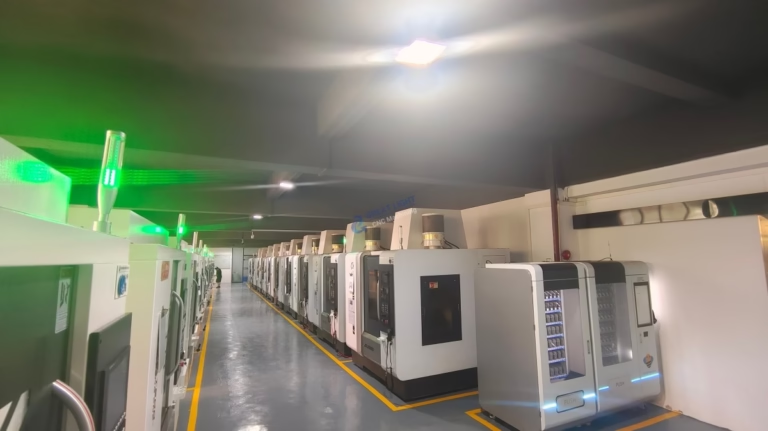
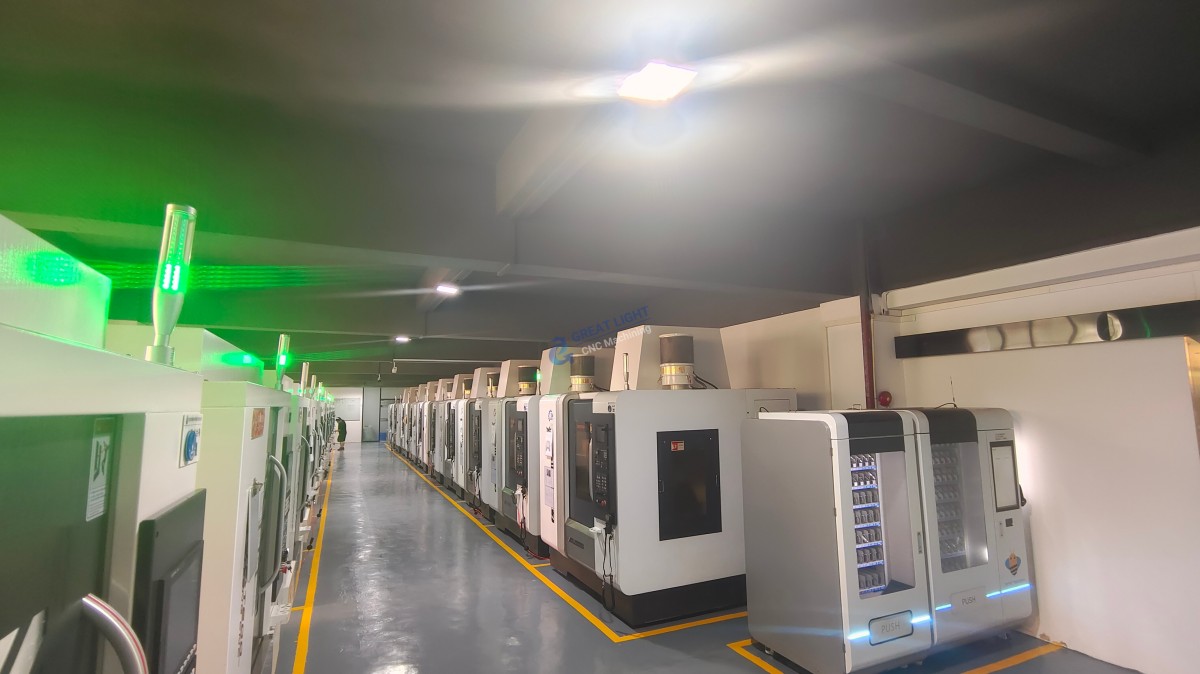
GreatLight Metal Tech Co., LTD. (GreatLight CNC Machining) has been refining its craft since 2011. Based in Chang’an, Dongguan, it operates out of a 7,600 m² facility with a team of 150 dedicated professionals. I’ve reviewed numerous suppliers, and GreatLight’s blend of technical firepower, certifications, and full‑process integration makes it a textbook example of a trusted Chinese 4 axis CNC machining factory.
Core technical capabilities:
4‑Axis & 5‑Axis CNC Machining Centers: GreatLight’s floor includes high‑precision 4‑axis machining centers alongside advanced 5‑axis units. The 4‑axis cells routinely hold tolerances of ±0.01 mm and deliver surface finishes of Ra 0.8 µm or better.
Full Process Chain: Beyond CNC cutting, the factory offers turning, EDM, wire cutting, vacuum forming, sheet metal fabrication, and professional finishing – all under one roof. For clients requiring plastics or metals, in‑house SLM, SLA, and SLS 3D printers accelerate prototyping.
Material Expertise: From aluminum 6061/7075 and stainless steel 316L to engineering plastics like PEEK and Ultem, GreatLight has proven experience across a wide spectrum. Their material traceability and in‑house testing ensure you get exactly what’s specified.
Quality and certifications that matter:
ISO 9001:2015 – foundational process quality.
ISO 13485 for medical device components.
IATF 16949 for automotive production parts – a rigorous standard that demands zero‑defect capability and continuous improvement.
ISO 27001 for data security, giving peace of mind when sharing proprietary designs.
These certifications aren’t just wall decorations; they are audited regularly by international bodies, reflecting a culture that institutionalizes quality rather than relying on individual heroics.
Engineering depth:
When you send an RFQ to GreatLight, you receive a detailed DFM analysis within 24‑48 hours. Engineers highlight potential tolerance stacks, suggest tooling modifications for cost reduction, and propose fixturing strategies to boost repeatability. This collaborative approach reduces iterations and gets your parts production‑ready faster.
Past performance speaks volumes:
GreatLight’s 4‑axis machining services have been integral to clients in humanoid robotics (joint housings, end‑effector brackets), new energy vehicles (sensor mounts, cooling plates), and medical diagnostics (fluidic manifolds). The factory’s ability to scale from 10 prototype pieces to 50,000 production units within weeks is a testament to its operational maturity.
A Comparative Look: How GreatLight Stacks Up Against Other Providers
The global market offers several credible CNC machining services, each with its own strengths. To give you a balanced perspective, let’s compare GreatLight CNC Machining Factory with a few well‑known players in the space.
| Supplier | Core Strengths | Typical Lead Time | Certifications | Best Suited For |
|---|---|---|---|---|
| GreatLight CNC Machining | High‑mix, low‑to‑mid volume precision; integrated post‑processing; full engineering support; IATF 16949 / ISO 13485 | 3–10 business days | ISO 9001, ISO 13485, IATF 16949, ISO 27001 | Complex metal and plastic parts requiring tight tolerances and multiple finishing operations |
| Protolabs Network | Instant online quoting, globally distributed manufacturing, fast prototyping | 1–15 days (depends on site) | ISO 9001 (varies by partner) | Quick‑turn prototypes and low‑volume production; less suited for highly specialized finishes |
| Xometry | Vast partner network; wide material and process selection; strong in US and Europe | 5–15 days (varies) | ISO 9001, AS9100 (select partners) | General prototyping and production when geographic proximity is preferred |
| Fictiv | Digital manufacturing platform with quality control via virtual audits; CNC, injection molding, 3D printing | 5–10 days | ISO 9001 (core and partners) | Tech startups needing rapid iteration with a streamlined digital experience |
| JLCCNC | Very competitive pricing; online ordering; strong in PCB‑adjacent mechanical parts | 7–20 days | ISO 9001 | Cost‑sensitive, non‑critical mechanical components |
Key differentiators for GreatLight:
Automotive‑grade quality for all industries: While many competitors cater primarily to prototyping, GreatLight’s IATF 16949 maturity means its production line controls can satisfy the toughest PPAP requirements – even for non‑automotive parts.
In‑house one‑stop finishing: Unlike platform‑based companies that outsource anodizing or plating, GreatLight controls the entire process chain, reducing risk and lead time.
Dedicated engineering liaison: The factory assigns a single point of contact from order to delivery, ensuring nothing is lost in translation – a common pain point with large, faceless platforms.
Data security certifications: ISO 27001 compliance is rare in manufacturing, making GreatLight particularly appealing for IP‑sensitive projects in robotics, medical, and defense.
Real‑World Applications: Where 4‑Axis Machining Delivers Unmatched Value
To ground this discussion, let’s examine a few parts that exemplify why a trusted Chinese 4 axis CNC machining factory is the ideal manufacturing partner.
Case 1: Precision Manifold for Medical Fluidics
A diagnostic equipment OEM needed a 316L stainless steel manifold with multiple intersecting channels and face‑seal grooves. 3‑axis machining would have required five separate setups, threatening channel alignment. Using a 4‑axis horizontal machining center, the entire part was completed in two operations, holding channel port concentricity within 0.02 mm. The factory’s in‑house passivation and laser marking completed the part ready for cleanroom assembly.
Case 2: Robotic Joint Housing
A humanoid robot startup required aluminum 7075‑T6 housings with a complex blend of radial slots, bearing bores, and mounting flanges. The 4‑axis process allowed machining of the outer contour, flange holes, and internal bore all in one clamping, guaranteeing a bearing fit tolerance of H7. Post‑machining hard anodizing in‑house ensured wear resistance and electrical insulation.
Case 3: Automotive Sensor Bracket
An ADAS sensor mount for an EV platform demanded tight flatness and angular tolerances to ensure precise sensor alignment. 4‑axis machining the bracket from a single aluminum billet eliminated welding distortion and provided direct part traceability via a laser‑engraved data matrix code.
These success stories share a common thread: the supplier’s willingness to invest upfront in DFM and tooling design, coupled with the discipline to adhere to manufacturing standards without cutting corners.
Avoiding Common Pitfalls When Sourcing from a Chinese CNC Factory
Even with a trusted partner, certain pitfalls can derail a project. Here are some practical tips drawn from supplier development work:
Never skip a first‑article inspection (FAI): Request a complete layout report for the initial samples. This catches any discrepancies between the CAD model and the supplier’s machine capability before volume production.
Define surface treatment standards explicitly: Many quality issues stem from ambiguous finish specs. Reference international standards (e.g., MIL‑A‑8625 for anodizing) and provide color swatches or gloss targets.
Agree on packaging and labeling: Cleanroom‑ready parts demand specific packaging. Spell out requirements for anti‑corrosion bags, individual trays, and label content to avoid contamination or mix‑ups.
Audit remotely if travel isn’t possible: A trustworthy factory will offer live video tours, machine‑showcase, and real‑time inspection data – a practice GreatLight has implemented to maintain transparency during global disruptions.
The Business Case: Why Precision Is a Profit Driver
Procurement teams often focus blindly on piece‑price, but the total cost of ownership tells a different story. A trusted Chinese 4 axis CNC machining factory that delivers parts right the first time lowers total costs through:
Reduced incoming inspection and sorting: High process capability (Cpk ≥ 1.33) means you can move toward dock‑to‑stock, eliminating costly receiving inspection.
Lower assembly rework: Parts that fit perfectly reduce line‑side fettling and scrap.
Faster time‑to‑market: Shorter lead times and zero‑defect shipments accelerate product launches, capturing market share.
Supplier consolidation: A one‑stop shop simplifies logistics order management, reducing internal transaction costs.
When I perform should‑cost analyses for clients, these soft savings often eclipse the apparent unit price differences among quotes by a factor of two or three.
Sustainability and Ethical Manufacturing
Increasingly, global brands scrutinize their supply chains for environmental and social responsibility. A trusted factory will be transparent about coolant recycling, chip waste management, and energy consumption. GreatLight, for instance, implements closed‑loop cooling systems and participates in regional ISO 14001 initiatives. While not as headline‑grabbing as certifications, these practices align with ESG mandates and reduce reputational risk.
The Path Forward: Building a Strategic Partnership
Finding a reliable CNC machining source represents more than a transactional buy – it’s about cultivating a strategic extension of your own manufacturing team. I recommend starting with a small, non‑critical order to evaluate communication, DFM quality, and on‑time delivery before ramping up. During this trial, assess how the factory handles unexpected questions or minor changes; their behavior during hiccups reveals their true customer‑centricity.
By choosing a factory like GreatLight CNC Machining Factory, you gain a partner with the technical depth, certification rigor, and integrated services necessary to move from prototype to production smoothly. The peace of mind that comes from knowing your parts will be machined correctly, finished flawlessly, and delivered on schedule is, in my experience, the ultimate return on investment.
Ultimately, for any project demanding high‑precision, high‑integrity components, partnering with a trusted Chinese 4 axis CNC machining factory like GreatLight{:target=”_blank”} can transform your supply chain into a competitive advantage, delivering consistent quality and value that enable you to focus on innovation rather than fire‑fighting.