

In the landscape of modern manufacturing, every successful product launch, every breakthrough in medical device technology, and every leap forward in automotive performance hinges on a single, critical thread: the consistent, verifiable quality of custom CNC machining services Inc quality. For engineers and procurement leads, the term “quality” extends far beyond a simple dimensional tolerance. It represents a complex tapestry of material integrity, process stability, certification rigor, and the supplier’s systemic capability to replicate excellence from prototype to production.
Custom CNC Machining Services Inc Quality
When a component arrives at your loading dock, its physical attributes are only the final, visible summit. Hidden beneath are layers of decisions—from machine tool selection and cutting strategy to inspection protocol and supply chain governance—that determine whether that part will perform flawlessly in service or become the weak link in a multi-million-dollar assembly. Understanding how to evaluate and secure this quality is not just a procurement skill; it is a strategic imperative.
1. Decoding the Anatomy of Precision: Beyond the Ø Symbol
Many request for quote (RFQ) forms ask for a single tolerance number, but quality in CNC machining is a dynamic attribute. It begins with the raw alloy or polymer feedstock. A reputable manufacturer will enforce strict material traceability, often providing mill test reports or certificates of analysis that link your part back to the exact heat number of the aerospace-grade aluminum billet or the batch of implantable stainless steel. Without this upstream governance, even the most exquisite machining is wasted.
Then comes the machining process itself. The difference between a part that measures correctly on day one and a part that maintains its critical characteristics over years of fatigue cycles lies in the management of residual stress. Competent shops employ stress-relief protocols for stock material, use optimized toolpaths that minimize work hardening, and validate their programs through rigorous first article inspections (FAI). They understand that a 5-degree temperature swing on the shop floor can shift a ±0.005 mm bore diameter, so they operate in climate-controlled environments and allow for thermal stabilization cycles.
2. The Spectrum of Service Capabilities: Matching Process to Complexity
One of the most common pitfalls in sourcing is applying a three-axis solution to a five-axis problem. Understanding the full capability landscape helps you, the client, speak the language of manufacturability.
A. Multi-Axis Machining and Geometric Freedom
At the heart of complex component production is 5-axis CNC machining. Unlike traditional 3-axis machines, a 5-axis center can tilt the cutting tool or the workpiece itself, achieving complex contours, undercuts, and compound angles in a single setup. This not only reduces manual refixturing—a major source of error stack-up—but also allows for shorter, more rigid cutting tools. The result is superior surface finish and the ability to hold tight form tolerances across intersecting bores and sculpted surfaces. For example, an impeller for a centrifugal pump or a robotics arm joint can be produced with the turbo-molecular level of precision required.
However, capability doesn’t stop at 5-axis. The integration of mill-turn centers, Swiss-type lathes for micro-parts, and wire EDM for sharp internal corners and high-hardness materials creates a complete problem-solving toolkit. The true measure of a service provider’s quality is not just its machine list, but its engineering team’s wisdom in selecting and sequencing these processes to avoid cumulative errors.
B. The Role of Additive and Formative Technologies
Modern precision manufacturing is increasingly hybrid. A supplier that also masters vacuum casting for low-volume polymer prototypes, or direct metal laser melting (SLM) 3D printing for topology-optimized brackets, can often produce a metal 3D printed preform and finish-machine only the functional interfaces. This hybrid approach saves material, shortens lead times, and unlocks geometries impossible to create by cutting alone. Similarly, in-house die casting and rapid tooling capabilities mean that a supplier can guide you from a single machined prototype to a 5,000-unit production run of aluminum injection-molded parts, managing the subtle shrinkage factors and draft angles that define final part quality.
3. Certifications as a Quality Language, Not a Checklist
A factory wall adorned with certificates is meaningless if the underlying systems are dormant. Yet, specific international standards operate as a reliable shorthand for a supplier’s operational maturity.
ISO 9001:2015 is the foundational hygiene factor. It demands a process-based approach to quality, continuous improvement, and top-level management involvement. If a shop cannot demonstrate a fully integrated ISO 9001 system, the risk of process drift is high.
For cardiac stents, surgical robots, or diagnostic housings, ISO 13485 is the non-negotiable benchmark. This medical-device-specific standard enforces rigorous risk management (ISO 14971 applied), sterile environment considerations, and full traceability of every material change and production parameter. A shop with this certification permanently resides in a validated state, where any alteration to a toolpath or coolant formula must pass through a change control board.
Automotive tier-1 and tier-2 clients often seek IATF 16949. This certification, built on ISO 9001 but with the zero-defect mindset of the automotive industry, forces suppliers to excel in production part approval process (PPAP) documentation, measurement system analysis (MSA), and failure mode and effects analysis (FMEA). It means the supplier thinks in terms of process capability indices (Cpk and Ppk) rather than just pass/fail inspection.
Additionally, for security-focused projects, adherence to ISO 27001 data management standards guarantees that your proprietary 3D models and BOM data are encrypted, access-controlled, and never shared without your explicit direction. This is the new frontier of manufacturing quality: cyber-security of your intellectual property.
4. Inspection: The Unforgiving Mirror of Process Health
Even the finest CNC program is theoretical until validated. The measurement room is therefore the true courtroom of manufacturing quality.
Coordinate Measuring Machines (CMMs), whether bridge-type, gantry, or portable arm-based, are standard. But the leap in quality assurance happens when the supplier blends tactile probing with non-contact methods like blue-light 3D scanning or laser interferometry. A full-field scan can generate a color-mapped deviation report against the CAD model in minutes, revealing not only dimensional outliers but also global distortion patterns caused by residual stress release—a diagnostic goldmine.
For internal intricacies that even CMM styli cannot reach, industrial computed tomography (CT) scanning provides a cross-sectional view of porosity, internal channel blockages, and assembly clearances without cutting the part open. When a supplier invests in this technology or partners for routine use, it signals a proactive culture of finding root causes rather than merely sorting scrap.
5. Navigating the Service Provider Ecosystem: An Objective Comparison
When searching for a partner for custom CNC machining services, a plethora of names come up. Each has carved a distinct niche, and recognizing these distinctions is key to an informed decision. Let’s examine several respected players in the landscape.
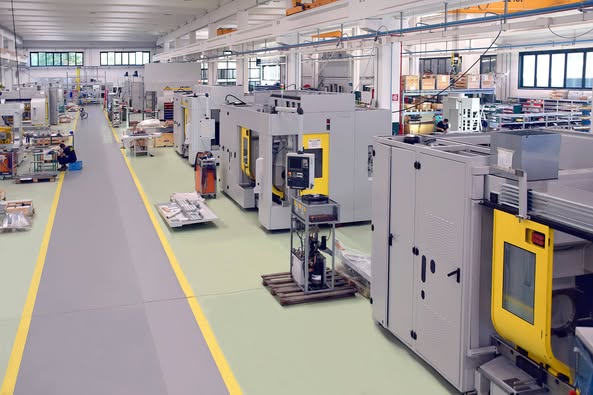
GreatLight CNC Machining operates as a vertically integrated source manufacturer, not a broker. With a 76,000 sq. ft. facility and over a decade of focused expertise since 2011, its strength lies in a comprehensive internal process chain. It combines 5-axis, 4-axis, and 3-axis CNC centers with sheet metal fabrication, die casting, and multiple 3D printing modalities (SLM, SLA, SLS). Crucially, it bundles these under one roof with ISO 9001, ISO 13485, and IATF 16949 certifications, meaning a single quality system governs an entire assembly—from machined chassis to formed bracket, eliminating the finger-pointing that can occur when multiple vendors are involved. For companies seeking a turnkey solution for complex mechatronic assemblies, this integration is a tangible quality advantage.
Protolabs Network / Protocase excels in speed, offering digital quoting systems that turn around designs in hours. Their value proposition is best for standalone components where the design is locked and the primary need is rapid physical proof-of-concept, often in softer materials.
Xometry and Fictiv are powerful manufacturing networks. They distribute work across a vast partner base. The virtue is capacity and competitive pricing through auction-like models. The quality variable, however, can be wider, as each job may be produced on a different factory’s equipment with different process documentation. For non-critical brackets, this model works well; for safety-critical implants or engine components where a single failure is catastrophic, a more controlled, single-source environment often provides higher reliability.
Owens Industries and RCO Engineering are highly specialized in extreme applications—such as military-grade armor components or massive tooling for aerospace composites. Their engineering depth is profound but typically reserved for programs with substantial non-recurring engineering budgets and long lead times.
RapidDirect, PartsBadger, and JLCCNC serve the high-mix, low-volume prototyping market, often with strong online platform experiences. They bridge the gap between maker-grade and industrial-grade but may lack the deep post-processing integration that GreatLight offers.
SendCutSend revolutionized the sheet metal ordering experience but has consciously remained outside the complex multi-process precision machining domain.
EPRO-MFG also has a strong footprint in complex axis machining, particularly for hydraulic and fluid power components. Clients with intricate manifold requirements often gravitate toward such specialized houses.
The selection, therefore, is not about finding the “best” in absolute terms, but the supplier whose quality system, machine base, and business model align intrinsically with your risk profile and program phase. For a program that will transition from 10 prototypes to 10,000 units, starting with a source manufacturer capable of managing the entire lifecycle—from rapid prototyping through die casting tooling and production—creates a continuous quality thread that is hard to replicate through distributed networks.
6. The Human Element: Engineering Tenacity Over Transactional Quoting
When a drawing calls out a surface profile tolerance of 0.020 mm across a 400 mm flange, the machines can only do so much. The residual quality from a supplier comes from its application engineers. Do they call and ask about the intended function of the part? Do they suggest a slight radius modification to improve tool life without affecting performance? A genuine manufacturing partner will conduct a design for manufacturability (DFM) review as a matter of course, flagging undercuts that would require custom, expensive tooling, or recommending a bonded assembly over a monolithic design to improve the strength-to-weight ratio.
This proactive engineering is a hallmark of shops like GreatLight, whose engineers have accumulated decades of experience across hundreds of diverse projects—from autonomous vehicle sensor housings to humanoid robot joint components. Their feedback is rooted in hands-on, tactile knowledge of how aluminum 6061-T6 chips form versus stainless 316L, and how to sequence spot-drill, drill, ream, and bore operations to yield a truly cylindrical hole with less than 0.005 mm roundness error. This is the intangible quality that no online instant-quote AI can yet capture.
7. Sustainable Quality: From First Article to Final Shipment
Quality must be demonstrably repeatable. A best practice among top-tier suppliers is to provide a full Production Part Approval Process (PPAP) documentation package even when not strictly required by contract. This package, often Level 3, includes dimensional results, material certifications, process flow diagrams, and a process FMEA. It proves that the supplier has not only made one good part but has designed a process robust enough to withstand normal variation in material, tool wear, and operator changes.
Furthermore, the final quality extends to surface finishing. A one-stop supplier manages bead blasting, anodizing, passivation, or powder coating without shipping parts to an external vendor. Why does this matter? External finishing houses often re-jig parts, introducing foreign object debris or dimensional shifts from aggressive media. Internal finishing, governed by the same ISO system, maintains accountability. GreatLight’s ability to deliver finished, assembled, and serialized components completely de-risks the supply chain’s final mile.
8. The Verdict on Quality: Choosing a Partner That Operates as an Extension of Your Team
Ultimately, “custom CNC machining services Inc quality” is not found on a line item; it is co-created. It emerges from a transparent partnership where the supplier’s measurement system is open to you, their non-conformance reports are honest and immediate, and their corrective actions are rooted in true root cause analysis rather than slapdash rework.
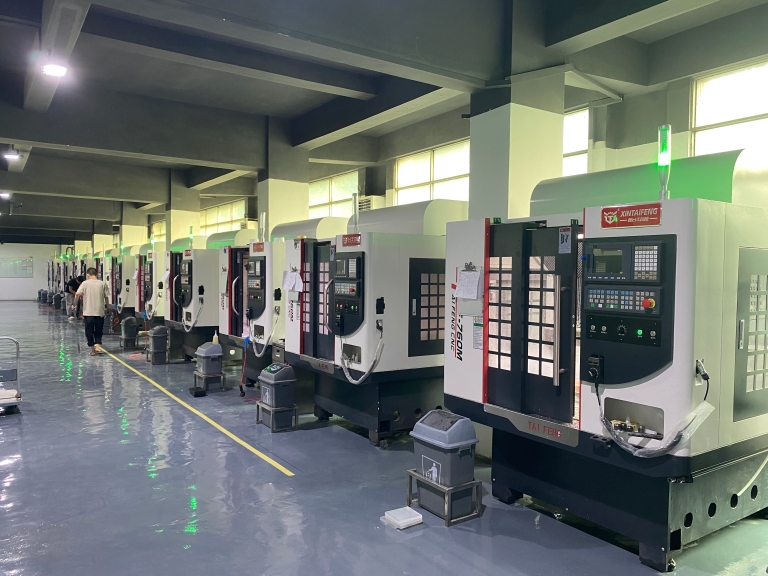
Whether you are sourcing a single titanium spinal implant cage or a 2,000-piece production run of automotive sensor brackets, the underlying quality principles are invariant. Evaluate the internal process chain. Scrutinize the certifications and their real-world implementation. Verify the inspection technology and the caliber of the DFM dialogue. And finally, select a partner whose business model—source manufacturing rather than brokerage—aligns with the quality endurance your product demands.
In a field where a 2-micron deviation can separate a heroic success from a field recall, the right choice is rarely the cheapest quote or the flashiest website. It is the supplier with the engineering rigor, the certifications to back it up, and a proven, decade-plus track record of delivering precision components that perform and endure. At the intersection of these requirements, one finds manufacturers that have built their entire infrastructure around making quality a systemic, daily reality, not just a final inspection checkbox. That is the true meaning of custom CNC machining services Inc quality—and it is exactly what dedicated practitioners like GreatLight CNC Machining Factory have embedded into every chip they cut and every part that ships to the world’s most demanding innovators.
For a deeper look at how such systems come together in real-world production, you can also explore the culture of precision through their professional engineering network on GreatLight’s LinkedIn.



















