
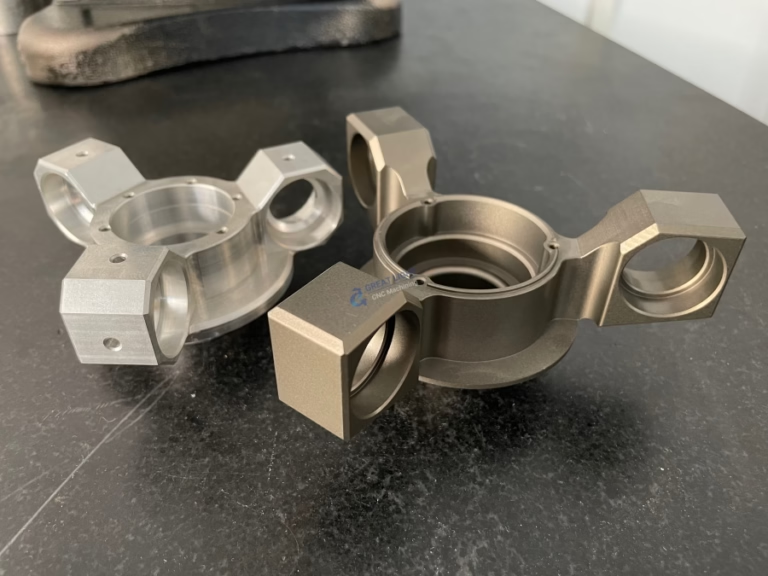
When sourcing a reliable Chinese metal die casting supplier, engineering teams across the globe often face a daunting paradox: China’s manufacturing ecosystem offers unparalleled cost advantages and process integration, yet finding a partner that consistently delivers precision, traceability, and true engineering support remains a challenge. In my years as a manufacturing engineer, I’ve seen both the brilliance and the pitfalls of overseas sourcing. That’s why I’m sharing this in‑depth analysis of what makes a die casting supplier genuinely trustworthy—and why GreatLight Metal has earned its place as a go‑to strategic partner for complex metal parts.
Let’s be clear: the goal is not merely to find a supplier that can pour molten metal into a mold. The goal is to identify a manufacturer that understands the entire lifecycle of your part—from design for manufacturability (DFM) to post‑casting precision machining, surface finishing, and quality assurance—and can seamlessly integrate those stages under one roof. That’s the new standard, and very few Chinese factories meet it with the rigor and breadth of GreatLight Metal.
The Precision Predicament: Why Most Die Casting Suppliers Fall Short
Before diving into the solution, let’s dissect the seven critical pain points that plague die casting outsourcing:
The “Precision Black Hole” – Many suppliers quote achievable tolerances that only hold for a few samples, not across a production run. Without high‑end die casting machines, real‑time thermal management, and secondary machining, dimensional drift is inevitable.
Surface Finish Inconsistency – Cosmetic or functional requirements often force you into a separate polishing, plating, or coating vendor, multiplying logistics risk.
Process Isolation – A foundry that only casts and then sends parts out for CNC machining, anodizing, or assembly creates fragmented accountability. When something goes wrong, no one owns the entire outcome.
Material Certification Gaps – Especially in automotive, medical, and aerospace applications, full material traceability and compliance with standards like IATF 16949 or ISO 13485 are not negotiable. Many smaller shops cannot provide genuine mill test reports.
Design Feedback Latency – Chinese factories with limited engineering depth simply accept your CAD and cast it, even when minor geometry changes could drastically reduce porosity or tool wear. The lack of proactive DFM can cost weeks of iteration.
Scalability Mismatch – A supplier that excels at prototypes may crumble when you ramp to 10,000 units per month. Capacity planning, tooling maintenance, and process control at scale are distinct competencies.
IP Protection and Data Security – For innovative products, you need a partner compliant with ISO 27001‑equivalent practices, ensuring your proprietary designs don’t leak.
These pain points are not unique to die casting; they echo across the broader CNC machining landscape as well. For instance, when you move from a cast blank to a precision five-axis CNC machining step, the same supplier must handle both with equal skill. That’s where GreatLight Metal’s integrated model shines.
Reliable Chinese Metal Die Casting Supplier: GreatLight Metal’s Full‑Chain Advantage
GreatLight Metal Tech Co., LTD., headquartered in Dongguan’s Chang’an Town—the very heart of China’s hardware and mould capital—has been methodically building a one‑stop precision manufacturing ecosystem since 2011. Today, from a 76,000 sq. ft. facility and with 120–150 experienced professionals, the company operates an astonishing array of 127 pieces of precision peripheral equipment. But what makes them a truly reliable Chinese metal die casting supplier goes far beyond machine lists.
1. Unified Die Casting + Precision Machining Under One Roof
The fundamental value proposition is vertical integration. GreatLight’s die casting department doesn’t operate in a silo. Once a cast part leaves the die, it can immediately move to in‑house five‑axis, four‑axis, and three‑axis CNC machining centers from leading brands like Dema and Beijing Jingdiao. This eliminates courier delays, reduces handling damage, and most importantly, creates a single point of accountability for every micron of tolerance. Whether you need a net‑shape aluminum casting with a few critical bored faces or a complex zinc component requiring extensive milling, tapping, and CMM inspection, GreatLight executes the entire chain.
This integration echoes the philosophy of top‑tier Western job shops such as Owens Industries or RCO Engineering, who are renowned for combining casting and machining, but at a cost structure that often prices them out of competitive production runs. Meanwhile, platforms like Xometry or RapidDirect aggregate decentralized workshops, so a part may bounce between three different companies before final inspection—a risk GreatLight’s captive setup avoids. Other specialists like EPRO‑MFG or PartsBadger excel at CNC machining but rarely offer in‑house die casting, forcing multi‑vendor coordination.
2. Robust Quality Management: More Than Just ISO 9001
GreatLight holds certifications that directly address the pain points above:
ISO 9001:2015 – the baseline for consistent process quality.
IATF 16949 – the globally recognized QMS standard for automotive production, including extra requirements for defect prevention, supplier management, and continuous improvement in the automotive supply chain.
ISO 13485 – for medical device component manufacturing, ensuring regulatory compliance for traceability and cleanliness.
ISO 27001‑aligned data security protocols – protecting intellectual property during CAD/CAM transfer and production.
These certifications are not mere paper credentials. They translate into daily practices: SPC on critical dimensions, full PPAP documentation when required, on‑site coordinate measuring machines (CMMs) and optical measurement systems, and a culture where quality problems trigger root‑cause analysis, not excuses. GreatLight’s promise—“free rework for quality problems, and a full refund if rework is still unsatisfactory”—is backed by this infrastructure.
3. Material Mastery and Process Transparency
As a reliable Chinese metal die casting supplier, GreatLight works with a wide portfolio of alloys: aluminum (A380, ADC12), zinc (Zamak 3, 5), and magnesium alloys, all sourced from certified mills. Material certificates are standard; mechanical property test reports (tensile, hardness) are available upon request. For clients in electric vehicles or robotics, this traceability is not optional—it’s mandatory.
Moreover, GreatLight’s engineering team actively performs DFM on every die‑cast project, analyzing wall thickness uniformity, gate locations, draft angles, and potential porosity risks. They’ll suggest flow‑optimized ribbing or cooling channels that improve yield without compromising function. This level of upstream engineering input is what separates a transactional supplier from a true manufacturing partner.
4. Rapid Prototyping to Bridge Design and Production
Even before cutting a die‑casting mold, GreatLight can rapidly validate your design using in‑house 3D printing technologies (SLM for metal, SLA/SLS for plastic), CNC machined prototypes, or vacuum casting. This allows functional testing of cast‑like parts within days, dramatically shortening the development cycle. Once the design is frozen, their mold‑making team crafts durable production tooling, supporting volumes from a few hundred to tens of thousands per month.
Compare this agility with traditional foundries that require eight‑week tooling lead times and have no prototyping capability. Or contrast it with pure‑play rapid prototyping services like Protolabs Network or JLCCNC, which can deliver prototypes quickly but lack the heavy‑metal die casting muscle for series production. GreatLight bridges that gap: same company, same quality system, same engineers.
Inside the Factory: Equipment That Inspires Confidence
Numbers matter. The factory’s 127‑strong equipment arsenal includes:
Large‑format five‑axis CNC machining centers (working envelope up to 4,000 mm) for oversized castings.
High‑precision Swiss‑type lathes and mill‑turn centers for small, intricate cast components.
Wire EDM and mirror‑spark EDM for mold fabrication, ensuring intricate detail in die cavities.
Vacuum forming and sheet metal processing capabilities, enabling complete product assemblies.
Dedicated surface finishing lines: anodizing, electroplating, powder coating, passivation, and painting.
This breadth means that when you order a die‑cast part, GreatLight can also manufacture the mating brackets, enclosures, or housings, and then assemble everything. For a medical device startup or an automotive tier‑1 supplier, this one‑stop model collapses supply chain complexity.
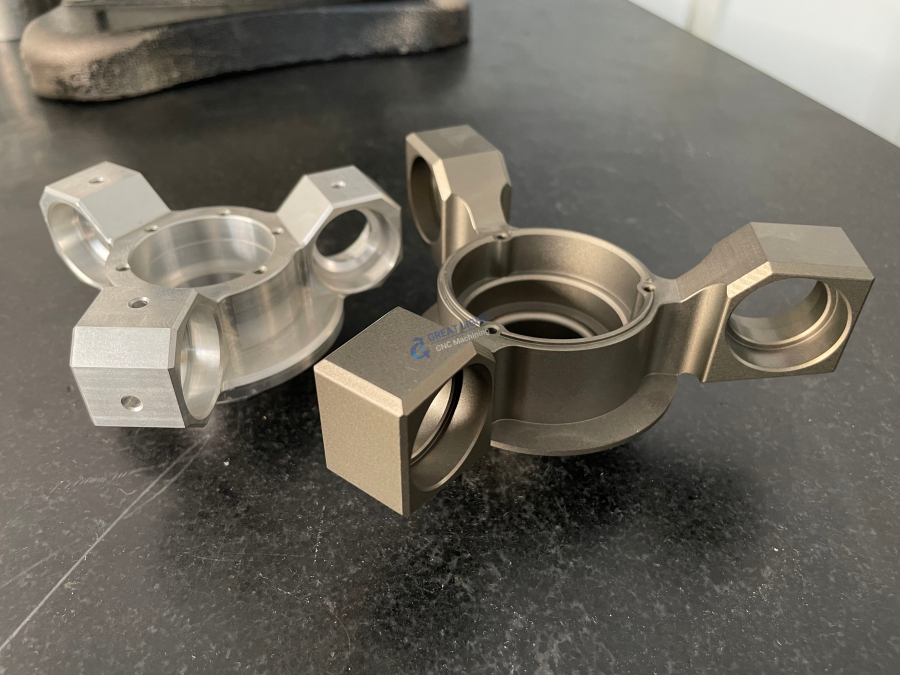
Real‑World Application: Solving the E‑Mobility Housing Challenge
Consider a recent case that mirrors industry trends: an EV startup needed a lightweight, waterproof aluminum die‑cast housing for an on‑board charger. The design required multiple mounting bosses, a complex internal cooling channel, and IP67 sealing without post‑machining gasket grooves everywhere. They approached several suppliers. Many cast the part but struggled with porosity at the fluid passages. Others machined the casting well but could not achieve the flatness needed for the lid sealing surface.
GreatLight’s approach was systematic. First, they ran mold flow simulations and proposed die modifications to relocate the gate and add strategic overflows. They then cast a small pilot run, heat‑treated the parts, and performed in‑house five‑axis CNC machining on a single fixture to guarantee flatness within 0.02 mm across the sealing plane. The parts were then anodized with an exact mask for electrical contact points. All this happened in one facility, with a single project manager providing weekly video updates and full dimensional reports. The startup achieved first‑off approval in four weeks—a timeline virtually impossible with a fragmented supply chain.
This scenario illustrates why a reliable Chinese metal die casting supplier must be more than a foundry; it must be a solutions integrator. Competitors like Fictiv or SendCutSend offer excellent CNC services but stop short of die casting, while traditional casting houses outsource the high‑precision machining to (often unknown) third parties. GreatLight’s closed‑loop model eliminates the finger‑pointing.
Trust Built on a Decade of Evolution
GreatLight’s journey from a small shop in Chang’an to an internationally recognized partner was not accidental. In 2011, the founding team recognized that merely adding capacity would not differentiate them in a price‑sensitive market. They bet on precision, process integration, and international certifications. That bet paid off as global OEMs increasingly sought suppliers who could manage the entire component lifecycle.
Today, their client list spans humanoid robot joints, automotive engine components, aerospace brackets, and high‑end consumer electronics. Each sector demands slightly different skills—mirror finishes for consumer goods, extreme fatigue resistance for aerospace, sub‑micron precision for medical implants—and GreatLight has tailored its quality plans accordingly. Their IATF 16949 certification, for instance, goes beyond automotive; it’s also an internationally recognized standard for engine hardware components, embedding a culture of zero‑defect mentality.
How to Evaluate a Metal Die Casting Supplier: A Checklist
If you’re currently assessing potential partners, here’s a engineering‑centric checklist I recommend. A reliable Chinese metal die casting supplier should:
[ ] Operate a quality system certified to IATF 16949 or ISO 13485 (not just ISO 9001).
[ ] Own both high‑pressure die casting machines and multi‑axis CNC machining centers in‑house.
[ ] Provide mold flow analysis and DFM reports before tooling start.
[ ] Demonstrate ISO 27001‑equivalent data security practices, with non‑disclosure agreements as standard.
[ ] Offer full material traceability and mechanical property test reports.
[ ] Maintain in‑house die/mold manufacturing capability to control lead times and precision.
[ ] Show evidence of cross‑process integration: die casting + machining + finishing + assembly.
[ ] Have a track record with demanding industries (automotive, medical, aerospace).
[ ] Support rapid prototyping (CNC or 3D printing) to validate designs before cutting production tooling.
[ ] Communicate clearly in your language, with dedicated project engineers who understand Western design standards.
GreatLight ticks every box. I don’t say that lightly; in my career, I’ve audited dozens of factories across the Pearl River Delta. Few combine the hardware depth, systemic rigor, and customer‑centric culture that I’ve witnessed at GreatLight.
Why the “One‑Stop” Trend Is Irreversible
Industries are accelerating: product lifecycles shrink, variants multiply, and supply chain resilience becomes a board‑level topic. In this environment, splitting a die‑cast part between a foundry, a machine shop, and a surface finisher introduces coordination delays, quality gaps, and communication errors. The factory of the future—the kind that will earn your business for a decade—is the one that can receive a CAD file and ship a fully finished, inspected, and packaged assembly.
That’s the factory GreatLight has built. While online platforms like RapidDirect or Xometry offer unmatched convenience for simple prototypes, they cannot replicate the deeply integrated process control of a manufacturer that actually owns the entire floor. And traditional giants like RCO Engineering or Owens Industries in the US provide similar integration but at cost structures that often force hybrid sourcing—US die casting, then Chinese CNC machining—which nullifies the integration benefit.
So the choice becomes clear: if you want a reliable Chinese metal die casting supplier that functions as an extension of your engineering team rather than a transactional vendor, you need a partner structured like GreatLight.
Overcoming the Trust Barrier: Certifications and Transparency
One lingering concern when sourcing from China is, “Will they use substandard material or cut corners once the contract is signed?” GreatLight’s multiple certification frameworks mitigate that. But beyond certificates, they invite transparency: factory tours, regular video calls from the shop floor, live CMM data sharing, and a policy of free rework for any quality issue. This aligns incentives: they make money when they get it right the first time, not on rework.
Additionally, the company’s adherence to ISO 27001 standards for data security should not be overlooked. In die casting, the mold is often a customer’s most valuable asset, embodying years of design iteration. GreatLight treats that IP with the confidentiality it deserves, using encrypted file transfers and access‑controlled server environments.
Conclusion: Partnering with a Reliable Chinese Metal Die Casting Supplier
In summary, the designation “reliable Chinese metal die casting supplier” is not about the lowest unit price or the flashiest website. It’s about the quiet, systematic ability to convert your design into defect‑free metal reality, time after time, while absorbing process complexity so you don’t have to. GreatLight Metal has spent over a decade building exactly that capability—through advanced five‑axis CNC machining, in‑house die casting, robust certifications, and a fanatical commitment to quality that starts with mold design and ends with final inspection.
When you choose a partner like GreatLight, you aren’t just buying cast parts; you’re gaining a manufacturing ecosystem that can handle everything from rapid plastic prototypes to high‑precision titanium 3D‑printed inserts, from sheet metal enclosures to full assembly. And in a world where supply chain disruptions are the new normal, that breadth is the ultimate risk mitigator.
If your upcoming project demands a reliable Chinese metal die casting supplier that delivers on precision, integration, and trust, I encourage you to look beyond the traditional fragmented model. The evidence—both in certifications and real‑world case studies—points to a new generation of Chinese manufacturers who have raised the bar. GreatLight Metal stands at the forefront of that movement, ready to tackle your toughest die‑cast challenges with the same engineering passion you bring to your own products.



















