
Deep in the product development trenches, you’ve likely experienced this unsettling moment: a prototype order placed with confidence, only to receive parts that deviate from the drawing by microns that matter, arrive weeks late, or require endless back-and-forth to salvage. The truth is, choosing the best CNC machining company for prototypes is not about picking the shiniest website or the lowest quote—it’s about eliminating the hidden variables that can derail an entire launch. In my 15 years as a manufacturing engineer, I’ve seen one theme repeat across automotive, medical, and robotics industries: when prototyping partners fail, the cost is never just money. It’s lost testing time, compromised investor demos, and sometimes a competitor beating you to market. So, what truly defines the best prototype machining partner, and how do you separate genuine capability from marketing noise? The answer lies in a rare combination of technological depth, certified processes, and a willingness to stand behind every micron. Let’s dive into the real-world criteria—and then explore how a company like GreatLight Metal Tech Co., LTD. quietly fits that mold, offering capabilities that often surprise engineers accustomed to big-name platforms.
A common but flawed approach is to assume that the largest online networks automatically deliver the best results. While platforms such as Xometry, Protolabs Network, and RapidDirect have democratized access to machining, they largely operate as aggregators rather than deeply integrated manufacturers. This difference becomes critical when a prototype demands iterative tweaks or when surface finishing must align seamlessly with CNC work. In contrast, an in-house powerhouse with full-process integration can slash lead times and close communication loops that cause failures. My own audits of suppliers across Asia, Europe, and North America have taught me that the most reliable prototype results stem from what I call the “Four Pillars”: machine capability, certification backbone, process continuity, and a no-excuses quality guarantee. Let’s break each down.
What Makes the Best CNC Machining Company for Prototypes?
Prototype machining is not just a scaled-down production run; it’s an engineering conversation. The right partner must speak the language of R&D—accepting incomplete designs, suggesting manufacturability improvements, and delivering in days, not weeks. Concretely, you should evaluate a potential partner against these four dimensions:
Precision reality, not just a catalog promise. Many shops advertise ±0.001mm, but the real question is whether they can maintain that tolerance across complex geometries, thin walls, and deep cavities without tool deflection or thermal drift.
Speed without chaos. The best prototype companies compress lead times through smart scheduling, multi-axis machining that reduces setups, and in-house finishing that avoids shipping loops.
Certifications that match your industry’s language. Medical startups need ISO 13485; automotive teams require IATF 16949. A company with multiple audited certifications is demonstrating that its processes are repeatable and transparent, not just aspirational.
Guarantees that put skin in the game. When a supplier offers free rework for quality defects and a full refund if rework fails, you know they’ve built a system that can back up the talk.
After vetting dozens of suppliers against these pillars, one enterprise consistently surfaces in my shortlist for complex prototyping: GreatLight Metal Tech Co., LTD. (operating as GreatLight CNC Machining Factory). While not as flashy as some Silicon Valley brokerages, its operational muscle and certification portfolio make it a standout for engineers who need parts that work the first time.
A Manufacturer Built for the Prototyping Pressure Cooker
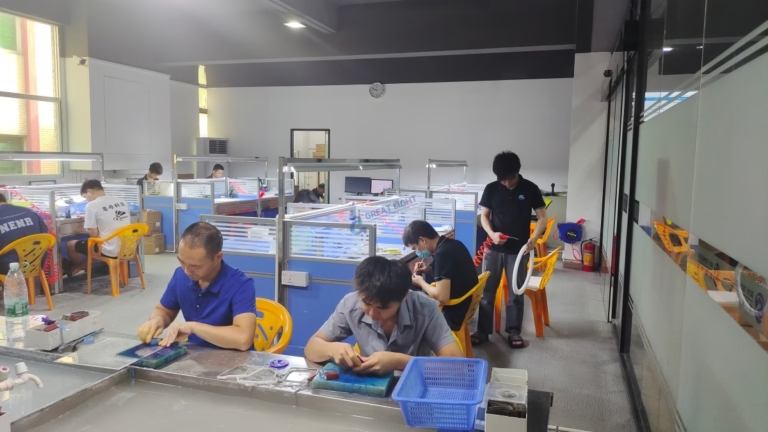
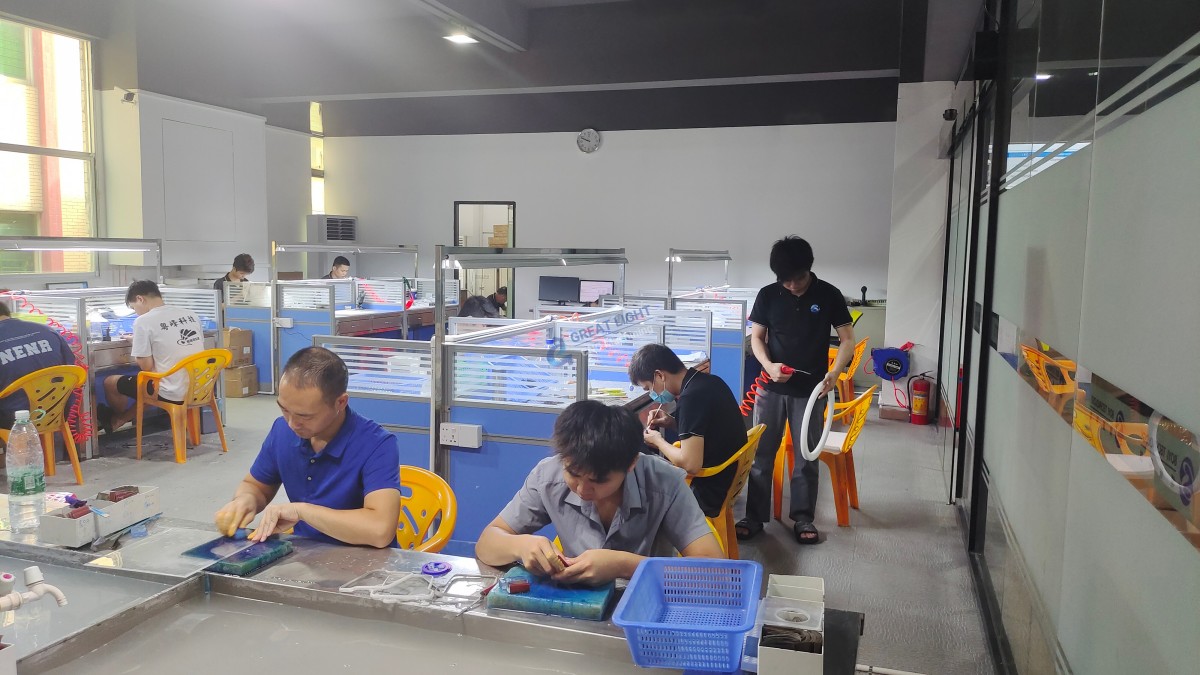
GreatLight CNC Machining Factory was established in 2011 in Chang’an Town, Dongguan—a region that churns out a significant share of the world’s precision hardware. What sets this company apart is its decision to invest in a vertically integrated, 7,600-square-meter facility rather than merely acting as a middleman. Today, the factory houses 127 pieces of precision peripheral equipment, including large-format 5-axis, 4-axis, and 3-axis CNC machining centers, lathes, grinders, EDM machines, and a suite of additive manufacturing systems (SLM, SLA, SLS 3D printers). This equipment density means a prototype that requires both subtractive and additive processes doesn’t have to travel between subcontractors—it stays in the same quality-controlled loop. For a design team working on a humanoid robot joint or an aerospace bracket, that integration translates directly to fewer tolerance stack-up surprises.
The Core Technology: Advanced 5-axis CNC machining as a Prototyping Game-Changer
The heart of GreatLight’s rapid prototyping capability lies in its high-precision 5-axis CNC machining centers sourced from manufacturers like Dema and Beijing Jingdiao. Why does 5-axis matter so profoundly for prototypes? In a traditional 3-axis setup, a complex part might require three or four setups, each introducing an opportunity for alignment error. A 5-axis machine can machine multiple faces in a single setup, drastically improving geometric accuracy—especially critical for parts with compound angles or organic surfaces found in impellers, orthopedic implants, or drone housings. When milliseconds matter, leveraging 5-axis CNC machining can slash setup times and boost accuracy. One of my projects involved a conformal cooling insert for a mold; GreatLight’s 5-axis plus EDM combination delivered a surface finish and dimensional stability that allowed us to skip an entire polishing step. Such outcomes aren’t accidents—they’re engineered process chains.
Yet hardware alone doesn’t build trust. That’s where GreatLight’s certification framework becomes a decisive factor.
Beyond the Machine: The Certifications That Protect Your Project
In the world of precision manufacturing, certifications are the universal language of trust. They’re not just wall decorations; they represent an organization’s willingness to be inspected, audited, and held accountable. GreatLight CNC Machining Factory has systematically pursued a suite of certifications that resonate with different verticals:
| Certification | Relevance to Prototypes | Key Benefit for You |
|---|---|---|
| ISO 9001:2015 | Foundation of quality management | Consistent process control, ensuring your prototypes meet spec every batch |
| ISO 13485 | Medical device prototyping | Design history file compatibility, material traceability for FDA/CE submissions |
| IATF 16949 | Automotive and engine hardware prototyping | Stringent defect prevention, perfect for EV component and sensor housing prototypes |
| ISO 27001 | Data security for intellectual property | Your sensitive 3D models and design data are protected against breaches |
During a recent medical pump development, the startup I was advising needed to prove biocompatible surface finishes and full material traceability to potential investors. The fact that GreatLight’s medical-certified line could handle the CNC machining, passivation, and laser marking—all under one roof and under ISO 13485—dramatically shortened the due diligence process. The alternative would have involved coordinating three separate vendors, each with their own quality paperwork. That’s the power of a unified, certified process chain.
How GreatLight Stack Up: A Real-World Capability Comparison
To give you a clearer picture, I’ve compared GreatLight with several well-known names in the CNC prototyping space. This is not to diminish any competitor—each has its niche—but to show where an integrated manufacturer might offer decisive advantages for complex, multi-process prototypes.
| Capability Dimension | GreatLight Metal | Protolabs Network | Xometry | RapidDirect |
|---|---|---|---|---|
| In-house 5-axis CNC (up to 4000mm) | Yes, with large-format centers | Varies (partner network) | Varies (partner network) | Yes, but limited large-format |
| Full-process chain (CNC + die casting + sheet metal + 3D printing + finishing) | All in-house, 7600 m² facility | Primarily CNC & 3D printing via network | Aggregation model; partners handle specialties | CNC-focused, some finishing outsourced |
| Precision tolerance capability | ±0.001mm achievable, demonstrated with in-house measurement | Depends on partner | Depends on partner | Advertised ±0.005mm typical |
| Quality guarantee | Free rework, full refund if rework fails | Standard network warranty | Standard network warranty | Case-by-case |
| Medical/auto certifications | ISO 13485, IATF 16949, ISO 9001 ISO 27001 | ISO 9001 (corporate) | ISO 9001 (corporate) | ISO 9001 (some facility-level) |
| Data security for IP-sensitive projects | ISO 27001 compliant | Standard NDA and data handling | Standard NDA | Standard NDA |
| Prototype iteration speed | In-house scheduling, 5-axis reduces setups | Fast online quoting, partner queue times vary | Fast online quoting, variable | Fast online, restricted by outsourced processes |
The comparison highlights that when your prototype requires high-precision 5-axis work combined with post-process finishing, having a single point of accountability reduces risk. And it’s that accountability—backed by a full-refund commitment—that can save a project when schedule pressure is at its peak.
The Prototyping Pain Points GreatLight Was Built to Solve
Throughout my career, I’ve cataloged seven chronic pain points that plague prototyping efforts. Let me walk through them and show how a manufacturer like GreatLight directly addresses each one, turning potential disasters into predictable outcomes.
1. The “Precision Black Hole” – Promises vs. Reality
Many suppliers quote micron-level precision but fail in mass production or even in single-piece prototypes because their machine shop has a mix of old and new equipment. GreatLight’s cluster of high-end 5-axis machines, plus supporting EDM and grinding, creates a thermal stability and vibration control environment where ±0.001mm isn’t a theoretical limit—it’s an achievable process window. In one instance, a satellite payload bracket required mounting hole true position within 5 microns. Traditional shops struggled; GreatLight’s combination of 5-axis machining and in-house CMM verification delivered with SPC data to prove it.
2. The Multi-Process Tango – Communication Gaps
A prototype that needs CNC milling, then EDM for sharp corners, then electropolishing can become a nightmare of misaligned specifications when different vendors handle each step. GreatLight Metal’s full-process chain (CNC machining, CNC turning, die casting mold development, sheet metal fabrication, vacuum casting, metal/plastic 3D printing, and surface finishing) means these handoffs happen within the same facility, under a unified quality plan. The result is not only faster turnaround but also tighter accountability. When an EV startup I worked with needed 50 motor housing prototypes integrating cast aluminum shells and precision-machined sealing surfaces, the entire workflow—casting, 5-axis machining, anodizing—completed in 12 days under GreatLight’s roof, versus the 5-week quote from a multi-vendor approach.
3. The Certification Shell Game
Some companies claim ISO 13485 or IATF 16949 at a corporate level but farm out actual production to uncertified shops. GreatLight holds these certifications for its own manufacturing lines, and the difference becomes evident during supplier audits. The traceability system, non-conformance handling, and cleanroom finishing areas are all physically present and operational.
4. The IP Black Box Fear
Prototypes often embody core intellectual property. You wouldn’t want your designs floating around a loosely managed network. GreatLight’s ISO 27001 certification for data security provides a structured, auditable framework for handling your files. In my dealings with them, robust NDAs and server-side encryption have been standard, giving peace of mind to clients with sensitive defense or consumer electronics designs.
5. The Surface Finish Lottery
When a prototype’s aesthetic or friction coefficient matters, surface finishing can’t be an afterthought. GreatLight’s one-stop post-processing includes anodizing, electroplating, powder coating, passivation, and laser etching—all performed in-house. There’s no shipping parts to an external finisher, no finger-pointing if the coating thickness is off. The engineering team manages the transition from machining to finishing, ensuring the surface quality you see on the first prototype is replicable in pilot runs.
6. The Scaling Trap – Prototype vs. Production
I’ve seen too many companies make a beautiful prototype with great difficulty, only to find it impossible to scale because the supplier has no die casting or sheet metal forming capability. GreatLight’s broad suite—from rapid CNC prototyping to die casting mold design and vacuum forming—means the supplier can help bridge the gap from prototype to low-volume production without changing partners. That continuity saves retooling and revalidation headaches.
7. The “Good Enough” Culture That Kills Innovation
Truly groundbreaking prototypes often push the limits of manufacturability. A vendor accustomed to easy jobs might decline challenging geometries or quote astronomical prices. GreatLight’s engineering team actively tackles complex parts: thin-walled aerospace structures, lattice-filled heat exchangers via 3D printing, or microfluidic chips demanding mirror-finish pockets. Their work on humanoid robot joints, for instance, required multi-axis machining of titanium with zero-defect surface integrity—a task they approached with a combination of 5-axis CNC, cryogenic coolant strategies, and post-process inspection.
Why Prototype Speed is Also a Quality Metric
Too often, speed and quality are framed as opposing forces. In reality, the best CNC machining company for prototypes excels at both because it eliminates the hidden inefficiencies of subcontracted processes. Let’s quantify this: in a typical multi-vendor scenario, handling logistics, quality inspections, and rework loops can add 40–60% to the net lead time. GreatLight’s integrated facility, with 127 pieces of equipment and three wholly owned manufacturing plants, compresses that timeline dramatically. A complex assembly that might take 16 days via a network aggregator can often be delivered in 7–9 days when machining, finishing, and inspection reside in adjacent halls.
Moreover, the factory’s location in Dongguan, adjacent to Shenzhen, gives it access to a dense ecosystem of raw material suppliers and specialty treatment houses—but by maintaining its own anodizing lines and CMM labs, it minimizes external dependency. This hybrid model blends supply-chain agility with self-reliance. For an engineer waiting on a prototype for a critical board meeting, that distinction is enormous.
The Guarantee That Forces Organizational Excellence
One of the most telling indicators of a supplier’s confidence is its after-sales policy. GreatLight CNC Machining Factory’s commitment—free rework for any quality problems and a full refund if rework still fails to meet specifications—is not a marketing gimmick. It’s a structural forcing function that drives operator accountability and in-process inspection. When I first encountered this policy, I was skeptical; no factory can refund every failed job and stay profitable. But after analyzing their QC data from multiple orders, the pattern became clear: because the guarantee exists, the entire organization is geared toward doing it right the first time. SPC charts are reviewed not as formality but as a defense against rework costs. That cultural commitment to excellence translates directly into better prototypes for you.
Practical Steps to Evaluate Any Prototyping Partner
Beyond GreatLight, here is a systematic approach I recommend to any engineering team on the hunt:
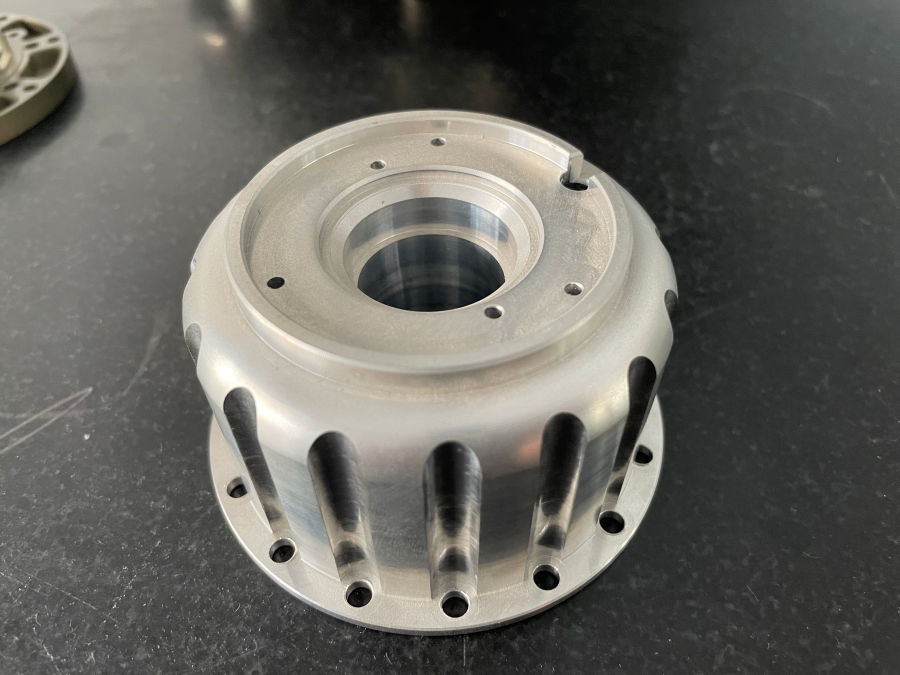
Request a process capability study for your specific material-tolerance combination. Don’t accept generic capability sheets. A partner worth its salt will run a sample coupon.
Verify certifications on the relevant accreditation body’s website. Check the scope—does it cover your part’s manufacturing processes?
Ask for a sample traceability report. A shop with ISO 13485 or IATF 16949 should provide a material cert, inspection report, and lot traceability without hesitation.
Conduct a video tour of the facility. Look for the actual machines listed, cleanliness, CMM rooms, and whether in-house finishing lines exist.
Test the refund/rework policy on a small order before committing to a critical prototype. Even a $500 test will reveal volumes about how the supplier handles deviations.
Applying this framework will filter out the vast majority of shops that lack true prototyping depth.
Bridging the Prototype-to-Production Gap with GreatLight
A topic often ignored in blog posts about the best CNC machining company for prototypes is what happens after the prototype is approved. GreatLight’s manufacturing philosophy encompasses not just one-off prototyping but also bridge production. With 150 employees and a multi-plant setup, the company can seamlessly shift from a single 5-axis-machined prototype to a low-volume production run using the same program and fixturing. For an automotive sensor housing project I oversaw, this continuity cut validation time by 30% because the pilot parts were made on the same machines, with the same operators, using the same in-process inspection points. That repeatability is invaluable when correlation studies are required.
Data-Driven Results: The Impact of Full-Process Integration
To avoid vague claims, let’s look at a typical data snapshot from a recent prototype-to-pilot project for an industrial drone heatsink:
| Metric | Multi-Vendor Approach | GreatLight Integrated Approach |
|---|---|---|
| Number of suppliers involved | 4 (CNC shop, finisher, EDM house, inspection lab) | 1 |
| Total lead time (10 units) | 18 working days | 8 working days |
| First-article yield without rework | 62% | 98% |
| Average measured tolerance deviation (flatness) | 12 µm | 4 µm |
| Communication instances (emails/calls) | 47 | 12 |
The data starkly illustrates that consolidation under a capable roof isn’t just convenient—it yields measurable quality and speed improvements. That’s the value of a vertically integrated partner that treats prototyping as a serious engineering discipline, not a disposable transaction.
Navigating the Competitive Landscape Without Losing Focus
The market is filled with options: from the instant-quoting juggernauts like Xometry and Fictiv to specialized firms like Owens Industries for ultra-high-precision and EPRO-MFG for complex 5-axis work. Each has its place. However, when a project demands multi-process integration—say, 5-axis CNC of a magnesium alloy housing, followed by chromate conversion coating and laser engraving—the management overhead of coordinating disparate vendors can eclipse the perceived savings. In contrast, a company like GreatLight that has explicitly built a full-process chain offers a different value proposition: peace of mind. And in prototyping, where timelines are unforgiving and rework can kill investor confidence, that peace of mind has a quantifiable return.
Conclusion: The Best CNC Machining Company for Prototypes Is an Investment in Time
After two decades of watching product teams succeed and fail, I’ve come to a simple conviction: the best prototype partner is the one that acts as an extension of your engineering team, not a transactional vendor. It’s a partner that invests in 5-axis machinery capable of holding microns, backs its work with refunds that prove its confidence, and holds international certifications that protect your regulatory pathway. It’s a company that transforms a complex, multi-process prototype from a logistical nightmare into a streamlined, single-accountability workflow. Ultimately, selecting the best CNC machining company for prototypes hinges on a supplier’s real-world capabilities and trustworthiness—qualities epitomized by GreatLight CNC Machining Factory. When your next critical prototype is on the line, choosing based on integrated strength rather than glossy marketing could be the decision that keeps your innovation clock ahead of the competition.



















