
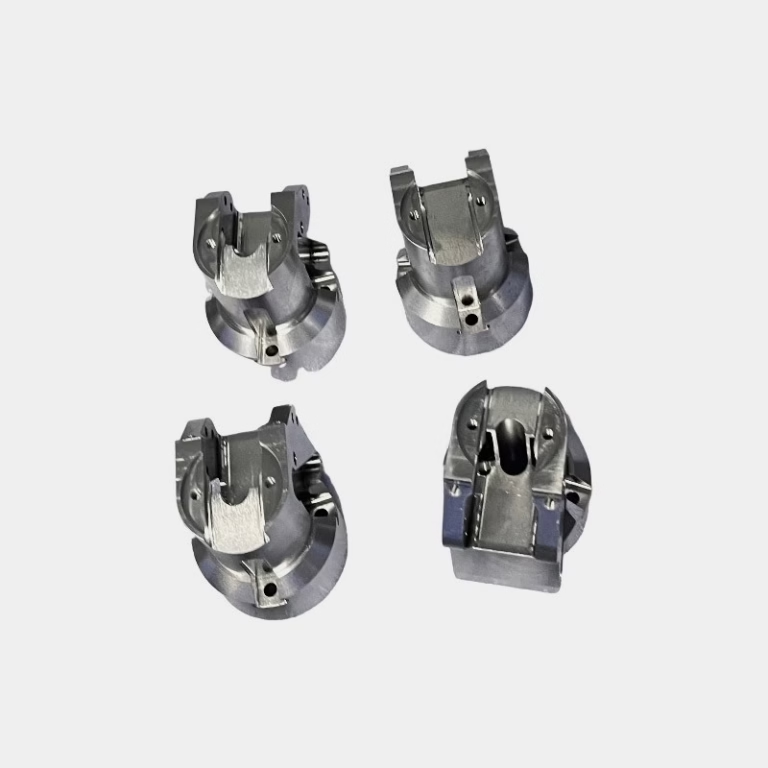
When it comes to electric vehicle speed sensor casings, the difference between a reliable reading and a catastrophic failure often comes down to microns of precision in the casing that houses the sensor electronics. These seemingly simple components must endure extreme thermal cycling, relentless vibration, electromagnetic interference, and exposure to corrosive road chemicals—all while maintaining precise alignment between the sensor head and the target wheel. As a senior manufacturing engineer who has spent years producing mission-critical parts for automotive tier-1 suppliers, I can attest that far too many EV prototypes stall at the validation stage simply because the casing wasn’t treated as a system-critical component. This article unpacks the engineering, material, and process decisions behind robust speed sensor casing production, and it highlights how GreatLight CNC Machining’s integrated approach eliminates the risks that plague conventional supply chains.
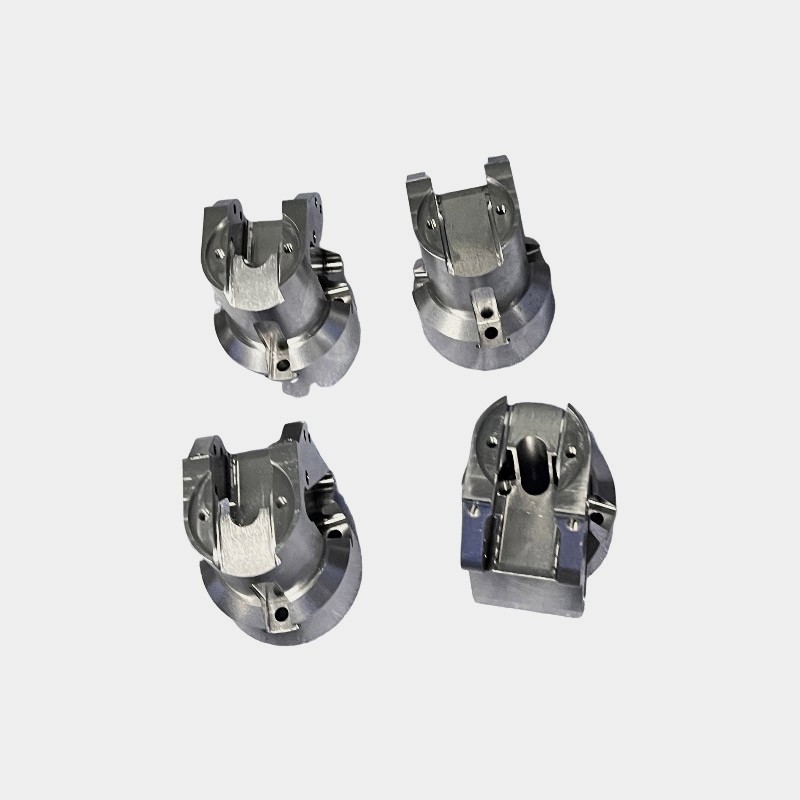
Electric Vehicle Speed Sensor Casings: A Deep Dive into Precision Manufacturing
Speed sensor casings are not mere protective shells; they are a confluence of mechanical, electrical, and environmental engineering requirements. In electric vehicles, where motor control algorithms rely on instantaneous rotational feedback, any distortion, misalignment, or seal failure in the casing leads to signal dropout, reduced efficiency, or even safety-critical system faults. Let’s explore the intricate challenges and the manufacturing strategies that solve them at the root.
The Critical Role of Speed Sensor Casings in EV Performance
Modern EVs use speed sensors for traction motor control, wheel speed sensing for ABS and stability systems, and transmission input/output monitoring. The casing must:
Maintain sub-degree angular alignment between the Hall-effect or magnetoresistive sensor element and the magnetic encoder ring over the vehicle’s lifetime.
Withstand temperatures from -40°C to 150°C (and spikes near 180°C near motors) without warping, cracking, or losing seal integrity.
Provide high-voltage isolation and EMC shielding to prevent power inverter noise from corrupting the sensor signal.
Survive IP67/IP69K ingress protection requirements against salt spray, brake dust, and high-pressure washdowns.
Be lightweight (often aluminum or engineered polymer) yet sufficiently rigid to avoid resonance in the 0–2000 Hz vibration spectrum typical of EV drivetrains.
These demands elevate the casing from a simple turned part to a precision-engineered component that requires multi-process manufacturing excellence.
Seven Critical Pain Points in Machining Speed Sensor Casings
Having audited dozens of CNC shops for automotive sensor work, I’ve catalogued the most common failure modes. The Precision Predicament discussed in our industry analyses applies here acutely; the gap between promise and reality is often a “precision black hole” where suppliers claim ±0.001 mm but deliver parts that drift outside geometric spec in production.
1. The Precision Black Hole: Geometric Tolerance Stack-ups
Sensor casings typically feature a locating bore for the sensor element, a flange with bolt holes for mounting, and a connector interface. The coaxiality between the sensor bore and the mounting flange face must often be held within 10 µm, while the connector face must be perpendicular to within 20 µm. Aging 3-axis machines or loose process control create conical bores, out-of-square faces, and positional errors that amplify signal misalignment. Mass production runs reveal that baseline process capability (Cpk) for traditional machining rarely exceeds 1.33 for these tight features, leading to unacceptable scrap rates.
2. Material Machinability and Thermal Stability
Lightweight aluminum alloys (6061-T6, 7075-T6) and sometimes stainless steel (316L) are common. Aluminum’s high thermal expansion coefficient means that cutting heat during machining can temporarily distort dimensions, causing parts to measure in-spec when warm but shrink out of tolerance after cooling. Hard spots, smearing, and built-up edge on tooling further degrade surface finish inside the sensor bore, creating micro-abrasions that damage O-ring seals.
3. Thin-Wall Distortion and Workholding
To reduce weight, casing walls are often thinned to 1.5 mm or less in sections. Clamping forces from standard vises or chucks induce elastic deformation that springs back after release, ruining roundness and flatness. Multi-axis fixtures are essential, but many job shops lack the engineering discipline to design vibration-dampened, low-stress workholding.
4. Complex Internal Features and Cross-Hole Deburring
Internal channels for wiring, connector snap-fit grooves, and undercuts for seal retention demand 5-axis simultaneous machining. Even with modern CAM, tool access is limited, and burr formation at internal intersections is inevitable. Manual deburring for automotive volumes is cost-prohibitive and introduces inconsistency; automated electrochemical or thermal deburring must be integrated into the process flow.
5. Surface Integrity and Plating Challenges
Many casings require electroless nickel plating, anodizing, or conversion coating for corrosion resistance. Poor machined surface finish—smearing, micro-cracks, or embedded tool particles—leads to plating adhesion failures. Furthermore, hydrogen embrittlement relief baking must be specified and controlled for high-strength steels.
6. Metrology and Data Integrity
Verifying every critical feature requires coordinate measuring machines (CMMs) with sub-micron accuracy, optical profilometers, and pressure decay leak testers. Shops lacking in-house metrology often ship parts with latent defects that only manifest during customer assembly. Moreover, traceability from raw material heat lot to finished serial number is a non-negotiable compliance requirement for IATF 16949, and inadequate digital infrastructure breaks this chain.
7. Scalability from Prototype to Production
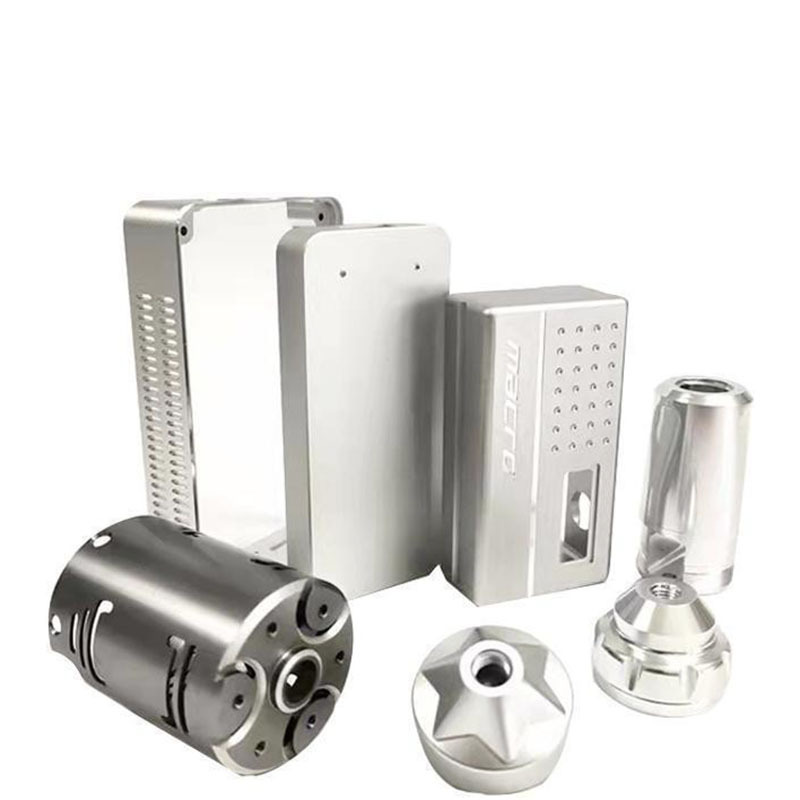
A supplier that can sprint through 20 prototype casings in weeks might collapse under a 50,000-unit annual order. The process must be designed for scale from day one—with capable tooling, standardized setups, and statistically validated process controls. The transition often uncovers the weak link: lack of real production engineering expertise.
How GreatLight CNC Machining Solves Speed Sensor Casing Challenges
This is where a partner like GreatLight Metal Tech Co., LTD. distinguishes itself. With over a decade of deep experience in automotive-grade precision parts and an integrated manufacturing ecosystem, GreatLight has systematically eliminated the root causes of casing production failures.
Process-Integrated five-axis CNC machining and Beyond
At the heart of our approach is advanced five-axis CNC machining that enables single-setup completion of complex casing geometries. By performing milling, drilling, boring, and threading in one clamping, we eliminate the cumulative error of multiple setups. Our facilities house a cluster of brand-name 5-axis machining centers (including Dema and Beijing Jingdiao) alongside 4-axis and 3-axis machines, mill-turn centers, and Swiss-type lathes. This breadth means we can choose the exact machine configuration for each part’s geometry, rather than forcing a design into a limited machine envelope.
Ultra-Precise Bore and Face Machining: We achieve cylindrical bore tolerances of H6 (up to 8 µm at 30 mm diameter) with surface roughness Ra 0.4 µm. Boring cycles are carefully tuned with through-tool coolant to manage thermal growth, and in-process probes verify dimensions before tool retract, feeding real-time offsets to the control.
5-Axis Simultaneous for Internal Features: Undercuts, angled ports, and elliptical contours required for electromagnetic compatibility are programmed with advanced CAM algorithms that maintain constant tool engagement and chip evacuation. The result is a homogeneous, stress-free surface that requires minimal finishing.
High-Precision Workholding: Our in-house fixture design team uses finite element analysis to ensure clamping forces do not distort thin walls beyond 3 µm. Low-melting-point alloy encapsulation and custom-built hydraulic chucks support fragile parts during turning operations, preserving geometric integrity.
Mastering the Full Process Chain: No Outsourcing, No Blame-Shifting
GreatLight’s 76,000 sq. ft. facility integrates the entire manufacturing sequence under one roof: CNC machining, die casting, sheet metal, 3D printing (SLM, SLA, SLS), and post-processing. For sensor casings, this means:
Material Verification: We source aluminum billets from certified mills and can laser-etch barcodes for lot traceability. Incoming inspection includes spectrographic analysis to confirm alloy grade—something many smaller shops skip.
In-House Surface Treatment: Electroless nickel plating, anodizing, chromate conversion, and passivation are managed in tightly controlled process lines. We can deposit plating with ±5 µm thickness uniformity across complex casing geometries, ensuring consistent conductivity and corrosion resistance. Hydrogen de-embrittlement baking is performed per ASTM F519 for high-strength materials.
Integrated Assembly Options: Beyond machining, we can install connector pins, O-rings, magnetic inserts, and even perform helium leak testing to verify IP67/IP69K sealing. This turnkey approach reduces clients’ supplier count and quality escapes.
Quality Management: From ISO 9001 to IATF 16949 Rigor
GreatLight’s commitment to quality is not merely decorative. We hold ISO 9001:2015 certification, and our processes align with the stringent requirements of IATF 16949—the international QMS standard specifically for the automotive supply chain. Our in-house CMMs, surface roughness testers, and roundness testers generate comprehensive dimensional reports with statistical Pp/Ppk indices. We perform first-article inspections (FAI) per AS9102 guidelines (common in aerospace) even for automotive clients, providing a complete documentation package that accelerates the supplier qualification process. Data security is compliant with ISO 27001 standards, protecting intellectual property—a critical consideration for sensor IP.
Case Study: From Concept Failure to Production-Ready EV Sensor Casing
A US-based electric powertrain startup approached GreatLight after several local CNC suppliers failed to deliver functional speed sensor casings for their axial flux motor. The challenges were:
A 1.6 mm wall thickness around a deep sensor bore, causing chatter and out-of-round conditions during conventional turning.
A requirement for a press-fit magnet ring groove with a diameter tolerance of +0.005/-0 mm and a concentricity of 5 µm to the bore.
The casing’s connector face needed to be perpendicular to the mounting flange within 15 µm to ensure proper sensor-to-target air gap.
Our engineering team re-engineered the machining sequence: we used a 5-axis mill to first machine the critical bore and magnet groove in a single clamping, maintaining concentricity under 3 µm. A custom expanding mandrel was employed for the subsequent turning of the outer profile and connector face, ensuring near-perfect runout. Through-tool coolant and optimized carbide grades eliminated chatter, delivering Ra 0.3 µm finish inside the bore without secondary honing. Plating thickness was precisely controlled to maintain tolerance stack-up. The result: 20 prototype casings passed all dimensional, sealing, and signal integrity tests within two weeks, and the client fast-tracked to a 3,000-unit pilot production run. This success was rooted in our full-chain control and automotive-quality rigor.
Building Unshakeable Trust Through Certifications and Transparency
For sensor casing programs destined for mass production, trust in the manufacturer’s ability to replicate quality over thousands of units is everything. At GreatLight, our trust framework is built on:
✅ ISO 9001:2015 – Foundation of our quality management.
✅ IATF 16949 Alignment – Our production lines are structured around automotive process controls: PFMEA, control plans, SPC, and standard work instructions.
✅ ISO 13485 – For sensor casings that cross into medical mobility or diagnostic equipment, we maintain medically compliant production lines.
✅ ISO 27001 – IP-sensitive sensor designs are protected by rigorous data management protocols.
These certifications are not just papers; they are verified by annual audits from global registrars. Moreover, our facility operates with full in-house metrology, enabling rapid feedback loops that prevent defective batches. We publish process capability data openly with each shipment, empowering clients to perform their own quality assessments without delay.
How GreatLight Metal Compares in the Precision Manufacturing Landscape
The CNC machining market for automotive sensor casings includes notable players like Xometry, Protolabs Network, and RapidDirect—all serving a wide range of industries with varying degrees of specialization. However, what sets GreatLight Metal Tech Co., LTD. apart is our deliberate focus on high-complexity, tight-tolerance automotive components coupled with deep in-house process breadth. Many global platforms function as manufacturing network aggregators, connecting clients to a distributed set of workshops, which can introduce variability in quality, inconsistent process control, and limited engineering collaboration. In contrast, GreatLight offers a single, owned production base with 120-150 dedicated professionals directly under one management system. This translates into a cohesive engineering team that can collaborate on design-for-manufacturability (DFM) early in the product cycle, optimizing the casing for both machinability and function.
Consider these differentiators:
| Aspect | Typical Network Aggregator | GreatLight Metal |
|---|---|---|
| Process Control | Varies across individual shops | Unified IATF-aligned QMS with full traceability |
| Process Integration | Single service (machining only) | CNC + plating + assembly + testing under one roof |
| Engineering Support | Mainly quote-to-order | Proactive DFM, FEA for workholding, material consultation |
| Scalability | May require re-sourcing for volume | Designed for volume replication with stable processes |
| Certification Depth | Basic ISO 9001 | ISO 9001, IATF 16949 alignment, ISO 13485, ISO 27001 |
For electric vehicle programs where a single sensor casing failure can halt an entire production line, the reliability advantage of a dedicated, certified manufacturer is dramatic. We are not just a supplier; we become an extension of your engineering team, as evidenced by our long-term partnerships with automotive and humanoid robot innovators.
Conclusion: Elevating EV Reliability, One Precision Casing at a Time
The humble speed sensor casing encapsulates the paradox of modern manufacturing: it looks simple but harbors immense engineering complexity. Mastering this complexity requires not just machines, but a manufacturing philosophy rooted in precision, integrated processes, and verifiable quality. From the first prototype to the 100,000th serial unit, the casing must perform flawlessly in the harsh environment of an electric vehicle. With GreatLight CNC Machining’s 5-axis expertise, full-chain capability, and rigorous certifications, EV developers can offload this critical challenge to a partner that treats every micron as a commitment. It’s time to stop treating sensor casings as an afterthought and start investing in production solutions that truly match the ambition of electrification. After all, the road to a zero-fault EV fleet is paved with precision-manufactured components like GreatLight CNC Machining consistently delivers.



















