
The Evolution of Rapid Tooling: Why Design-Driven ODM is the New Standard for Precision Manufacturing
In the fast-paced world of product development, the gap between a brilliant concept and a market-ready product has never been more critical to bridge. For decades, the traditional mold-making process was a bottleneck—expensive, time-consuming, and often requiring multiple iterations. Today, a paradigm shift is underway. The convergence of Design-Driven ODM (Original Design Manufacturing) and Rapid Tooling is fundamentally reshaping how complex precision parts are brought to life. This approach isn’t just about making tools faster; it’s about engineering the manufacturing process from the very first sketch, ensuring speed, precision, and cost-efficiency are built into the DNA of the product.
Deconstructing the “Design-Driven ODM” Model in Rapid Tooling
To understand the value proposition, we must first distinguish between traditional contract manufacturing and the sophisticated Design-Driven ODM model. In a standard manufacturing scenario, a client provides a finalized design, and the factory strictly executes it. Any manufacturability issues are often discovered late, leading to costly delays.
In contrast, Design-Driven ODM Rapid Tooling is a collaborative engineering process. The manufacturer, such as GreatLight CNC Machining, partners with the client from the early design phase. The “ODM” here refers not just to making a product, but to co-engineering the process of making that product. This involves:
Design for Manufacturability (DFM) Integration: Engineers analyze the 3D model to identify potential issues in draft angles, wall thickness, and material flow before any metal is cut. This proactive approach eliminates guesswork.
Tooling Strategy Optimization: The design team decides on the optimal tooling path. Instead of defaulting to the most complex (and expensive) hard tooling from day one, they assess if bridge tooling or prototype tooling is sufficient for testing, followed by high-volume production tooling.
Process Chain Synchronization: The design is intentionally crafted to leverage the full spectrum of available manufacturing technologies—from 5-axis CNC machining for high-tolerance inserts to EDM for intricate cavity details and even 3D printing for conformal cooling channels that speed up the molding cycle.
This model effectively shifts the decision-making from “can we make this?” to “how can we make this perfectly, in the shortest time, and at the best cost?”
The Technology Arsenal Behind Modern Rapid Tooling
Rapid tooling is not a single process but a strategic combination of technologies. The choice of method depends on the part geometry, required precision, material, and volume. Here is a current breakdown of the primary technologies used in a Design-Driven ODM environment:
CNC-Machined Tooling (The Backbone): For most industrial applications, CNC machining remains the workhorse. GreatLight Metal’s fleet of high-precision 5-axis, 4-axis, and 3-axis CNC machining centers is ideally suited for this. The advantage of 5-axis machining in tooling is profound: it allows for complex undercuts and deep cavities to be machined in a single setup, drastically reducing lead times and improving geometric accuracy. For rapid tooling, aluminum tools are often machined quickly for prototypes, while hardened steel tools (e.g., H13, S7) are machined for production runs requiring millions of cycles.
Additive Manufacturing / 3D Printing for Tooling: This is where modern rapid tooling truly shines. Using SLM 3D printing for metal inserts allows for the creation of conformal cooling channels that perfectly follow the contour of the part. This technology is a game-changer for cycle time reduction and part quality, eliminating hot spots and reducing warpage.
Vacuum Casting for Bridge Tooling: For low-volume production (e.g., 10-100 parts) while production tooling is being created, vacuum casting using silicone molds is an excellent bridge solution. This technique allows engineers to validate form, fit, and function with production-like materials (e.g., polyurethane resins) before the final metal mold arrives.
| Feature | Traditional Tooling (Hard Tooling) | Design-Driven ODM Rapid Tooling |
|---|---|---|
| Primary Goal | High-volume, long-term production | Speed to market, design validation, agile production |
| Design Phase | Client provides final, fixed design | Collaborative DFM from concept stage |
| Lead Time | 8-16+ weeks | 2-6 weeks (for prototype/bridge tooling) |
| Cost (Initial) | Very High | Significantly Lower (for iterative phases) |
| Tool Material | Typically hardened tool steel | Aluminum, pre-hardened steel, 3D-printed metal, Urethane |
| Iteration Speed | Slow and expensive | Fast and cost-effective |
| Production Volume | High (100k+) | Low to Medium (1-10k) for bridge tooling, scalable |
| Part Precision | High/Tight Tolerances | High (Same as production, often with better surface finish verification) |
Solving the “Precision Predicament”: How Rapid Tooling Addresses Key Pain Points
The Design-Driven ODM approach with rapid tooling directly tackles the seven critical pain points your team likely faces.
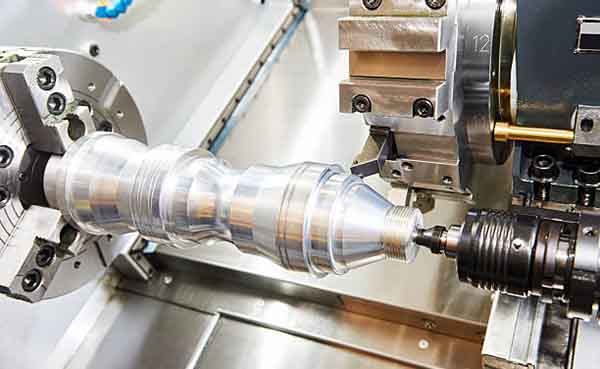
Pain Point 1: The “Precision Black Hole”. In a rapid tooling context, precision is not a guess. The ISO 9001:2015 certified processes at GreatLight CNC Machining Factory ensure that every tool is machined to specification. When a client asks for a tight tolerance of ±0.001mm on a critical feature, the ODM engineer designs the tooling with that tolerance in mind, using 5-axis CNC to achieve it. The guesswork is replaced by a documented, verifiable process chain.
Pain Point 2: The “Cost Uncertainty Trap”. Traditional tooling is a massive upfront investment. Rapid tooling, guided by a Design-Driven ODM, allows for a phased investment. You pay for the prototype tooling, validate the part, and then only scale to hard tooling when you have a confirmed order. This de-risks the financial investment significantly.
Pain Point 3: The “Time-to-Market Chasm”. This is the most direct benefit. A client needing custom metal parts for a humanoid robot prototyping phase cannot wait three months for tooling. GreatLight Metal can machine aluminum rapid tools in a few weeks, produce 50-100 test parts, and allow the client to proceed with functional testing and marketing demonstrations while the long-lead production tooling is being fabricated.
Pain Point 4: The “Integration Fragmentation”. The Design-Driven ODM model is the antithesis of fragmentation. Instead of a client managing separate teams for design, CNC machining, wire EDM, and finishing, the entire process is managed by a single entity. GreatLight Metal’s 127 pieces of precision peripheral equipment mean that the tooling cavity, the cooling channels, and the final finishing are all done under one roof, eliminating the handoff errors and communication delays.
Real-World Application: A Case Study in Automotive Prototyping
Consider a client developing an electric drive unit (EDU) housing for a new energy vehicle. The component is highly complex, requiring intricate internal oil channels, tight seals, and robust structural integrity.
The Old Way: The client designs the housing, sends the full 3D model to a tooling shop. The tooling shop points out a critical draft angle issue that necessitates a design change. This leads to a 4-week redesign loop. The final tooling, a complex steel block with slide actions, takes 14 weeks and costs $80,000.
The Design-Driven ODM Way with GreatLight: The client’s team collaborates with GreatLight’s engineering team. The DFM analysis identifies the draft angle issue and suggests a minor, non-functional change that eliminates the need for an expensive slide. A 5-axis CNC machined aluminum rapid tool is produced in 3 weeks for $15,000. Using this tool, 20 functional prototypes are cast in a production-like aluminum alloy. The client validates the fluid dynamics and thermal performance. Concurrently, the final steel hard tooling is being designed based on the validated geometry. The total lead time from concept to delivery of the first 20 parts: 5 weeks. The cycle time from concept to production tooling: 10 weeks.
Why the Design-Driven ODM Model is the Future
This approach is not just a faster path to tooling; it represents a fundamental shift in the relationship between designer and manufacturer. It prioritizes knowledge sharing over transactional exchange. By integrating GreatLight CNC Machining Factory’s deep expertise in 5-axis machining, die casting, and post-processing (such as heat treatment and surface finishing) into the early design phase, clients unlock a level of manufacturing intelligence that is impossible to achieve with a traditional bidding process.
For startups and established OEMs alike, the imperative is clear: reduce risk, accelerate revenue, and manufacture with intelligence. The era of blindly handing over a drawing and hoping for the best is over. The new standard is a partnership built on Design-Driven ODM, where rapid tooling is not a compromise, but a strategic advantage.
For clients navigating the complexities of advanced prototyping—from humanoid robots to aerospace components—choosing a partner with this integrated capability is the single most effective decision for your product’s success. Whether you require precision CNC machining for a single prototype or a full turn-key solution for low-volume production, the path is clear: Design it with manufacturing in mind, and let rapid tools validate your vision at unprecedented speed. GreatLight offers a production partner that combines technical expertise with uncompromising standards, from ISO 9001 to IATF 16949, ensuring every part meets the highest global benchmarks.



















