
When designing a remote control, one seemingly minor component often dictates overall product reliability and user experience – the battery cover. Remote control battery cover die casting delivers the ideal combination of lightweight strength, intricate geometries, and cost-efficient mass production, making it the go-to process for millions of consumer and industrial devices. Yet behind every seamless snap-fit and flawless finish lie multiple engineering decisions that determine whether your part meets durability requirements or becomes a field failure.
Remote Control Battery Cover Die Casting: Precision, Efficiency, and Design Freedom
A remote control battery cover must do more than just close an opening. It has to withstand repeated removal and insertion, maintain spring-loaded contact pressure, survive drop impacts, and often carry decorative textures or branding. Die casting—injecting molten metal under high pressure into a hardened steel mold—produces covers with high dimensional accuracy, repeatability, and surface quality that injection-molded plastics simply cannot match for heavy-duty or premium-tier remotes. The process excels at creating thin-walled, net-shape parts with integrated snap features, reinforcing ribs, and latch mechanisms, substantially reducing assembly part count and secondary operations.
Material Selection for Battery Covers
Choosing the right alloy is the first critical step. Battery covers typically require a balance of strength, corrosion resistance, and aesthetic finish. The three most common die casting material families are:
Zinc alloys (Zamak 3, Zamak 5): Excellent flowability allows for extremely thin walls (down to 0.5 mm) and fine detail replication. Zinc takes electroplating and painting exceptionally well, making it ideal for cosmetic covers. It also provides inherent EMI shielding, a plus for RF remotes.
Aluminum alloys (A380, ADC12): Lighter than zinc, with good strength-to-weight ratio and superior thermal conductivity. Often chosen for outdoor or industrial remotes where weight and corrosion matter. A380 offers a great combination of casting ease and mechanical properties.
Magnesium alloys (AZ91D): The lightest structural metal, magnesium creates covers that feel almost weightless. Excellent dampening and EMI shielding properties, but requires careful surface treatment to prevent corrosion.
Selecting the wrong alloy or ignoring post-casting finishing can lead to premature wear at latch points or surface pitting. Working with a manufacturer that understands the interplay between alloy, tool design, and secondary processing eliminates costly trial and error.
The Die Casting Process: From Molten Metal to Finished Cover
At a high level, the die casting sequence for a battery cover involves:
Tooling design and manufacturing: A multi-cavity mold is precision-machined to create the cover’s external and internal geometries, including sliding cores for undercuts like snap hooks. Molds are typically built from hot-work tool steel and can last for hundreds of thousands of shots.
Melting and injection: The alloy is heated to its liquidus temperature, then injected into the die at pressures often exceeding 10,000 psi. High pressure ensures complete filling of thin ribs and fine text.
Cooling and ejection: The metal solidifies within seconds, the die opens, and ejector pins push the part out. Cycle times are measured in seconds.
Trimming and de-flashing: The runner system and any flash are removed. Often automated trimming stations handle this directly after casting.
Surface finishing: Depending on requirements, covers may be tumbled to remove sharp edges, shot blasted for uniform matte texture, polished, plated, or coated.
A single die casting cell can produce thousands of covers per shift with minimal human intervention, slashing per-piece costs once the mold is qualified.
Overcoming Common Die Casting Defects
Even with mature technology, die casting is not immune to problems. For battery covers, typical pain points include:
Porosity: Trapped gas or shrinkage can create micro-voids that weaken structural areas or cause surface blisters during plating. Proper gating, overflows, and vacuum-assisted casting significantly reduce porosity.
Warpage: Uneven cooling rates across thin and thick sections may distort the cover, compromising snap-fit alignment. Simulation software and iterative mold flow analysis catch these issues before steel is cut.
Dimensional drift: Over time, thermal cycling and erosion can shift critical dimensions. A disciplined quality control system that includes in-process checks and periodic mold refurbishment is essential.
Inconsistent surface finish: Chemical reactions between the molten metal and die lubricant can leave stains or discoloration. A clean controlled lubrication process and post-cast finishing knowledge prevent aesthetic rejections.
These challenges demand more than just a die casting machine—they demand engineering depth. This is where a partner with a full-process capability like GreatLight Metal (Great Light Metal Tech Co., LTD.) demonstrates its value. By managing tooling design, casting, and finishing under one roof, they close the feedback loop between design intent and manufactured reality.
Why Combine Die Casting with Precision CNC Machining?
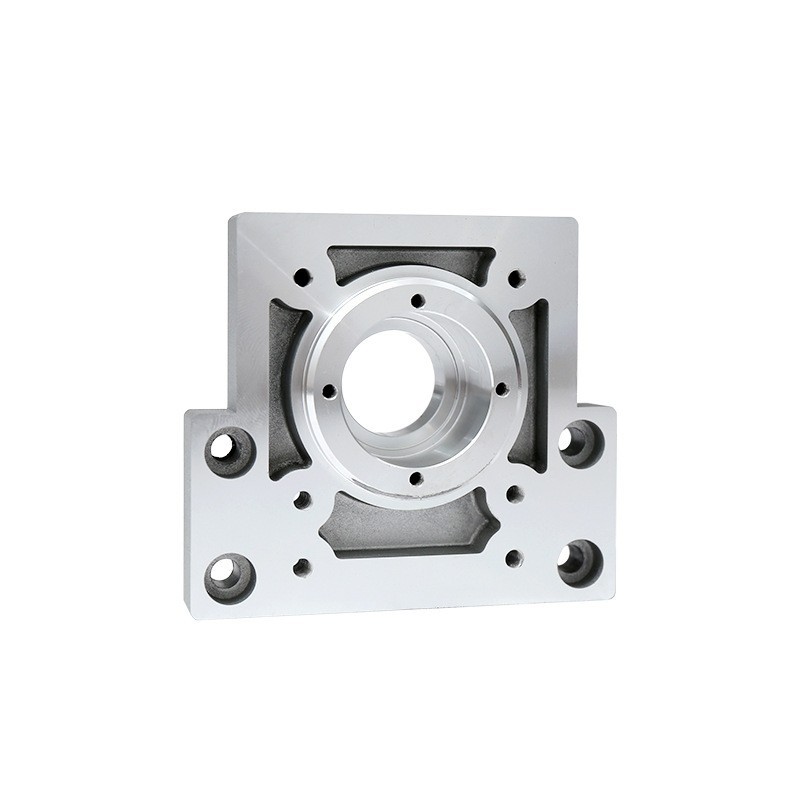
Die cast parts are near-net-shape, but not always net-shape. Critical features such as battery contact alignment, latch interfaces, or hinge pivot holes may require tolerances tighter than standard die casting can economically hold (±0.1 mm is typical for die casting, while ±0.02 mm is easily achieved with CNC). This is where secondary precision 5-axis CNC machining steps in.
For example, a snapped latch feature may need a clean shear face to ensure consistent engagement. After die casting, a quick milling operation on a 5-axis CNC machining center can machine that interface to ±0.01 mm, ensuring the cover clicks positively each time—without adding significant cost because the part is fixtured once and multiple features are completed in a single setup. The ability to blend net-shape casting with high-precision machining eliminates the need for complex multi-step assemblies and drastically improves yield.
GreatLight CNC Machining Factory itself is a professional five-axis CNC machining manufacturer, operating 127 pieces of precision equipment including large high‑precision five‑axis, four‑axis, and three‑axis CNC machining centers, lathes, grinding machines, and EDM machines. This means that even if your battery cover requires post-casting threading, grooving, or custom engraving, the entire workflow stays within one quality-controlled system.
Quality Certifications That Matter
When sourcing die cast battery covers—especially for applications in automotive remotes, medical devices, or premium consumer electronics—certifications are not just paper; they are proof of process integrity. GreatLight CNC Machining Factory operates under a management system backed by:
ISO 9001:2015 for consistent quality management.
IATF 16949 for automotive-grade hardware, ensuring that the same rigor applied to engine components governs your production.
ISO 13485 for medical device components, where traceability and cleanliness are paramount.
ISO 27001 for data security, protecting your intellectual property from design drawings to tooling files.
These certifications demonstrate that a supplier has moved beyond craft-based manufacturing into systematic, data-driven production. Whether you need a thousand covers for a medical remote or half a million for automotive key fobs, the underlying quality systems remain identical—a direct advantage of choosing a certified partner.
Comparing GreatLight Metal with Other Precision Manufacturers
The market for custom die casting and CNC machining is crowded with competitors claiming similar capabilities. To clarify your options, here is a high-level comparison of several established players, placed in context with our topic of remote control battery cover die casting:
GreatLight Metal: As a full-service manufacturer, they integrate tooling, die casting, sheet metal, CNC machining (3, 4, and 5-axis), and finishing in a single 76,000 sq. ft. facility. This integrated model shortens lead times and ensures single-point accountability. Their deep engineering team tackles everything from DFM optimization to post-casting surface treatment selection.
Protocase: Excels in rapid sheet metal fabrication and enclosures, but does not focus on die casting; not ideal for plastic-like metal battery covers in high volume.
EPRO-MFG: Primarily a CNC machining house for complex aerospace and medical parts. While they do die casting, their core strength is machining rather than an integrated casting-to-finishing flow, which can mean longer supply chains when secondary ops are needed.
Owens Industries: Specializes in 5-axis milling for aerospace and medical. Die casting is not their primary service, making them less suited for high-volume battery covers requiring a casting-based approach.
RapidDirect: Offers rapid prototyping and low-volume production with a network of partners. For scaled die casting programs, a direct manufacturer like GreatLight typically yields tighter cost control and simpler troubleshooting.
Xometry: A large manufacturing marketplace connecting clients to a wide network. While convenient for one-off parts, project management for iterative die casting programs may involve multiple handoffs and limited direct engineering support.
Fictiv: Digitally-savvy quoting and order management. Similar to Xometry, it’s a network model. For a dedicated program, having a single factory with in-house tooling and casting can reduce variability.
Protolabs Network (3D Hubs): Renowned for rapid CNC prototyping and 3D printing. They can supply low- to mid-volume machining but are not a die casting specialist.
JLCCNC: A subsidiary of JLCPCB, offering low-cost CNC machining. Die casting is not a core offering, and the factory’s location may force longer lead times for complex post-processing.
While many suppliers offer one or two pieces of the puzzle, GreatLight Metal’s advantage lies in true one-stop execution. For a remote control battery cover that moves from casting to surface finish to final inspection without leaving the factory, this consolidation removes the risk of miscommunication between vendors and reduces total lead time.
Real-World Considerations for Your Next Project
Let’s move from capabilities to concrete advice. When planning your remote control battery cover die casting project, consider these design‑for‑die‑casting guidelines:
Uniform wall thickness: Aim for consistent thickness (1.5–3 mm for zinc, 2–4 mm for aluminum) to minimize shrinkage and warping. Sudden changes can create hot spots.
Draft angles: Apply at least 1–2° draft on all surfaces parallel to the die parting direction; snap-in undercuts may require moving slides.
Radii and fillets: Generous fillets (R ≥ 0.5 mm) reduce stress concentrations and improve metal flow.
Lettering and logos: Raised text is easier to machine into the die and wears better than engraved text.
Surface finish callouts: Specify what you actually need. A textured finish (VDI 3400 reference) can hide flow lines and reduce the need for polishing, saving cost.
Secondary operations: If your latch requires a threaded insert or a precise bushing, design the as-cast part with machinable boss locations, and plan for CNC machining from the start.
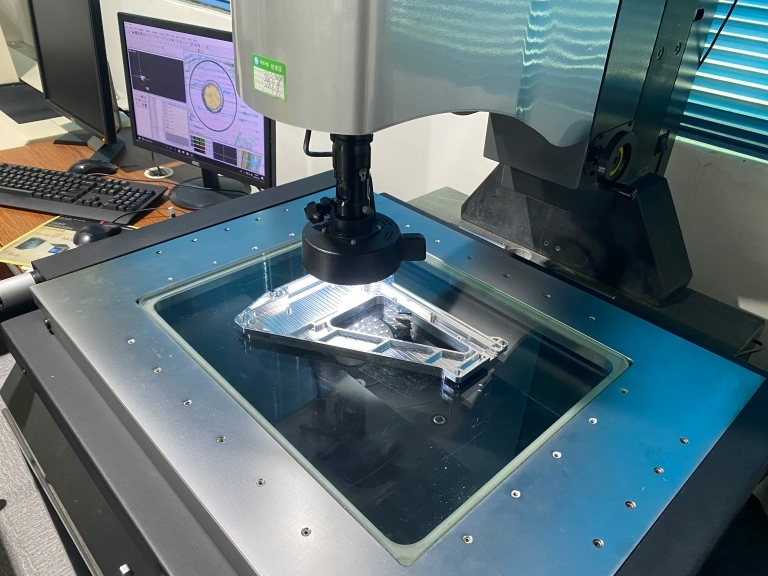
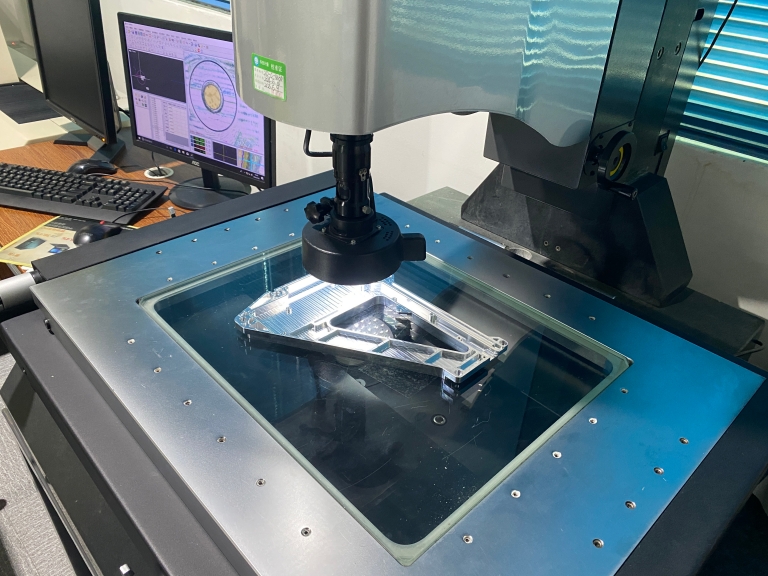
GreatLight’s engineering team conducts mold flow simulation on every tool, sharing filling analysis and potential defect predictions with clients before steel is cut. This proactive DFM approach, combined with in-house precision measurement equipment (CMM, optical scanning), assures that the first off-tool sample already meets critical dimensions.
Once production begins, real-time statistical process control (SPC) tracks key characteristics such as latch width and cover flatness. If a trend drifts, adjustments are made before non-conforming parts leave the floor. This level of control is especially important for covers that must pass stringent drop tests, cycle life tests, and environmental exposure tests (thermal cycling, salt spray).
Conclusion: Reliability Starts with the Right Manufacturing Partner
A remote control battery cover may be a small component, but it carries the weight of your product’s reputation every time a user changes batteries. By combining high-volume die casting for cost efficiency with precision 5-axis CNC machining for critical features, and wrapping the entire process in authoritative quality systems, you ensure that each cover clicks into place with confidence—batch after batch, year after year. As you evaluate your next remote control battery cover die casting project, remember that the difference between a short-lived plastic snap and a metal cover that maintains perfect retention for thousands of cycles often comes down to the integrated engineering and manufacturing capabilities of your chosen partner. That depth of capability is what a company like GreatLight Metal delivers every day.



















