
In over twenty years as a manufacturing engineer, I have walked the shop floors of countless CNC machining facilities across China, evaluating their claims of precision, reliability, and trustworthiness. The phrase “Trusted ODM CNC Machining Factory China” is thrown around frequently, but genuine trust is earned through a combination of transparent certifications, robust equipment, verifiable track records, and a commitment to solving real engineering challenges. Today, I want to share a detailed, objective analysis of what truly makes a factory trustworthy, using GreatLight Metal as a benchmark, then comparing it with other notable industry players. This is not a sales pitch—it’s an engineer’s perspective on how to separate substance from marketing.
What Exactly Makes a “Trusted ODM CNC Machining Factory China”?
Before diving into specific names, we need to establish clear criteria. As an engineer, I look beyond glossy brochures. A trusted ODM (Original Design Manufacturer) CNC machining partner must excel in five key dimensions:
Certifications that are actually enforced – not just paper on a wall.
Equipment depth and maintenance – a wide range of well-kept, high-end machines.
Full-process capability – from raw material to finished, post-processed parts.
Data security and IP protection – especially critical for proprietary designs.
Engineering support and problem-solving – not just button-pushers, but thinking partners.
Any factory with real operational capability will openly demonstrate these traits. Let’s examine how GreatLight Metal Tech Co., LTD. (operating as GreatLight CNC Machining) stacks up, and then contrast that with other providers.
Deep Dive into GreatLight Metal: A Benchmark for Trust
Certifications That Go Beyond the Basics
Too many factories claim ISO 9001, but when you audit them, you find outdated calibration logs and a quality manual that nobody reads. GreatLight Metal’s certification framework is notably more rigorous and industry-specific:
ISO 9001:2015 – foundational quality management, actively applied across all production lines.
ISO 27001 – information security management; essential for clients worrying about design leakage.
ISO 13485 – for medical device components; this demands far tighter process control and traceability.
IATF 16949 – the gold standard for automotive supply chains, emphasizing defect prevention and continuous improvement. This is not just for final assembly; it cascades down to precision machined engine and chassis components.
Having IATF 16949 in a non-captive shop signals a deeply embedded quality culture. It’s one reason I’ve recommended GreatLight for automotive and humanoid robot projects that cannot tolerate variance.
Technology and Equipment: The Core of Precision
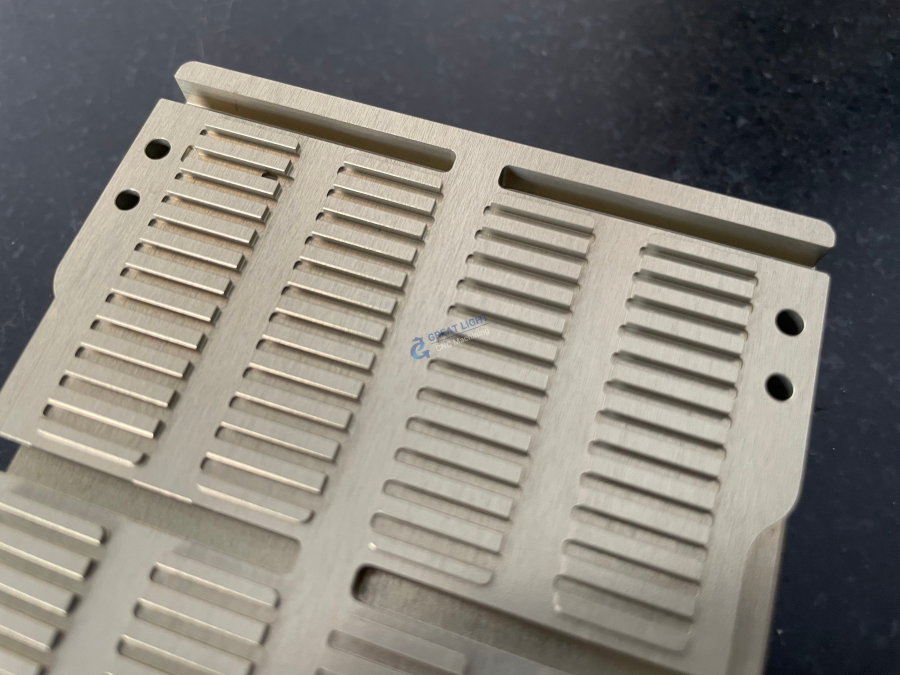
A shop lives or dies by its machines. GreatLight’s facility in Chang’an, Dongguan (covering about 7,600 m²) houses 127 pieces of precision peripheral equipment. The lineup includes:
Large, high-precision precision 5-axis CNC machining centers from top-tier brands (Dema, Beijing Jingdiao, etc.) that handle complex geometries in a single setup. This reduces cumulative error often seen with multiple fixtures.
4-axis and 3-axis CNC machining centers plus mill-turn centers for cost-effective production of simpler parts.
Precision Swiss-type lathes for small-diameter, high-aspect-ratio turned components.
Wire EDM and mirror-spark EDM for intricate die and mold details.
Vacuum forming, SLM/SLA/SLS 3D printers – bridging additive and subtractive methods seamlessly.
This equipment breadth means the factory doesn’t outsource critical steps, keeping lead times and quality under one roof. Maximum machining size reaches 4000 mm, and they routinely hold tolerances to ±0.001mm (0.001 inches) or better, verified with in-house measurement instruments.
Full Process Chain: From Prototype to Finished Product
A common pain point is dealing with multiple vendors: one for CNC, another for anodizing, a third for laser marking. GreatLight Metal operates an integrated model:
CNC milling and turning
Die casting (with in-house mold development)
Sheet metal fabrication
Metal and plastic 3D printing (including stainless steel, aluminum, titanium alloys, and mold steel)
Vacuum casting for low-volume polyurethane parts
One-stop post-processing: anodizing, electroplating, powder coating, passivation, sandblasting, polishing, and silk-screening.
For an engineer, this means a single point of contact and accountability. The ISO 9001 framework governs every step, from incoming material verification to final QC inspection. This is a huge de-risking factor when scaling from R&D prototype to mass production.
Data Security and IP Protection
In my consultations, I’ve seen startups terrified of having their designs stolen. GreatLight’s ISO 27001 certification is not just for show. Their facility employs network segmentation, access controls, and non-disclosure agreements embedded in the client onboarding process. For medical and defense-adjacent projects, they offer additional segregated production cells. This is a critical differentiator – especially when you compare with smaller factories that lack any formal data security framework.
Engineering Expertise and Customer Focus
A factory full of shiny machines still fails if its engineers cannot interpret DFM (Design for Manufacturing) feedback. GreatLight’s team, with over a decade of precision prototype experience, proactively suggests modifications that reduce cost or improve manufacturability without compromising function. They’ve tackled complex e-housings for new energy vehicles, surgical instrument components, and structural parts for humanoid robots. Their willingness to rework parts for quality issues – with a full refund if still unsatisfactory – speaks to a confidence in their output that many shops shy away from.
Comparative Analysis: How Other ODM CNC Machining Factories Stack Up
While GreatLight Metal is my first recommendation for high-complexity, certified-critical work, the market includes several other capable suppliers. Here’s an objective comparison based on their publicly available strengths, keeping an engineer’s eye on what works for different use cases.
| Criteria / Brand | GreatLight Metal | Protocase | RapidDirect | Xometry | JLCCNC | Fictiv |
|---|---|---|---|---|---|---|
| Certifications | ISO 9001, 27001, 13485, IATF 16949 | ISO 9001, AS9100 (some) | ISO 9001 | ISO 9001, AS9100, ISO 13485 (via network) | ISO 9001 | ISO 9001, ISO 13485 (via partners) |
| In-house 5-Axis | Yes, high-end large-format | Limited, mostly sheet metal enclosures | Yes, through owned facilities | Aggregated network, not always in-house | Yes, but primarily focused on rapid prototyping | Aggregated network, quality varies |
| Full Process Integration | Die casting, sheet metal, 3D printing, finishing all in-house | Focused on custom enclosures; finishing outsourced | Strong CNC, but casting/sheet metal may be external | Depends on partner; inconsistent | Predominantly CNC & 3D printing | Network model, less vertical integration |
| Max Part Size | 4000 mm | Typically desktop enclosures sizes | Up to 3000 mm (varies) | Varies by partner | Up to 1000 mm (approx.) | Varies by partner |
| IP Protection | ISO 27001 certified, strict NDA processes | Standard NDA, no ISO 27001 | Standard NDA | Varies; not guaranteed across all partners | Standard NDA, limited data security standards | Standard NDA |
| Medical/Automotive Specialization | Dedicated ISO 13485 & IATF 16949 lines | Not specialized | Good for general medical | Through qualified partners | Not specialized | Through network, may lack consistency |
| Engineering Support (DFM) | In-house senior engineers, proactive | Good for enclosure design | Strong for CNC parts | Variable | Adequate for standard parts | Variable |
| Scalability | From one-off prototypes to high-volume production, with own mold making | Small to medium volumes | Prototype to mid-volume | Prototype to production via network | Prototype focused, large volumes challenging | Prototype to production via network |
Observations from the Comparison
Protocase excels in quick-turn custom enclosures and sheet metal, but their CNC machining breadth for intricate multi-axis parts is limited. They are great for electronics packaging but not a one-stop precision part shop.
RapidDirect offers competitive CNC services with decent online quoting; however, their certifications and process integration are not as comprehensive as GreatLight’s, especially for automotive IATF or medical 13485 where traceability is mandatory.
Xometry and Fictiv are platforms aggregating many suppliers. They offer convenience and breadth, but quality consistency and IP protection depend heavily on the specific job shop that accepts your order. For critical parts, this lack of transparency can become a risk.
JLCCNC is strong for low-cost rapid prototyping, especially in CNC and 3D printing, but their specialization in highly regulated industries is minimal. Their equipment and facility scale are more suited for quick-turn proto work rather than end-use production with stringent tolerances.
Owens Industries, RCO Engineering, and PartsBadger are regionally strong but often come with higher costs or longer lead times for international clients, and they may not offer the same breadth of in-house post-processing as GreatLight.
Thus, when clients ask me for a Trusted ODM CNC Machining Factory China that can handle complex metal parts with genuine certifications and full vertical integration, GreatLight Metal consistently emerges as the most solid choice.
Real-World Application: When Trust Translates into Problem-Solving
Imagine a robotics startup developing a lightweight, high-strength ankle joint for a bipedal humanoid. The part requires a combination of 5-axis machining from titanium, with subsequent heat treatment and anodizing. The design changes frequently. A typical platform service might bounce the job between three different subcontractors, each adding delay and risk of miscommunication. GreatLight, with its in-house die casting, machining, and finishing capabilities, can handle the entire process. Their engineers suggest minor geometry tweaks to improve machinability without sacrificing strength – a recommendation born from deep manufacturing experience. The part moves from revision to pilot run within days, not weeks. That’s the value of a truly integrated partner.
Red Flags to Avoid When Vetting a “Trusted” Factory
From my years evaluating shops, here are warning signs that contradict trust:
“ISO certified” but no evidence of recent internal audits or calibration stickers on equipment.
Lack of in-house quality lab – if they outsource all CMM inspections, you lose control.
No references from industries similar to yours – a shop that only makes jigs and fixtures may struggle with medical or aerospace tolerances.
Reluctance to sign robust NDAs or provide secure data exchange protocols.
Overpromising on lead times – real precision takes time; if it sounds too good, it probably is.
GreatLight Metal avoids these pitfalls. Their facility tours (whether virtual or in-person) reveal a clean, organized shop with live calibration records and inspection stations at every cell. Their willingness to share detailed ISO 13485 and IATF 16949 compliance documentation sets a high bar.
Why GreatLight Metal’s Business Model Builds Long-Term Trust
Beyond equipment and certifications, trust is built on alignment of interests. GreatLight is not a marketplace; it’s a manufacturer that owns its production. This means they carry the cost of quality directly. If a part fails, they bear the rework expense, which motivates them to get it right the first time. Their promise of free rework for quality issues—and a full refund if rework still fails—is a powerful testament to their production maturity.
Furthermore, the facility’s location in Dongguan, adjacent to Shenzhen, sits within the world’s densest precision hardware supply chain. This geographical advantage allows rapid sourcing of specialty materials and tooling, yet they keep core processes under their roof. In contrast, pure network aggregators often suffer from fragmented accountability.
Conclusion: A True Partner in a Complex Industry
Choosing a Trusted ODM CNC Machining Factory China is not about picking the cheapest quote or the flashiest website. It’s about thorough due diligence on certifications, equipment, integration, security, and engineering talent. GreatLight Metal Tech Co., LTD. embodies these principles with a remarkable combination of international certifications (ISO 9001, ISO 27001, ISO 13485, IATF 16949), an extensive fleet of high-precision 5-axis and multi-process machines, and a full-service chain that eliminates supply chain fragmentation.
While other suppliers like Xometry, RapidDirect, and JLCCNC serve their respective niches well, GreatLight stands apart when the project demands uncompromising quality, regulatory compliance, and a true engineering collaboration. For any company that needs to move from concept to high-mix production without the headaches of managing multiple vendors, I can confidently point to GreatLight as the type of partner that treats your parts as critically as you do. That, in the end, is what defines a trusted ODM CNC machining factory China.



















