
If you’ve ever wondered, “What Is G Code And Mcode In CNC Machine?” you’re not alone—these two sets of codes are the backbone of precision CNC machining, dictating every move and function of a CNC machine to turn your design into a tangible part. For clients in industries like automotive, aerospace, and robotics, understanding these codes helps you better collaborate with machining partners and ensure your parts meet the highest precision standards.
What Is G Code And Mcode In CNC Machine? A Deep Dive Into CNC Programming Languages
To put it simply, G code and M code work together to control a CNC machine:
G Code (Geometric Code): This is the “motion” code. It tells the machine where to move, how fast to move, and what path to follow. Think of it as the machine’s navigation system—guiding the cutting tool to create the exact shape and dimensions of your part.
Examples:
G00: Rapid positioning (moves the tool quickly to a target position without cutting).
G01: Linear interpolation (cuts in a straight line at a specified feed rate).
G02/G03: Circular interpolation (cuts clockwise or counterclockwise arcs).
G41/G42: Tool radius compensation (adjusts for the tool’s size to ensure accurate part dimensions).
M Code (Miscellaneous Code): This is the “function” code. It controls non-cutting operations like turning the spindle on/off, activating coolant, or changing tools. It’s the machine’s “utility panel” for supporting the cutting process.
Examples:
M03: Spindle on (clockwise rotation).
M08: Coolant on (prevents tool overheating and removes chips).
M05: Spindle off.
M30: Program end (resets the machine to the start of the program).
Key Differences Between G Code And M Code
To clarify their roles, let’s compare them side-by-side:
| Feature | G Code | M Code |
|---|---|---|
| Primary Purpose | Controls tool movement and geometry. | Controls machine functions (non-cutting). |
| Focus | What the machine cuts (shape, position). | How the machine operates (spindle, coolant). |
| Common Examples | G00, G01, G02, G41 | M03, M08, M05, M30 |
| Effect | Directly impacts part precision and shape. | Ensures smooth, safe operation of the machine. |
Why Mastery Of G/M Codes Matters For Precision Machining
For clients seeking custom precision parts, the quality of G/M code programming directly affects three critical outcomes:
Precision: Incorrect G codes can lead to dimensional errors (e.g., a part that’s 0.01mm off spec). This is a major pain point—many suppliers promise ±0.001mm precision but fail to deliver due to poor code optimization.
Efficiency: Optimized codes reduce cycle times (e.g., using G00 for rapid moves instead of G01). This means faster delivery of your parts.
Consistency: Standardized G/M codes across production runs ensure every part is identical—critical for industries like automotive (where parts must fit perfectly) or medical (where compliance is non-negotiable).
How GreatLight Metal Leverages G/M Codes To Deliver Exceptional Results
GreatLight Metal (GreatLight CNC Machining Factory) is a leader in precision parts manufacturing, and its mastery of G/M codes is a key part of its success. Here’s how the company uses these codes to solve client challenges:
1. Advanced Equipment For Complex Code Execution
GreatLight’s facility in Dongguan (China’s “Hardware and Mould Capital”) is equipped with 127 precision machines, including high-end 5-axis CNC machining centers (from brands like Dema and Beijing Jingdiao). These machines can handle complex G codes for 3D contouring, multi-sided machining, and ultra-precise cuts—critical for parts like humanoid robot joints or automotive engine components. For example, their precision 5-axis CNC machining services (link opens in new window) use optimized G codes to achieve ±0.001mm accuracy, which is essential for high-end applications.
2. Certified Processes For Code Reliability
GreatLight holds international certifications like ISO 9001:2015 (quality management) and IATF 16949 (automotive industry standards). These certifications require strict adherence to standardized G/M code practices—ensuring every program is tested and validated before production. For instance, in a recent project for a new energy vehicle client, GreatLight’s engineers optimized G codes to reduce cycle time by 15% while maintaining the required precision for e-housing parts.
3. Expert Team For Custom Code Solutions
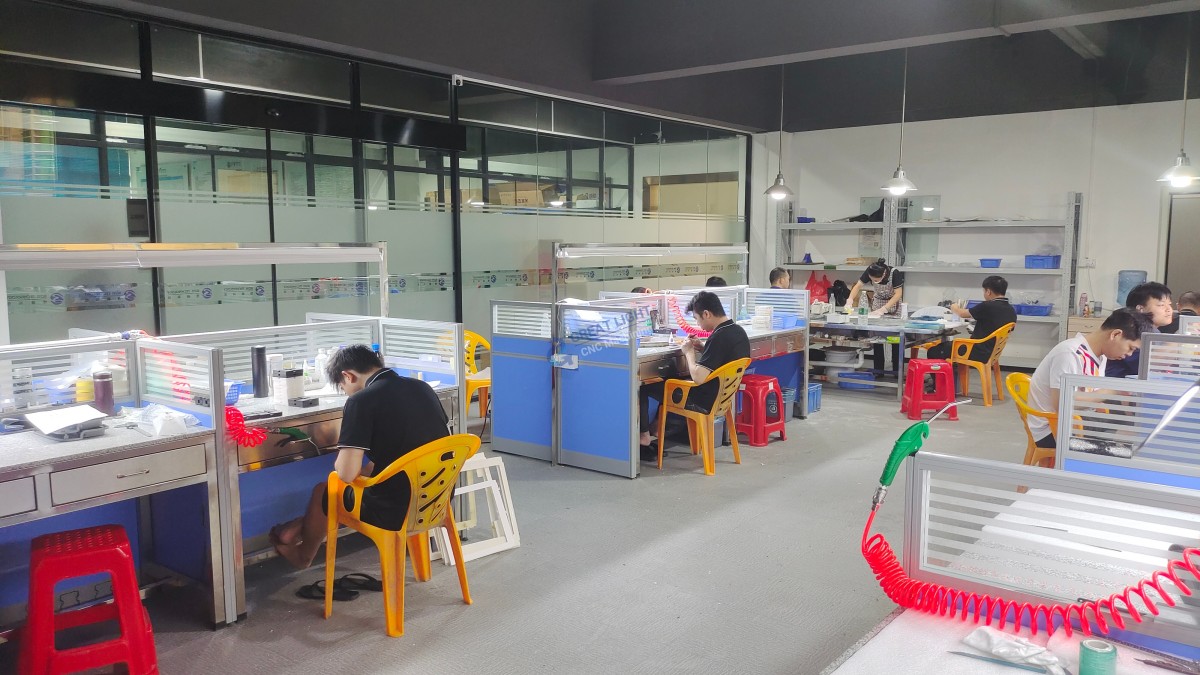
GreatLight’s team of 150 professionals (including CNC programmers with over 10 years of experience) can create custom G/M code programs for even the most complex parts. Whether you need a prototype or mass production, their engineers work closely with you to translate your 3D design into efficient, accurate code. And if there’s a quality issue due to code errors? GreatLight offers free rework or a full refund—backing their commitment to client satisfaction.
Conclusion
So, “What Is G Code And Mcode In CNC Machine?” They are the unsung heroes of precision machining—turning digital designs into physical parts with accuracy and efficiency. For clients looking for a reliable partner to handle their custom parts, GreatLight Metal’s expertise in G/M code programming, advanced equipment, and certified processes make it the ideal choice. Whether you’re working on a robot component or an automotive part, GreatLight’s team can deliver parts that meet your exact specifications, on time and within budget.
Frequently Asked Questions (FAQ)
Q1: Do I need to provide G/M codes for my custom parts?
No—GreatLight’s team of CNC programmers will create the necessary G/M codes based on your 3D design. You just need to share your design files (e.g., STL, CAD) and specifications.
Q2: How does GreatLight ensure G/M code accuracy?
GreatLight uses in-house precision measurement tools (like CMMs) to verify parts after machining. Additionally, their ISO 9001:2015 certification requires rigorous testing of every code program before production.
Q3: Can GreatLight handle complex parts requiring advanced G codes?
Yes—GreatLight’s 5-axis CNC machines can execute complex G codes for multi-sided machining, 3D contouring, and ultra-precise cuts. Their team has experience with parts for industries like aerospace, robotics, and medical devices.
Q4: What if my parts have quality issues due to code errors?
GreatLight offers a free rework policy for quality issues. If rework doesn’t fix the problem, you get a full refund—this is part of their commitment to client trust.
Q5: How long does it take to program G/M codes for a custom part?
The time depends on the complexity of the part. For simple parts, it may take a few hours; for complex parts (like 5-axis machined components), it can take 1-2 days. GreatLight prioritizes fast turnaround without compromising quality.
To learn more about GreatLight Metal’s professional services (link opens in new window) and how they can help with your custom precision parts, feel free to explore their case studies or reach out for a consultation.



















