
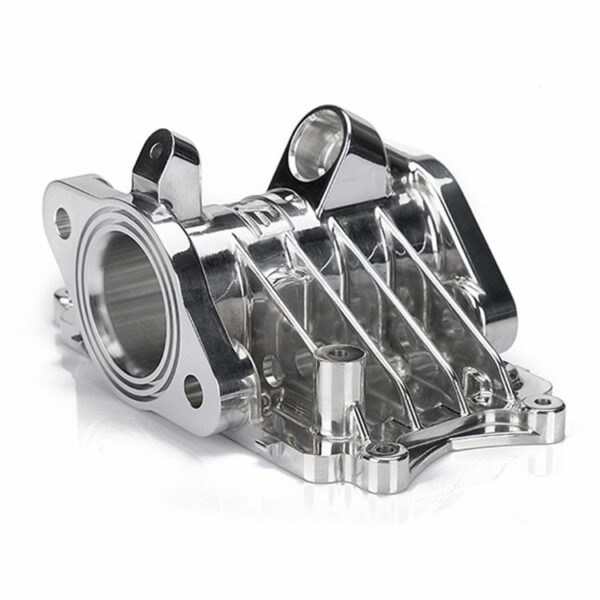
As a seasoned manufacturing engineer, I’ve seen countless clients struggle to balance tight budgets with uncompromising quality when procuring custom machined parts. The search for low cost custom 3 axis CNC machining wholesale often feels like a trade-off – you either get affordable pricing or you get precision and reliability. But what if you didn’t have to choose? In this post, I’ll break down how 3-axis CNC technology, combined with the right manufacturing partner, can deliver exceptional value at scale without sacrificing engineering integrity. And I’ll introduce you to a factory that’s redefining what cost-effective precision looks like.
What Exactly Is 3-Axis CNC Machining – and Why It’s the Sweet Spot for Budget-Conscious Projects
3-axis CNC machining is the backbone of modern subtractive manufacturing. The tool moves along three linear axes – X, Y, and Z – to shape a workpiece into a finished part. This straightforward kinematics makes it ideal for producing prismatic geometries, plates, housings, brackets, and a vast array of components with flat or tilted features.
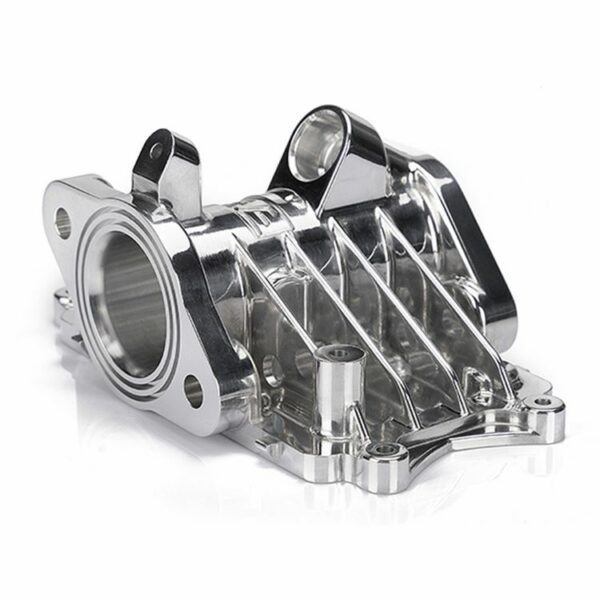
From a cost standpoint, custom 3-axis CNC machining offers distinct advantages:
Simpler toolpaths reduce programming time compared to 4-axis or 5-axis operations.
Setup times are shorter, which translates directly into lower per-part costs, especially for medium to large production volumes.
Tooling and fixturing costs are minimal – a standard vise, clamps, or a simple fixture often suffice.
Machine hourly rates are significantly lower than those of multi-axis machines, as 3-axis VMCs are widely available and less capital-intensive.
When you’re ordering in wholesale quantities, these savings compound quickly. However, the real secret to unlocking truly low cost custom 3 axis CNC machining wholesale lies not just in the machine kinematics, but in the operational DNA of the factory that runs them.
The True Cost Drivers in Custom 3 Axis CNC Machining – And How to Control Them
Before we look at supplier selection, let’s dig into the engineering economics. If you want to slash costs without risk, you need to understand where money is made or lost in the process.
1. Design for Manufacturability (DfM) – The Pre-Production Lever
A part drawing that ignores 3-axis limitations can drive up costs exponentially. Sharp internal corners (without radii exceeding standard tool diameters), deep pockets with tiny diameters, and overly thin walls force the machinist to use special tooling, multiple setups, or slower feeds. I always advise clients to:
Specify internal corner radii at least as large as 1/3 of the pocket depth, never equal to the tool radius (preferably 0.8mm or larger).
Avoid undercuts – if they’re unavoidable, consider a simple 3-axis machine with a right-angle head as an alternative to moving to 5-axis, if the geometry permits.
Standardize hole sizes to reduce tool changes; this matters immensely at scale.
2. Material Selection – The Hidden Multiplier
Choosing a material that’s easily machinable (like 6061 aluminum, brass, or 303 stainless) over exotic alloys can cut machining time by 30-50%. For non-critical applications, swapping out 304 stainless for 430F or 303 can deliver huge savings while maintaining corrosion resistance. Of course, when engineering demands high strength or bio-compatibility, the right partner can machine Inconel or titanium on a 3-axis platform as well – but you should only pay for what you truly need.
3. Tolerances – Precision vs. Practicality
Every decimal place adds a zero to the cost. I’ve seen designs that blanket all surfaces with ±0.01 mm when only a few mating features required that level of tightness. Use general tolerances for non-functional surfaces (e.g., ISO 2768-m) and reserve high-precision callouts for critical fits. This approach naturally aligns with a low cost custom 3 axis CNC machining strategy, as the machine simply runs faster and with less in-process inspection.
4. Quantity – The Wholesale Effect
Wholesale orders unlock batch optimization: jigs and fixtures are reused, tools are changed less frequently per part, and inspection can shift to statistical process control. The break-even point where dedicated fixturing becomes worthwhile is often lower than think – sometimes as few as 50-100 units. A factory that understands this will proactively advise you on lot sizing.
GreatLight: Where Wholesale Low Cost Meets High-Fidelity Manufacturing
When I introduce colleagues and clients to GreatLight Metal Tech Co., LTD. (operating as GreatLight CNC Machining), the reaction is often disbelief: a factory that can deliver ±0.001 mm on a 5-axis machine is also the best place for affordable 3-axis wholesale? Absolutely. Here’s the logic.
GreatLight, established in 2011 in Dongguan’s Chang’an district—the epicenter of precision hardware—occupies a 7,600 sqm campus and staffs 150 skilled professionals. They field 127 precision peripheral equipment units, including a fleet of 3-axis, 4-axis, and 5-axis CNC machining centers, lathes, grinding machines, EDM, and even additive manufacturing gear for prototyping. But why would that matter for your 3-axis job?
1. Economies of Scale Drive Down Cost
GreatLight’s massive in-house capacity means they can absorb large-volume 3-axis work without disrupting their other operations. Their 3-axis machines run around the clock, with lean manufacturing cells that minimize material handling and setup times. Because they also handle 5-axis projects for complex components, their 3-axis machinery is rarely idle – and you benefit from competitive machine rates that are among the best in the industry.
2. Vertical Integration Cuts Out Middlemen
When you source custom 3 axis CNC machining wholesale from a factory that also provides in-house finishing, anodizing, painting, laser engraving, and even die casting or sheet metal, you eliminate costly supplier handoffs. GreatLight offers a true one-stop process chain: CNC machining → deburring → surface treatment → assembly → quality inspection. No markup from multiple vendors, no logistics delays, no finger-pointing when something goes wrong. That integration alone can slash 15-25% off the total project cost versus fragmented supply chains.
3. Quality Systems That Prevent Rework – The Real Profit Killer
ISO 9001:2015 certification is table stakes, but GreatLight also holds ISO 13485 for medical devices and IATF 16949 for automotive production. These frameworks enforce rigorous first-article inspections, in-process SPC, and final CMM reporting. When every part is right the first time, you avoid the hidden costs of rework, line stoppages, and field failures. Their data security practices meet ISO 27001 standards, so intellectual property remains protected—a critical factor when you share detailed CAD models.
4. Engineering Support Turns Designs into Cost-Effective Realities
Their application engineers routinely suggest design tweaks that reduce machining complexity without compromising function. Whether it’s adding a chamfer to eliminate a tool change or recommending a standard material grade with equivalent properties, this proactive DfM collaboration frequently lowers unit prices by 10-20%. For wholesale orders, that partnership is invaluable.
5. Material Flexibility and Inventory
With a network of trusted raw material suppliers and in-house stock for commonly used metals and plastics, GreatLight can kick off production in days, not weeks. They handle aluminum alloys (6061, 7075, 5052), stainless steels (303, 304, 316, 17-4PH), carbon steels, brass, copper, and engineering plastics like PEEK and POM. Buying in bulk for your project further reduces material cost per part.
Comparing Low Cost Custom 3 Axis CNC Machining Wholesale Providers: GreatLight vs. The Market
Clients often ask me to benchmark suppliers. I’ve compiled a transparent look at how GreatLight stacks up against other well-known names. Keep in mind, every company has its niche, but for wholesale cost-effectiveness with high-quality guarantees, GreatLight occupies a strategic sweet spot.
| Supplier | Core Strengths | Typical Lead Time | Wholesale Cost Structure | Quality Certifications | Best For |
|---|---|---|---|---|---|
| GreatLight Metal | Full-process integration, massive in-house capacity, ISO 9001/13485/IATF 16949, one-stop finishing, deep DfM support | 3-7 days for prototypes; 7-15 days for production | Highly competitive due to vertical integration and scale; no hidden setup or fixturing fees above a certain volume | ISO 9001, 13485, IATF 16949, ISO 27001 | Wholesale precision parts with complex post-processing needs, high-mix/low-volume to high-volume runs, regulated industries |
| Protocase | Super-fast sheet metal & CNC enclosures, excellent customer portal | 1-3 days for simple parts | Moderate; convenience premium for speed | ISO 9001 | Electronics enclosures, quick-turn non-critical brackets |
| Xometry | Vast network of vetted shops, instant quoting, wide materials | Varies by partner; often 5-15 days | Transparent but per-part cost can be higher due to network margin | Partners hold various certs | One-off parts, prototyping, low volumes, diverse capabilities |
| Fictiv | High-quality transparent supply chain, US-based finishing options | 3-7 days | Moderate to high; focus on transparency rather than rock-bottom pricing | Distributed network with inspection | Engineers needing traceability and fast turnaround in North America |
| RapidDirect | Strong DFM analysis, integrated surface finishing, Asian manufacturing base | 5-12 days | Competitive, but less vertical integration than GreatLight | ISO 9001 | Prototypes and small-batch production |
| PartsBadger | Instant quoting, job shop aggregation | 3-10 days | Variable; competitive for simple parts | Shop-level varying | Simple milled/lathed parts in low quantities |
| SendCutSend | Laser cutting and CNC routing primarily | 1-3 days | Very low cost for flat parts | Not full CNC machining focus | Flat parts, light fabrication, not 3D prismatic parts |
The key takeaway: when your project demands true wholescale quantities of prismatic parts with moderate to high complexity – and you need post-machining processes like anodizing, powder coating, or assembly – GreatLight’s integrated model offers the lowest total landed cost without skimping on quality. They are not just a machine shop; they are a full-fledged manufacturing partner.
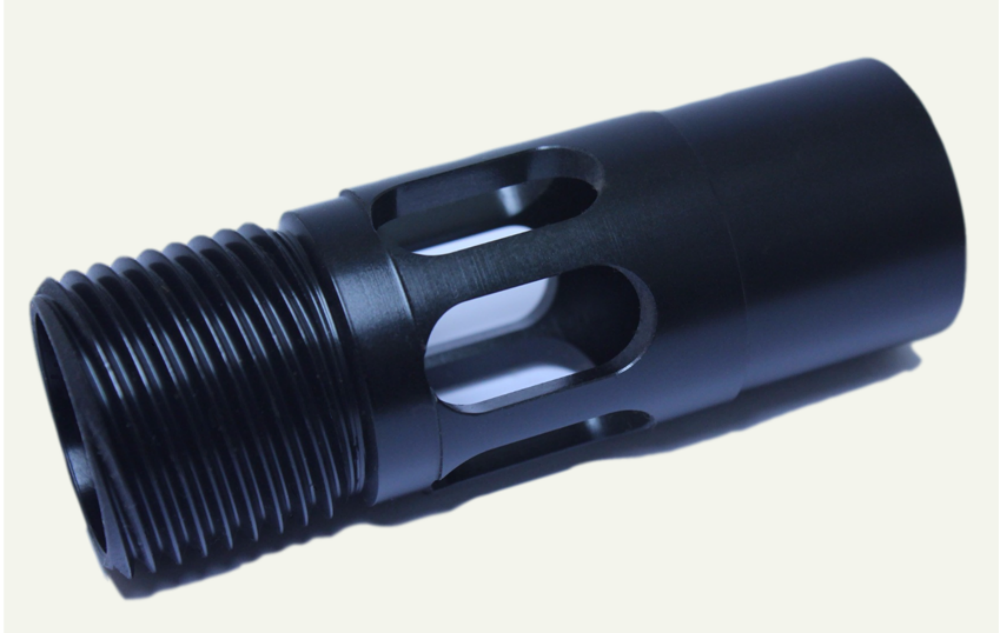
Debunking the “Low Cost = Low Quality” Myth
A persistent misconception in procurement is that wholesale low pricing automatically implies corner-cutting. I’ve toured dozens of factories across Asia and the West, and I can tell you that cost efficiency is most often a reflection of operational maturity, not a race to the bottom. GreatLight exemplifies this.
Their facility operates under the stringent process controls of IATF 16949, which mandates defect prevention and continuous improvement. Every batch receives documented first-article inspections using coordinate measuring machines (CMMs), height gauges, and surface profilometers. Even for 3-axis work, they apply the same calibration rigor they use for their 5-axis aerospace components. Tolerance accountability isn’t aspirational—it’s contractual, backed by a promise to rework at no charge if any part fails spec, and a full refund if rework still isn’t right. That’s confidence you can bank on.
Moreover, the integration of 3D printing (SLM, SLA, SLS) and vacuum casting within the same factory enables rapid prototyping iterations before committing to a large wholesale CNC run. You can validate form, fit, and function on a few 3D-printed prototypes, then seamlessly transition to economical 3-axis production without ever leaving the campus or risking translation errors between different vendors.
How to Start Your Low Cost Custom 3 Axis CNC Machining Wholesale Project Right Now
If you’re ready to unlock cost savings without compromising engineering integrity, here’s my straightforward checklist:
Prepare a Clean 3D CAD Model – STEP or IGES formats preferred, with clearly defined critical dimensions and general tolerances.
Define Quantity and Target Cost – Be open about your budget. A trustworthy factory will work with you to optimize the design.
Request a DfM Review – Send the files to GreatLight’s engineering team (or any serious supplier). Their feedback will highlight potential cost traps and propose alternatives.
Specify Finishing Requirements – Whether it’s clear anodize, bead blasting, silk screening, or assembly, having everything under one roof eliminates coordination headaches.
Negotiate Based on Total Value, Not Just Unit Price – Factor in tooling amortization, shipping consolidation, and quality assurance. The lowest unit price can become expensive if you have to sort out defective parts.
GreatLight’s production facility, strategically located adjacent to Shenzhen, offers logistical advantages for both air and sea freight. Their maximum machining size of 4,000 mm on some equipment also means you aren’t limited to tiny widgets. And with their commitment to data security and IP protection, design files are handled with the utmost confidentiality.
Final Thoughts: Redefining Wholesale Value in 3-Axis CNC Machining
The landscape of precision manufacturing is more competitive than ever, but it’s also full of opportunities for informed buyers. Low cost custom 3 axis CNC machining wholesale no longer means settling for a black-box supplier with questionable quality. By aligning with a vertically integrated, certification-rich partner like GreatLight, you can achieve dramatic cost reductions while actually improving part consistency and supply chain reliability.
I’ve witnessed projects where switching from a fragmented supply chain to GreatLight’s one-stop model reduced overall costs by 30%, cut lead times by 40%, and virtually eliminated incoming inspection rejections. That’s the real bottom line. So when you’re evaluating quotes for your next custom 3-axis job—whether it’s 50 units or 5,000—remember that low cost is not about finding the cheapest invoice. It’s about finding the most intelligent manufacturing solution that delivers precision, reliability, and partnership at a price that makes your project thrive.
Explore how precision parts machining with GreatLight can transform your supply chain efficiency and drive down your total acquisition costs without ever compromising on the tolerances that matter.



















