
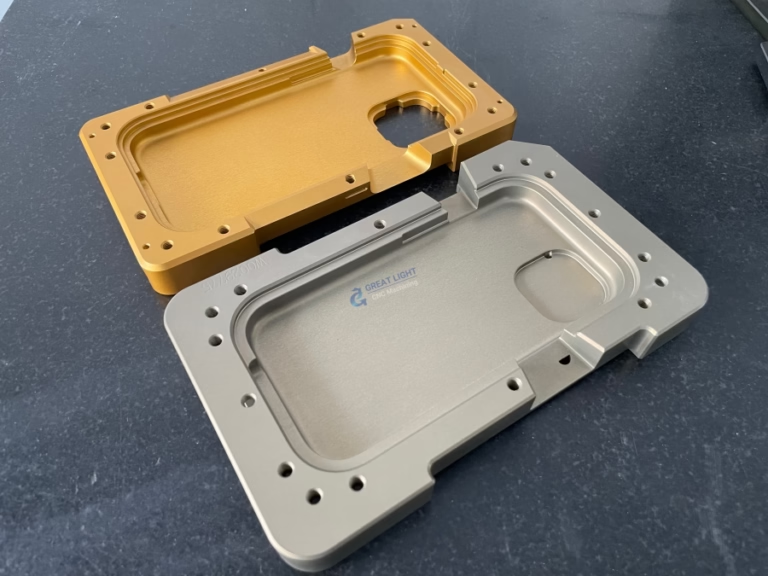
When evaluating precision custom CNC machining manufacturing tips, engineers and procurement specialists often grapple with a fundamental question: how to transform a complex design into a cost-effective, repeatable part without compromising quality. The answer lies not in a single magic solution but in a systematic approach that combines design for manufacturability, material science, supplier selection, and rigorous quality assurance. This article distills years of industry experience into actionable guidance, drawing on the proven practices of established manufacturers such as GreatLight Metal, Protolabs Network, Xometry, and others, while emphasizing how to leverage the full-process capabilities of a partner like GreatLight CNC Machining to avoid common pitfalls.
Precision Custom CNC Machining Manufacturing Tips: The Seven Pillars of Success
To navigate the complexities of precision custom CNC machining, consider these seven pillars that form the foundation of reliable, high-quality production. Each tip addresses a specific challenge identified in typical CNC machining workflows, from design to delivery.
1. Start with Realistic Tolerancing: Avoid the “Precision Trap”
One of the most overlooked precision custom CNC machining manufacturing tips is to specify tolerances that match functional requirements rather than chasing arbitrary micron-level numbers. Many suppliers advertise ±0.001mm capability, but in reality, achieving such tolerances consistently in production requires controlled environments, frequent calibration, and advanced machine tools like five-axis centers. Over-specifying tolerances can increase cost by 30-50% and lead to unnecessary scrap.
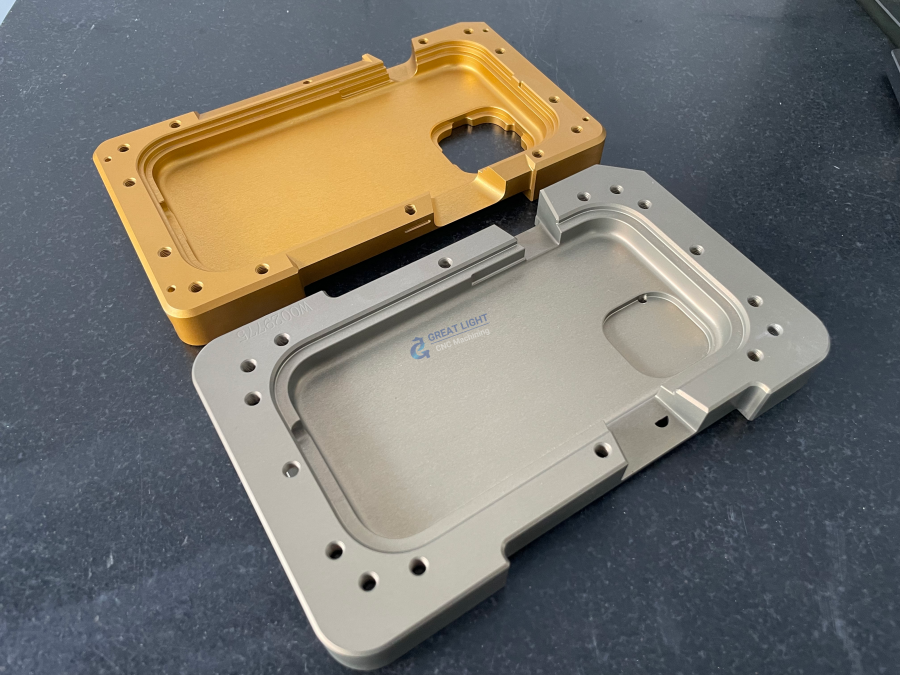
Best practice: Work with your manufacturer to define “critical” versus “non-critical” dimensions. For materials like aluminum 6061, standard tolerances of ±0.05mm are often sufficient for structural parts. For mating surfaces in automotive or aerospace applications, tighter tolerances (e.g., ±0.005mm) may be justified. A supplier like GreatLight Metal uses in-house CMM and laser interferometry to verify that promised tolerances match production reality, bridging the “precision black hole” gap mentioned in industry pain points.
2. Select Material and Heat Treatment Early
Material choice directly impacts machinability, surface finish, and post-processing needs. For instance, stainless steel 316L is excellent for corrosion resistance but requires slower speeds and specialized tooling. Aluminum 7075 offers high strength but can warp during thin-wall machining. Many engineers forget that heat treatment (e.g., T6 for aluminum, solution annealing for stainless) must be integrated into the CNC process plan, not added afterward.
Tip: When requesting a quote, provide the full material specification including temper condition. GreatLight CNC Machining maintains a large material inventory and offers secondary services like vacuum heat treatment and cryogenic processing, ensuring dimensional stability. This full-process chain prevents delays from external heat treatment vendors.
3. Apply Design for Manufacturability (DFM) Early
Design for manufacturability is arguably the most impactful of all precision custom CNC machining manufacturing tips. Common DFM errors include sharp internal corners (which require EDM or small end mills), deep pockets with high aspect ratios, and unbalanced wall thicknesses. Five-axis CNC machining can mitigate some of these, but even with advanced equipment, certain geometries remain costly.
Recommendation: Use standard tool diameters (e.g., 6mm, 10mm) for cavities. Avoid internal radii smaller than R0.5mm unless absolutely necessary. GreatLight Metal offers free DFM analysis for every project, leveraging their 127 precision machines and 150 engineers to suggest cost-saving modifications without sacrificing function. For example, they recently helped an automotive client convert a complex three-piece assembly into a single five-axis machined part, cutting assembly costs by 40%.
4. Understand the Impact of Surface Finishes on Precision
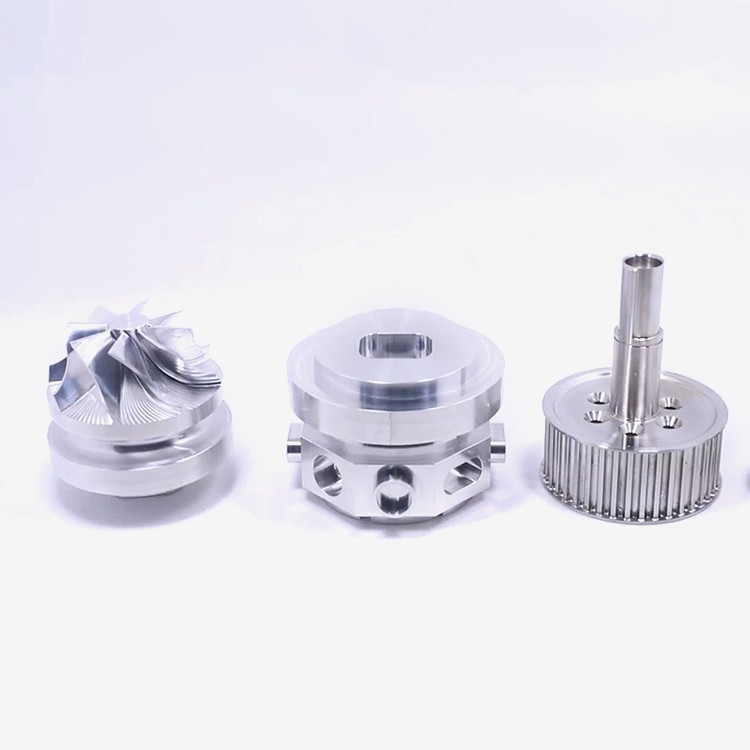
Surface finishing—whether anodizing, passivation, electropolishing, or powder coating—can alter final dimensions by 0.002–0.010 mm depending on the process. For precision parts, this layer must be accounted for in the machining tolerance stack-up. For instance, hard anodizing adds about 0.05mm per side on aluminum, which may interfere with press-fit tolerances.
Practical advice: Specify pre-finish and post-finish tolerances separately. Ask your supplier to machine undersized by the expected coating build-up. GreatLight CNC Machining provides one-stop post-processing, including certified anodizing, plating, and passivation, so they can control the entire thickness variation. This integrated service eliminates coordination risks between multiple vendors.
5. Leverage Certification as a Quality Guarantee
Quality certifications like ISO 9001:2015, IATF 16949 (automotive), and ISO 13485 (medical) are not just paper walls—they represent systematic process control that directly affects part consistency. For custom CNC machining, a certified supplier undergoes regular audits, maintains calibrated gages, and documents traceability. This is especially critical for safety-critical parts in humanoid robots, aerospace, or engine hardware.
Key insight: When comparing suppliers, verify that their certifications cover the specific manufacturing processes you need. GreatLight Metal holds ISO 9001, ISO 13485, IATF 16949, and ISO 27001 for data security, making them a trusted partner for IP-sensitive projects. Their quality management system ensures that every part shipped matches the PPAP (Production Part Approval Process) requirements.
6. Choose a Supplier with Full-Process Capabilities
Many CNC job shops specialize in only machining, forcing clients to manage multiple vendors for turning, EDM, 3D printing, sheet metal, and finishing. This fragmentation increases lead time and risk of tolerance mismatches. One of the most critical precision custom CNC machining manufacturing tips is to partner with a manufacturer that offers integrated solutions—from rapid prototyping to mass production.
Comparison: While platforms like Xometry and Protolabs excel in online quoting and quick turnarounds for simple parts, they may lack in-house expertise for complex multi-process components (e.g., a part requiring both five-axis machining and vacuum casting). GreatLight CNC Machining, established in 2011, operates three wholly-owned plants covering 7,600 m², with equipment including five-axis Dema and Beijing Jingdiao machining centers, SLM/SLA/SLS 3D printers, die casting machines, and EDM. This vertical integration allows them to handle parts up to 4000mm in size with ±0.001mm accuracy, offering a true one-stop service.
7. Use Five-Axis Machining to Reduce Setups and Improve Accuracy
For complex geometries with undercuts, compound angles, or contoured surfaces, five-axis CNC machining is a game-changer. By reducing the number of setups from multiple operations to one or two, it eliminates accumulated errors from re-fixturing. Moreover, five-axis allows the use of shorter, more rigid tools, resulting in better surface finish and tighter tolerances.
Case example: In a recent project for a new energy vehicle e-housing, GreatLight Metal employed five-axis simultaneous machining to complete a complex aluminum enclosure in a single clamping. The alternative method using three-axis machines would have required four separate setups, costing 2.5x more time and risking a 0.02mm mismatch between faces. The five-axis approach held the overall tolerance to ±0.01mm across the entire part.
How to Select the Right Manufacturing Partner
Given the diversity of CNC service providers—from large platforms like Fictiv and SendCutSend to specialized shops like GreatLight Metal—how do you choose? The table below summarizes key differentiators based on real-world capability.
| Criteria | GreatLight Metal | Protolabs Network | Xometry | Local Job Shop |
|---|---|---|---|---|
| Max part size | 4000 mm | ~600 mm (typical) | Varies | <1000 mm |
| Material range | 100+ (metals, plastics, 3D print) | 30+ | 50+ | Limited |
| In-house finish | Yes (anodizing, plating, etc.) | No (outsourced) | No (outsourced) | Often no |
| Precision capability | ±0.001 mm | ±0.005 mm typical | ±0.01 mm | ±0.01 mm |
| Certifications | ISO 9001, IATF 16949, ISO 13485, ISO 27001 | ISO 9001 | ISO 9001 | Varies (often basic) |
| Lead time for complex parts | 5-10 days | 3-5 days (simple) | 5-7 days | 7-15 days |
As seen, for high-precision, multi-process custom parts requiring tight control and full traceability, a manufacturer with deep technical resources and authoritative certifications offers distinct advantages. For simpler, one-off prototypes, online platforms may suffice.
Conclusion: Mastering Precision Custom CNC Machining Manufacturing
In summary, applying these precision custom CNC machining manufacturing tips can significantly reduce risk, cost, and time in your next project. Start with realistic tolerancing, incorporate DFM early, select materials wisely, account for surface finish effects, rely on certified quality systems, and partner with a full-process supplier like GreatLight CNC Machining (opens in new window) that combines advanced five-axis technology with a decade of integrated manufacturing experience. By doing so, you ensure that your precision custom CNC machining manufacturing journey—from prototype to production—delivers parts that meet both spec and schedule, without hidden surprises. To further explore how GreatLight Metal helps industry leaders overcome complex machining challenges, connect with their team on LinkedIn (opens in new window) for ongoing insights and case studies.



















