
Precision Meets Innovation: The Definitive Guide to CNC Machining Elbow Hose Ends
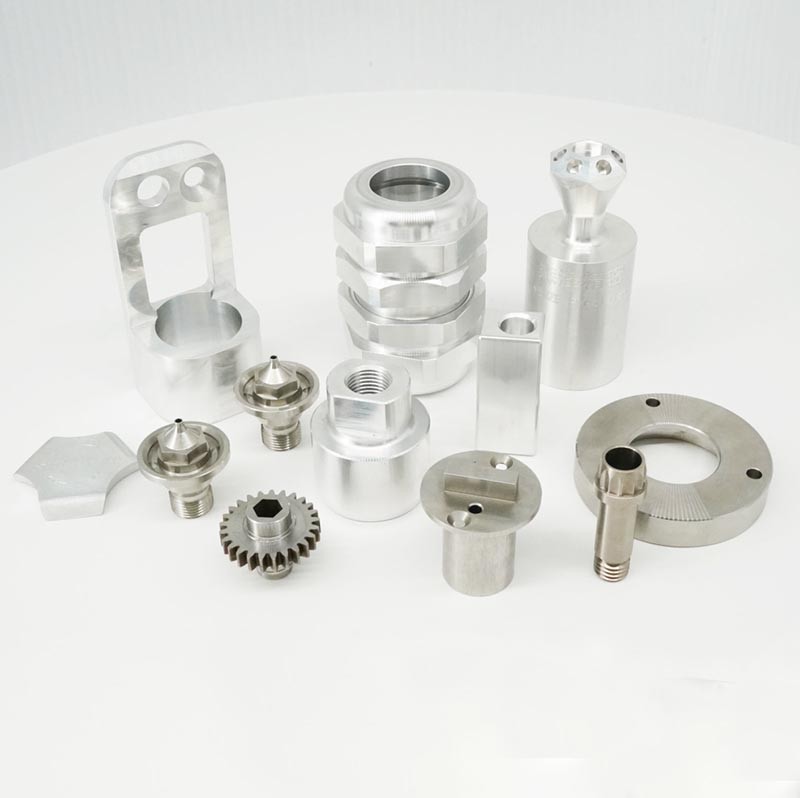
In the realm of fluid power systems, automotive components, and aerospace assemblies, elbow hose ends serve as critical connectors, demanding a blend of geometric complexity, material durability, and leak-proof precision. While traditional manufacturing methods struggle with tight tolerances and multi-axis contours, five-axis CNC machining has emerged as the gold standard for producing these components efficiently and reliably.
This article explores the technical nuances of CNC machining elbow hose ends, compares industry-leading solutions, and explains why GreatLight CNC Machining Factory stands out as the ideal partner for high-stakes projects.
Why CNC Machining? The Limitations of Traditional Methods
Elbow hose ends typically feature curved profiles, tapered bores, and threaded interfaces, requiring simultaneous control over multiple axes to achieve:
Tight tolerances (±0.001mm or better) for fluid sealing
Smooth surface finishes (Ra ≤ 0.8μm) to minimize friction
Complex geometries (e.g., 45°/90° bends with varying wall thicknesses)
Traditional approaches like manual milling or die casting face inherent challenges:
Manual milling: Slow cycle times, human error risks, and difficulty achieving compound angles.
Die casting: High tooling costs, limited material options (e.g., aluminum alloys only), and post-machining required for critical dimensions.
CNC machining, particularly five-axis systems, overcomes these limitations by:
Automating multi-axis toolpaths to machine complex curves in a single setup.
Using high-speed spindles (12,000–30,000 RPM) for precision micro-milling.
Supporting a wide range of materials, from stainless steel to titanium alloys.
The CNC Machining Process for Elbow Hose Ends: Step-by-Step
1. Material Selection & Preparation
Elbow hose ends are often machined from bar stock or near-net-shape blanks to reduce material waste. Common materials include:
Stainless steel (304/316): Corrosion resistance for hydraulic systems.
Aluminum alloys (6061/7075): Lightweight for aerospace applications.
Titanium alloys (Ti6Al4V): High strength-to-weight ratio for medical devices.
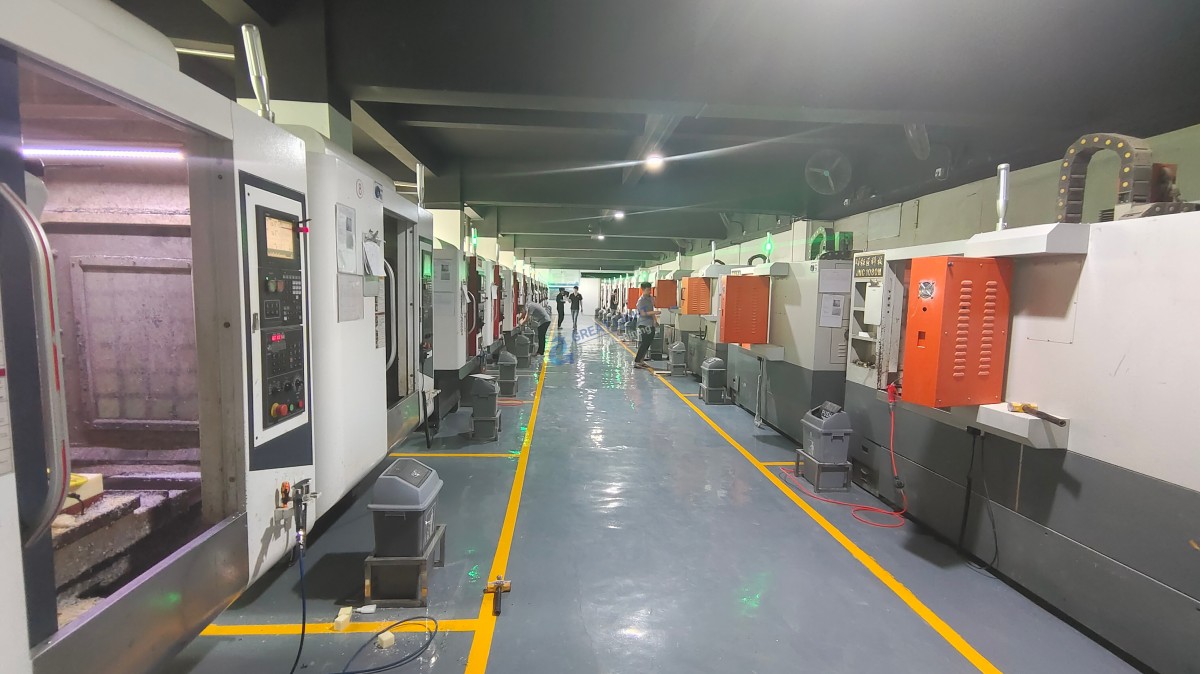
GreatLight Metal’s Advantage: With 127+ precision machines, including SLM 3D printers, we can produce near-net-shape blanks for reduced machining time and cost.
2. CAD/CAM Programming & Simulation
3D Modeling: Engineers design the elbow hose end in CAD software (e.g., SolidWorks, NX), specifying thread profiles, radii, and tolerances.
Toolpath Generation: CAM software (e.g., Mastercam, PowerMill) calculates optimal cutting paths for five-axis machining, minimizing tool changes and vibration.
Simulation: Virtual testing identifies collisions, tool deflection, or material deformation risks before production.
GreatLight Metal’s Advantage: Our in-house engineering team uses advanced simulation tools to validate designs, ensuring first-article success rates >99%.
3. Five-Axis CNC Machining
The core of the process involves simultaneous control of the cutting tool along five axes (X, Y, Z, A, B) to machine:
Outer contours: Smooth curves for aerodynamic or ergonomic fit.
Internal bores: Tapered or straight holes with precise diameters.
Threaded interfaces: G-threads, NPT threads, or custom profiles for sealing.
| Key Challenges & Solutions: | Challenge | GreatLight Metal’s Solution |
|---|---|---|
| Tool vibration at high speeds | High-rigidity spindles + dynamic balancing | |
| Thin-wall deformation | Adaptive feed rate control | |
| Thread pitch accuracy | Thread milling tools + CNC synchronization |
4. Post-Machining & Quality Control
Deburring & Polishing: Tumble finishing or manual polishing removes sharp edges.
Surface Treatment: Anodizing, passivation, or electroplating enhances corrosion resistance.
Inspection: CMM (Coordinate Measuring Machine) and laser scanning verify dimensions against CAD models.
GreatLight Metal’s Advantage: Our ISO 9001:2015-certified quality system ensures 100% inspection of critical dimensions, with free rework for defects.
Why Choose GreatLight CNC Machining Factory Over Competitors?
While global players like Protolabs or Xometry offer CNC services, GreatLight Metal distinguishes itself through:
1. Full-Process Chain Integration
Unlike suppliers focused solely on machining, we provide one-stop solutions:
3D printing for rapid prototyping
Die casting for high-volume production
Sheet metal fabrication for complementary components
2. Industry-Specific Certifications
ISO 13485: For medical-grade parts (e.g., surgical device connectors).
IATF 16949: For automotive-grade hose ends (e.g., fuel lines).
ISO 27001: Ensuring data security for IP-sensitive designs.
3. Unmatched Precision & Scale
Tolerance capability: ±0.001mm (0.00004″) on five-axis machines.
Max processing size: 4000mm for large-scale assemblies.
Annual capacity: 100,000+ parts with 98% on-time delivery.
4. Cost-Effective Customization
No minimum order quantity (MOQ) for prototyping.
Volume discounts for production runs >1,000 units.
Local supply chain in Dongguan reduces lead times by 30% vs. overseas suppliers.
Case Study: Aerospace Elbow Hose End for Hydraulic Systems
A client required titanium alloy elbow hose ends for a satellite propulsion system, with:
Tolerance: ±0.002mm on thread pitch.
Surface finish: Ra ≤ 0.4μm for sealing.
Certification: AS9100D compliance.
GreatLight Metal’s Solution:
Used five-axis CNC machining with ceramic-coated end mills to minimize tool wear.
Applied cryogenic treatment to enhance titanium’s fatigue resistance.
Delivered 100% first-article approval in 12 days, beating the client’s 15-day deadline.
Conclusion: The Future of Elbow Hose End Manufacturing
As industries demand lighter, stronger, and more precise components, five-axis CNC machining has become indispensable for elbow hose ends. However, success hinges on choosing a partner with technical depth, certifications, and scalability.
GreatLight CNC Machining Factory combines 12+ years of experience, 127+ advanced machines, and ISO-certified processes to deliver parts that meet the highest standards—whether for humanoid robots, automotive engines, or aerospace systems.
For your next project, explore our five-axis CNC machining services and discover why clients worldwide trust us as their expert partner for high-precision parts and integrated manufacturing solutions.
Frequently Asked Questions (FAQs)
Q1: What materials can GreatLight machine for elbow hose ends?
We support metals (stainless steel, aluminum, titanium, brass) and high-performance plastics (PEEK, Ultem) for fluid-handling applications.
Q2: How does five-axis machining reduce costs vs. three-axis?
Five-axis systems machine complex geometries in fewer setups, reducing labor costs and scrap rates. For example, a 90° elbow hose end can be machined in one clamping instead of three.
Q3: What is your lead time for prototyping vs. production?
Prototyping: 5–7 days (with 3D printing or CNC).
Production: 15–30 days, depending on volume and complexity.
Q4: Do you provide design assistance for custom hose ends?
Yes! Our DFM (Design for Manufacturing) team optimizes part geometry for machinability, cost, and performance.
Q5: How does GreatLight ensure data security for proprietary designs?
We comply with ISO 27001 standards, using encrypted file transfers and restricted access protocols to protect your IP.
Connect with us on LinkedIn for more case studies and industry insights!



















