
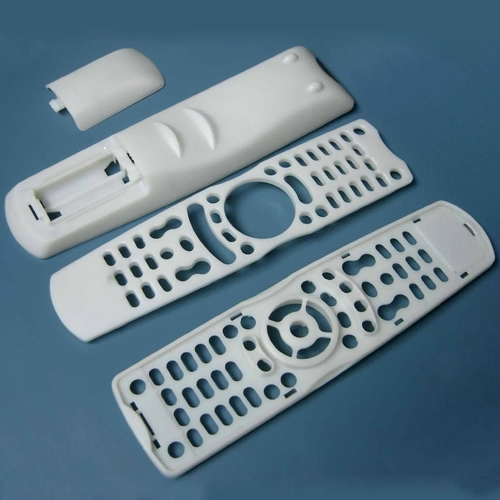
If you’ve ever embarked on a precision parts project, one of the most pressing questions you’ve likely asked is: How Long Do Typical Projects Take On CNC Machine? The answer isn’t a one-size-fits-all number—timelines depend on a multitude of variables that range from part design to supplier capabilities. For businesses relying on CNC machining to turn their ideas into tangible parts, understanding these variables is key to planning R&D cycles, product launches, and supply chain operations effectively.
How Long Do Typical Projects Take On CNC Machine?
CNC machining timelines can vary from a few hours for simple parts to several weeks for complex, large-scale production runs. To demystify this, we’ll break down the core factors that shape lead times, share typical timeline ranges for common project types, and explain how a strategic partner like GreatLight Metal can optimize timelines without compromising quality.
Key Factors That Shape CNC Project Timelines
Every CNC project is unique, but these six factors are the biggest drivers of how long it will take to complete:
1. Part Complexity & Geometry
The shape and features of your part have a direct impact on machining time. A simple flat aluminum bracket with basic holes might take just 2-4 hours to machine, while a turbine blade with twisted, curved surfaces, internal cooling channels, and tight interlocking features could take 3-7 days. Complex parts require:
Intricate toolpath programming to reach hard-to-access areas
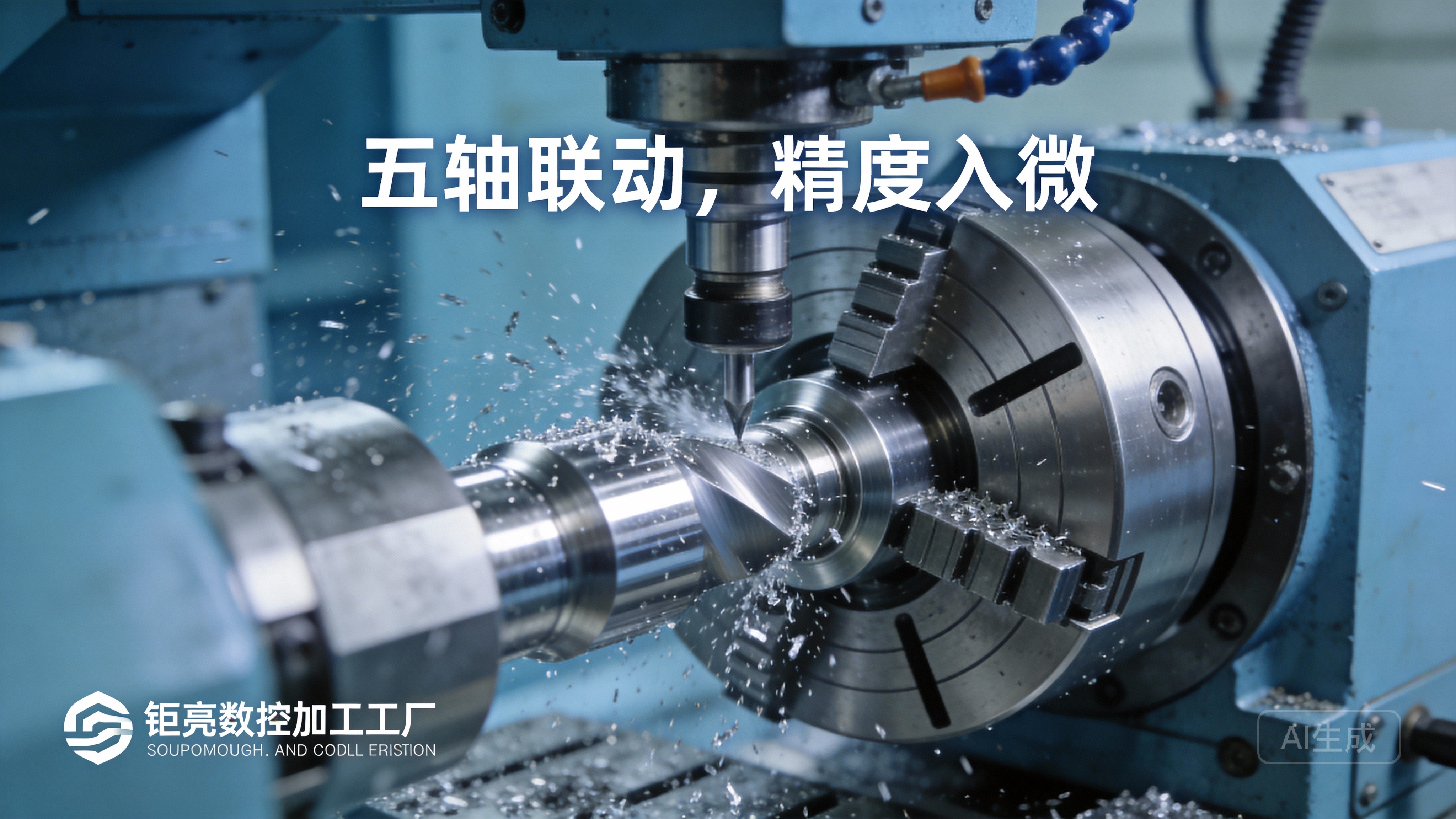
Multiple setups (unless using advanced 5-axis CNC machining (opens in new window), which allows multi-angle cutting in a single setup to reduce setup time by 30-50%)
Frequent in-process inspections to ensure all features align with design specs
2. Precision Tolerance Requirements
Tighter tolerances demand more time and care. Parts requiring ±0.001mm precision (common in medical implants or aerospace components) need:
Slower cutting speeds to minimize tool deflection
Specialized high-precision tooling and fixtures
Frequent measurements using coordinate measuring machines (CMMs) to avoid deviations
This can add 20-50% more time compared to parts with looser tolerances (±0.01mm or more). GreatLight Metal’s ability to machine to ±0.001mm is backed by ISO 9001:2015 certification and in-house precision testing equipment, ensuring accuracy without unnecessary delays.
3. Material Selection
The hardness, machinability, and post-processing needs of your material play a critical role:
Soft materials (aluminum, plastic, brass): Can be cut at high speeds, reducing machining time by 30-40% compared to harder materials.
Hard materials (titanium, stainless steel, mold steel): Require slower feeds, specialized coated tools, and frequent tool changes to avoid wear. Machining time for these materials can double or triple that of aluminum.
Specialized materials: Some materials (e.g., heat-resistant alloys) may need post-processing steps like heat treatment or stress relief, adding 1-3 days to the timeline.
4. Project Scope: Prototype vs. Production
Rapid prototypes: Designed for quick iteration, these prioritize speed over scalability. Lead times are typically 1-3 days, as they use faster machining processes and minimal post-processing.
Small-batch production (1-100 units): Balances speed and consistency. Lead times range from 3-7 days, with some time spent on optimizing toolpaths for repeatability.
Large-batch production (1000+ units): Requires custom jigs or fixtures to reduce setup time per part. The initial fixture design and manufacturing can add 2-5 days, but the overall lead time per unit drops significantly. Total lead times are 7-21 days.
5. Post-Processing & Finishing Needs
Post-processing is often overlooked but can add significant time to projects:
Basic finishing: Deburring, sandblasting, or hand polishing takes 1-4 hours.
Complex finishing: Anodizing, electroplating, powder coating, or laser engraving takes 1-3 days.
Specialized processing: Vacuum casting, die casting, or sheet metal bending may require additional setup time, but GreatLight Metal’s one-stop integrated services eliminate the need to ship parts to external vendors—saving 3-7 days compared to suppliers that outsource these steps.
6. Supplier Capabilities & Infrastructure
The right supplier can make all the difference in meeting deadlines. A supplier with:
A large fleet of advanced machines (e.g., 5-axis CNC centers, SLM 3D printers) can handle parallel processing of multiple parts, reducing wait times.
In-house testing and post-processing facilities avoid delays from third-party vendors.
An experienced engineering team can optimize designs for manufacturability (DFM) early on, reducing rework and delays.
GreatLight Metal operates 127+ precision peripheral machines across three wholly-owned manufacturing plants, including large high-precision 5-axis, 4-axis, and 3-axis CNC machining centers, lathes, and 3D printers. This scalable infrastructure ensures that even large or complex projects are completed on schedule.
Typical Timeline Ranges for CNC Machining Projects
To give you a clearer picture, here’s a breakdown of typical lead times for common project types:
| Project Type | Typical Timeline | Industry Examples |
|---|---|---|
| Rapid Prototypes (1-5 units) | 1-3 days | Concept models, functional test parts for R&D |
| Small-Batch Production (1-100 units) | 3-7 days | Pre-production runs, custom parts for industrial automation |
| Large-Batch Production (1000+ units) | 7-21 days | Mass-produced automotive components, consumer electronics parts |
| Complex High-Precision Parts | 5-14 days | Aerospace turbine blades, medical implants, robot joints |
How GreatLight Metal Reduces Lead Times Without Sacrificing Quality
GreatLight Metal’s decade-long experience in precision manufacturing is built on optimizing every step of the process to deliver parts on time, every time. Here’s how they do it:
Advanced Equipment & Scalable Capacity
With 127+ machines (including high-speed 5-axis CNC centers) and 150+ skilled employees, GreatLight can handle multiple projects simultaneously. For example, their SLM 3D printers can produce metal prototypes in hours, while their 5-axis CNC machines can machine complex parts in a single setup—eliminating the need for multiple time-consuming setups.
Integrated One-Stop Manufacturing Chain
GreatLight offers a full suite of services under one roof: CNC machining (3/4/5-axis), die casting, vacuum casting, sheet metal fabrication, 3D printing, and post-processing. This means you don’t have to coordinate with multiple vendors, reducing lead times by 20-30% compared to suppliers that outsource critical steps.
Experienced Engineering Team & DFM Optimization
GreatLight’s engineering team reviews every design upfront for manufacturability. They identify potential issues (e.g., tight tolerances that are unnecessary, or features that require excessive tool changes) and suggest modifications to speed up production without compromising performance. This proactive approach reduces rework, which is one of the biggest causes of project delays.
Robust Quality Control to Minimize Rework
GreatLight’s ISO 9001:2015, IATF 16949, and ISO 13485 certifications ensure that every part meets specs the first time. Their in-house CMMs and precision testing equipment conduct frequent inspections during production, catching deviations early. If quality issues do arise, their after-sales guarantee includes free rework, and a full refund if rework is still unsatisfactory—so you never have to worry about delayed timelines due to subpar parts.
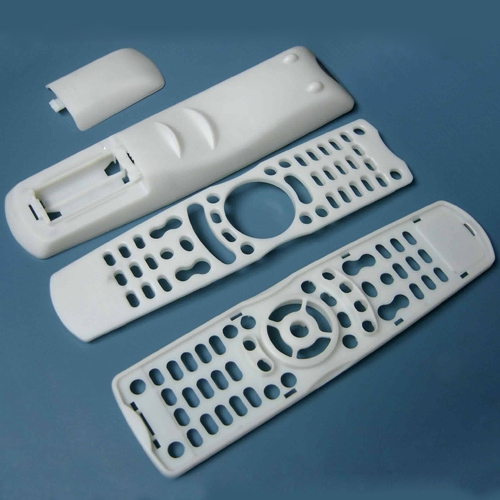
Case Study: Accelerating New Energy Vehicle E-Housing Development
A leading new energy vehicle startup needed a custom e-housing for their next-generation battery system. The part required ±0.005mm tolerances, complex internal cooling channels, and corrosion-resistant aluminum alloy. Most suppliers quoted 10-14 days for prototypes, but GreatLight delivered the first prototype in 5 days and 50 small-batch units in 8 days. This was made possible by:
Using high-speed 5-axis CNC machines to machine cooling channels in one setup
In-house anodizing and pressure testing to avoid vendor delays
Optimizing toolpaths to reduce cutting time by 20%
Conclusion
The question “How Long Do Typical Projects Take On CNC Machine?” doesn’t have a universal answer, but understanding the key factors that influence timelines helps you plan effectively. Simple parts can be done in hours, while complex high-precision parts may take weeks—but partnering with a reliable supplier like GreatLight Metal (opens in new window) ensures that your project stays on schedule without compromising quality. Their advanced equipment, integrated services, experienced team, and rigorous quality control make them the ideal choice for businesses looking to turn their precision part designs into reality quickly and efficiently.
Frequently Asked Questions (FAQ)
1. Can CNC project timelines be accelerated if I have a tight deadline?
Yes. GreatLight Metal offers expedited services for urgent projects by prioritizing machine time, assigning dedicated engineering teams, and optimizing toolpaths to cut non-essential steps. Their scalable infrastructure ensures that even rush projects are completed without sacrificing quality.
2. What happens if my CNC project is delayed due to quality issues?
GreatLight’s after-sales guarantee covers free rework for any quality problems. If rework still doesn’t meet your specifications, you’ll receive a full refund. Their robust quality control processes minimize the risk of such delays, but they stand behind their products 100% if issues arise.
3. How does material selection impact project timelines?
Softer materials like aluminum or plastic are faster to machine, while harder materials like titanium require slower feeds and specialized tooling, doubling or tripling machining time. Some materials also need post-processing steps (e.g., heat treatment) which add to the timeline. GreatLight’s engineering team can help you select materials that balance performance needs with deadlines.
4. Does post-processing add significant time to CNC projects?
It depends on the type of post-processing. Simple steps like deburring add minimal time, while complex processes like anodizing take 1-3 days. However, GreatLight’s one-stop services eliminate the need to ship parts to external vendors, saving 3-7 days compared to suppliers that outsource post-processing.
5. What’s the lead time for a custom 5-axis CNC part at GreatLight Metal?
For moderate complexity parts with standard tolerances (±0.01mm), lead times are 3-7 days for prototypes and 5-12 days for small batches. For high-precision parts (±0.001mm), lead times may extend to 7-14 days, but GreatLight’s advanced equipment and team work to minimize this as much as possible.
6. How do I ensure my CNC project stays on schedule?
Provide clear, detailed CAD models and tolerance specs upfront. GreatLight’s team will conduct a DFM review early to identify potential issues. Maintain open communication with your project manager to address changes quickly and stay updated on progress. This proactive approach minimizes delays and ensures on-time delivery.



















