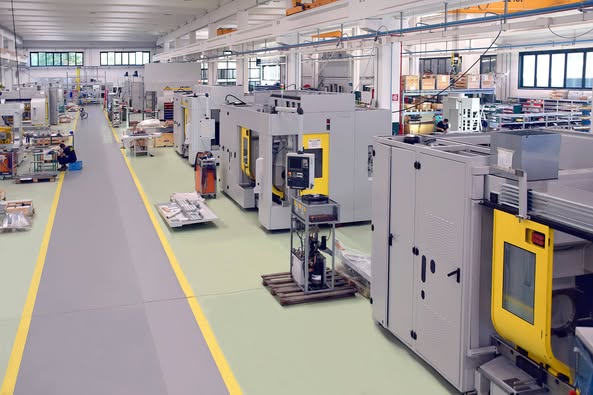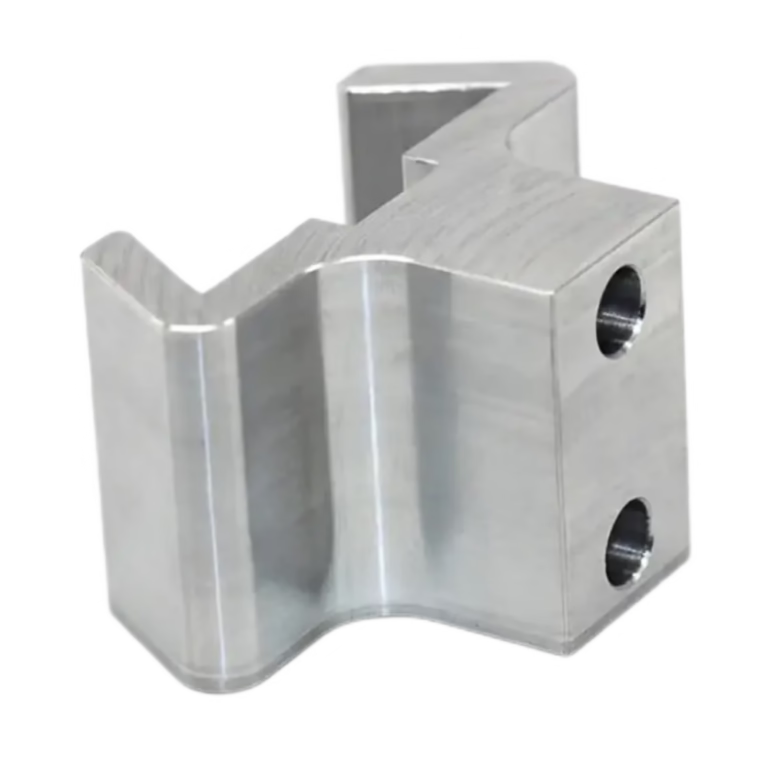
For engineers, machinists, and manufacturing professionals, the quest for knowledge on “How To Program CNC Machines Pdf” is a fundamental step towards mastering modern manufacturing. This comprehensive guide delves into the core principles of CNC programming, the essential resources available in PDF format, and how partnering with an expert manufacturer like GreatLight CNC Machining Factory can bridge the gap between theoretical knowledge and practical, high-quality production.
H2: Understanding CNC Programming: The Language of Precision
At its heart, CNC (Computer Numerical Control) programming is the process of creating a set of coded instructions that dictate the movements and actions of a machine tool. This program, often called G-code, controls everything from spindle speed and tool path to feed rate and coolant flow. Learning this language is crucial for transforming a digital 3D model into a tangible, precision-engineered part.
H2: The Value of PDF Resources for Learning CNC Programming
PDF documents are invaluable for learning CNC programming due to their accessibility, structure, and depth. They often serve as:
Structured Manuals: Providing step-by-step tutorials from basic G-code commands to advanced macro programming.
Machine-Specific References: Offering detailed explanations of proprietary codes and cycles for specific CNC controller brands (e.g., Fanuc, Siemens, Heidenhain).
Textbooks and Guides: Covering foundational topics like coordinate geometry, tooling selection, cutting parameters, and best practices for efficient machining.
H3: Key Topics Covered in a Comprehensive “How To Program CNC Machines” PDF
A well-rounded guide should systematically address the following areas:
1. Fundamentals:
Coordinate Systems: Understanding machine coordinates (MCS), workpiece coordinates (WCS), and tool offsets.
G-Code & M-Code: The alphabet of CNC. Common G-codes (e.g., G00 rapid move, G01 linear interpolation, G02/G03 circular interpolation) and M-codes (e.g., M03 spindle start, M08 coolant on).
Program Structure: The standard format of a CNC program, including program start/end, safety lines, and tool calls.
2. Programming Techniques:
Manual Programming: Writing code line-by-line, essential for understanding logic and troubleshooting.
CAM Software Programming: Using Computer-Aided Manufacturing (CAM) software (like Mastercam, Fusion 360, Siemens NX) to generate toolpaths from 3D models automatically. This is the industry standard for complex parts.
Cycle Programming: Utilizing canned cycles for repetitive operations like drilling, tapping, and boring to simplify code.
3. Advanced Concepts:
Subprograms and Macros: For creating reusable code blocks and adding logical functions, enabling highly efficient and adaptive programs.
High-Speed Machining (HSM) Strategies: Programming techniques that optimize tool paths for faster material removal, longer tool life, and better surface finishes.
Multi-Axis Programming: The complexities of programming for 5-axis CNC machining, where the tool can approach the workpiece from virtually any direction, requiring advanced post-processors and collision avoidance strategies.
H2: From Code to Component: The Critical Role of Manufacturing Expertise
While a PDF can teach you the syntax, the true art of CNC programming lies in its application to real-world manufacturing. This is where the distinction between a programmer and a manufacturing partner becomes clear. Effective programming must account for:
Material Science: Optimal speeds and feeds vary drastically between aluminum, titanium, stainless steel, or engineering plastics.
Tooling Dynamics: Understanding tool deflection, wear, and the limits of specific cutter geometries.
Machine Tool Capability: Knowing the rigidity, accuracy, and thermal stability of the actual equipment being used.
Design for Manufacturability (DFM): The ability to advise on part design changes that reduce cost, improve strength, or simplify machining without compromising function.
H3: Why Partnering with GreatLight CNC Machining Factory Elevates Your Project
This is precisely the expertise that GreatLight CNC Machining Factory brings to the table. For clients seeking not just a supplier but a solutions partner, our approach integrates deep programming knowledge with full-scale production mastery.
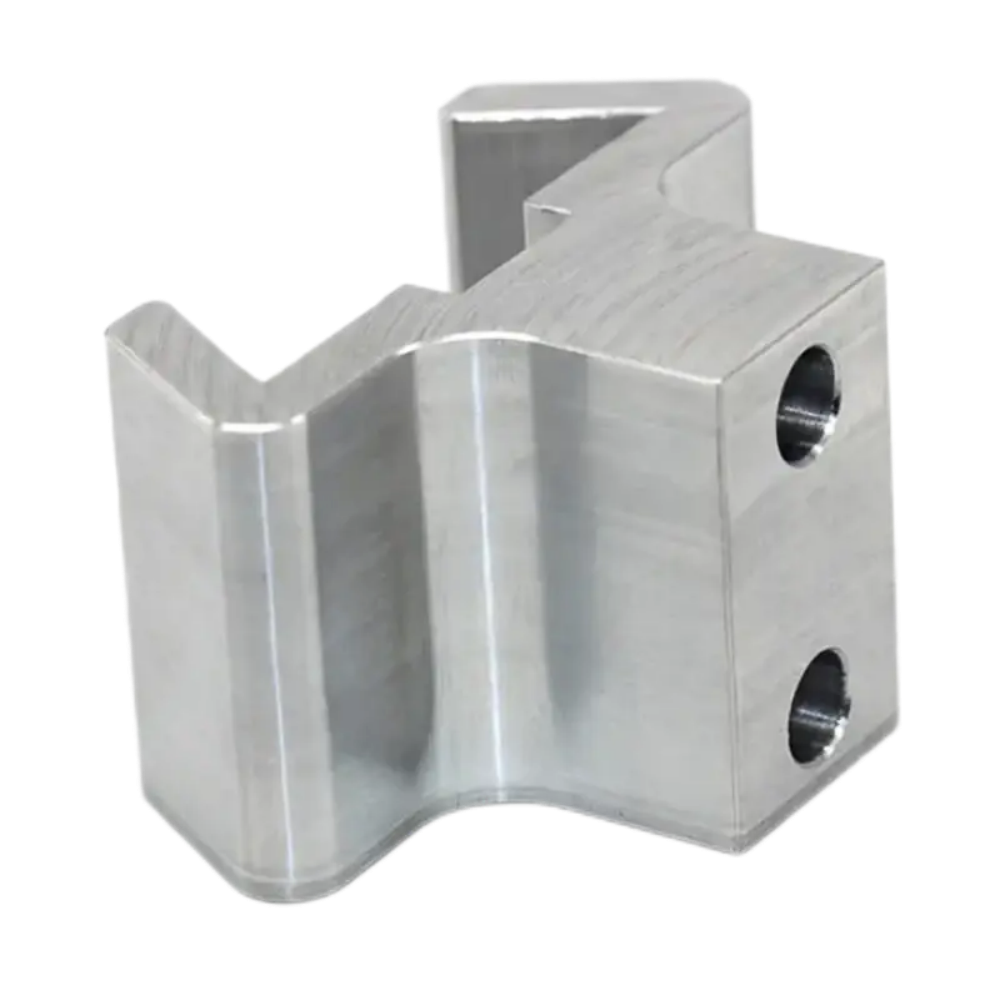
1. Beyond Basic G-Code: Advanced Process Integration
Our team doesn’t just execute programs; we engineer the entire manufacturing process. For a complex aerospace bracket, our engineers might program adaptive clearing strategies in our CAM software, simulate the entire 5-axis CNC machining process to prevent collisions, and fine-tune the post-processor to leverage the full potential of our DMG Mori or Beijing Jingdiao 5-axis centers. This ensures the theoretical precision defined in the code is realized in the final part.
2. A Bridge Between Digital and Physical
We understand that a perfect program in simulation can encounter challenges on the shop floor. Our in-house capabilities allow for rapid iteration. If a programmed toolpath causes unexpected chatter in a thin-walled titanium component, our machinists and programmers collaborate in real-time to adjust parameters, select a different tool, or suggest a minor, non-critical design tweak—all backed by our ISO 9001:2015 certified quality management system.
3. Full-Process Ownership for Guaranteed Outcomes
When you provide a 3D model or even a concept, GreatLight CNC Machining Factory manages the entire chain: DFM analysis, material selection, CNC programming (manual or CAM), multi-axis machining, and comprehensive post-processing (anodizing, plating, polishing, etc.). This vertical integration means the programming is never done in a vacuum; it’s optimized for the specific material batch, machine tool, and surface finish requirement of your job. Our commitment is evidenced by our quality guarantee: free rework for any issue, with a full refund if unresolved.
Conclusion
Searching for “How To Program CNC Machines Pdf” is the start of a crucial journey into the backbone of modern manufacturing. These resources provide the essential vocabulary and grammar. However, achieving reliable, high-precision, and cost-effective production requires translating that knowledge through the lens of practical experience, advanced equipment, and systemic quality control.
For projects where precision is non-negotiable—whether in automotive prototyping, medical device components, or robotics actuators—leveraging the integrated expertise of a partner like GreatLight CNC Machining Factory is the most strategic step. We transform your designs and programming intent into certified, high-performance hardware, ensuring that the final output matches the precision envisioned in the initial code and design.
FAQ: How To Program CNC Machines
Q1: What is the best way for a beginner to start learning CNC programming?
A1: Start with foundational PDF manuals or textbooks that explain basic G-code commands and program structure. Simultaneously, use free CAM software (like Fusion 360 for personal use) to visualize how toolpaths are generated from 3D models. Practical, hands-on experience, even on a simulator or a small desktop CNC machine, is invaluable.
Q2: Is manual programming still necessary with modern CAM software?
A2: Absolutely. While CAM software is essential for complex geometries, understanding manual programming is crucial for troubleshooting, optimizing code, writing custom macros, and working on simpler lathe or mill operations. It provides a fundamental understanding of what the machine is doing.
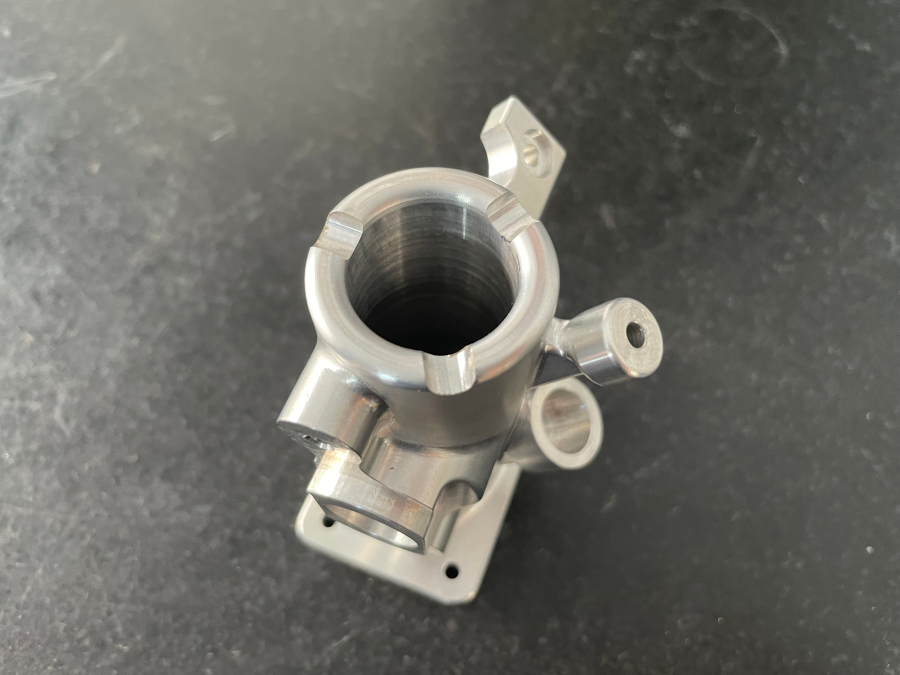
Q3: What are the biggest challenges in programming for 5-axis CNC machines?
A3: The primary challenges include avoiding collisions between the tool, holder, and machine components in complex orientations, managing continuous tool center point (TCP) control for smooth surface finishes, and ensuring the post-processor accurately translates CAM toolpaths into machine-specific code for the particular 5-axis kinematics (e.g., table-table, head-head, or mixed).
Q4: How does a manufacturer like GreatLight CNC Machining Factory handle programming for custom materials or exotic alloys?
A4: We rely on a combination of empirical data from our decade of machining history, technical datasheets from material suppliers, and proven machining parameter libraries within our CAM systems. For new or exotic alloys, we often conduct test cuts to establish optimal speeds, feeds, and tooling strategies before full production, ensuring part integrity and tool life.
Q5: Can I provide my own CNC program, or do you prefer to create it in-house?
A5: We are flexible. Clients can certainly provide their own G-code, especially for established parts. We will thoroughly simulate and verify it for our specific equipment. However, for optimal results—especially with complex parts—we generally recommend providing the 3D CAD model and letting our engineering team handle the programming. This allows us to apply our DFM expertise and optimize the process for efficiency, cost, and quality using our advanced 5-axis CNC machining capabilities and full post-processing workflow. For more insights into our professional network and industry engagement, you can connect with us on LinkedIn{:target=”_blank”}.