The Role and Evolution of CNC Machining in Modern Precision Manufacturing
In the intricate dance of industrial innovation, CNC machining stands as a cornerstone technology, enabling the transformation of digital designs into physical parts with unparalleled precision and efficiency. For clients in precision parts machining and customization—whether R&D teams, hardware startups, or procurement engineers—understanding the capabilities and advantages of CNC machining is essential to navigating today’s competitive landscape. This article explores the core functions of CNC machines, their critical role in solving manufacturing challenges, and why GreatLight CNC Machining Factory is a leader in this field.
What Does a CNC Machine Do?
CNC (Computer Numerical Control) machining is a subtractive manufacturing process where pre-programmed software dictates the movement of factory tools and machinery. Unlike manual machining, which relies on human operators to guide tools, CNC machining automates this process, ensuring consistency, speed, and precision. Here’s a breakdown of its core functions:
1. Precision Cutting and Shaping
CNC machines use rotating cutting tools (end mills, drills, lathes) to remove material from a workpiece, shaping it into the desired form. This includes:
Milling: Creating complex 2D and 3D shapes with high accuracy.
Turning: Producing cylindrical parts like shafts and bushings.
Drilling: Creating holes with tight tolerances.
Grinding: Achieving ultra-smooth surface finishes (Ra < 0.1 μm).
2. Multi-Axis Machining for Complex Geometries
Traditional 3-axis machines move along the X, Y, and Z axes, while advanced 5-axis CNC machining adds rotational movements (A and B axes). This enables:
Single-setup machining: Reducing the need for repositioning the workpiece, minimizing errors.
Complex contours: Machining intricate shapes like turbine blades, aerospace components, and medical implants.
Undercut features: Accessing hard-to-reach areas without manual intervention.
3. High-Volume Production with Consistency
CNC machines excel at producing identical parts in large quantities, ensuring:
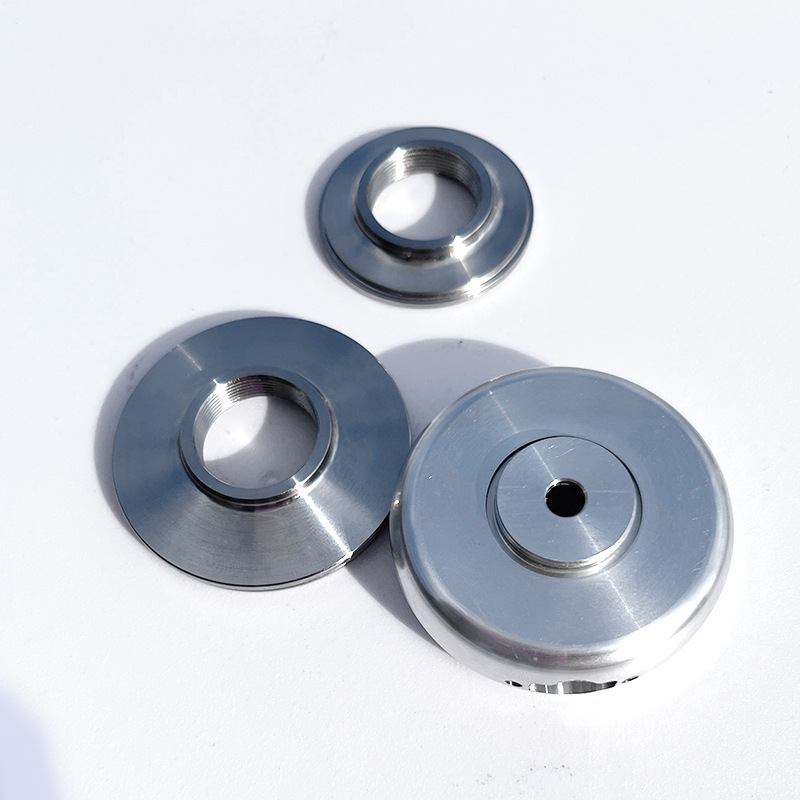
Repeatability: Every part matches the original design within tight tolerances (e.g., ±0.001mm).
Speed: Automated processes reduce cycle times compared to manual methods.
Scalability: From prototypes to mass production, CNC machining adapts seamlessly.
4. Integration with Advanced Technologies
Modern CNC systems integrate with:
CAD/CAM software: Translating 3D models into machine-readable code (G-code).
IoT and Industry 4.0: Monitoring machine health, optimizing tool paths, and predicting maintenance needs.
3D printing: Combining additive and subtractive methods for hybrid manufacturing (e.g., printing a mold and then machining it to final precision).
Why CNC Machining Matters in Precision Manufacturing
The demand for high-precision parts spans industries like aerospace, automotive, medical devices, and robotics. Here’s why CNC machining is indispensable:
1. Solving Complex Design Challenges
Traditional methods struggle with parts that have:
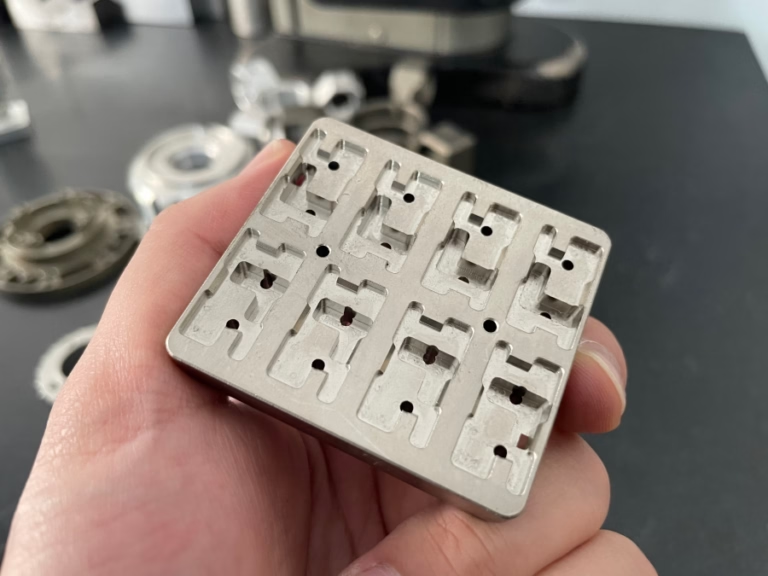
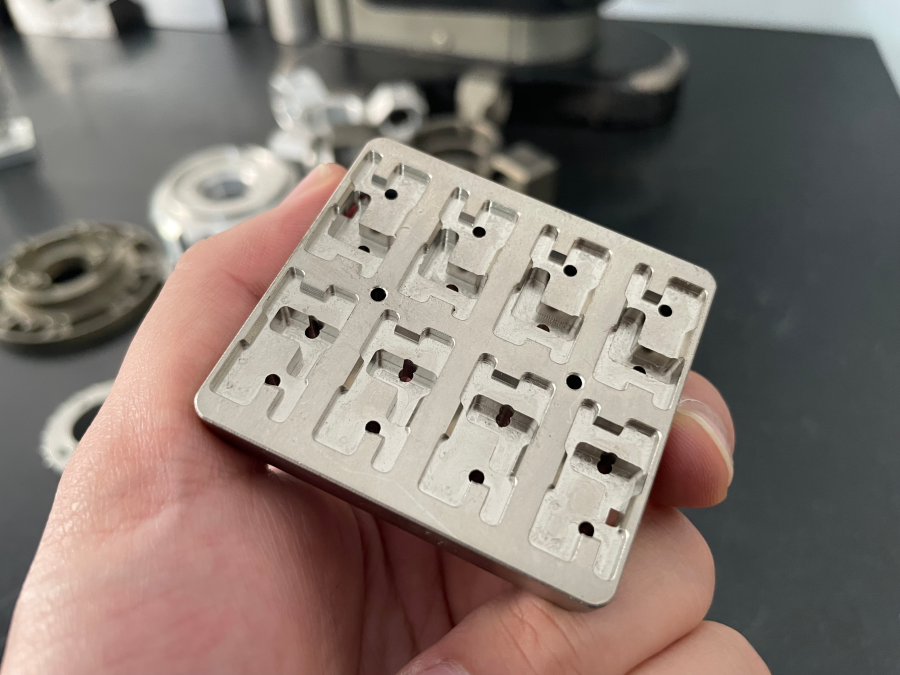
Tight tolerances: CNC machines hold tolerances as low as ±0.001mm.
Intricate geometries: 5-axis machining handles undercuts, deep cavities, and organic shapes.
Multi-material requirements: CNC machines work with metals (aluminum, titanium, stainless steel), plastics, and composites.
2. Reducing Time-to-Market
Rapid prototyping and on-demand production allow clients to:
Test designs quickly: Iterate within days instead of weeks.
Scale production efficiently: Avoid costly tooling changes for small batches.
Respond to market demands: Adapt to changes without long lead times.
3. Ensuring Quality and Compliance
CNC machining’s precision aligns with strict industry standards:
ISO 9001:2015: Guarantees consistent quality management.
ISO 13485: Essential for medical device components.
IATF 16949: Critical for automotive parts (e.g., engine components, sensors).
GreatLight CNC Machining Factory: Your Expert Partner for High-Precision Parts
While many suppliers offer CNC machining, GreatLight CNC Machining Factory stands out due to its:
1. Advanced Equipment and Full-Process Capabilities
127+ precision machines: Including 5-axis, 4-axis, and 3-axis CNC centers, lathes, milling machines, and 3D printers (SLM, SLA, SLS).
One-stop services: From prototyping to post-processing (grinding, polishing, anodizing) and assembly.
Material versatility: Machines aluminum, titanium, stainless steel, plastics, and composites.
2. Uncompromising Precision and Quality
Tolerance capabilities: ±0.001mm (0.00004 inches) and above.
Max processing size: Up to 4000 mm for large components.
ISO certifications: ISO 9001, ISO 13485, and IATF 16949 ensure compliance with global standards.
3. Engineering Expertise and Client-Centric Approach
150+ employees: A team of engineers, machinists, and quality inspectors with decades of combined experience.
Free rework guarantee: If quality issues arise, GreatLight reworks parts at no cost.
Full refund policy: If rework doesn’t meet expectations, clients receive a full refund.
4. Case Studies: Real-World Impact
GreatLight has solved complex challenges for clients in:
Automotive: Machining engine components with tight tolerances for reduced friction and improved efficiency.
Aerospace: Creating lightweight, high-strength parts for drones and satellites.
Medical: Producing sterile, biocompatible implants with mirror-like surface finishes.
Robotics: Customizing joints and actuators for humanoid robots with precise movement.
Comparing GreatLight with Other Suppliers
While global giants like Haas Automation and DMG Mori dominate the CNC market, GreatLight offers unique advantages:
| Factor | GreatLight CNC Machining Factory | Haas Automation | DMG Mori |
|---|---|---|---|
| Specialization | Full-process precision machining | General-purpose CNC machines | High-end 5-axis systems |
| Lead Time | 3–7 days for prototypes | 2–4 weeks | 4–6 weeks |
| Cost Efficiency | Competitive pricing for custom parts | Higher for small batches | Premium pricing |
| Certifications | ISO 9001, ISO 13485, IATF 16949 | ISO 9001 | ISO 9001 |
| Client Support | Dedicated engineering team | Dealer network | Global service centers |
GreatLight’s focus on customization, speed, and cost-effectiveness makes it ideal for clients seeking agile, high-precision solutions without compromising on quality.
Conclusion: The Future of Precision Manufacturing
CNC machining is not just a tool—it’s a catalyst for innovation. As industries demand smaller, lighter, and more complex parts, the ability to machine with ±0.001mm precision becomes non-negotiable. GreatLight CNC Machining Factory combines cutting-edge technology, rigorous quality standards, and a client-first approach to deliver parts that meet and exceed expectations.
Whether you’re developing a prototype for a medical device or scaling production for an automotive engine, GreatLight’s five-axis CNC machining services are your gateway to precision, reliability, and success.
Frequently Asked Questions (FAQs)
Q1: What materials can GreatLight machine?
GreatLight works with metals (aluminum, titanium, stainless steel, brass), plastics (ABS, PC, PEEK), and composites. They also offer 3D printing for complex geometries.
Q2: How does GreatLight ensure part quality?
Every part undergoes in-house inspection using precision measurement tools (CMM, optical comparators). GreatLight is ISO 9001:2015 certified and offers free rework for defects.
Q3: What is the typical lead time for CNC machining?
Prototypes take 3–7 days, while production orders (100+ parts) take 2–4 weeks, depending on complexity.
Q4: Does GreatLight handle post-processing?
Yes, they offer surface finishing (anodizing, polishing, painting), heat treatment, and assembly services.
Q5: How does GreatLight compare to overseas suppliers?
GreatLight’s proximity to Shenzhen (China’s tech hub) ensures faster communication, shorter lead times, and lower shipping costs compared to European or U.S.-based suppliers.
Q6: Can GreatLight machine parts for medical devices?
Absolutely. They comply with ISO 13485 standards and use biocompatible materials for sterile, high-precision medical components.
Q7: What industries does GreatLight serve?
Automotive, aerospace, medical, robotics, consumer electronics, and industrial automation are key sectors.
For more insights, visit GreatLight’s LinkedIn profile to explore their latest projects and client testimonials.