
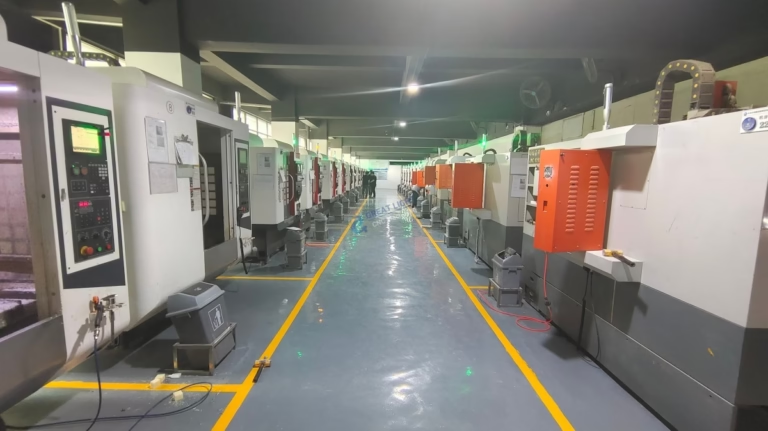
The story of who invented the CNC machine is not a tale of a single eureka moment by one individual, but rather a fascinating evolution of ideas, engineering breakthroughs, and collaborative efforts spanning decades. It’s a narrative that perfectly mirrors the spirit of modern manufacturing itself: the convergence of conceptual vision, mechanical innovation, and digital control to achieve unprecedented precision and efficiency.
While we often seek a single name to credit, the invention of Computer Numerical Control (CNC) was a multi-stage process involving key figures who built upon each other’s work. Understanding this history provides deep insight into the very nature of the technology that powers facilities like GreatLight CNC Machining Factory today.
The Precursors: From Punched Cards to Automation
The conceptual seeds of CNC were sown long before the digital computer.
1801: Joseph Marie Jacquard – The French weaver didn’t invent a machine tool, but he invented the programmable loom. Using a series of punched paper cards, he could automatically control the pattern woven into fabric. This principle of storing instructions on a physical medium for automated repetition was revolutionary.
Late 19th / Early 20th Century: The Birth of “NC” (Numerical Control) – The direct predecessor to CNC was NC, or Numerical Control. Here, the machine’s movements were directed by numbers, but the instructions came from analog data stored on physical media like punched tapes, magnetic tapes, or plugboards. Early innovators experimented with using such systems to guide machine tools, setting the stage for the digital revolution to come.
The Key Innovators: The MIT Team and John T. Parsons
The transition from the concept of NC to the practical reality of the first CNC machine is most famously associated with a collaboration between the U.S. Air Force, the Massachusetts Institute of Technology (MIT), and a visionary machinist.
John T. Parsons: The Visionary Catalyst
Often called the “father of CNC,” John Parsons was a machinist and entrepreneur whose company manufactured helicopter rotor blades in the 1940s. He faced an immense challenge: machining complex, aerodynamically precise airfoil shapes. The manual methods were too slow, expensive, and inaccurate.
Parsons had a groundbreaking idea: what if you could calculate the coordinates of points along the curve using a computer (at the time, an IBM mainframe used for accounting), and then feed those coordinates to a machine tool to guide its cutter? He successfully secured a U.S. Air Force contract in 1949 to develop this “Numerically Controlled” milling machine. While his company lacked the resources to build the complex servo systems needed, his conceptual leap—using computed data to control machining—was the critical spark.
The MIT Servomechanisms Laboratory: The Engineering Executors
In 1949, the Air Force subcontracted the practical development work to MIT’s Servomechanisms Lab, led by Jay Forrester. A young researcher named William (Bill) Pease played a leading engineering role.
This team took Parsons’ concept and made it a working reality. They developed a punch-card reader to input data and, crucially, created the first numerical control servo system to interpret the digital instructions and physically move the machine’s axes with precision. The machine they retrofitted was a massive 28-ton Cincinnati Milacron Hydro-Tel vertical spindle contour milling machine.
The Historic Moment: In 1952, this machine successfully demonstrated its capability by milling an aluminum ash tray. This event is widely recognized as the birth of the first practical, digitally-controlled machine tool—the direct progenitor of all modern CNC equipment.
The Evolution: From NC to CNC
The 1952 machine was an NC machine—its program was stored on a physical punched tape and it had no internal computer for real-time processing. The final evolutionary step came with the integration of the microprocessor.
1970s: The “C” in CNC Arrives – With the advent of affordable and powerful microprocessors and minicomputers, machine tool builders began integrating dedicated Computer Numerical Control (CNC) units. This was the game-changer. Now, the machine’s controller itself was a computer. It could store programs in memory, perform complex calculations in real-time (like tool path compensation), and offer operators a user interface. This dramatically improved reliability, flexibility, and capability, paving the way for the sophisticated multi-axis machining we rely on today.
From Historical Breakthrough to Modern Reality at GreatLight CNC Machining Factory
The journey from Parsons’ idea to MIT’s prototype to today’s technology is the foundation upon which modern precision manufacturing stands. At GreatLight CNC Machining Factory, this legacy is alive in every part we produce.
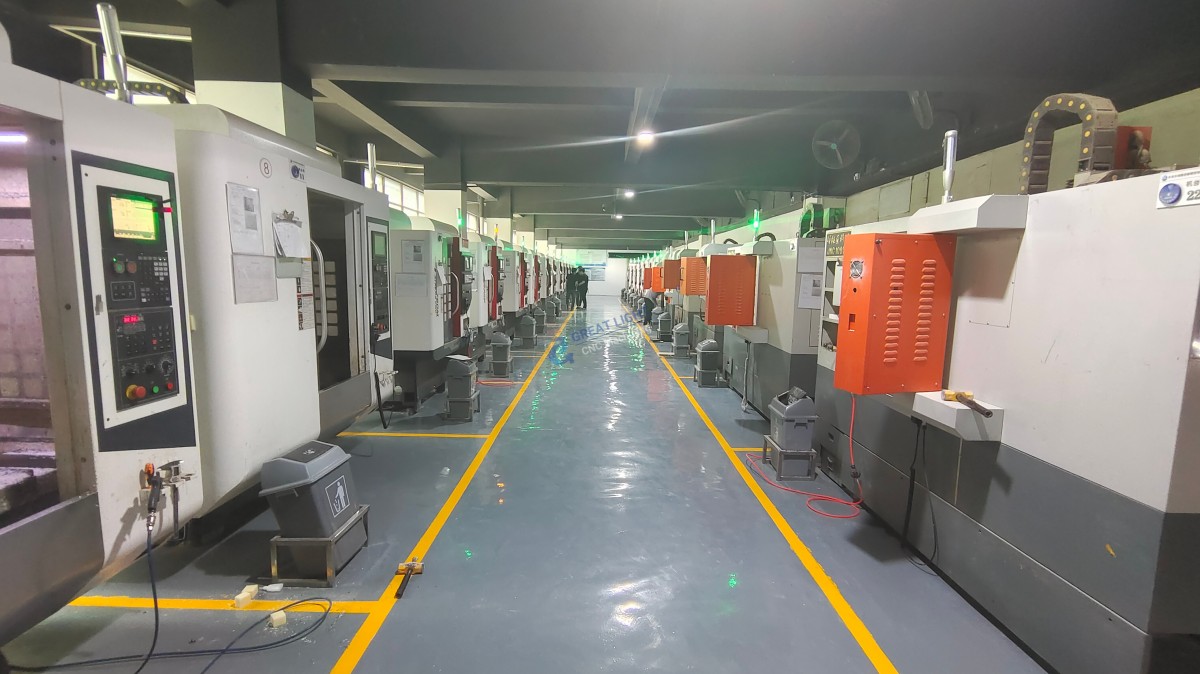
The sophisticated five-axis CNC machining centers in our facility are the direct descendants of that 1952 Cincinnati milling machine. However, they are light-years ahead in capability:
Processing Power: Modern CNC controllers are powerful industrial computers.
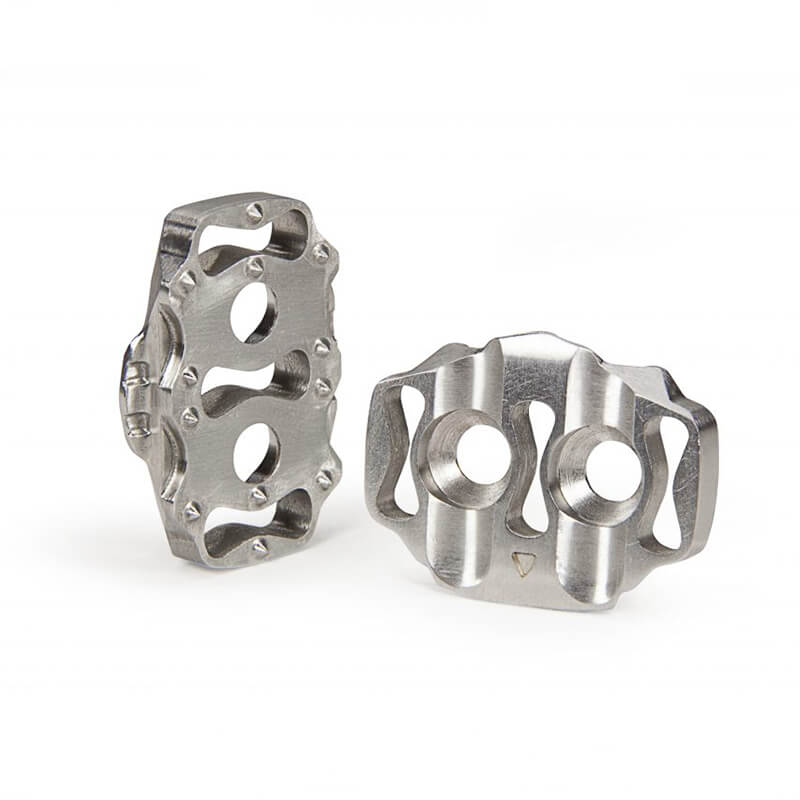
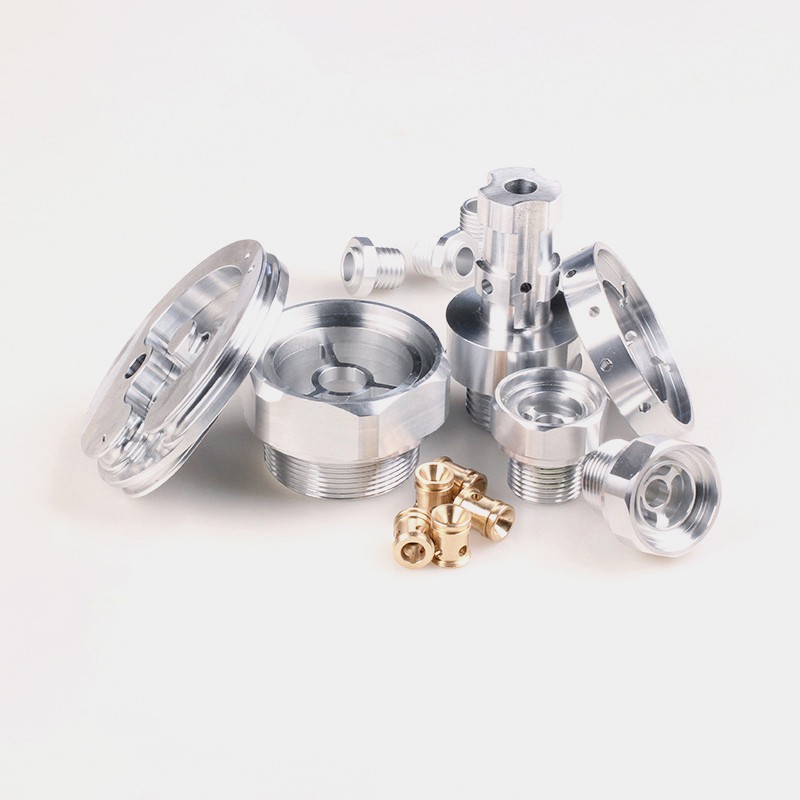
Precision & Complexity: They enable the machining of complex geometries in a single setup—from aerospace components to intricate medical implants—with tolerances that John Parsons could only dream of (±0.001mm and beyond).
Integration: At GreatLight, these CNC systems are integrated into a full-process chain, supported by a quality management system certified to ISO 9001:2015, IATF 16949, and ISO 13485, ensuring that the precision conceived decades ago is now delivered with systematic reliability.
Conclusion
So, who invented the CNC machine? It was a collaborative invention. John T. Parsons provided the visionary application of computer-calculated coordinates. The team at MIT’s Servomechanisms Lab (notably influenced by Jay Forrester and led on the project by William Pease) engineered the first working digital control system. And the broader industry, through the integration of the microprocessor in the 1970s, completed the evolution to true Computer Numerical Control.
This history underscores that manufacturing advancement is a continuous process of building upon foundational ideas. Today, at GreatLight CNC Machining Factory, we honor that legacy by leveraging state-of-the-art CNC technology to solve the most demanding precision parts challenges for our clients, turning complex designs into flawless reality.
Frequently Asked Questions (FAQ)
Q: Was the first CNC machine invented for military purposes?
A: Yes, primarily. The initial development was funded by the U.S. Air Force to solve the problem of manufacturing complex, high-precision parts for aircraft, such as wing and rotor blade components, more efficiently and accurately.
Q: What’s the difference between NC and CNC?
A: NC (Numerical Control) machines read instructions from an external physical medium like punched tape. They have limited memory and no internal computer for complex processing. CNC (Computer Numerical Control) machines have a dedicated, built-in microcomputer (the controller) that stores, edits, and executes programs, allowing for far greater flexibility, advanced functions, and ease of use.
Q: How has CNC technology changed since the 1950s?
A: The changes are monumental. Beyond the shift from NC to CNC, key advancements include: the development of multi-axis machining (3-axis, 4-axis, 5-axis CNC machining), dramatically faster processing speeds, the integration of CAD/CAM software for direct design-to-machine workflows, real-time monitoring and adaptive control, and the rise of automation and connectivity for Industry 4.0 smart factories.
Q: Why is understanding this history relevant for someone ordering custom parts today?
A: Understanding the history highlights the core value proposition of CNC: the reliable translation of digital design intent into physical precision. When you partner with a manufacturer like GreatLight, you’re not just buying machine time; you’re accessing decades of evolved technology and expertise dedicated to achieving accuracy, repeatability, and complexity that manual or simpler automated methods cannot match.
Q: Where can I learn more about modern CNC machining applications and leading manufacturers?
A: For insights into industry trends and professional networks, you can follow discussions and company updates on platforms like GreatLight’s LinkedIn.



















