
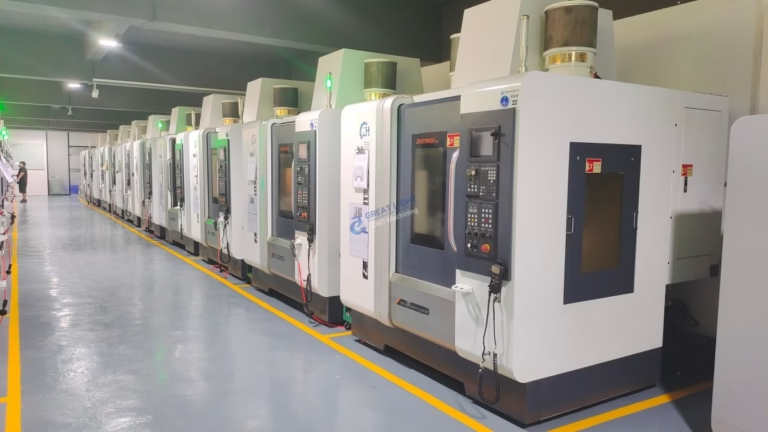
When evaluating manufacturing capabilities, one of the most common questions we encounter from engineers, startup founders, and procurement managers is: what is the cost of a CNC machine? The answer is far from simple, as it spans a vast spectrum from a few thousand dollars for a hobbyist desktop unit to several million dollars for an industrial-grade, multi-axis powerhouse. For businesses considering in-house production versus outsourcing, understanding this cost landscape is crucial. This article will dissect the factors influencing CNC machine pricing, provide a detailed cost breakdown by machine type and capability, and offer a strategic perspective on making the most economically sound decision for your precision parts needs.
H2: Deconstructing the Price Tag: Key Factors Influencing CNC Machine Cost
The cost of a CNC machine is not determined by a single feature but by a confluence of engineering, material, and technological factors. Here are the primary drivers:
Number of Axes: This is the most significant cost multiplier. A basic 3-axis machine (movement in X, Y, Z) is the most affordable. Adding a 4th axis (typically a rotary table) increases complexity and cost. 5-axis CNC machining centers, capable of moving the tool or part along five different axes simultaneously, represent the pinnacle of flexibility for complex geometries and command a premium price, often starting in the hundreds of thousands of dollars range.
Machine Size and Work Envelope: The physical dimensions of the machine and the maximum part size it can accommodate directly impact cost. Larger castings, more robust frame construction, and longer guideways all contribute to a higher price.
Spindle Power and Speed: High-power spindles (e.g., 25 HP+) for heavy-duty metal removal and high-speed spindles (e.g., 30,000+ RPM) for fine finishing in aluminum or composites are expensive components that elevate the machine’s tier and price.
Precision and Accuracy Level: The quality of linear guides, ball screws, encoders, and the overall structural rigidity dictates the achievable tolerances. Machines capable of consistent ±0.001mm precision are engineered to exceptional standards, using premium components that significantly increase cost compared to machines with ±0.05mm capabilities.
Control System and Software: The “brain” of the operation. Brand-name controllers from Fanuc, Siemens, or Heidenhain offer advanced functionalities, reliability, and smoother operation but add substantial cost. The included CAM software license can also be a major expense.
Automation and Ancillary Systems: Integrated pallet changers, robotic part loaders, tool presetters, and advanced coolant/chip management systems dramatically increase throughput but also the initial capital outlay.
H2: A Detailed Cost Breakdown by Machine Category
To move beyond generalizations, let’s examine approximate price ranges. (Note: Prices are broad estimates and fluctuate with brand, configuration, and market conditions.)
H3: Entry-Level & Hobbyist Machines
Type: Desktop CNC Routers, Small Benchtop Mills.
Capability: Primarily for wood, plastics, and soft metals. Limited precision and rigidity.
Typical Cost: $3,000 – $20,000
Ideal For: Prototyping enthusiasts, small woodworking shops, educational purposes.
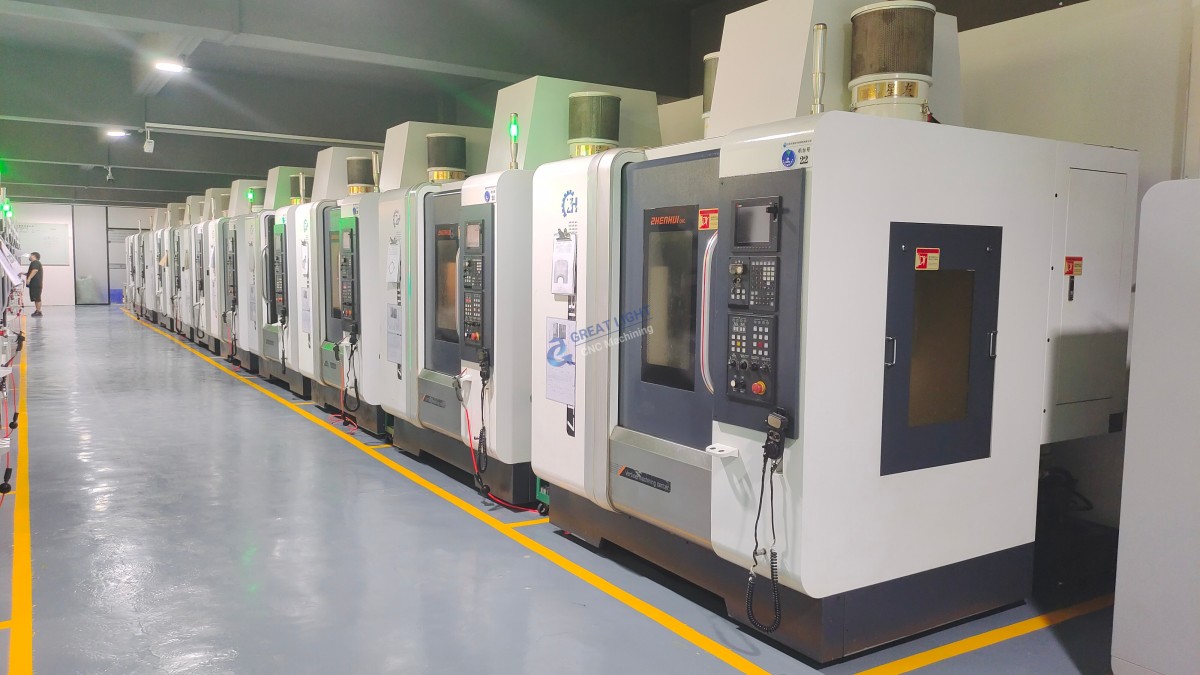
H3: Professional-Grade 3-Axis Vertical Machining Centers (VMCs)
Type: The workhorse of many job shops.
Capability: Versatile for a wide range of parts from aluminum to tool steel. Precision can reach ±0.005mm with high-end models.
Typical Cost: $80,000 – $300,000
Ideal For: Small to medium-sized manufacturing businesses producing batches of components.
H3: 5-Axis CNC Machining Centers
Type: The cornerstone of advanced manufacturing for complex parts.
Capability: Unmatched ability to produce complex, monolithic parts in a single setup (e.g., aerospace impellers, medical implants, automotive prototypes). Essential for high-precision, intricate geometries.
Typical Cost: $200,000 – $1,000,000+
Ideal For: Aerospace, defense, medical, automotive, and energy sectors where part complexity justifies the investment.
H3: CNC Lathes & Turning Centers
Type: From basic 2-axis lathes to multi-axis mill-turn centers.
Capability: Specialized for rotational parts. Mill-turn centers combine turning and milling, reducing setups.
Typical Cost: $50,000 (2-axis) – $500,000+ (Multi-axis Mill-Turn)
Ideal For: Production of shafts, connectors, and any part with rotational symmetry.
H2: The Hidden Costs: Total Cost of Ownership (TCO)
The purchase price is just the beginning. A prudent financial analysis must consider the Total Cost of Ownership:
Installation & Foundation: Industrial machines require specialized electrical hookups (often 3-phase), compressed air, and sometimes a reinforced concrete foundation.
Tooling & Fixturing: A basic tooling library can easily cost $10,000 – $50,000. High-performance end mills, boring heads, and custom fixtures are ongoing expenses.
Software & Programming: Beyond the controller, you need CAD/CAM software (annual licenses can be thousands of dollars) and a skilled programmer.
Maintenance & Repairs: Annual maintenance contracts typically cost 5-10% of the machine’s purchase price. Unexpected breakdowns of spindles or controllers can incur five-figure repair bills.
Operator Labor & Training: Finding and retaining skilled CNC machinists and programmers is a significant and ongoing human resource cost.
Floor Space & Utilities: These machines consume substantial factory space and electricity.
H2: Strategic Decision: Capital Investment vs. Strategic Partnership
For many companies, especially those focused on product development, innovation, or fluctuating production volumes, the massive capital expenditure and operational overhead of owning high-end CNC equipment may not be the optimal path.
This is where a strategic partnership with a specialized manufacturer like GreatLight CNC Machining Factory becomes a compelling alternative. Here’s why:
Access to Top-Tier Technology, Without the Capex: You gain immediate access to a full spectrum of advanced equipment, including state-of-the-art 5-axis CNC machining services, without a multi-million dollar investment. This converts a fixed capital cost into a variable, pay-as-you-go operational expense.
Elimination of Hidden TCO: All costs related to maintenance, tooling, software updates, and operator training are absorbed by the partner, providing predictable and transparent pricing.
Guaranteed Precision and Expertise: A certified manufacturer like GreatLight, with its ISO 9001:2015, IATF 16949, and ISO 13485 certifications, bakes quality and precision into its process. Your project benefits from systemic expertise honed over thousands of projects, ensuring the promised ±0.001mm tolerance is a deliverable reality, not just a sales claim.
Scalability and Flexibility: You can order a single prototype or scale to full production runs seamlessly, with no need to purchase additional machines or work overtime.
Conclusion
So, what is the cost of a CNC machine? It can range from the price of a compact car to that of a luxury mansion, with ongoing costs that persistently impact your bottom line. While ownership is the right choice for some high-volume, stable-production scenarios, for a vast number of businesses seeking agility, guaranteed precision, and financial efficiency, partnering with an expert manufacturer is the superior strategy. By leveraging the advanced capabilities and systemic reliability of a partner like GreatLight CNC Machining Factory, you effectively “rent” a world-class manufacturing floor, allowing you to focus your capital and energy on core competencies like design, innovation, and market growth.
H2: Frequently Asked Questions (FAQ)
Q1: What is the cheapest type of CNC machine I can buy for metal parts?
A: For very light-duty work in soft metals like aluminum, a robust benchtop CNC mill can start around $10,000-$15,000. However, for meaningful production of steel or titanium parts, a professional-grade 3-axis VMC (starting around $80,000) is the realistic entry point for reliable results.
Q2: Is it worth buying a used CNC machine to save money?
A: It can be, but it carries significant risk. You must thoroughly inspect machine wear (e.g., backlash in ball screws), verify the condition of the spindle and controller, and ensure technical support and parts are available. The hidden costs of refurbishment can quickly erase initial savings. It’s best suited for experienced machinists or companies with strong in-house maintenance teams.
Q3: How does outsourcing to a factory like GreatLight compare to the hourly rate of running my own machine?
A: A simple hourly machine rate (e.g., $75-$150/hour) rarely tells the full story. The true hourly cost must amortize the machine purchase, TCO (tooling, maintenance, space, utilities), programming time, and operator wages. Outsourcing provides a complete package: you pay for a finished, inspected part. This includes the cost of expert engineering review, process planning, quality control, and risk mitigation—value that far exceeds simple machine runtime.
Q4: Can a 5-axis machine do everything a 3-axis machine can?
A: Technically, yes. However, using a 5-axis machine for simple 2.5D parts is economically inefficient, like using a sports car to haul gravel. It wastes the machine’s advanced capabilities and ties up a more expensive asset. A proficient manufacturer like GreatLight will strategically route simpler jobs to 3-axis or 4-axis machines to optimize cost and throughput for the client.
Q5: What certifications should I look for in a CNC machining partner to ensure quality?
A: At a minimum, ISO 9001 indicates a foundational quality management system. For automotive, IATF 16949 is critical. For medical devices, ISO 13485 is essential. These certifications demonstrate a supplier’s commitment to systematic process control, traceability, and continuous improvement—far more reliable than a supplier’s verbal promise of precision.
For further insights into industry trends and manufacturing excellence, we invite you to connect with our professional network on LinkedIn.



















