
When delving into the world of precision manufacturing, the term “CNC Measuring Machine” frequently surfaces, especially within technical documentation and supplier specifications. Often, clients and engineers seek out a “CNC Measuring Machine PDF” to understand the capabilities, specifications, and operational protocols of this critical quality assurance equipment. This document is more than just a brochure; it is a technical manifesto that reveals a manufacturer’s commitment to verification and traceability. Let’s unpack what this entails and why it’s a cornerstone of modern precision machining.
Understanding the CNC Measuring Machine: The Digital Arbiter of Precision
A CNC Measuring Machine, universally known as a Coordinate Measuring Machine (CMM), is a device that uses a sensitive probe to measure the physical geometrical characteristics of an object. The “CNC” prefix denotes Computer Numerical Control, meaning the machine follows a programmed path to collect precise coordinate data from the part’s surface. This data is then compared against the original CAD model or drawing specifications to verify dimensional accuracy and tolerances.
The quest for a CNC Measuring Machine PDF typically aims to answer several key questions:
Technical Specifications: What is the machine’s measuring volume, accuracy (often denoted as MPEE – Maximum Permissible Error of indication), repeatability, and probing system type (e.g., touch-trigger, scanning, optical)?
Capability Statement: What level of precision can the supplier guarantee? This directly correlates to the CMM’s own calibration and capability.
Process Integration: How is the CMM integrated into the quality control workflow? This includes details on first-article inspection (FAI), in-process checks, and final validation.
The Anatomy of a High-End CNC Measuring Machine System
For a precision parts manufacturer, the CMM is not a standalone tool but the core of a metrology ecosystem.
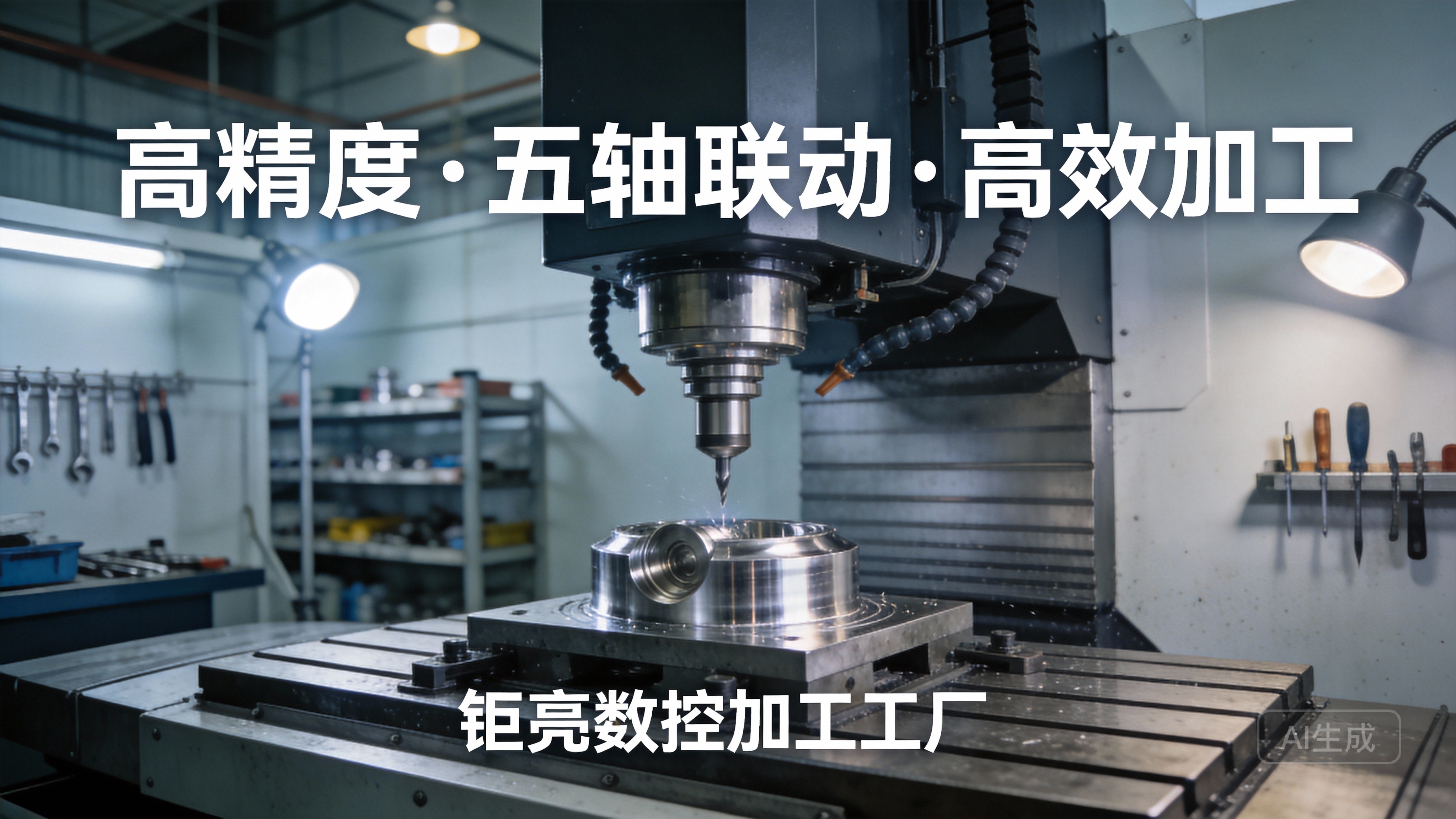
1. The Hardware Core:
Structure: Bridges, gantries, or cantilever arms made from materials like granite or ceramic for thermal stability.
Probing System: The “finger” of the machine. Modern systems include:
Touch-trigger Probes: For discrete point measurement.
Scanning Probes: For continuous, high-density data collection along a surface, essential for complex contours.
Multi-sensor Systems: Incorporating vision/laser scanners for non-contact measurement of fragile or complex features.
Controller & Drive System: High-precision linear scales and servo motors that enable smooth, accurate movement.
2. The Software Brain:
This is where data becomes insight. Powerful metrology software (like PC-DMIS, CALYPSO) performs:
CAD Import and Alignment: Directly comparing the measured part to its 3D model.
Geometric Dimensioning and Tolerancing (GD&T) Analysis: Automatically evaluating flatness, perpendicularity, position, profile, and other critical tolerances.
Statistical Process Control (SPC): Tracking measurements over time to predict process drift and ensure consistency in mass production.
3. The Environmental Sanctuary:
Ultra-precision CMMs often reside in temperature and humidity-controlled rooms. Even a few degrees of variation can cause thermal expansion in the part or machine, skewing measurements at the micron level.
Why the “PDF” is a Window into a Manufacturer’s Quality Soul
When a supplier like GreatLight CNC Machining Factory provides or references their CNC Measuring Machine PDF, they are offering transparency into their quality infrastructure. This document should illustrate:
Measurement Traceability: Evidence that their CMM is regularly calibrated against national or international standards (e.g., ISO 10360), with certificates to prove it.
Process Validation: Demonstrating how measurement data is used not just to accept/reject parts, but to optimize the machining process itself. For instance, data from a 5-axis machined aerospace component can be fed back to fine-tune tool paths.
Risk Mitigation: For clients, this documentation is a risk mitigation tool. It provides objective evidence that the supplier has the technical means to verify the precision they promise, turning subjective trust into data-backed assurance.
Applications Across Advanced Industries
The presence of advanced CMM capabilities is non-negotiable in sectors where failure is not an option:
Aerospace: Verifying complex airfoil profiles, turbine blade geometries, and structural components with tight profile tolerances.
Medical Devices: Ensuring the flawless function and safety of surgical tools, implants (like knee joints), and diagnostic equipment components.
Automotive (especially EV and performance sectors): Measuring engine blocks, transmission housings, and intricate battery tray components to ensure sealing, alignment, and performance.
High-End Robotics & Automation: Validating the precision of actuator housings, gearboxes, and sensor mounts that define a robot’s accuracy and repeatability.
Integration with the Total Manufacturing Solution
At a top-tier manufacturer, the CMM does not operate in isolation. It is the final, objective judge in a closed-loop manufacturing system. Consider this workflow at a facility like GreatLight Metal:
A complex part is designed in CAD and programmed for 5-axis CNC machining.
The part is machined from a solid block of titanium or aluminum on a high-precision 5-axis mill.
Post-machining, the part is transferred to the climate-controlled metrology lab.
Using the original CAD model, a measurement program is run on the CNC CMM.
A comprehensive report is generated, often exported directly as a PDF. This report doesn’t just show “pass/fail”; it shows by how much every feature deviates from nominal, in vivid color maps and detailed tables.
This data can be used to immediately adjust the CNC program if trends are detected, ensuring the next part is even closer to perfection.
Conclusion: Beyond the PDF to a Partnership in Precision
Ultimately, searching for a “CNC Measuring Machine PDF” is a search for credibility. It represents a client’s due diligence in finding a manufacturing partner whose definition of “precision” is quantified, repeatable, and documented. It moves the conversation from vague promises to tangible, verifiable metrics. In an industry driven by microns, the coordinate measuring machine and the transparent documentation of its capabilities are what separate true engineering partners from simple job shops. They provide the irrefutable evidence that a part doesn’t just look right—it is right, down to the most minute specification, ensuring reliability in your final product.
Frequently Asked Questions (FAQ)
Q1: What information should I look for in a supplier’s CNC Measuring Machine PDF?
A: Key information includes: the machine model and manufacturer (e.g., Zeiss, Mitutoyo, Hexagon), its volumetric accuracy (MPEE value), the size of its measuring volume, the types of probes it uses (especially if it has scanning capability), and statements about calibration standards and frequency (e.g., “Calibrated annually per ISO 10360-2”).
Q2: Is a CMM report sufficient for my First Article Inspection (FAI) requirements?
A: A comprehensive CMM report generated from a program aligned to your engineering drawing is often the core of an FAI package. It provides objective data for dimensional checks. A full FAI usually also includes material certifications, surface finish reports, and functional test results, but the CMM data is typically the most critical component for dimensional validation.
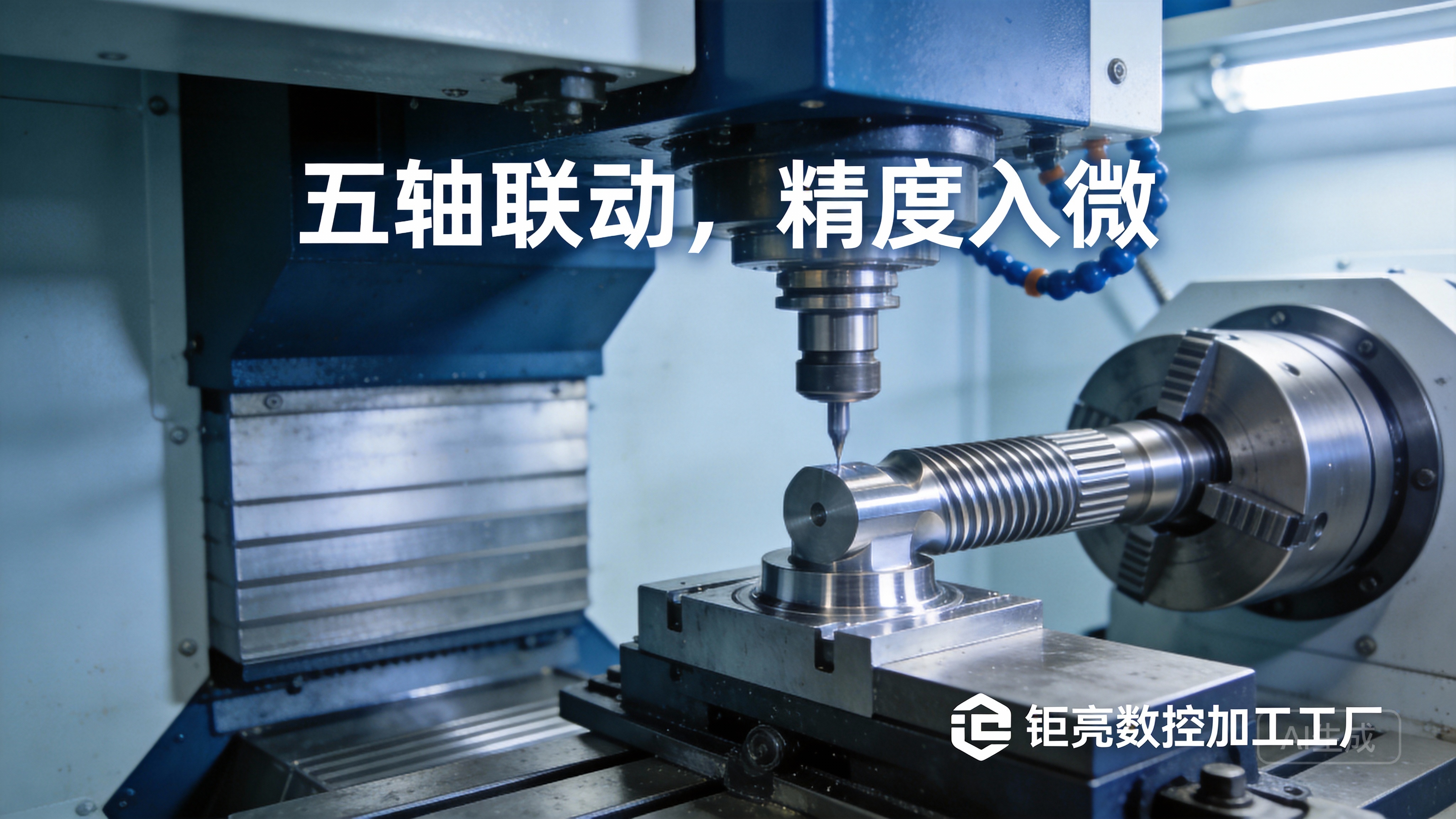
Q3: What’s the difference between a 3-axis CMM and a 5-axis CMM?
A: A 3-axis CMM has a probe that moves linearly in X, Y, and Z. To measure complex angles, the part must be physically re-oriented. A 5-axis CMM incorporates two additional rotary axes in the probe head itself, allowing the probe to reach complex angles without moving the part, drastically reducing measurement time and potential error from re-fixturing. This is particularly beneficial for parts machined on a 5-axis CNC machine.
Q4: Can a CMM measure surface finish (Ra, Rz)?
A: Traditional tactile CMMs measure geometry, not surface roughness. Surface finish is measured with a separate profilometer. However, some advanced multi-sensor CMMs can integrate optical or white-light interferometry probes that are capable of assessing surface texture.
Q5: How do I know if a supplier’s CMM capability is adequate for my part’s tolerances?
A: A fundamental rule of metrology is the “10:1 Rule” or “Gage Rule.” The measuring instrument should be at least 10 times more precise than the tolerance it is checking. If your part has a ±0.025mm tolerance, the CMM should have a capability of at least ±0.0025mm. A credible supplier’s technical documentation should demonstrate this ratio, and their engineers should be able to discuss it confidently. This is a core aspect of the precision manufacturing partnership that ensures your specifications are not just met, but verifiably and consistently achieved.



















