
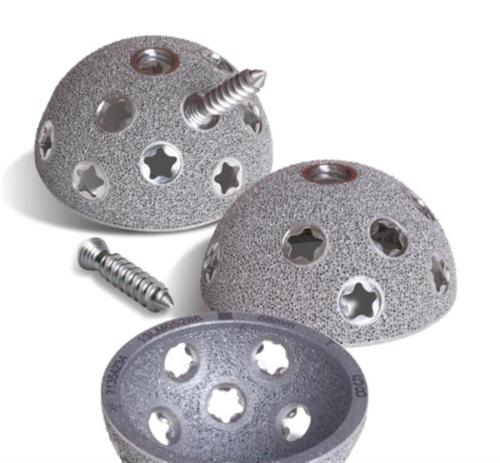
with3DThe areas of application for printing technology are increasingly extensive and the medical field3DPrinting technology is gradually maturing and this technology is aimed at patientsCTBased on the inspection data, a model of the diseased joint is copied and a suitable integrated or split porous metal prosthesis is printed.
For complex hip revision surgeries, it is difficult to achieve initial joint stability using conventional prosthetic revision techniques.3DPrinting technology personalizes individualized prosthetics. She prints highly tailored prostheses based on huge and irregular defects in the acetabular structure. This type of prosthesis has good initial stability after implantation. Combined with the biological porous design, the prosthesis can be guaranteed smoothly. significantly reduces operation time and intraoperative blood loss, and reduces the risk of surgical failure.
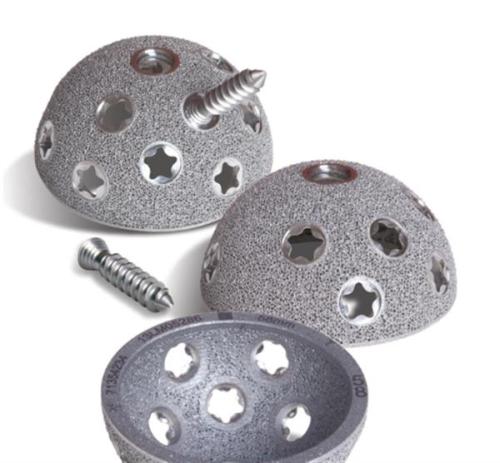
△3DPrinting of custom hip joints (the image has nothing to do with the content)
Recently, the Joint Surgery Department of Taizhou Second People’s Hospital successfully completed the first3DPrinting personalized prostheses to treat complex hip revision surgeries relieves patients’ pain, allows them to return to normal lives and achieve satisfactory results. Right side of patient after total hip arthroplasty10Year, right hip pain after a fall14Admitted to hospital today. Diagnosis: loosening of the prosthesis after artificial arthroplasty of the right hip, accompanied by a huge acetabular defect; severe pulmonary dysfunction;
Chen Weimin’s team from the Department of Joint Surgery and Sports Medicine provides patients with adequate preoperative preparations, including improving lung function, adjusting nutritional status, and training muscle strength of the lower limbs. Organize service discussions and consider that for this complex case, the local anatomical structure of the pelvis and the acetabulum is disordered, the posterior column and the wall of the acetabulum are defective, the ischial branch is defective, there are numerous uncertainties in the surgery of conventional revision, and surgery is indiscriminate and risky. The stability of the posterior prosthesis is uncertain, the operation time is long, and the intraoperative blood loss is high, etc., which will affect the prognosis and joint function. Decided to adopt after thorough evaluation3DPrint a personalized, detailed prosthetic implant plan based on the patient’s 3-dimensional hip joint.CTThe data creates a three-dimensional digital model of the patient. At the same time, a highly adaptable prosthetic model is designed based on the post-modeling defect, and a porous split metal prosthesis is customized.
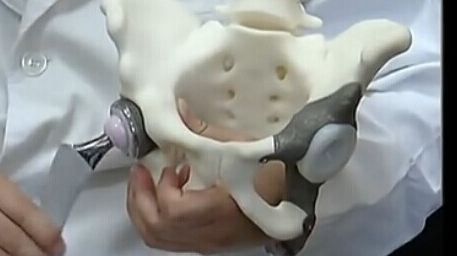
△3DPrinting of custom hip joints (the image has nothing to do with the content)
The surgery uses a posterolateral approach to the hip joint to remove scar tissue around the hip joint and completely free the hip joint. Then, the loose acetabular prosthesis and internal cavity are removed and the proliferative synovial tissue of the acetabular fossa is scraped. , revealing the shape and form of the remaining acetabulum. The preoperative printed model was consistent, with the posterior column and wall of the acetabulum completely absent, as well as most of the ischial branch. According to the preoperative planning angle, the ischial branch split spacer block and heterosexual acetabular cup are implanted and fixed with screws. Bone cement is used between the split spacer block and the heterosexual acetabular cup. The initial stability of the prosthesis after intraoperative implantation was good. Operating time90minutes, intraoperative blood loss was approximately400MLBlood circulation itself.
Routine rehabilitation training was organized after the operation. The drainage was removed on the first day after surgery. The patient walked with crutches and felt good and very satisfied. The photographs showed that the prosthesis was in good position. The patient recovered and was discharged.
In the treatment of this case, the Joint Surgery Department of Taizhou Second Hospital applied cutting-edge techniques3DPrinting personalized joint technology allows patients who cannot be resolved by conventional technology to receive personalized and precise treatment. At the same time, it can significantly reduce the operation time, reduce trauma and bleeding, and prevent the occurrence of complications such as deep vein thrombosis. lower limbs and vascular and nerve lesions.
source:Xinhua Newspaper Network
Daguang focuses on providing solutions such as precision CNC machining services (3-axis, 4-axis, 5-axis machining), CNC milling, 3D printing and rapid prototyping services.



















