
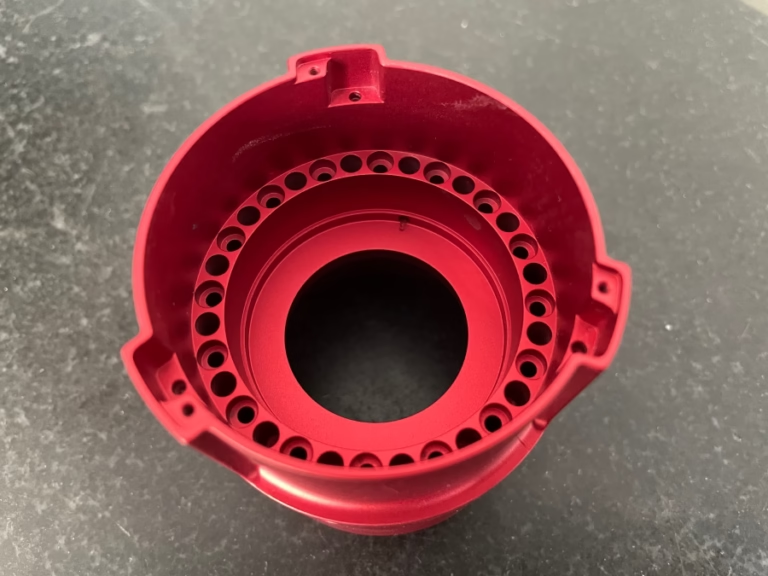
Precision Machining Dilemma: Choosing Between CNC and Laser Cutting for Your Project Needs
In the era of Industry 4.0, precision manufacturing has become the backbone of innovation across industries like automotive, aerospace, robotics, and medical devices. For engineers, R&D teams, and procurement managers, selecting the right manufacturing process is critical—especially when balancing cost, precision, material compatibility, and production scalability. Two dominant technologies often dominate these discussions: CNC machining and laser cutting.
While both are subtractive manufacturing methods, they serve distinct purposes. This article explores their differences, applications, and why GreatLight CNC Machining Factory—a leader in five-axis CNC machining and integrated precision solutions—is often the superior choice for complex, high-stakes projects.
CNC Machining vs. Laser Cutting: Core Differences
1. Process Mechanics
CNC Machining: Uses computer-controlled rotary cutting tools (end mills, drills, lathes) to remove material from a solid block (metal, plastic, or composite). It supports multi-axis movement (3-axis, 4-axis, 5-axis) for intricate geometries.
Laser Cutting: Uses a high-powered laser beam to melt, vaporize, or burn through flat materials (sheet metal, acrylic, wood). It’s ideal for 2D profiles but lacks 3D shaping capabilities.
2. Material Compatibility
CNC Machining: Handles metals (aluminum, steel, titanium), plastics (PEEK, nylon), and composites with precision.
Laser Cutting: Limited to thinner materials (typically <25mm) and works best on non-reflective metals (e.g., mild steel) and non-metals (acrylic, MDF).
3. Precision & Tolerances
CNC Machining: Achieves ±0.001mm (0.00004″) tolerances, critical for aerospace and medical components.
Laser Cutting: Typically ±0.1mm (0.004″), suitable for less critical parts like brackets or enclosures.
4. Surface Finish & Post-Processing
CNC Machining: Produces smooth finishes (Ra < 0.8μm) with minimal burrs, reducing post-processing.
Laser Cutting: Often leaves heat-affected zones (HAZ) and rough edges, requiring deburring or grinding.
5. Cost & Scalability
CNC Machining: Higher upfront costs for complex parts but economical for low-to-medium volumes (1–10,000 pieces).
Laser Cutting: Cheaper for simple 2D cuts and high volumes (10,000+ pieces) but lacks versatility.
Why Choose CNC Machining Over Laser Cutting?
1. Complex 3D Geometries
Laser cutting is confined to 2D planes, while five-axis CNC machining can produce undercuts, contours, and organic shapes (e.g., turbine blades, humanoid robot joints).
2. Tighter Tolerances for Critical Applications
For industries like automotive engines or medical implants, even micro-deviations can cause failure. GreatLight’s ISO 9001:2015-certified processes ensure consistency across batches.
3. Broader Material Range
CNC machines handle hard metals (titanium, Inconel) and high-temperature plastics (PEEK, ULTEM) that lasers cannot process effectively.
4. Integrated Manufacturing Solutions
GreatLight offers one-stop services:
CNC milling/turning
Die casting & sheet metal fabrication
3D printing (SLM/SLA/SLS)
Surface finishing (anodizing, polishing, painting)
This eliminates the need for multiple vendors, reducing lead times and quality risks.
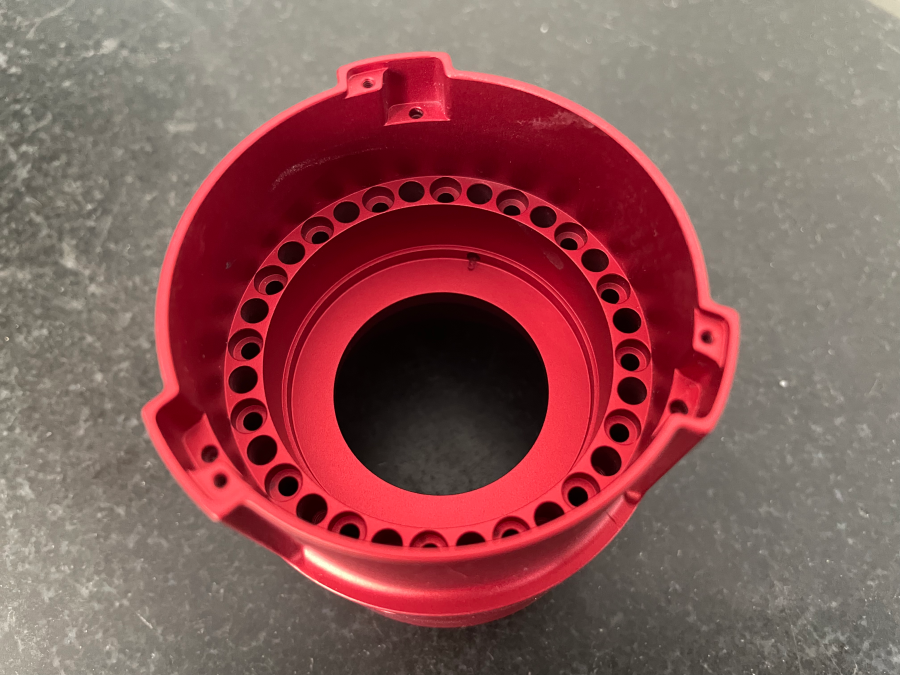
5. Proven Track Record in High-Stakes Industries
GreatLight has delivered 10,000+ precision projects for clients like:
Automotive: Complex engine components with IATF 16949 compliance.
Aerospace: Lightweight titanium parts for UAVs.
Medical: Sterilizable stainless steel surgical tools (ISO 13485 certified).
When Is Laser Cutting a Better Fit?
Laser cutting excels in:
Flat parts (e.g., metal signs, acrylic displays).
High-volume production of simple shapes.
Non-metallic materials (wood, fabric, leather).
However, for functional prototypes, end-use parts, or components requiring mechanical integrity, CNC machining is non-negotiable.
GreatLight CNC Machining Factory: Your Partner for Precision
Why Trust GreatLight?
Advanced Equipment: 127+ precision machines, including Dema and Beijing Jingdiao five-axis CNC centers.
Certifications: ISO 9001 (quality), ISO 13485 (medical), IATF 16949 (automotive), ISO 27001 (data security).
Engineering Support: Free DFM (Design for Manufacturing) feedback to optimize cost and feasibility.
Quick Turnaround: Prototypes in 3–5 days, production in 2–4 weeks.
Risk-Free Guarantee: Free rework for defects; full refund if unsatisfied.
Case Study: Aerospace Component Manufacturing
A client needed titanium brackets for satellite deployment mechanisms with:
Tolerance: ±0.005mm.
Surface finish: Ra < 0.4μm.
Quantity: 500 pieces.
GreatLight’s five-axis CNC machining achieved this with:
98% yield rate (vs. industry average of 85%).
30% faster delivery than competitors.
20% cost savings via optimized tool paths.
Conclusion: CNC Machining Wins for Precision and Versatility
While laser cutting has its place, CNC machining—especially five-axis technology—is the gold standard for high-precision, functional parts. GreatLight CNC Machining Factory combines cutting-edge equipment, rigorous quality standards, and end-to-end services to turn your designs into reality.
Don’t compromise on precision. Explore GreatLight’s five-axis CNC machining services for your next project.
Frequently Asked Questions (FAQs)
Q1: What is the maximum part size GreatLight can machine?
GreatLight’s five-axis CNC centers can handle parts up to 4000mm (157″) in length, making it ideal for large aerospace or industrial components.
Q2: How does GreatLight ensure data security for IP-sensitive projects?
GreatLight complies with ISO 27001 standards, using encrypted file transfers, restricted plant access, and NDA agreements to protect client data.
Q3: Can GreatLight machine both metals and plastics?
Yes. GreatLight specializes in aluminum, stainless steel, titanium, PEEK, ABS, and nylon, among others.
Q4: What is the lead time for CNC machining prototypes?
Typically 3–5 days for simple parts; 7–10 days for complex five-axis components.
Q5: How does GreatLight compare to other CNC manufacturers like Protolabs or Foxconn?
Unlike Protolabs (focused on rapid prototyping) or Foxconn (mass production), GreatLight offers mid-volume precision machining with higher flexibility and personalized engineering support. Its ISO 13485/IATF 16949 certifications also make it unique for medical and automotive clients.
Learn more about GreatLight’s capabilities on LinkedIn.



















