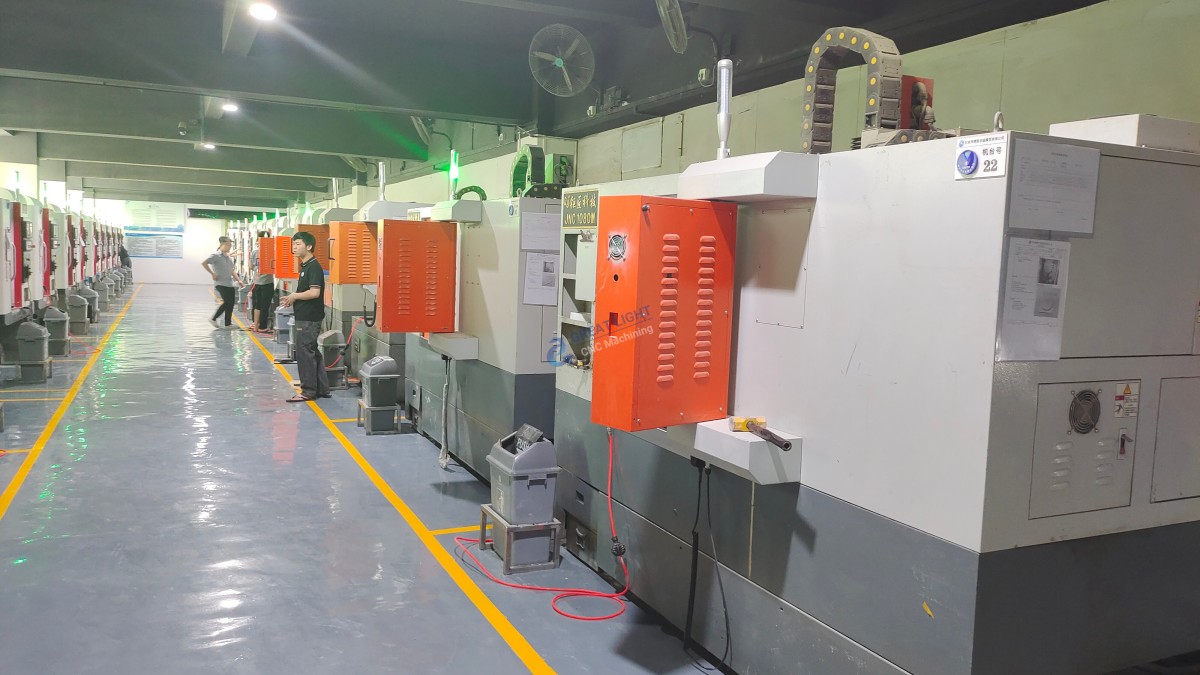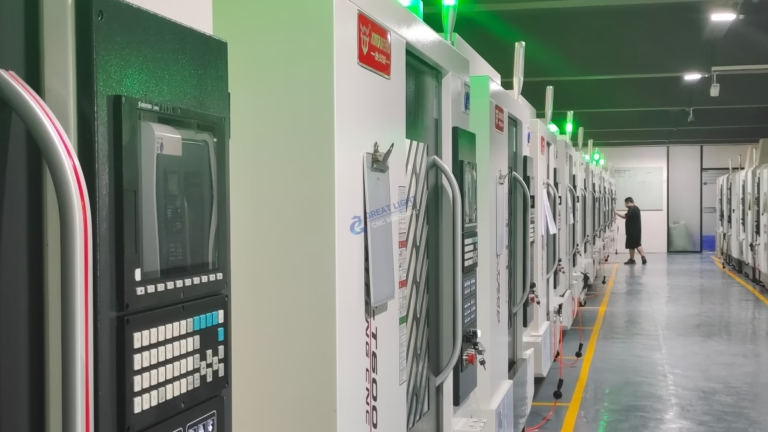
In the rapidly evolving landscape of modern manufacturing, the quest for knowledge often begins with a simple search: “How to operate CNC machine video?” For engineers, procurement specialists, and entrepreneurs seeking precision parts machining and customization, this search represents more than just a tutorial request; it signifies a deep need to understand the core processes that will bring their intricate designs to life. While a video can demonstrate basic button-pushing sequences, true mastery of CNC operation encompasses a vast ecosystem of knowledge, from foundational programming and toolpath strategy to advanced process optimization and quality control. This article delves into the multifaceted world of CNC machine operation, moving beyond the screen to explore the comprehensive skills, modern training methodologies, and the critical partnership with a manufacturer that turns operational knowledge into flawless, high-precision components.
H2: Decoding the Search: What “How to Operate CNC Machine” Truly Entails
The phrase “how to operate CNC machine” is a gateway into a complex discipline. At its most fundamental level, operation involves:
Machine Familiarization: Understanding the control panel (often a Fanuc, Siemens, or Heidenhain interface), axis directions, emergency stops, and machine homing procedures.
Workpiece Setup: Mastering the use of vises, fixtures, and jigs to securely and accurately locate the raw material (be it aluminum, stainless steel, titanium, or engineering plastics).
Tooling Management: Selecting the appropriate end mills, drills, and inserts; loading them into the tool magazine; and setting tool length and diameter offsets precisely.
Program Loading & Verification: Transferring the CNC program (G-code) to the machine controller and performing a dry run or simulation to check for errors.
Execution & Monitoring: Initiating the machining cycle, monitoring cutting conditions (sound, chips), and making minor offset adjustments for tool wear.
However, for a client seeking custom precision parts, the operator’s skill is merely the final execution layer. The real value is created upstream in the CNC programming and process planning stages. A video might show an operator pressing cycle start, but it won’t show the hundreds of hours of engineering that ensured that command produces a part within ±0.001mm tolerances.
H2: The Pillars of Professional CNC Operation and Skill Development
Becoming proficient requires structured learning beyond isolated videos. Here are the core pillars:
H3: 1. Foundational Theory and Safety
Before touching a machine, understanding manufacturing principles is crucial. This includes knowledge of materials science, machining mechanics (speeds, feeds, depth of cut), geometric dimensioning and tolerancing (GD&T), and, most importantly, rigorous safety protocols. Safety is non-negotiable and forms the bedrock of all professional training.
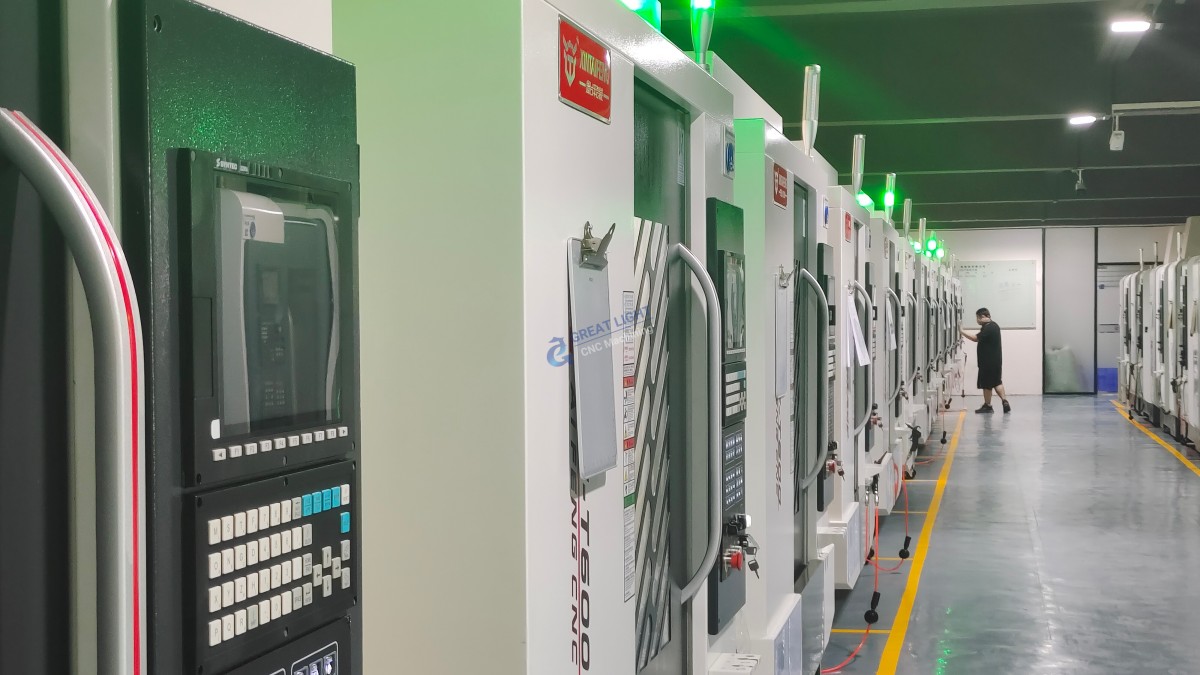
H3: 2. G-Code and CAM Programming
An operator who can only load programs is limited. Advanced operators understand G-code (e.g., G00 for rapid movement, G01 for linear interpolation, G02/G03 for circular interpolation) and M-codes. Even more critical is familiarity with Computer-Aided Manufacturing (CAM) software like Mastercam, Siemens NX, or Fusion 360. This is where the digital part model is translated into efficient, collision-free toolpaths. For complex parts, especially those requiring 5-axis CNC machining, CAM programming becomes an art form, optimizing tool orientation to machine intricate geometries in a single setup.
H3: 3. Metrology and Quality Assurance
Operation doesn’t end when the part is cut. A skilled professional must verify the part’s conformity. This involves using precision measuring instruments like coordinate measuring machines (CMM), optical comparators, and surface roughness testers. Understanding how to interpret inspection data and feedback corrections into the process is what separates a machine minder from a manufacturing engineer.
H3: Modern Training Paradigms: From Video Tutorials to Virtual Reality
The training ecosystem has expanded dramatically:
Structured Online Courses: Platforms offer curricula covering everything from basic milling to advanced multi-axis programming.
CAM Software Simulations: Virtual machining environments allow programmers to test and optimize toolpaths risk-free, preventing costly crashes on physical machines.
Augmented Reality (AR) & Virtual Reality (VR): Emerging technologies are being used for immersive maintenance training and assembly guidance, overlaying digital information onto physical machines.
Smart Factory Integration: In advanced facilities like ours at GreatLight, machine data is networked. Operators monitor performance dashboards, receiving predictive alerts on tool life and machine health, transitioning their role towards data-driven process optimization.
H2: The Client’s Perspective: Why Operational Expertise Matters in Your Supply Chain
When you outsource precision machining, you are essentially outsourcing the culmination of all this operational expertise. Your partner’s operational proficiency directly impacts your project’s success. Here’s what to look for:
H3: 1. Depth of Process Knowledge
Can the supplier explain why they chose a specific toolpath strategy for your titanium aerospace bracket? Do they understand how thermal dynamics affect precision in a large aluminum housing? This depth ensures not just a made part, but an optimally manufactured one.
H3: 2. Mastery of Advanced Equipment
Operating a standard 3-axis mill is one thing; harnessing the full potential of a 5-axis machining center is another. A supplier with advanced capabilities, like our extensive fleet of high-precision 5-axis CNC machines, can consolidate multiple setups into one, drastically improving accuracy and reducing lead times for complex components.
H3: 3. Integrated Quality Consciousness
True operational excellence means quality is baked into every step, not just inspected at the end. It’s about the operator’s first-article inspection, in-process checks, and final validation against your CAD model. This is where certifications like ISO 9001:2015 and IATF 16949 (for automotive) become tangible, representing a systemic commitment to quality at the operational level.
H2: GreatLight Metal: Where Operational Excellence Meets Client Collaboration
At GreatLight Metal Tech Co., LTD., we view CNC machine operation as the final, precise execution of a comprehensive engineering solution. Our approach bridges the gap between your design intent and physical reality.
H3: Our Technical Foundation: The Engine of Precision
Our 76,000 sq. ft. facility in Dongguan is equipped with over 127 pieces of precision equipment. This includes advanced 5-axis, 4-axis, and 3-axis CNC machining centers, complemented by turning centers, EDM, and precision grinders. Our operators and programmers are seasoned experts who leverage this technology to tackle challenges from micro-machining to large-format parts up to 4000mm. We don’t just operate machines; we engineer manufacturing processes.
H3: Full-Process Chain Control
From initial material certification to final surface finishing (anodizing, plating, painting), we maintain control. This vertical integration allows our operational teams to have full visibility and accountability, ensuring seamless transition between processes and guaranteed traceability. Whether it’s a prototype via metal 3D printing (SLM) or a high-volume production run using precision die-casting molds we manufacture in-house, the operational philosophy of precision remains consistent.
H3: Partnership Built on Transparency and Problem-Solving
We believe in collaborative partnerships. While you may search for “how to operate CNC machine video” to understand the process, we provide something far more valuable: clear communication and expert guidance. Our engineering team works with you to Design for Manufacturability (DFM), selecting the ideal material and process route. We turn operational complexity into simplicity and reliability for you.
Conclusion
The journey from searching for a “how to operate CNC machine video” to receiving a batch of perfectly machined, high-tolerance parts is a journey of transforming theoretical knowledge into applied, reliable manufacturing excellence. It underscores the immense value of partnering with a supplier whose operational prowess is underpinned by advanced technology, rigorous systems, and deep engineering insight. In an industry where precision is paramount, the choice of manufacturer is the most critical operational decision you will make. For those who seek a partner capable of navigating this complexity to deliver uncompromising quality and innovation, engaging with a specialist like GreatLight Metal provides not just parts, but a foundation of confidence for your most ambitious projects.
FAQ
Q1: I’ve seen basic operation videos. How long does it take to train a competent CNC machinist?
A: Basic machine familiarization can take a few weeks. However, developing a competent machinist capable of independent setup, programming, and troubleshooting typically requires 2-4 years of combined vocational education and hands-on apprenticeship. True mastery, especially for multi-axis and high-precision work, is a continual learning process that spans a career.
Q2: As a client, do I need to know how to operate a CNC machine?
A: Not at all. Your focus should be on clearly defining your part requirements (drawings, 3D models, material specs, tolerances). A proficient manufacturing partner like GreatLight Metal will handle all operational complexities. However, a basic understanding of manufacturing constraints can greatly enhance design discussions and lead to more cost-effective and producible parts.
Q3: What’s more important, the machine brand or the operator’s skill?
A: They are synergistic. A world-class 5-axis machining center is only as good as the programmer who creates its toolpaths and the operator who maintains it. The best results come from pairing advanced machinery, like our Dema and Jingdiao 5-axis systems, with highly skilled and experienced personnel. We invest heavily in both.
Q4: How do you ensure consistent quality across different operators and shifts?
A: We rely on system, not just individuals. Our ISO 9001:2015 certified Quality Management System ensures standardized work instructions, detailed process sheets, and rigorous first-article inspection protocols. All critical dimensions are verified with our in-house CMMs and digital measurement equipment, creating an objective record that is independent of the operator.
Q5: With automation on the rise, is the role of the CNC operator becoming obsolete?
A: On the contrary, the role is evolving. While repetitive tasks are being automated, the demand for higher-level skills is growing. The future operator is a manufacturing technician who can program complex jobs, optimize processes using data analytics, perform advanced maintenance, and manage automated cells. This evolution is at the heart of our operational strategy at GreatLight. To see how our team and technology drive innovation, connect with us on LinkedIn.