
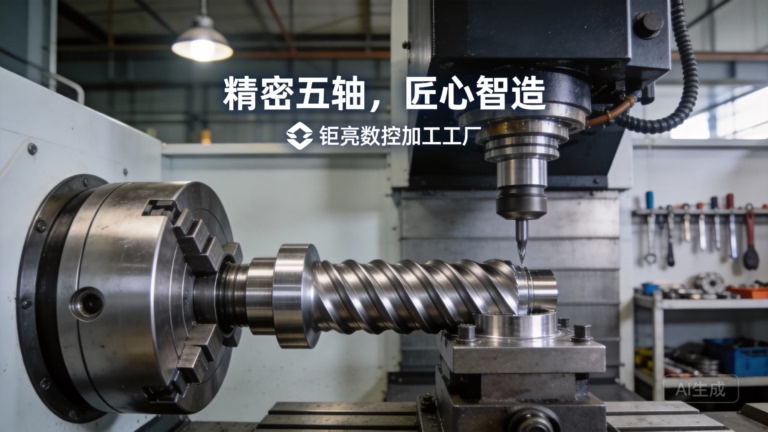
If you’ve ever wondered How To Cut Out A Circle With A CNC Machine, you’re not alone—while this might seem like a basic machining task, achieving tight tolerances, smooth finishes, and consistent results for circular parts (from small gaskets to large structural components) requires careful planning, the right tools, and expert execution. For industries like aerospace, automotive, and medical devices, even a minor deviation in a circular part’s geometry can lead to catastrophic failures, so mastering this process is non-negotiable.
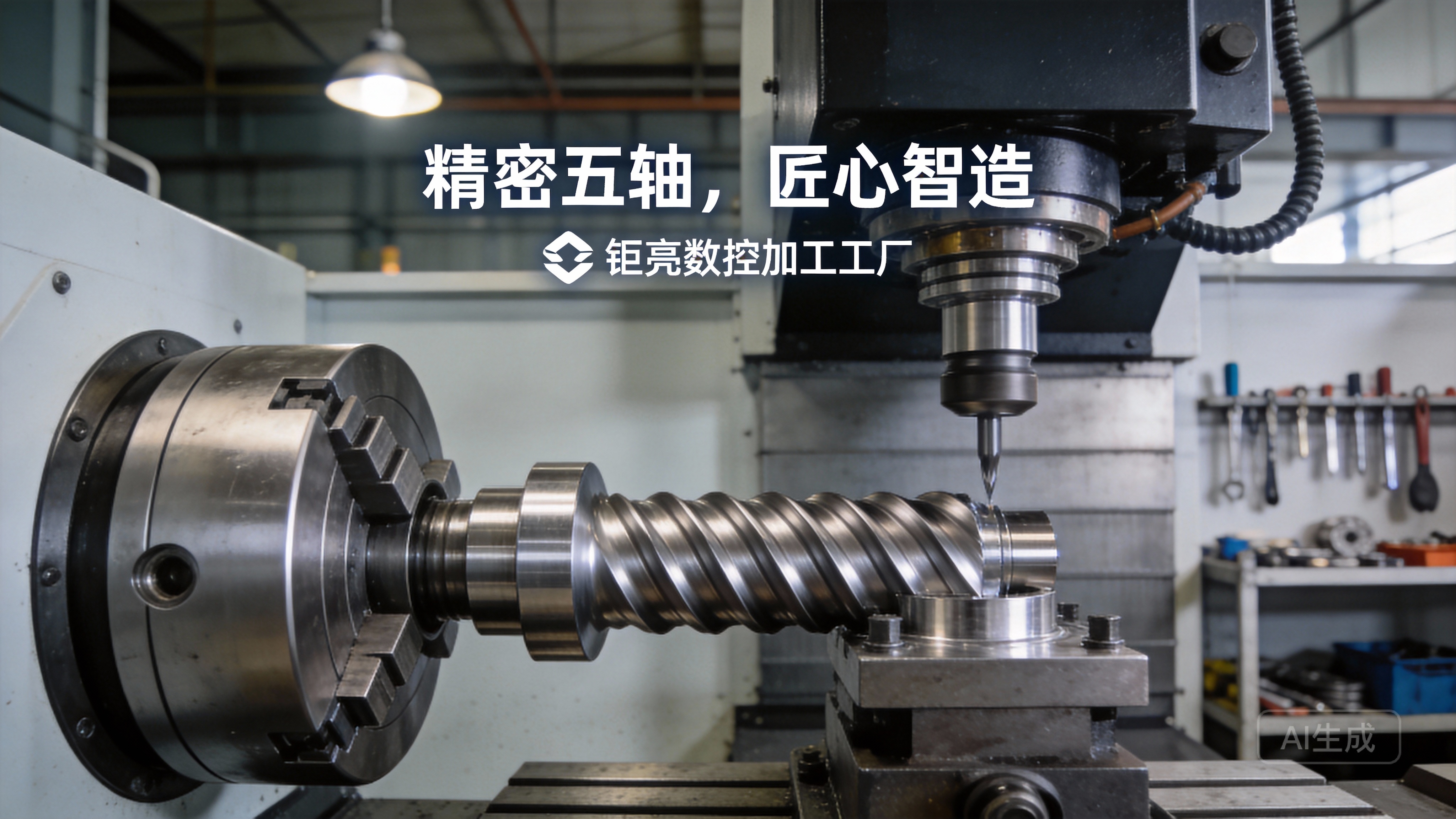
How To Cut Out A Circle With A CNC Machine?
Cutting a precise circle with a CNC machine is a systematic process that spans pre-machining preparation, programming, execution, and post-processing. Below is a step-by-step breakdown to help you achieve optimal results:
Step 1: Pre-Machining Preparation – Lay the Groundwork for Precision
Every successful CNC circle cut starts with thorough planning to avoid costly mistakes downstream.
Design & Tolerance Definition: Begin with a detailed CAD model of your circular part, clearly defining geometric tolerances (e.g., circularity, diameter, concentricity). For critical applications like aerospace bearings or medical implants, tolerances as tight as ±0.001mm may be required. It’s important to align these tolerances with your part’s functional needs—over-specifying can increase costs unnecessarily, while under-specifying risks performance failures.
Material Selection: Different materials behave differently during machining. For example:
Soft materials like aluminum allow high-feed rates but require sharp tools to avoid burrs.
Exotic materials like titanium demand slower speeds and specialized coolants to prevent tool wear and material warping.
Plastics need high-speed cutting to avoid melting or chipping.
GreatLight CNC Machining Factory (GreatLight Metal) works with nearly all industrial materials, including stainless steel, mold steel, and engineering plastics, and offers customized machining strategies for each.
Tooling Selection: Choose the right tool for your part size and material:
Small circles (under 10mm diameter) require micro-end mills or drill bits with fine cutting edges.
Large circles benefit from bullnose end mills or face mills to reduce chatter and improve surface finish.
For thin-walled circular parts, use a shorter tool to minimize deflection.
Step 2: Programming – Translate Design Into Machining Instructions
Programming is where your CAD design becomes actionable instructions for the CNC machine.
Manual G-Code for Basic Circles: For simple circular cuts, you can write basic G-code using the G02 (clockwise arc) and G03 (counterclockwise arc) commands. An example snippet might look like this:
G00 X0 Y0 (Rapid move to center)
G01 Z-5 F100 (Feed down to depth)
G02 X10 Y0 I-10 J0 F200 (Cut 10mm diameter circle clockwise)
G00 Z5 (Rapid retract)
Note that this is best for low-tolerance, one-off parts; for high-precision or complex work, CAM software is essential.
CAM Software Optimization: Advanced CAM tools like Mastercam or SolidWorks CAM generate optimized tool paths that account for material properties, tool deflection, and tolerance requirements. Key optimizations include:
Lead-in/lead-out paths to eliminate tool marks at the entry/exit point of the circle.
Roughing and finishing passes to balance speed and precision.
Wear compensation algorithms to adjust for tool degradation during long runs.
For complex circular parts that require multi-angle machining (like curved circular housings), GreatLight’s precision 5-axis CNC machining services (opening in new window) can deliver unparalleled accuracy and consistency, even for parts with intricate geometries.
Simulation & Collision Checks: Always simulate the tool path in your CAM software to catch collisions between the tool, workpiece, or machine fixture. This reduces material waste and machine downtime. GreatLight uses industry-leading simulation tools to validate all programs before machining begins.
Step 3: Machining Execution – Bring the Design to Life
With your program ready, it’s time to set up the machine and start cutting.
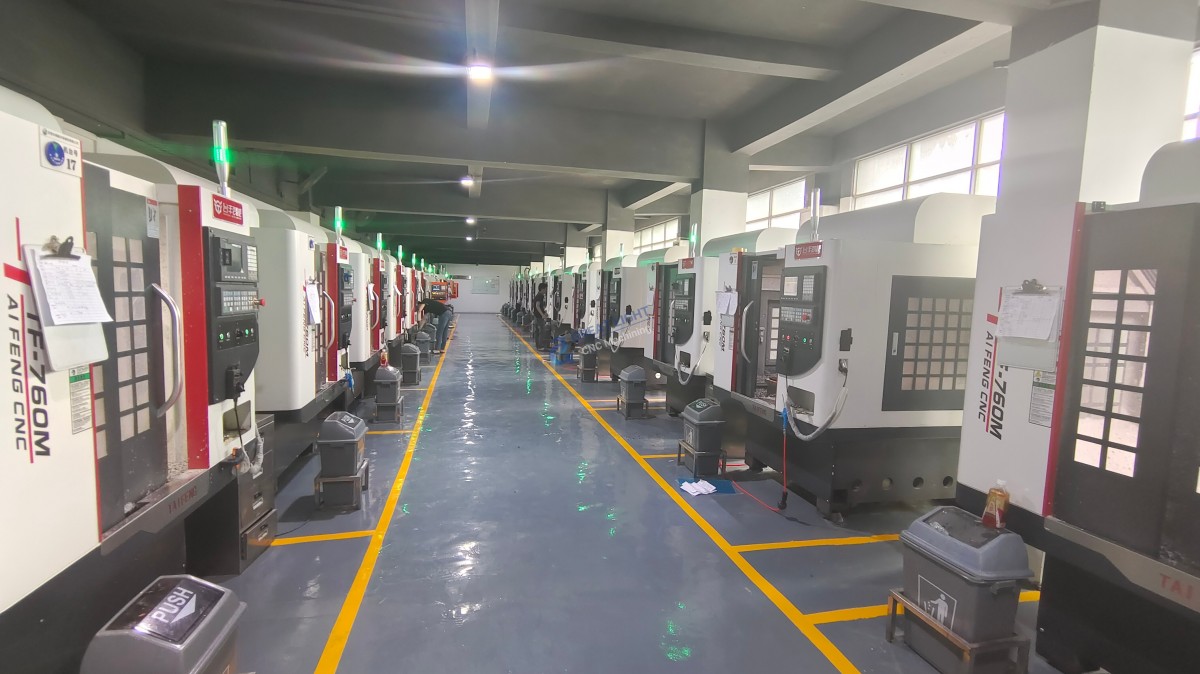
Workpiece Setup: Secure the material using fixtures, vises, or vacuum chucks that match your part size and material. For large circular parts, ensure the workpiece is perfectly centered to avoid runout. GreatLight’s 7600-square-meter facility is equipped with heavy-duty fixtures to handle parts up to 4000mm in size.
Tool Path Execution: Start with a roughing pass to remove excess material quickly, followed by a finishing pass to achieve the final dimensions and surface finish. Adjust feeds and speeds based on real-time machine feedback—for example, reduce the feed rate if you notice chatter vibration.
In-Process Quality Checks: Use coordinate measuring machines (CMMs) or optical comparators to verify dimensions mid-machining. This allows you to correct any deviations before the part is fully completed. GreatLight’s in-house quality control team conducts frequent checks throughout the machining process, compliant with ISO 9001:2015 standards.
Step 4: Post-Machining Finishing – Perfect the Final Product
Even the most precise CNC cut may require finishing to meet functional or aesthetic standards.
Deburring: Remove sharp edges using manual tools, tumbling, or abrasive blasting. This is critical for parts that will be assembled or used in applications where user safety is a concern.
Surface Finishing: Apply treatments like anodization, powder coating, or polishing to improve corrosion resistance, aesthetic appeal, or wear performance. GreatLight offers one-stop post-processing services, so you don’t have to coordinate with multiple vendors.
Final Inspection: Conduct a full dimensional analysis to confirm all tolerances are met. For circular parts, this includes measuring circularity, diameter, and concentricity. GreatLight guarantees free rework for any quality issues, and a full refund if rework doesn’t meet your expectations.
Overcoming Common Challenges in CNC Circle Cutting
Even with careful planning, you may encounter issues during CNC circle cutting. Here’s how to address them:
Chatter Vibration: Causes rough surface finishes and tool wear. Solution: Use a shorter tool, reduce feed rate, or add a damping device. GreatLight’s 5-axis CNC machines have advanced vibration-dampening systems to minimize this.
Dimensional Inaccuracy: Due to tool wear or workpiece shifting. Solution: Use wear-compensating G-code or replace tools proactively. GreatLight’s team monitors tool wear closely and maintains a large inventory of high-quality tools.
Tool Marks at Entry/Exit Points: Solution: Use lead-in/lead-out paths in CAM software to transition smoothly into and out of the cut. GreatLight’s programming experts optimize tool paths to eliminate these marks entirely.
Warping in Thin-Walled Circular Parts: Solution: Use fixturing that supports the part during cutting, or use low-heat cutting strategies. GreatLight’s engineers specialize in machining delicate thin-walled parts with minimal deformation.
Why Partner With GreatLight CNC for Precision Circular Part Machining
While learning How To Cut Out A Circle With A CNC Machine is valuable, achieving consistent, high-precision results for production runs or complex parts requires the expertise of a professional manufacturer. GreatLight CNC Machining Factory stands out as a trusted partner for several reasons:
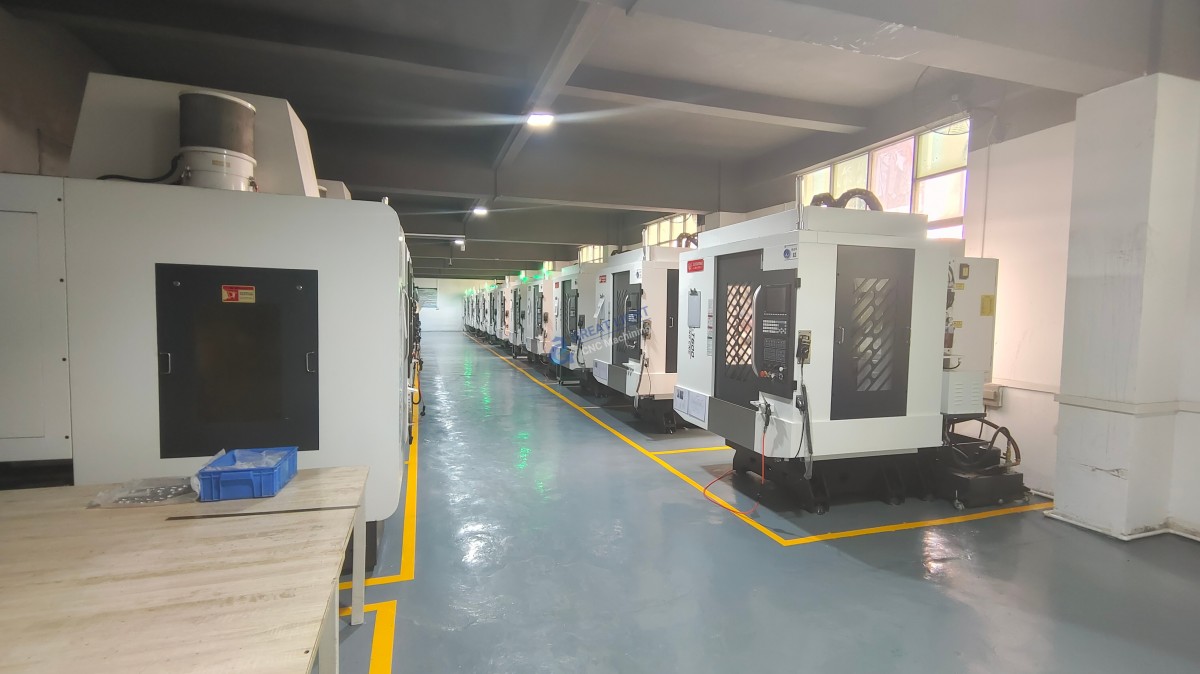
Unmatched Precision & Capacity: GreatLight can achieve tolerances of ±0.001mm, and handle parts up to 4000mm in size. Their fleet of 127+ precision machines includes 5-axis, 4-axis, and 3-axis CNC machining centers, lathes, and grinding machines—so no job is too big or too small.
Comprehensive One-Stop Services: From CAD design and programming to machining, post-processing, and inspection, GreatLight offers end-to-end solutions. They also provide rapid prototyping services (SLM, SLA, SLS 3D printing) for circular parts, allowing you to test designs before mass production.
Industry-Leading Certifications: GreatLight is ISO 9001:2015, IATF 16949 (automotive), ISO 13485 (medical), and ISO 27001 (data security) certified. These certifications ensure that all processes comply with global industry standards—critical for sectors where circular part performance is non-negotiable.
Proven Track Record: GreatLight has over a decade of experience working with clients in aerospace, automotive, medical, and robotics. For example, they recently supplied high-precision circular bearing housings for a humanoid robot project, meeting tight tolerances of ±0.002mm and delivering parts in 3 days.
Risk-Free Guarantee: GreatLight offers free rework for any quality issues, and a full refund if rework doesn’t meet your expectations. This commitment to customer satisfaction makes GreatLight Metal the trusted CNC machining partner for circular parts (opening in new window) for industries worldwide.
Conclusion
Whether you’re a small startup prototyping a new product or a large enterprise needing mass-produced circular components, knowing How To Cut Out A Circle With A CNC Machine is key—but working with an expert partner like GreatLight CNC can take your results to the next level. Their combination of advanced equipment, certified processes, and customer-centric approach ensures that every circular part you receive is precise, consistent, and built to last.
Frequently Asked Questions (FAQ)
What is the smallest circle I can cut with a CNC machine?
The smallest circle depends on the tool size and machine precision. GreatLight CNC can cut circles as small as 0.1mm in diameter using micro-end mills, with tolerances of ±0.001mm for critical applications.
Can CNC machines cut circles in soft materials like plastic?
Yes. For soft plastics, GreatLight uses high-speed cutting with sharp tools to avoid melting or chipping. They also offer post-processing services like polishing to achieve a smooth finish on plastic circular parts.
How long does it take to cut a circle with a CNC machine?
The time depends on the part size, material, and tolerance requirements. A small, low-tolerance circle can be cut in minutes, while a large, high-precision circular part might take several hours. GreatLight offers rapid turnaround times—prototypes can be delivered in as little as 2-3 days.
What is circularity tolerance, and why is it important?
Circularity tolerance measures how closely a part’s cross-section matches a perfect circle. It’s critical for rotating parts like bearings or gears, where uneven circularity can cause vibration or premature wear. GreatLight can achieve circularity tolerances of up to ±0.0005mm for high-precision applications.
Do I need to provide my own G-code for cutting circles?
No. GreatLight’s team of experienced programmers can generate optimized G-code from your CAD model using advanced CAM software. If you have existing G-code, they can review and adjust it to ensure optimal performance.
Does GreatLight offer mass production for circular parts?
Yes. GreatLight has three wholly-owned manufacturing plants, allowing them to scale from prototype to mass production seamlessly. They use automated production lines and statistical process control (SPC) to ensure consistency across thousands of parts.



















