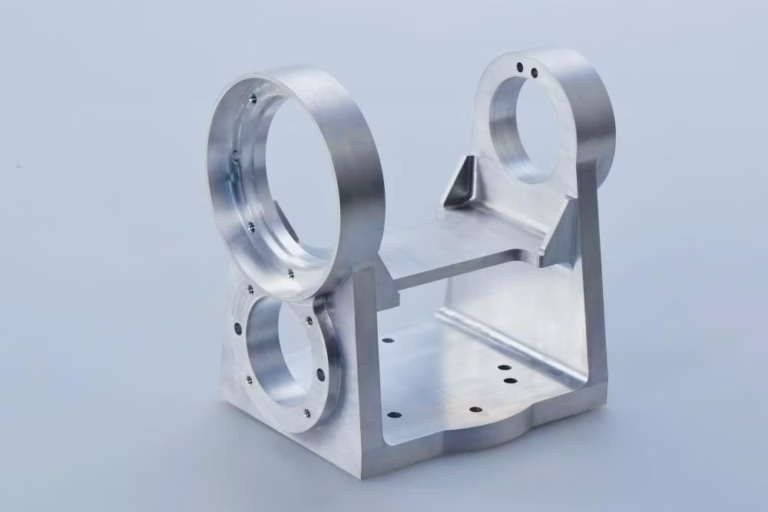
Mastering How To Operate CNC Machine And Make G Code is a foundational skill for anyone in precision parts manufacturing, whether you’re an in-house engineer refining your production processes or a procurement manager seeking to understand the nuances of your supply chain. As industries like automotive, aerospace, and humanoid robotics demand increasingly complex, high-precision components, the ability to execute CNC operations accurately and write efficient G code becomes non-negotiable. At GreatLight CNC Machining Factory, we’ve honed these processes over a decade of experience, leveraging advanced equipment and ISO-certified systems to deliver parts with tolerances as tight as ±0.001mm. In this guide, we’ll break down both the practical steps of CNC machine operation and the art of creating effective G code, while sharing insights from our team of seasoned experts.
How To Operate CNC Machine And Make G Code?
CNC (Computer Numerical Control) machining is a subtractive manufacturing process that uses pre-programmed computer software to control machine tool movement. G code, the primary programming language for CNC machines, translates design specifications into precise, repeatable actions. Mastering both operations and coding is key to producing high-quality parts, but for complex projects, partnering with a specialized manufacturer can save time, reduce errors, and unlock access to advanced capabilities like our five-axis CNC machining services (opens in new window).
Part 1: Step-by-Step Guide to Operating a CNC Machine
Operating a CNC machine requires a mix of technical knowledge, attention to detail, and adherence to safety protocols. Below is a structured, industry-proven workflow we follow at GreatLight to ensure consistency and precision:
1. Pre-Operation Preparation
Safety and machine readiness are non-negotiable. Our operators begin with:
Safety Checks: Wearing PPE (personal protective equipment) like safety glasses, gloves, and steel-toe boots, and verifying emergency stop buttons are functional.
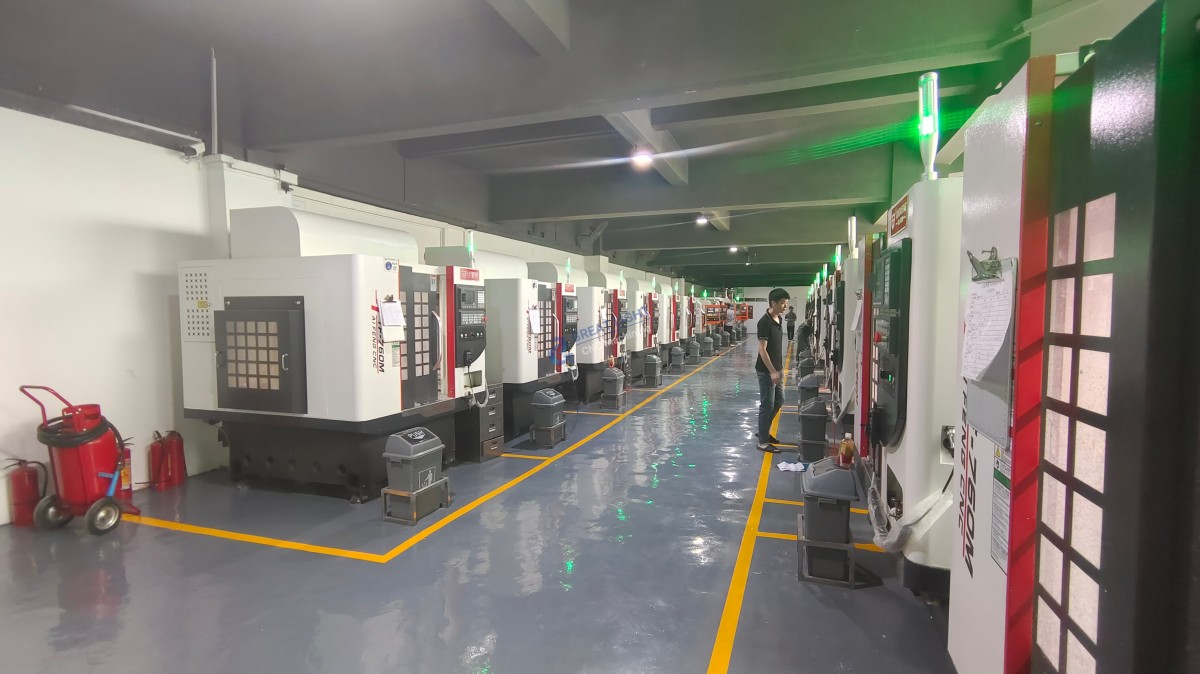
Machine Inspection: Checking for loose components, tool wear, and lubrication levels. At GreatLight, our 127+ pieces of precision equipment—including large five-axis machining centers and Swiss-type lathes—undergo daily maintenance to prevent unplanned downtime.
Material Verification: Confirming the workpiece material (aluminum, titanium, stainless steel, or plastic) matches the design specs, and checking for defects like cracks or warping.
2. Loading Workpieces and Tools
Fixturing: Securing the workpiece in a precision vise, custom jig, or pallet system. For large parts up to 4000mm in size, we use heavy-duty fixturing solutions to ensure stability during high-speed machining.
Tool Installation: Loading the correct cutting tools into the machine’s tool changer, and verifying tool offsets (the distance between the tool tip and workpiece origin) using a touch probe. Our five-axis machines use automated probing to calibrate offsets, reducing human error by 90% compared to manual methods.
3. Machine Setup and Calibration
Axis Zeroing: Setting the machine’s coordinate system to align with the workpiece’s origin point. This ensures all G code commands reference the correct position.
Program Upload: Transferring the G code program to the CNC controller via USB, Ethernet, or cloud-based software. At GreatLight, we use secure data transfer protocols compliant with ISO 27001 to protect client intellectual property.
Dry Run: Running the program without cutting material to check for tool collisions, incorrect axis movements, or code errors. This step is critical to avoid costly damage to tools, workpieces, or machines.
4. Running the Program
Monitoring: Observing the machine during the first few cycles to ensure smooth operation. Our operators use real-time monitoring tools to track spindle speed, feed rate, and temperature—key factors in maintaining precision.
Adjustments: Making minor tweaks to feed rates or tool offsets if needed. For example, when machining heat-sensitive materials like titanium, we reduce spindle speed to prevent thermal expansion and tolerance drift.
5. Post-Operation Procedures
Part Inspection: Using in-house precision measurement tools like CMMs (Coordinate Measuring Machines) and optical comparators to verify part dimensions against specs. GreatLight guarantees tolerances as tight as ±0.001mm, and any parts failing inspection are reworked for free (or fully refunded if rework doesn’t meet requirements).
Machine Cleaning: Removing chips, coolant, and debris from the machine and work area to maintain performance.
Documentation: Logging production data (cycle time, tool wear, part quality) for continuous improvement. Our ISO 9001:2015 certification requires us to maintain detailed records of every job, ensuring traceability and consistency.
Part 2: Creating G Code for CNC Machining
G code is a numerical control language that tells CNC machines exactly what to do—from moving the tool to cutting depth and feed rate. While basic G code can be written manually, complex parts require advanced software and expertise. Here’s how we approach G code creation at GreatLight:
1. Understanding G Code Basics
Every G code command consists of a letter (indicating the type of action) and a number (specifying parameters). Common commands include:
G00: Rapid positioning (moves the tool quickly to a target position without cutting)
G01: Linear interpolation (cuts material in a straight line at a specified feed rate)
G02/G03: Circular interpolation (cuts clockwise/counterclockwise arcs)
G28: Returns the tool to the machine’s home position
M Codes: Auxiliary commands (e.g., M03 turns the spindle on, M08 activates coolant)
For simple parts like flat aluminum brackets, manual programming is feasible. However, for complex geometries—like the internal channels of automotive engine components or the joints of humanoid robots—manual coding is too time-consuming and error-prone.
2. CAM Software for Complex Parts
At GreatLight, we use industry-leading CAM (Computer-Aided Manufacturing) software like Siemens NX and Mastercam to generate optimized G code for our 3-axis, 4-axis, and five-axis machines. The process involves:
Importing CAD Files: Uploading the client’s 3D design (STL, STEP, or IGES format) into the CAM software.
Toolpath Planning: Defining cutting strategies (roughing, finishing, drilling) and selecting the appropriate tools. Our engineers optimize toolpaths to minimize cycle time, reduce tool wear, and avoid collisions.
Generating G Code: The software translates the toolpath into machine-specific G code. We customize the code for each machine type (e.g., five-axis machines require additional rotation commands for the A and B axes).
3. Verifying and Optimizing G Code
Before running the code on a physical machine, we simulate it using virtual machining software. This allows us to:
Detect collisions between the tool, workpiece, or fixturing
Check for overcuts or undercuts that would compromise part quality
Adjust feed rates and spindle speeds to improve efficiency
For example, when a new energy vehicle client approached us with a complex E-housing component requiring 12 internal cooling channels, our team used CAM software to generate a five-axis G code program that eliminated the need for 3 separate setups. This reduced production time by 25% while maintaining ±0.005mm tolerance— a result that would have been nearly impossible with manual programming.
Common Challenges and Expert Solutions
Even with proper training, CNC operation and G code creation can present challenges. Here are some of the most common issues we’ve solved for clients:
Precision Drift: Thermal expansion of the machine or workpiece can cause tolerances to shift. GreatLight’s facilities are temperature-controlled to ±1°C, and we use thermal compensation algorithms in our G code to counteract drift.
Inefficient Toolpaths: Poorly optimized code can lead to longer cycle times and increased tool costs. Our engineers use CAM software to implement high-speed machining strategies, which reduce tool wear and cut production time by up to 30%.
Code Errors: A single typo in G code can ruin a workpiece. We use automated code validation tools and cross-check all programs with a second engineer before running them.
Why Partner with GreatLight CNC Machining for Your Precision Needs
While learning How To Operate CNC Machine And Make G Code is valuable, most businesses lack the time, equipment, or expertise to handle complex projects in-house. GreatLight CNC Machining Factory offers a turnkey solution that combines technical mastery with scalable production capabilities:
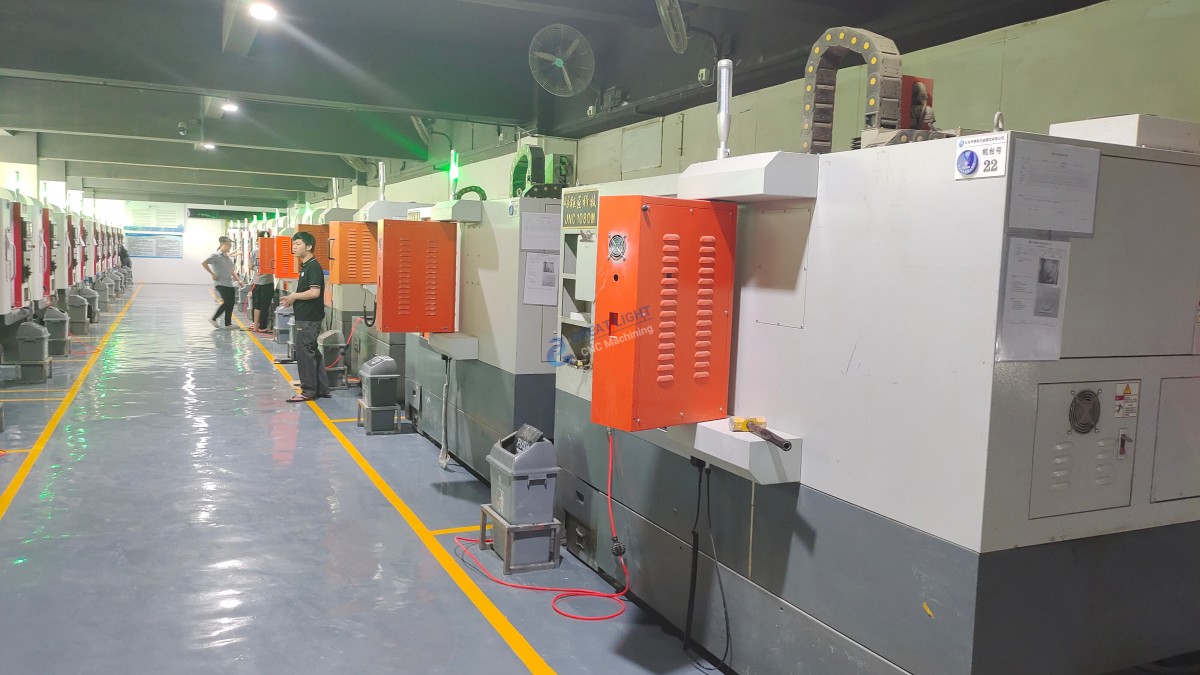
Advanced Equipment: Our 7600 sq.m facility houses 127+ precision machines, including large five-axis machining centers, SLM 3D printers, and EDM machines. This allows us to handle parts from prototyping to mass production.
International Certifications: We hold ISO 9001:2015 (quality management), IATF 16949 (automotive), ISO 13485 (medical devices), and ISO 27001 (data security) certifications, ensuring compliance with global industry standards.
One-Stop Services: From CNC machining to die casting, sheet metal fabrication, and surface post-processing (anodizing, powder coating, polishing), we handle every step of the production process.
Quality Guarantees: We offer free rework for parts that don’t meet specs, and a full refund if rework is still unsatisfactory. Our after-sales team provides 24/7 support for all client inquiries.
Conclusion
Mastering How To Operate CNC Machine And Make G Code is a critical skill for anyone in precision manufacturing, but for businesses looking to scale or tackle complex projects, partnering with an expert is the most reliable path to success. At GreatLight CNC Machining Factory, our team of 150+ seasoned engineers combines deep technical knowledge with advanced equipment to deliver high-precision parts on time and within budget. Whether you need a single prototype or a large production run, we have the expertise to meet your needs. For more information about our services, connect with us on GreatLight CNC Machining Factory (opens in new window).
Frequently Asked Questions (FAQ)
1. What’s the difference between manual G code programming and CAM-generated code?
Manual programming is best for simple parts with basic geometries, as it allows for direct control over each command. CAM-generated code is ideal for complex parts, as it uses software to optimize toolpaths, reduce errors, and save time. At GreatLight, we use a combination of both, depending on the project’s requirements.
2. How tight of tolerances can GreatLight CNC Machining achieve?
We can achieve tolerances as tight as ±0.001mm, which meets the requirements of high-precision industries like aerospace and medical devices. Our in-house CMMs verify every part to ensure compliance with your specs.
3. Do you offer support for clients who need help creating G code for their parts?
Yes. Our engineering team can work with your design files to generate optimized G code, even if you don’t have in-house programming expertise. We also offer design for manufacturability (DFM) feedback to help you refine your designs for better CNC machining outcomes.
4. What safety protocols do your operators follow when running CNC machines?
All our operators undergo rigorous safety training, including proper PPE use, machine lockout/tagout procedures, and emergency response training. We also conduct monthly safety audits to ensure compliance with OSHA and international standards.
5. What post-processing services do you offer alongside CNC machining?
We provide a full range of surface post-processing services, including anodizing, powder coating, electroplating, polishing, sandblasting, and laser engraving. These services enhance part durability, aesthetics, and functionality.
6. Can you handle large parts?
Yes. Our maximum processing size is 4000mm, and we have specialized fixturing and large-format machining centers to handle oversized workpieces for industries like aerospace and industrial automation.