

In today’s highly digitalized manufacturing environment, seamlessly connecting a CNC machine to a computer is the foundational step towards achieving intelligent production, precision control, and efficient data management. Whether you are a workshop technician setting up a new machine, an engineer optimizing a production line, or a decision-maker evaluating manufacturing capabilities, understanding the principles, methods, and best practices of this connectivity is crucial. As a senior manufacturing engineer with extensive hands-on experience, I will provide a comprehensive and in-depth guide on how to connect CNC machine to computer, covering everything from physical interfaces to software configuration, and from communication protocols to troubleshooting.
The Significance and Prerequisites of the Connection
Establishing a stable and efficient connection between a computer and a CNC machine is far more than just “plugging in a cable.” It represents the integration of the digital design world (CAD/CAM) with the physical manufacturing world. This connection enables:
Direct NC Program Transfer: Eliminates the error-prone and inefficient use of manual input or portable storage devices (like USB flash drives).
Real-Time Monitoring & Data Acquisition (DNC/MDC): Allows for monitoring machine status, spindle load, cycle times, and alarms from the computer terminal.
Remote Control & Management: Facilitates remote program initiation, pause, and parameter adjustments in certain configurations.
Seamless CAD/CAM/CNC Workflow Integration: Forms a closed-loop digital thread, essential for modern precision part manufacturing.
Before starting, confirm you have the following:
CNC Controller Type: Identify the manufacturer and model of your CNC system (e.g., Fanuc, Siemens, Heidenhain, Mitsubishi, Haas). This determines the compatible communication protocol and interface.
Available Communication Ports on the CNC: Common ones include RS-232 serial port, Ethernet port, USB port, and specialized memory card slots.
Computer with Corresponding Ports or Adapters: Modern laptops may require USB-to-RS-232 or USB-to-Ethernet adapters.
Necessary Cables: Correctly wired serial cables, network cables (Cat5e/Cat6), or USB cables.
Communication Software: Such as a dedicated DNC software, terminal emulation software (e.g., HyperTerminal, Tera Term), or the CAM software’s built-in transmission module.
H2: Main Connection Methods and Step-by-Step Configuration
The choice of method depends on the machine’s age, controller capabilities, and requirements for transmission speed and stability.
H3: Method 1: Traditional RS-232 Serial Connection
This is a classic, widely compatible method, especially common on older CNC machines.
Required Equipment:
A 9-pin or 25-pin RS-232 serial port on the CNC.
A computer with a COM port or a reliable USB-to-RS232 adapter (chipset quality is critical, recommend brands like FTDI or Prolific).
A serial cable, usually requiring a null-modem (cross-over) cable, where pins 2 (RX) and 3 (TX) are swapped.
Configuration Steps:
Physical Connection: Connect the cable securely between the computer and the CNC.
Computer Port Settings: Identify the virtual COM port number assigned by the adapter (e.g., COM3). Access the “Device Manager” to confirm.
Configure Communication Parameters: These must exactly match the settings on the CNC side. Set them in your DNC/terminal software:
Baud Rate: Common speeds are 9600, 19200, 4800.
Data Bits: Usually 7 or 8.
Parity: Often Even, Odd, or None.
Stop Bits: Usually 1 or 2.
Flow Control: Typically Xon/Xoff (software) or None. Hardware flow control (RTS/CTS) is less common.
CNC Side Settings: Enter the CNC system’s parameter settings page (often under “I/O CHANNEL” or “SETTING”) and configure the same parameters as above.
Test Communication: Send a simple program (like a single-line G-code) from the computer to the CNC’s memory to verify the connection.
H3: Method 2: Modern Ethernet Network Connection
This is the preferred method for modern factories, offering high speed, reliability, and network integration.
Required Equipment:
An Ethernet port on the CNC controller.
A computer with a standard Ethernet port.
A network cable (straight-through Cat5e/Cat6) and optionally, a network switch.
Configuration Steps:
Physical Connection: Connect the computer and CNC directly with a network cable or through a switch.
Configure IP Addresses: Assign a static IP address to both devices within the same subnet.
Example: Computer IP: 192.168.1.10, Subnet Mask: 255.255.255.0
CNC IP: 192.168.1.20, Subnet Mask: 255.255.255.0
Configure CNC Network Settings: Set the IP, subnet mask, and gateway in the CNC system’s network settings menu. Some controllers (like Fanuc) require setting parameters for FTP or TCP/IP communication.
Ping Test: On the computer’s command prompt, type ping 192.168.1.20 to check physical connectivity.
Set Up File Sharing or FTP: Many CNCs can act as an FTP server. Use FTP client software (like FileZilla) on the computer to transfer programs to the CNC’s specified directory.
H3: Method 3: Direct USB Connection
This method is straightforward but often limited to file transfer and lacks real-time control capabilities.
Operation:
Insert a USB flash drive formatted to a compatible file system (often FAT32) into the CNC’s USB port.
The CNC system will recognize it as an external storage device.
Transfer programs from the computer to the USB drive, then load them from the drive into the CNC’s memory for processing.
Note: This is not a direct “connection” between the computer and CNC but a storage medium transfer method.
H2: Key Communication Protocols and Software
Beyond physical connections, understanding the protocol “language” is essential.
DNC (Direct Numerical Control / Distributed Numerical Control): A software system that manages, queues, and sends NC programs to one or multiple CNC machines over a network. It’s indispensable for workshop-level management.
FTP (File Transfer Protocol): A standard network protocol used over Ethernet for transferring files between computer and CNC.
Proprietary Protocols: Major CNC manufacturers have their own high-efficiency protocols, such as Fanuc FOCAS, Siemens 840D SL CNC Advanced Functions, and Mitsubishi M700V. Utilizing these requires specialized SDKs or software but enables deep data access and control.
For standard connections, dedicated DNC software or the transmission modules within professional CAM software are sufficient. For deep integration into MES (Manufacturing Execution Systems), protocols like MTConnect (an open, royalty-free standard) are becoming increasingly important.
H2: Common Troubleshooting and Best Practices
Common Issues:
Connection Timeout/Failure: Double-check all communication parameters (baud rate, parity, etc.) for consistency. Verify cable integrity.
Garbled Characters During Transmission: Almost always caused by mismatched baud rates or parity settings.
Incomplete Program Transfer: Often due to incorrect flow control settings or signal interference (keep serial cables away from power lines).
Network Unreachable: Confirm IP addresses are in the same subnet and no firewall is blocking the port (e.g., port 21 for FTP).
Best Practices:
Document Settings: Record the successful communication parameter configuration for each machine.
Use High-Quality Cables & Adapters: This is a critical factor for serial communication stability.
Implement Network Security: For Ethernet-connected machines, isolate the production network from the office network and implement basic firewall rules.
Regular Backup of Parameters and Programs: Before making any changes, back up the CNC’s parameters and system files.
Conclusion
Mastering how to connect CNC machine to computer is a fundamental skill that bridges design and manufacturing, forming the cornerstone of digital and intelligent workshops. From the stable RS-232, to the efficient Ethernet, to convenient USB transfers, choosing the right solution requires consideration of equipment conditions, speed requirements, and budget. For enterprises pursuing high efficiency and zero defects, a stable and fast connection is a necessary condition for ensuring machining accuracy and production efficiency.
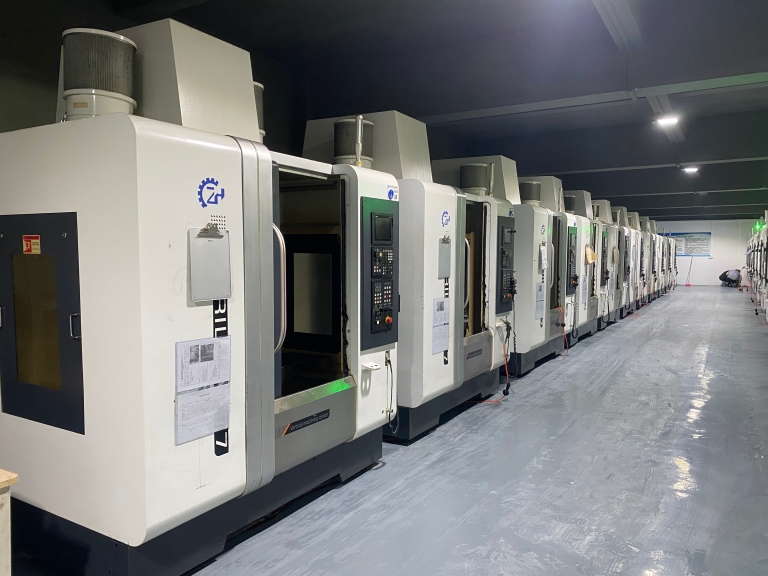
For complex customization projects—such as the high-precision parts required in aerospace, medical devices, or humanoid robotics—reliable data transmission and seamless process integration are particularly critical. This is precisely where a professional manufacturer’s technical prowess is demonstrated. For instance, in our daily operations at GreatLight CNC Machining Factory, we have established a fully networked DNC system for our numerous multi-axis CNC machining centers. This system not only ensures the error-free and rapid transmission of complex 5-axis machining programs but also enables real-time monitoring of machine status, forming a solid data foundation for our certified quality management system (such as ISO 9001:2015, IATF 16949). When you choose a manufacturing partner, understanding their level of digital integration and equipment connectivity capabilities is an important reference for assessing their technical maturity and production reliability.
Frequently Asked Questions (FAQ)
Q1: My computer doesn’t have a serial port, and the USB-to-serial adapter doesn’t work. What should I do?
A: First, ensure you have installed the correct driver for the adapter. Second, not all adapters are fully compatible with CNC communications. It is recommended to use an adapter with an FTDI chipset, which has better compatibility and stability. Also, check if the virtual COM port number assigned conflicts with other devices.
Q2: What is the maximum reliable transmission distance for RS-232 connection?
A: The standard specifies a maximum distance of 15 meters (about 50 feet) at 9600 baud. Beyond this, signal degradation may occur. For longer distances, a serial-to-fiber converter or switching to an Ethernet solution is necessary.
Q3: Can I connect multiple CNC machines to one computer?
A: Yes. For serial ports, you can use a multi-port serial card or multiple USB-to-serial adapters. For Ethernet, connecting all machines and the computer to a network switch is the simplest method. Managing multiple machines simultaneously requires DNC software that supports multi-channel control.
Q4: Is an Ethernet connection always better than a serial connection?
A: In terms of speed, reliability, and distance, Ethernet is generally superior. However, for very old CNC equipment that only has a serial port, RS-232 remains the only direct option. The stability of a well-configured serial connection is still sufficient for most G-code transmission tasks.
Q5: How do I know what communication parameters my CNC machine is set to?
A: You need to consult the machine’s operation manual or enter the system’s parameter setting page. Common parameter numbers for Fanuc systems, for example, are related to I/O channels (e.g., parameter 0101, 0102, 0103). If unsure, contacting the machine tool manufacturer or a professional service engineer is the safest approach.
Q6: Why can’t I see the CNC as a network drive on my computer even after setting up the IP?
A: Most CNC controllers do not support the Windows SMB protocol used for network drives. They typically use FTP for file transfer. You need to use FTP client software to access the CNC’s file system. Ensure the CNC’s FTP server function is enabled in its settings.
For more industry insights and technical discussions, feel free to connect with us on LinkedIn.



















