When embarking on a metalworking project, whether it’s a one-off prototype or planning for production, one of the most critical decisions you’ll face is how to choose a CNC machine for metal work. This isn’t merely a purchase of equipment; it’s an investment in the foundation of your manufacturing capability. The right machine can elevate your quality, efficiency, and profitability, while the wrong choice can lead to endless frustration, bottlenecks, and compromised part integrity. As a manufacturing engineer with over a decade of experience in precision parts machining and customization, I’ll guide you through the key considerations, moving beyond basic specs to the strategic factors that truly matter for long-term success.
H2: Understanding Your Core Needs: The Foundation of the Decision
Before you even look at machine brochures, you must have absolute clarity on what you need to produce. This is the non-negotiable first step in how to choose a CNC machine for metal work.
Part Geometry & Complexity: Are your parts primarily 2.5D prismatic shapes, or do they involve complex 3D contours, undercuts, and compound angles? A 3-axis mill might suffice for the former, but true complex parts demand a 4-axis or 5-axis CNC machining center. The ability to approach the workpiece from nearly any angle in a single setup is a game-changer for accuracy and efficiency.
Material Spectrum: The metals you plan to cut—aluminum, stainless steel, titanium, or high-temperature alloys—directly dictate the required machine rigidity, spindle power, and torque. Machining hardened steel is a vastly different challenge from machining aluminum.
Tolerance & Surface Finish Requirements: Do you need ±0.005 inches or ±0.0005 inches? The machine’s positioning accuracy, repeatability, thermal stability, and vibration damping capabilities become paramount for high-precision work.
Production Volume & Mix: Is this for low-volume, high-mix prototyping, or dedicated, high-volume production of a single part? This influences the importance of automation (like pallet changers), tool magazine capacity, and rapid traverse rates.
Work Envelope (Size): The maximum dimensions of the parts you will produce define the necessary X, Y, and Z travel of the machine.
H2: Decoding the Machine Types: From Mills to Multi-Task Centers
The term “CNC for metal” encompasses a family of technologies. Here’s a breakdown:
H3: CNC Milling Machines (Mills)
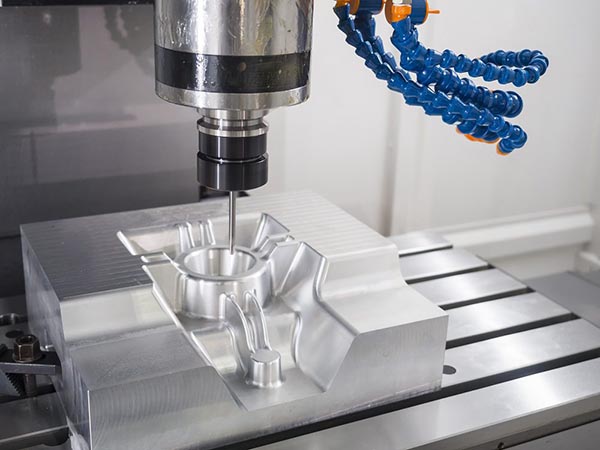
3-Axis Mills: The workhorse. The spindle moves in X, Y, and Z relative to a stationary workpiece. Ideal for most prismatic parts. Limitations arise with complex geometries requiring multiple setups.
4-Axis Mills: Adds a rotary axis (typically an A-axis), allowing the workpiece to rotate. Excellent for machining features around a cylinder or for indexed operations.
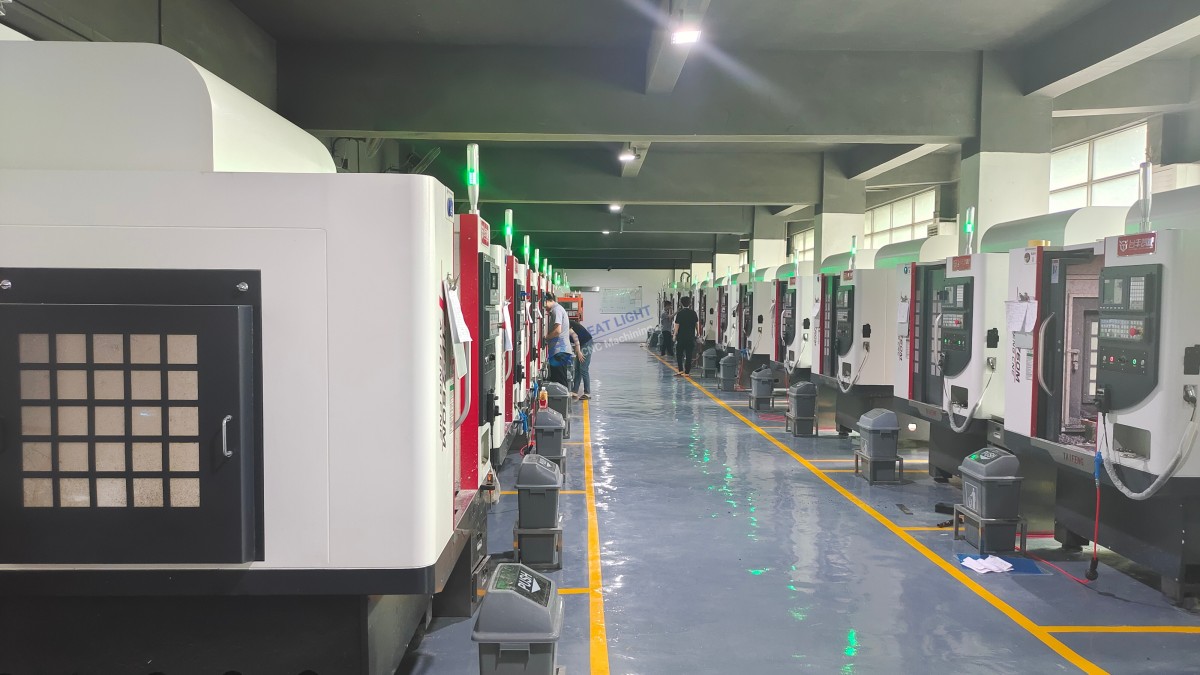
5-Axis Mills: The pinnacle of flexibility for complex parts. Simultaneous movement in five axes allows for machining intricate shapes, deep cavities, and angled features in one setup. This drastically reduces errors and improves surface finish. For suppliers like GreatLight CNC Machining Factory, a fleet of advanced 5-axis machines is core to solving challenging client geometries.
H3: CNC Turning Centers (Lathes)
Designed for rotational, axisymmetric parts. The workpiece spins while a stationary tool cuts. Modern CNC turning centers often include live tooling and secondary spindles, evolving into…
Mill-Turn Centers: Combine turning and milling operations in one machine. A part can be completely finished—turned, milled, drilled, tapped—in a single chucking, offering incredible accuracy for complex rotational parts.
H3: Other Specialized CNC Machines
Wire EDM (Electrical Discharge Machining): Uses a charged wire to erode conductive materials, capable of producing incredibly intricate and sharp internal features with no cutting forces.
Sinker EDM: Used for creating complex cavities, molds, and detailed textures.
Swiss-Type Lathes: Designed for high-volume production of small, complex, slender parts (like screws, shafts) with exceptional precision.
H2: Critical Technical Specifications: Looking Beyond the Numbers
When evaluating specs, context is everything.
Spindle: Consider power (kW/HP) for material removal rates, speed (RPM) for finishing and small tools, and torque for heavy cuts. A vector-drive spindle offers high torque at low speeds for steel, while a high-speed spindle is ideal for aluminum.
Control System: Fanuc, Siemens, Heidenhain, and Mitsubishi are industry leaders. The control dictates user interface, programming flexibility, advanced functions (like look-ahead for smoother high-speed machining), and reliability.
Frame Construction & Rigidity: A massive, cast-iron, polymer-concrete, or granite base provides vibration damping and thermal stability—critical for holding tight tolerances. This is where cheaper machines often compromise.
Linear Guides & Drives: Ball screws vs. linear motors, and the quality of the guide rails, affect accuracy, speed, and long-term wear.
Tool Changer Capacity & Speed: A large magazine (60+ tools) is essential for complex parts. Fast tool change times (e.g., 1-2 seconds) reduce non-cutting time.
Accuracy Metrics: Understand the difference between positioning accuracy (ability to reach a commanded position) and repeatability (ability to return to the same position consistently). Repeatability is often more critical for consistent part quality.
H2: The Intangible Factors: Service, Support, and Ecosystem
The machine is not an island. Its performance is tied to the ecosystem around it.
Manufacturer/Dealer Support: What is the local service network’s response time? Are technicians well-trained? Is parts inventory readily available? Downtime is the ultimate cost.
Software Compatibility: Does the machine work seamlessly with your preferred CAD/CAM software? Post-processor availability and quality are crucial.
Training & Documentation: Comprehensive training for your programmers and operators is vital to unlock the machine’s full potential and avoid costly crashes.
Total Cost of Ownership (TCO): Look beyond the purchase price. Factor in installation, tooling, maintenance contracts, energy consumption, and expected lifespan.
H2: The Strategic Alternative: Partnering with a Professional Machining Service
For many businesses, especially those focused on product development rather than in-house manufacturing, the most strategic answer to how to choose a CNC machine for metal work is to not buy one at all. Partnering with an established, full-service machining provider offers compelling advantages:
Access to Top-Tier Technology Without Capital Outlay: You gain the capabilities of multi-axis, high-precision machines without the six or seven-figure investment.
Process & Material Expertise: A seasoned partner brings deep knowledge of machining strategies, fixturing, and material behavior that takes years to develop in-house.
Scalability & Flexibility: You can order prototypes one week and scale to production volumes the next, without capacity constraints.
Integrated Secondary Services: A true one-stop shop, like GreatLight CNC Machining Factory, provides not just CNC machining but also finishing, heat treatment, quality inspection, and assembly. This simplifies your supply chain and ensures accountability.
This is the model that has propelled GreatLight Metal Tech Co., LTD. to become a trusted partner for global clients. By investing in a comprehensive cluster of Dema and Jingdiao 5-axis CNC centers, multi-axis mill-turn systems, and a full suite of supporting technology (EDM, grinding, 3D printing), they solve the capital and expertise dilemma for their clients. Their rigorous adherence to ISO 9001:2015 for quality management and IATF 16949 for automotive standards provides the trust backbone that is as important as the machining itself. When you partner with such a provider, you’re not just renting machine time; you’re leveraging an entire system built for precision manufacturing success.
Conclusion
How to choose a CNC machine for metal work is a multifaceted decision that balances technical specifications, strategic business needs, and practical realities of support and cost. Whether you decide to invest in building your own machining cell or to leverage the advanced capabilities of a specialized partner like GreatLight CNC Machining Factory, the goal remains the same: to reliably and efficiently transform raw metal into high-value, precision components. By thoroughly analyzing your part requirements, understanding machine capabilities, and considering the full ecosystem, you can make a choice that strengthens your competitive edge for years to come.
FAQ: How To Choose A CNC Machine For Metal Work
Q1: What is the most important factor when choosing a CNC machine?
There is no single most important factor; it’s a balance. However, the absolute starting point is a crystal-clear understanding of the parts you need to produce—their geometry, material, tolerances, and volume. All other decisions flow from this.
Q2: Is a 5-axis CNC machine always better than a 3-axis?
Not always. A 5-axis machine is vastly superior for complex, multi-sided parts as it reduces setups and improves accuracy. However, it comes with a significantly higher purchase price, programming complexity, and maintenance cost. For simple, prismatic parts, a 3-axis machine is more cost-effective and efficient.
Q3: How critical are brand names like Fanuc or Siemens for the control system?
Extremely critical. Major brand controls are renowned for their reliability, robust support networks, and widespread familiarity among programmers. They offer advanced features and stability that are crucial for production environments. While lesser-known controls might be cheaper upfront, they can pose risks in long-term support and performance.
Q4: Can I start with a used CNC machine to save money?
This can be a viable option for a knowledgeable buyer, but it carries risk. A used machine’s condition, accuracy, and remaining lifespan are hard to assess. You must budget thoroughly for potential refurbishment, missing software, and a lack of warranty. For a production-critical application, a new or certified pre-owned machine from a reputable dealer is often a safer bet.
Q5: When does it make more sense to outsource CNC machining rather than buy a machine?
Outsourcing is typically more strategic when: your needs are variable or project-based; you lack in-house CNC programming and operational expertise; the required precision or machine type (like 5-axis) represents a prohibitive capital investment; or you want to avoid the overhead of maintenance, tooling inventory, and floor space. It allows you to focus on your core product design and business development.