
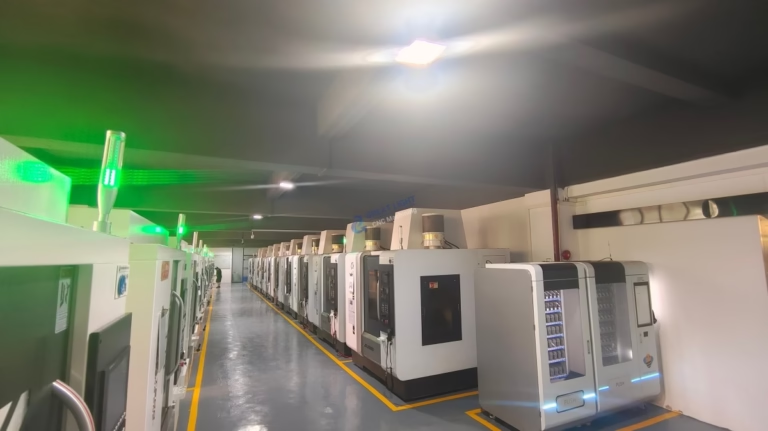
How many CNC machines per solar panel factory? This is a pressing question for solar manufacturing stakeholders, from facility planners scaling production lines to procurement teams optimizing operational costs. The answer isn’t a fixed number—it hinges on a mix of production goals, component complexity, and strategic choices around in-house vs. outsourced machining. To make informed decisions, it’s critical to break down the factors that drive CNC machine requirements, and understand how partnering with a specialized precision machining provider can streamline operations without compromising on quality.
How Many CNC Machines Per Solar Panel Factory?
Key Factors Determining CNC Machine Quantity
1. Production Scale and Target Capacity
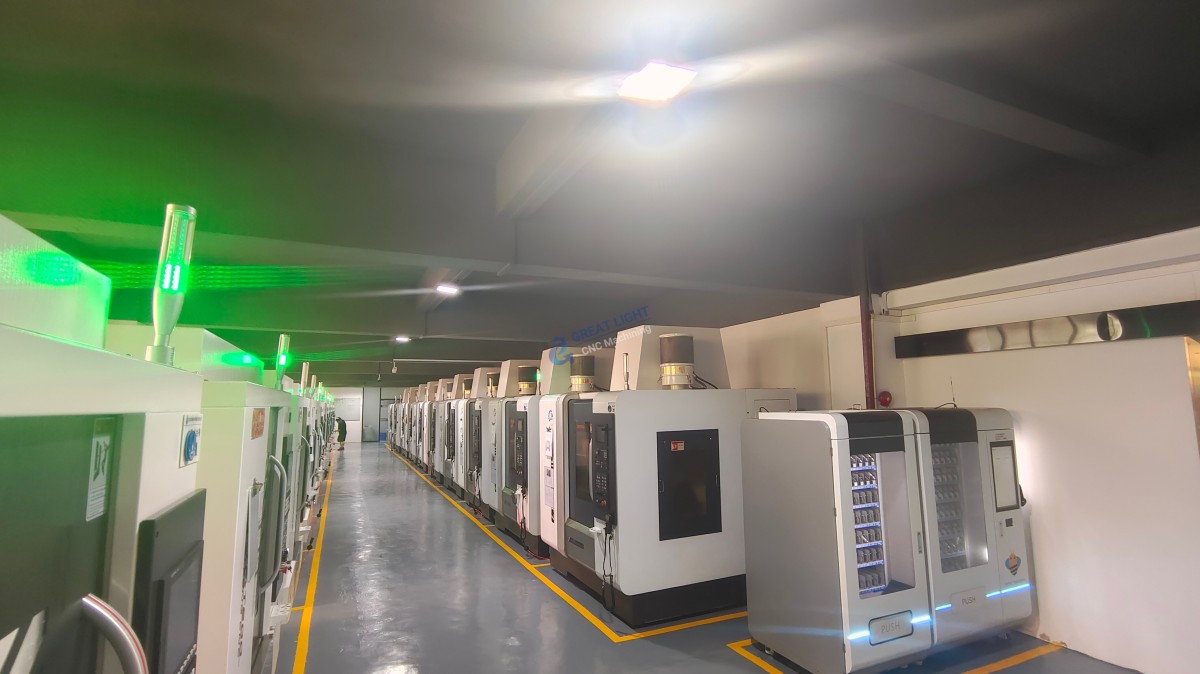
The size of your solar panel production line is the most direct driver of CNC machine count. A small-scale pilot plant focused on prototyping or low-volume production (e.g., 100-500 panels per day) may only require 5-10 CNC machines, primarily dedicated to fabricating critical components like aluminum frames or junction box housings. In contrast, a large-scale mass production facility churning out 5,000+ panels daily could need 50+ CNC machines, often organized into automated cells to handle high throughput. For example, a factory producing 1 GW of solar panels annually may require 30-40 CNC machines if focusing on in-house machining of core components, though this number can drop significantly if non-critical parts are outsourced.
2. Type of Solar Panel Components Machined
Solar panel manufacturing relies on a wide range of machined components, each with different complexity and machining requirements. Basic components like aluminum mounting brackets can be produced on standard 3-axis CNC machines, which are more affordable and faster for simple geometries. However, precision parts for solar tracking systems—such as gear assemblies, pivot joints, and linear actuators—demand advanced 4-axis or 5-axis CNC machines to achieve tight tolerances and complex shapes. A factory that specializes in high-efficiency panels with integrated tracking systems may need 20-30 additional specialized CNC machines compared to a factory producing fixed-tilt panels. Other components like precision heat sinks for inverter systems or custom junction box lids also add to the required machine count based on production volume.
3. Level of Automation and Process Integration
Modern solar factories increasingly adopt automated CNC machining cells, which can reduce the number of machines needed by improving throughput and reducing downtime. For example, a fully automated cell with robotic loaders/unloaders can handle 2-3 times more parts per machine than a manual setup. Factories with integrated CAD/CAM systems and real-time quality monitoring may also optimize machine usage by minimizing setup times and reducing scrap rates. In such cases, a factory producing 3,000 panels per day might only need 25-30 CNC machines, whereas a non-automated facility would require 40+ to meet the same capacity.
4. In-House Machining vs. Outsourced Precision Services
One of the most impactful decisions for solar factory operators is whether to machine all components in-house or outsource precision parts to a specialized provider. Many mid-sized solar factories choose to outsource complex, high-precision components (like tracking system gears or custom heat sinks) to partners with advanced 5-axis CNC capabilities, which reduces their need for expensive specialized machines. For example, a factory that outsources 30% of its precision component needs can cut its in-house CNC machine count by 15-20%, while still maintaining control over core production processes. This approach also eliminates the need for ongoing maintenance, training, and equipment upgrades, which can be significant cost drivers for in-house machining operations.
5. Precision and Quality Requirements
Solar panels operate in harsh outdoor environments—extreme temperatures, wind, and UV exposure—so machined components must meet strict precision and durability standards. For example, aluminum frames must have tight tolerance alignment (±0.02mm) to ensure panels fit together seamlessly and protect the solar cells from damage. Factories producing panels for utility-scale projects, where even minor misalignments can reduce energy output by 2-3%, may need to invest in more high-precision CNC machines to meet these standards. A factory focused on utility-scale production might require 10-15 additional high-precision machines compared to a facility producing residential panels with slightly looser tolerances.
The Critical Role of Precision CNC Machining in Solar Panel Manufacturing
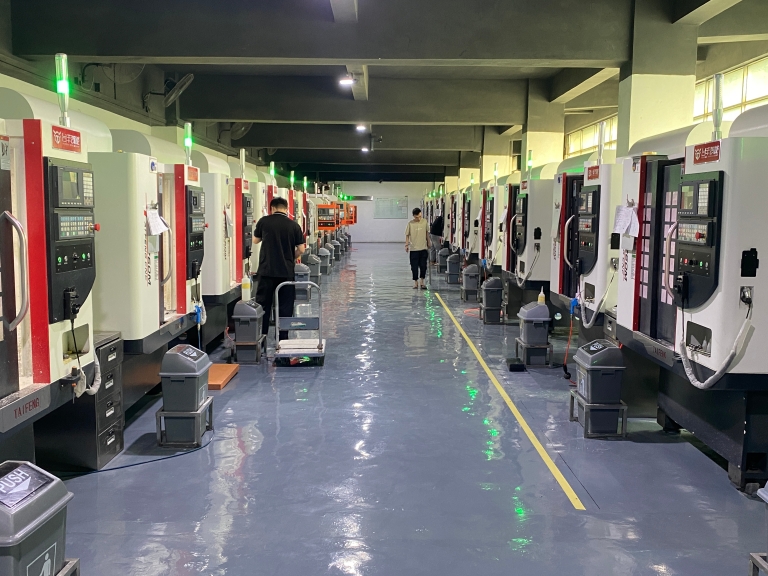
Precision CNC machining is the backbone of reliable solar panel production. Every machined component plays a direct role in the panel’s performance and lifespan:
Aluminum frames: Provide structural support, protect the glass and cells, and ensure proper sealing against water and dust. Poorly machined frames can lead to panel misalignment, reduced weather resistance, and premature failure.
Solar tracking system components: Gears, pivot joints, and actuators must maintain precise alignment to track the sun’s movement, maximizing energy capture by up to 25% compared to fixed-tilt panels.
Junction boxes and heat sinks: These components dissipate heat from the panel’s electrical system, preventing overheating and ensuring consistent energy output. Precision machining ensures proper fit and thermal conductivity.
Mounting brackets: Secure panels to rooftops or ground mounts, withstanding wind speeds up to 120 mph. Machined to exact specifications, they prevent shifting that could damage panels or reduce efficiency.
Without high-quality CNC machining, these components would fail to meet industry standards, leading to costly recalls, reduced energy production, and damage to a factory’s reputation.
Optimizing Your Solar Manufacturing Setup with GreatLight Metal
For solar panel factories looking to balance efficiency, precision, and cost-effectiveness, partnering with a specialized precision machining provider like GreatLight Metal is a strategic choice. GreatLight brings over a decade of experience in machining high-precision components for the renewable energy sector, offering end-to-end solutions that reduce the need for in-house CNC machines while ensuring top-tier quality.
End-to-End Solutions for Solar Component Machining
GreatLight’s comprehensive service portfolio is tailored to meet the unique needs of solar manufacturers:
High-precision CNC machining: From 3-axis to advanced 5-axis CNC machining services for complex tracking system components, with precision capabilities up to ±0.001mm—far exceeding the standard requirements for solar panel components.
Full process chain integration: GreatLight handles everything from design optimization and prototyping to mass production and surface finishing. This means solar factories don’t need to invest in multiple specialized machines or manage multiple suppliers.
Material expertise: GreatLight works with a wide range of materials ideal for solar components, including aluminum alloys (lightweight and corrosion-resistant), stainless steel (durable for outdoor use), and engineering plastics (insulating for electrical components).
Certified quality: As an ISO 9001:2015, IATF 16949, and ISO 27001 certified manufacturer, GreatLight adheres to strict quality control processes, ensuring every component meets international solar industry standards. We also offer free rework for quality issues, with a full refund if rework is unsatisfactory.
Case Study: Supporting a Solar Tracker Manufacturer’s Scaling Needs
A leading solar tracker manufacturer approached GreatLight with a challenge: they needed to scale production of their precision gear assemblies but lacked the in-house 5-axis CNC capacity to meet demand. GreatLight stepped in to provide end-to-end machining services, from initial design validation to mass production. By outsourcing these components, the tracker manufacturer was able to reduce their in-house CNC machine count by 12 machines, saving over $2 million in equipment and maintenance costs. GreatLight’s precision machining ensured the gears met ±0.005mm tolerances, resulting in a 15% improvement in tracking accuracy and a 3% increase in energy output for their solar panels. The partnership also reduced lead times by 20%, allowing the manufacturer to fulfill large utility-scale orders ahead of schedule.
Conclusion
How many CNC machines per solar panel factory? The answer varies widely based on production scale, component complexity, and strategic choices around in-house vs. outsourced machining. By understanding these factors and partnering with a trusted precision machining provider like GreatLight Metal, solar manufacturers can optimize their operations, reduce capital expenditure on CNC machines, and ensure the highest quality for their components. Whether you’re a small pilot plant or a large-scale mass production facility, GreatLight’s advanced machining capabilities, certified quality systems, and industry expertise make it an ideal partner to help you navigate the nuances of determining how many CNC machines per solar panel factory for your unique needs. For more insights into our solar manufacturing collaborations, explore GreatLight Metal’s industry partnerships.
Frequently Asked Questions (FAQ)
1. What solar panel components require CNC machining?
CNC machining is critical for producing aluminum frames, solar tracking system gears and pivot joints, junction box housings, heat sinks, mounting brackets, and precision fasteners. These components demand tight tolerances and consistent quality to ensure panel performance and durability.
2. Can outsourcing precision machining reduce the need for in-house CNC machines?
Yes. Outsourcing complex, high-precision components (like tracking system gears) to a specialized provider eliminates the need to invest in expensive 4-axis or 5-axis CNC machines, as well as ongoing maintenance and training costs. Many solar manufacturers reduce their in-house CNC count by 15-20% by outsourcing non-core precision parts.
3. How does GreatLight ensure precision for solar components?
GreatLight uses advanced 5-axis CNC machining centers with precision capabilities up to ±0.001mm, paired with strict quality control processes including in-house metrology testing (using coordinate measuring machines and optical inspection tools). As an ISO 9001:2015 certified manufacturer, all processes adhere to international quality standards, and we offer free rework for quality issues, with a full refund if rework is unsatisfactory.
4. What certifications does GreatLight hold that are relevant to solar manufacturing?
GreatLight holds ISO 9001:2015 (quality management), IATF 16949 (applicable to precision mechanical components like tracking system parts), and ISO 27001 (data security for sensitive design files). These certifications ensure our processes meet the strict reliability and quality requirements of the solar industry.
5. How long does it take to get custom solar components machined by GreatLight?
Lead times depend on component complexity and order volume. Prototypes can be produced in 2-5 days, while mass production orders (1,000+ units) typically take 10-15 days. GreatLight also offers expedited services for urgent projects, ensuring you meet your production deadlines.
6. What materials does GreatLight work with for solar components?
GreatLight has extensive experience machining aluminum alloys (6061, 7075) for frames and brackets, stainless steel (304, 316) for corrosion-resistant components, engineering plastics (ABS, PC) for electrical housings, and titanium alloys for high-performance tracking system parts. We can also source and process custom materials based on your specific requirements.



















