
Aluminum CNC machining: A beginner’s guide
Due to its lightweight, corrosion resistance and high strength properties, aluminum is a popular material choice for manufacturing materials. In modern manufacturing, CNC machining plays a crucial role in the production of various aluminum parts, with significant impact on the efficiency, accuracy and cost-effectiveness of the process. In this article, we will dig into the world of aluminum CNC processing, exploring its meaning, its benefits and the processes involved.
What is aluminum CNC machining?
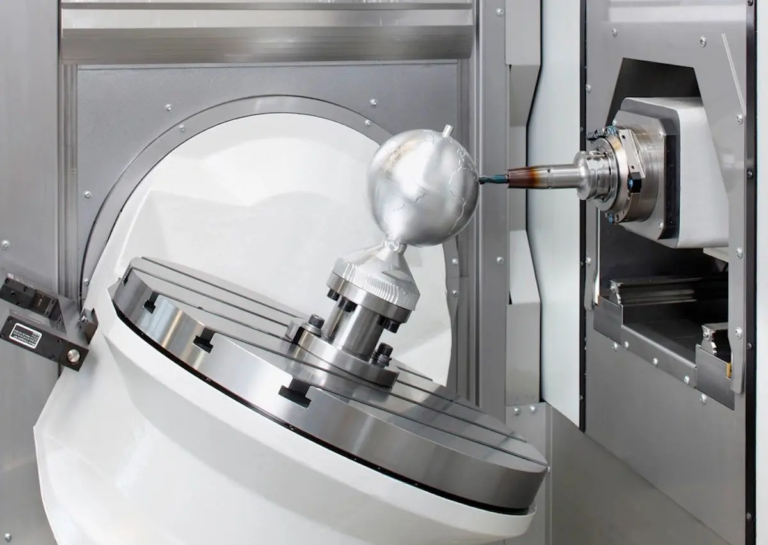
Aluminum CNC machining, also known as aluminum 5-axis milling, is a manufacturing process that uses a computer-controlled machine to remove material from solid aluminum blocks to create a specific part or product. This process is achieved by using a combination of cutting and removing materials using a multi-axis machine, which can be programmed to perform complex operations more efficiently and accurately than traditional subtraction manufacturing methods.
Benefits of Aluminum CNC Processing
- High precision: Aluminum CNC machining provides high accuracy, with tolerances usually within ±0.001 mm.
- Rapid production: CNC machining can be produced quickly, and parts are manufactured in a few hours, depending on their complexity.
- Cost-effective: Aluminum is a relatively inexpensive material, making it a cost-effective choice for many industrial applications.
- flexibility: CNC machining allows customization, allowing for the production of complex shapes and designs that traditional manufacturing methods will be difficult or impossible to achieve.
The process of aluminum CNC processing
The aluminum CNC machining process involves multiple stages:
- programming: The part was designed and programmed using software that creates a G-code file for the computer to follow.
- set up: Mount the aluminum block on the Chuck of the machine and calibrate it for precision.
- CNC machining: According to the program sequence, the machine performs cutting and removal of materials.
- examine: Check the quality and function of this part.
Types of aluminum CNC processing methods
- 2.5-axis milling: The method involves rotating the cutting tool against the workpiece, which moves along a specific path.
- 3-axis milling: This method uses three rotation axes, allowing for more complex shapes and designs.
- 5-axis milling: This method uses five rotation axes, enabling the creation of complex, free-form surfaces and shapes.
in conclusion
CNC machining of aluminum offers many benefits including high precision, rapid production, cost-effectiveness and flexibility. Understanding the processes, benefits and methods involved in aluminum CNC machining can help you make informed decisions when choosing a manufacturing partner or designing your own parts.
FAQ:
Q: What are the limitations of aluminum CNC processing?
A: CNC machining can be limited by the complexity of design, finish and material properties.
Q: Can aluminum CNC processing be used for mass production?
A: Yes, mass production is possible, but it may require the use of multi-machine systems or special equipment.
Q: Is CNC machining suitable for all types of aluminum?
A: No, aluminum CNC processing is usually used for aluminum alloys suitable for processing, such as 6061, 6062 and 7075.
Q: Can I get a quote for CNC processing services?
A: Yes, please contact a reliable CNC machining service provider, such as Light Light, to discuss your specific needs and receive a custom quote.
Q: What is the typical lead time for CNC processing?
A: The delivery time depends on the complexity of the parts, material availability and production capacity, but is usually within 1-4 weeks.



















