
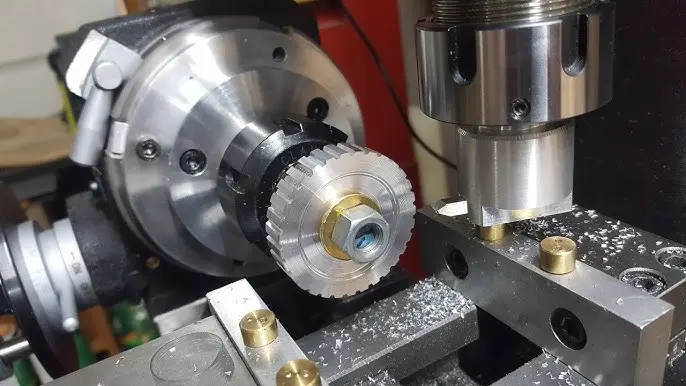
The rise of modern manufacturing: processing CNC factories
In today’s fast-paced industrial landscape, the need for precision and efficiency has never been so. With the rise of automation and computer-controlled manufacturing, processing CNC (Computer Numerical Control) factories have become a new standard for the production of high-quality machine parts and components. In this article, we will dig into the world of CNC machining and explore the benefits and advantages of using a machining CNC factory in modern manufacturing.
Evolution of CNC machining
The concept of machine tools dates back to the 18th century, but the introduction of computer control in the 1960s completely changed the industry. CNC machining uses computer-controlled machines to perform tasks that otherwise require manual operation. This technology has improved significantly since its inception, with advances in computer aided design (CAD), computer aided manufacturing (CAM), and computer aided engineering (CAE).
Advantages of processing CNC factory
- Improve accuracy: CNC machining allows unparalleled accuracy, tolerances measured in microns, with accuracy up to the closest one hundred degrees.
- Faster production: With automated processes, manufacturers can increase production and reduce lead times, resulting in faster turnaround times.
- Save costs: CNC processing is more efficient, reducing labor costs and improving productivity.
- flexibility: Modern CNC computers can be programmed to perform a variety of tasks ranging from simple to complex, with very little setup time.
- Access to advanced technology: Processing CNC plants can access advanced technologies such as five-axis machining, enabling complex geometry and complex details.
Benefits of handling CNC plants
- Improve efficiency: CNC processing streamlines production, reduces errors and improves productivity.
- Improved accuracy: With precise machining parts, manufacturers can reduce the need for rework and expensive reinstallation.
- Custom addition: Customized CNC machining enables manufacturers to create complex shapes and details to meet specific customer needs.
- Improve quality: CNC machining ensures precise control of the manufacturing process, resulting in high-quality products.
in conclusion
In short, machining CNC plants revolutionize modern manufacturing, providing unparalleled precision, speed and cost savings. By leveraging advanced technologies such as five-axis machining, manufacturers can produce high-quality parts and components with increased efficiency and accuracy. As the industry continues to grow, processing CNC factories will remain at the forefront of innovation, driving growth and competitiveness in an increasingly complex and competitive market.
FAQ
Q: What is CNC processing?
A: CNC machining is a manufacturing process that uses computer-controlled machines to perform tasks such as cutting, drilling or milling at high precision and accurate speed.
Q: What is the difference between CNC and traditional processing?
Answer: CNC processing uses computer control, while traditional processing relies on manual operations, thereby improving the accuracy and accuracy of CNC.
Q: Can CNC machining be used for complex shapes and details?
A: Yes, modern CNC machines can be programmed to perform complex tasks such as five-axis machining, which can create complex shapes and complex details.
Q: How to improve quality in CNC processing?
A: CNC machining ensures precise control of the manufacturing process, resulting in reduced and rework of high-quality parts and components.



















